BROS(601339)

Search documents
百隆东方(601339) - 简式权益变动报告书—杨燿斌(更新)
2025-07-02 09:45
权益变动性质:股份增加 签署日期:2025 年 7 月 2 日 1 信息披露义务人声明 一、本报告书系信息披露义务人依据《中华人民共和国公司法》《中华人民 共和国证券法》、《上市公司收购管理办法》、《公开发行证券的公司信息披露内 容与格式准则第 15 号——权益变动报告书》等相关法律、法规和规范性文件编 写。 百隆东方股份有限公司 简式权益变动报告书 上市公司的名称:百隆东方股份有限公司 股票上市地点:上海证券交易所 股票简称:百隆东方 股票代码:601339 信息披露义务人:杨燿斌 住所:深圳南山区****** 通讯地址:深圳南山区****** 二、信息披露义务人签署本报告书已获得必要的授权和批准。 三、依据《证券法》、《收购办法》的规定,本报告书已全面披露信息披露 义务人在百隆东方股份有限公司中拥有权益的股份变动情况。 截至本报告书签署之日,除本报告书披露的信息外,信息披露义务人没有 通过任何其他方式增加或减少其在百隆东方股份有限公司中拥有权益的股份。 四、本次权益变动是根据本报告书所载明的资料进行的。信息披露义务人 没有委托或者授权任何其他人提供未在本报告书中列载的信息和对本报告书做 出任何解释或者说明 ...

百隆东方(601339) - 简式权益变动报告书—郑亚斐(更新)
2025-07-02 09:45
百隆东方股份有限公司 权益变动性质:股份减少 简式权益变动报告书 上市公司的名称:百隆东方股份有限公司 股票上市地点:上海证券交易所 股票简称:百隆东方 股票代码:601339 信息披露义务人:郑亚斐 住所:深圳市南山区****** 通讯地址:深圳市南山区****** 签署日期:2025 年 7 月 2 日 1 信息披露义务人声明 一、本报告书系信息披露义务人依据《中华人民共和国公司法》《中华人民 共和国证券法》、《上市公司收购管理办法》、《公开发行证券的公司信息披露内 容与格式准则第 15 号——权益变动报告书》等相关法律、法规和规范性文件编 写。 二、信息披露义务人签署本报告书已获得必要的授权和批准。 三、依据《证券法》、《收购办法》的规定,本报告书已全面披露信息披露 义务人在百隆东方股份有限公司中拥有权益的股份变动情况。 截至本报告书签署之日,除本报告书披露的信息外,信息披露义务人没有 通过任何其他方式增加或减少其在百隆东方股份有限公司中拥有权益的股份。 四、本次权益变动是根据本报告书所载明的资料进行的。信息披露义务人 没有委托或者授权任何其他人提供未在本报告书中列载的信息和对本报告书做 出任何解释或者 ...
百隆东方(601339) - 百隆东方关于实际控制人之一致行动人内部协议转让公司股份暨权益变动的提示性公告
2025-07-02 08:17
证券代码:601339 证券简称:百隆东方 公告编号:2025-019 百隆东方股份有限公司关于实际控制人之一致行动人内部 协议转让公司股份暨权益变动的提示性公告 本公司董事会及全体董事保证本公告内容不存在任何虚假记载、误导性陈述或 者重大遗漏,并对其内容的真实性、准确性和完整性承担个别及连带责任。 重要提示: 本次股份转让变动情况如下: | 股东简称 | 本次转让前 | | 本次转让后 | | | --- | --- | --- | --- | --- | | | 数量(股) | 比例(%) | 数量(股) | 比例(%) | 1 | 郑亚斐 | 75,000,000 | 5.00 | 0 | 0 | | --- | --- | --- | --- | --- | | 杨燿斌 | 0 | 0 | 75,000,000 | 5.00 | (详细情况请参阅公司同日刊登的简式权益变动报告书) 本次权益变动不会导致公司控股股东及实际控制人发生变化;本次权益变 动不触及要约收购。 1、2025年7月1日,公司实际控制人之一致行动人、大股东郑亚斐与其 子、公司现任董事杨燿斌签署《股份转让协议》。郑亚斐以协议转让方式向杨 ...
百隆东方(601339) - 简式权益变动报告书—郑亚斐
2025-07-02 08:15
百隆东方股份有限公司 简式权益变动报告书 上市公司的名称:百隆东方股份有限公司 股票上市地点:上海证券交易所 股票简称:百隆东方 股票代码:601339 信息披露义务人:郑亚斐 住所:深圳市南山区****** 通讯地址:深圳市南山区****** 权益变动性质:股份减少 截至本报告书签署之日,除本报告书披露的信息外,信息披露义务人没有 通过任何其他方式增加或减少其在百隆东方股份有限公司中拥有权益的股份。 四、本次权益变动是根据本报告书所载明的资料进行的。信息披露义务人 没有委托或者授权任何其他人提供未在本报告书中列载的信息和对本报告书做 出任何解释或者说明。 2 | 附表一 13 | | --- | 签署日期:2025 年 7 月 2 日 1 信息披露义务人声明 一、本报告书系信息披露义务人依据《中华人民共和国公司法》《中华人民 共和国证券法》、《上市公司收购管理办法》、《公开发行证券的公司信息披露内 容与格式准则第 15 号——权益变动报告书》等相关法律、法规和规范性文件编 写。 二、信息披露义务人签署本报告书已获得必要的授权和批准。 三、依据《证券法》、《收购办法》的规定,本报告书已全面披露信息披露 义务人 ...
百隆东方(601339) - 简式权益变动报告书—杨燿斌
2025-07-02 08:15
百隆东方股份有限公司 简式权益变动报告书 上市公司的名称:百隆东方股份有限公司 股票上市地点:上海证券交易所 股票简称:百隆东方 股票代码:601339 信息披露义务人:杨燿斌 住所:深圳南山区****** 通讯地址:深圳南山区****** 权益变动性质:股份增加 签署日期:2025 年 7 月 2 日 1 信息披露义务人声明 一、本报告书系信息披露义务人依据《中华人民共和国公司法》《中华人民 共和国证券法》、《上市公司收购管理办法》、《公开发行证券的公司信息披露内 容与格式准则第 15 号——权益变动报告书》等相关法律、法规和规范性文件编 写。 二、信息披露义务人签署本报告书已获得必要的授权和批准。 三、依据《证券法》、《收购办法》的规定,本报告书已全面披露信息披露 义务人在百隆东方股份有限公司中拥有权益的股份变动情况。 截至本报告书签署之日,除本报告书披露的信息外,信息披露义务人没有 通过任何其他方式增加或减少其在百隆东方股份有限公司中拥有权益的股份。 4 本报告书中,除非另有说明,下列简称在本报告书中作如下释义: 百隆东方、上市公司、公司 指百隆东方股份有限公司 信息披露义务人 指杨燿斌 本报告、本报告 ...
趋势研判!2025年中国纺织面料行业发展现状及发展趋势分析:纺织面料的发展将更注重功能性和环保性,新型纤维和技术的应用将不断扩大[图]
Chan Ye Xin Xi Wang· 2025-06-30 01:28
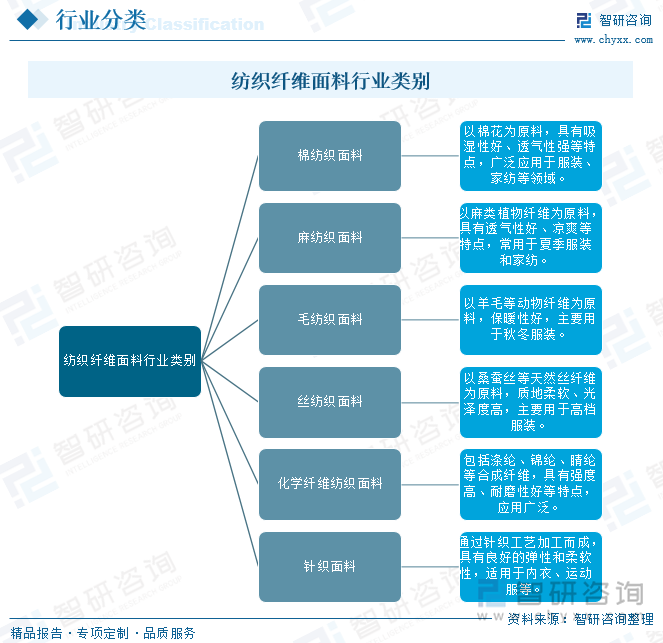
Core Insights - The textile fiber fabric industry is crucial for manufacturing fabrics and garments, divided into natural fiber fabrics and chemical fiber fabrics [3][5] - In 2024, China's cotton textile industry is projected to generate revenue of 1,141.86 billion yuan, accounting for 61.40% of the textile industry, while the chemical textile industry is expected to generate 247.88 billion yuan, representing 13.33% [6][8] - The development of the textile fabric industry is increasingly focused on functionality and environmental sustainability, with the application of new fibers and technologies expanding [22] Industry Definition and Classification - Textile fiber fabrics are elongated materials used for making fabrics and garments, categorized into natural fiber fabrics and chemical fiber fabrics [3] - Natural fibers are favored for their environmental friendliness and comfort, while chemical fibers are essential for their strength and durability [3] Current Development Status - The textile industry has evolved significantly since the Neolithic era, reflecting advancements in technology, art, culture, and economy [5] - The industrial revolution greatly enhanced production efficiency and quality, with cotton becoming a key textile raw material [5] - The 21st century presents new challenges and opportunities, emphasizing sustainable practices and the emergence of innovative materials like nanofibers and smart textiles [5] Industry Chain Structure - The textile fabric industry chain consists of upstream natural fibers (cotton, linen, silk, wool) and chemical fibers (polyester, nylon), midstream fabric production, and downstream applications in clothing, home textiles, and industrial textiles [10] Market Size and Growth - The market size for industrial textiles in China is projected to reach 332.44 billion yuan in 2024, with total industry output valued at 597.74 billion yuan [14] - The silk industry is expected to generate approximately 76.59 billion yuan in revenue in 2024, with a year-on-year growth of 5.75% [12] Competitive Landscape - The textile fabric industry in China is characterized by a diverse and fragmented competitive landscape, with key players including Zhejiang Xin'ao Textile Co., Ltd., Hengli Petrochemical Co., Ltd., and others [16] - Major companies are focusing on product innovation and sustainability, with significant investments in technology and brand development [18] Future Trends - The development of textile fabrics is increasingly influenced by new materials and technologies, emphasizing diversification, functionality, lightweight, and environmental sustainability [22] - The industry is expected to continue evolving to meet consumer demands for high-quality, eco-friendly products [22]


百隆东方: 百隆东方关于董事、高级管理人员减持股份计划时间届满暨未减持股份结果的公告
Zheng Quan Zhi Xing· 2025-06-19 09:20
Summary of Key Points Core Viewpoint - The announcement details that the planned share reduction by directors Zhang Kui and Dong Qihan of Bailong Oriental Co., Ltd. has not been executed within the specified timeframe, resulting in no shares being sold [1][2]. Shareholding Basic Situation - Zhang Kui held 1,850,000 shares, representing 0.12% of the total share capital, all acquired through the company's stock option incentive plan [1][3]. - Dong Qihan held 300,000 shares, representing 0.02% of the total share capital, also acquired through the stock option incentive plan [1][3]. Implementation Results of the Reduction Plan - The reduction plan was set to occur from March 20, 2025, to June 19, 2025, with Zhang Kui planning to reduce up to 462,500 shares (0.03% of total share capital) and Dong Qihan planning to reduce up to 75,000 shares (0.005% of total share capital) [1][4]. - As of the announcement date, neither Zhang Kui nor Dong Qihan executed any share reductions, resulting in a total reduction amount of 0 yuan and an unfulfilled reduction of 462,500 shares and 75,000 shares, respectively [2][4].
百隆东方(601339) - 百隆东方关于董事、高级管理人员减持股份计划时间届满暨未减持股份结果的公告
2025-06-19 08:31
证券代码:601339 证券简称:百隆东方 公告编号:2025-018 2025 年 2 月 26 日,公司披露了《关于部分董监高集中竞价减持股份计划公 告》(公告编号:2025-002)。张奎计划于 2025 年 3 月 20 日至 2025 年 6 月 19 日期间,通过集中竞价方式减持所持有的公司股份不超过 462,500 股,减持比例 不超过公司总股本的 0.03%。董奇涵计划于 2025 年 3 月 20 日至 2025 年 6 月 19 日期间,通过集中竞价方式减持所持有的公司股份不超过 75,000 股,减持比例 不超过公司总股本的 0.005%。 在本次减持计划期间内,张奎、董奇涵均未减持本公司股份。截至本公告披 露之日,本次减持计划时间届满。 | 股东名称 | 张奎 | | --- | --- | | 股东身份 | 控股股东、实控人及一致行动人 □是 □否 | 一、减持主体减持前基本情况 百隆东方股份有限公司董事、高级管理人员减持股份 计划时间届满暨未减持股份结果的公告 本公司董事会、全体董事及相关股东保证本公告内容不存在任何虚假记载、 误导性陈述或者重大遗漏,并对其内容的真实性、准确性和完 ...
百隆东方:董事张奎和财务总监董奇涵减持计划届满未减持
news flash· 2025-06-19 08:13
Core Viewpoint - The reduction plans of the company's director Zhang Kui and financial director Dong Qihan have expired without any shares being sold [1] Summary by Relevant Sections - **Shareholding Information** - Zhang Kui holds 1.85 million shares, accounting for 0.12% of the total share capital of the company [1] - Dong Qihan holds 300,000 shares, accounting for 0.02% of the total share capital of the company [1] - **Reduction Plans** - Zhang Kui had planned to reduce his holdings by up to 462,500 shares [1] - Dong Qihan had planned to reduce his holdings by up to 75,000 shares [1]
百隆东方上市13周年:利润增长63%,市值较峰值蒸发67%
Sou Hu Cai Jing· 2025-06-12 00:33
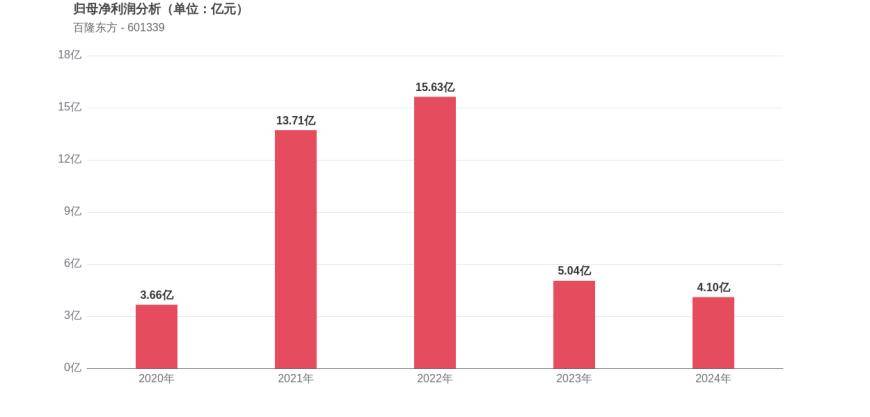
Core Viewpoint - The company has experienced significant growth since its IPO in 2012, but recent years have shown notable fluctuations in performance [1][3]. Group 1: Company Overview - The company, Baolong Oriental, was listed on June 12, 2012, with an initial closing price of 12.33 yuan and a market capitalization of 9.247 billion yuan. Currently, its market capitalization stands at 7.243 billion yuan [1]. - The main business of Baolong Oriental includes the research, production, and sales of colored spun yarn, with colored spun yarn accounting for 51.07% of its revenue structure [3]. Group 2: Financial Performance - From 2012 to 2024, the company achieved a cumulative net profit growth of 63.22%, increasing from 251 million yuan to 410 million yuan [3]. - Over the past five years, the company's net profit has shown volatility, with a total increase of 12.02% from 366 million yuan in 2020 to 410 million yuan in 2024 [3]. - Revenue increased from 6.135 billion yuan in 2020 to 7.941 billion yuan in 2024, reflecting an overall growth of 29.43% during this period [3]. Group 3: Market Capitalization Trends - The peak market capitalization of Baolong Oriental reached 22.162 billion yuan on June 18, 2015, with a stock price of 29.55 yuan. As of June 11, the stock price is 4.83 yuan, resulting in a market capitalization of 7.243 billion yuan, indicating a decrease of 14.92 billion yuan and a 67.32% drop from its peak [5].