
Ronbay Technology(688005)

Search documents
容百科技延期回复上交所问询函 股票继续停牌
Zhi Tong Cai Jing· 2026-01-14 13:33
Core Viewpoint - Rongbai Technology (688005.SH) has received an inquiry letter from the Shanghai Stock Exchange regarding its operational contract with CATL (300750), leading to a temporary suspension of its stock trading [1] Group 1 - The company received the inquiry letter on January 13, 2026, from the management department of the Shanghai Stock Exchange's Sci-Tech Innovation Board [1] - The company's stock was suspended for one day on January 14, 2026, due to the inquiry [1] - The company is actively organizing its management team and relevant parties to prepare responses to the inquiry letter [1] Group 2 - Due to the need for further clarification on certain matters mentioned in the inquiry letter, the company's stock will continue to be suspended for an additional day on January 15, 2026 [1]
容百科技(688005) - 关于延期回复上海证券交易所《问询函》暨公司股票继续停牌的公告
2026-01-14 13:30
为了保证信息披露的公平性,经公司向上海证券交易所申请,公司股票(简 称"容百科技",代码:688005)已于 2026 年 1 月 14 日停牌一天。 收到《问询函》后,公司积极组织管理层及相关方按照要求逐项认真准备答 复工作,鉴于《问询函》涉及的部分事项需要进一步落实,公司股票于 2026 年 1 月 15 日将继续停牌 1 日。 公司所有信息均以上海证券交易所官网(www.sse.com.cn)及相关指定信息 披露媒体刊登的公告为准。敬请广大投资者关注公司后续公告,并注意投资风险。 特此公告。 证券代码:688005 证券简称:容百科技 公告编号:2026-004 宁波容百新能源科技股份有限公司 关于延期回复上海证券交易所《问询函》 暨公司股票继续停牌的公告 本公司董事会及全体董事保证本公告内容不存在任何虚假记载、误导性陈述 或者重大遗漏,并对其内容的真实性、准确性和完整性依法承担法律责任。 宁波容百新能源科技股份有限公司(以下简称"容百科技"或"公司")于 2026 年 1 月 13 日收到上海证券交易所科创板公司管理部下发的《关于宁波容百 新能源科技股份有限公司与宁德时代签署日常经营合同事项的问询函》 ...
容百科技:延期回复上交所问询函 股票继续停牌
Mei Ri Jing Ji Xin Wen· 2026-01-14 13:25
Group 1 - Company Rongbai Technology (688005.SH) received an inquiry letter from the Shanghai Stock Exchange on January 13, 2026, regarding its daily operational contract with CATL [1] - The company's stock was suspended for one day on January 14, 2026, due to the inquiry [1] - The stock will continue to be suspended for an additional day on January 15, 2026, as some matters in the inquiry require further clarification [1]
容百科技:延期回复上交所问询函 继续停牌一天

Zheng Quan Shi Bao Wang· 2026-01-14 13:18
Core Viewpoint - Rongbai Technology (688005) received an inquiry letter from the Shanghai Stock Exchange regarding its operational contract with CATL (300750) on January 13, 2023, indicating regulatory scrutiny over the company's business dealings [1] Group 1 - The inquiry letter was issued by the management department of the Shanghai Stock Exchange's Sci-Tech Innovation Board [1] - Following the receipt of the inquiry letter, the company is actively organizing its management team and relevant parties to prepare responses as required [1] - Due to the need for further verification of certain matters mentioned in the inquiry letter, the company's stock will remain suspended for trading on January 15, 2023 [1]
容百科技:延期回复上海证券交易所《问询函》 股票继续停牌1日
Di Yi Cai Jing· 2026-01-14 13:14
Group 1 - The company, Rongbai Technology, received an inquiry letter from the Shanghai Stock Exchange regarding a business contract signed with CATL on January 13, 2026 [2] - Following the inquiry, the company is actively organizing its management and relevant parties to prepare responses as required [2] - Due to the need for further verification of certain matters mentioned in the inquiry letter, the company's stock will continue to be suspended for one additional day on January 15, 2026 [2]

签下1200亿元大单,上交所四问容百科技
Bei Jing Shang Bao· 2026-01-14 13:09
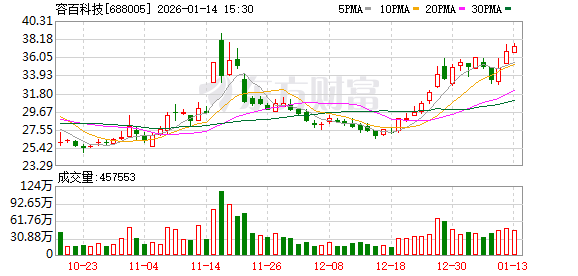
Core Viewpoint - The Shanghai Stock Exchange has raised inquiries regarding Rongbai Technology's information disclosure accuracy, agreement details, insider trading prevention, and other related issues following the announcement of a significant procurement cooperation agreement with CATL [2][3]. Group 1: Agreement Details - Rongbai Technology announced a procurement cooperation agreement with CATL for the supply of 3.05 million tons of lithium iron phosphate cathode materials from Q1 2026 to 2031, with a total sales amount exceeding 120 billion yuan [2]. - The Shanghai Stock Exchange questioned the absence of a specified total sales amount in the agreement and the basis for determining the sales amount [3]. - The exchange requested additional disclosures regarding annual production capacity agreements, the company's capacity acquisition plans, and financial reserves to clarify the company's ability to fulfill the agreement [3][4]. Group 2: Performance and Financials - Prior to the announcement of the cooperation agreement, Rongbai Technology disclosed a forecast indicating a potential net loss of up to 190 million yuan for the year 2025, with a projected net profit of approximately 30 million yuan for Q4 2025 [6]. - The company reported a decline in revenue and net profit from 2022 to 2025, with revenues of approximately 301.23 billion yuan in 2022, dropping to 89.86 billion yuan in 2025 [7]. - The company’s net profit figures for the same period were approximately 13.53 billion yuan in 2022, decreasing to a loss of 2.04 billion yuan in 2025 [7]. Group 3: Market Reaction and Stock Performance - On January 13, the stock price of Rongbai Technology increased by 1.66%, closing at 37.35 yuan per share, with a total market capitalization of 26.69 billion yuan [8]. Group 4: Regulatory Compliance - The Shanghai Stock Exchange mandated that Rongbai Technology disclose the inquiry letter and respond within one trading day, emphasizing the importance of fulfilling information disclosure obligations [9].
【太平洋科技-每日观点&资讯】(2026-01-15)
远峰电子· 2026-01-14 12:46
Market Overview - The major indices showed mixed performance with the STAR Market 50 index rising by 2.13%, while the Shanghai Composite Index fell by 0.31% [1] - The TMT sector led the gains, particularly in sub-sectors like SW Portal Websites (+10.62%) and SW Communication Application Value-Added Services (+7.17%) [1] - Conversely, the TMT sector also saw declines in areas such as SW Robotics (-0.81%) and SW Military Electronics III (-0.57%) [1] Domestic News - Zhejiang Jingrui achieved a key technological breakthrough in 12-inch silicon carbide substrate uniformity, with a TTV of ≤1μm, marking a significant advancement in domestic equipment capabilities [2] - Rongbai Technology signed a procurement cooperation agreement with CATL for lithium iron phosphate cathode materials, expected to supply 3.05 million tons from Q1 2026 to 2031, with a total sales value exceeding 120 billion yuan [2] - The first underwater geological drilling and monitoring robot was successfully developed in China, featuring high-precision operation capabilities with a 3D positioning error of less than 0.3 meters [2] - LeKai Optoelectronics plans to invest in a TAC functional film coating production line, aiming for an annual production capacity of 18 million square meters [2] Overseas News - Global DRAM manufacturers are projected to have a total capacity of 18 million wafers in 2026, reflecting a 5% increase from 2025 [3] - Wolfspeed announced the successful production of 300mm silicon carbide wafers, enhancing capabilities for power electronics and optical systems [3] - Siemens acquired ASTER, integrating advanced design-for-test capabilities into its software suite [3] - The U.S. Industrial and Security Bureau revised its export licensing policy for specific semiconductor products to a case-by-case review, impacting products like NVIDIA's H200 chip [3] AI Insights - Aishi Technology launched the PixVerse R1 model, which significantly reduces video generation latency to real-time interaction, applicable in gaming and entertainment [4] - Baichuan Intelligence open-sourced its medical AI model Baichuan-M3, achieving top scores in global medical AI evaluations [4] - Tsinghua University developed the DrugCLIP platform, enhancing screening speed by a million times compared to traditional methods [4] - MiniMax released the OctoCodingBench, showing that some open-source models are nearing or surpassing closed-source models in compliance metrics [4] Industry Tracking - The Long March 6 and Long March 8 rockets successfully launched satellites into orbit, contributing to the development of the space economy [5] - Lianxun Instruments is set to undergo IPO review, with its high-end optical communication testing suite breaking the long-standing monopoly of U.S. and Japanese firms [5] - The first non-invasive brain-machine interface treatment was successfully implemented in China, improving symptoms in a patient with acute cerebral infarction [5] - Yongjin Co. reported successful production and market circulation of its titanium materials, which are widely used in aerospace and medical fields [5]
1200亿元超级大单遭问询背后,锂电正极材料龙头深度绑定宁王
2 1 Shi Ji Jing Ji Bao Dao· 2026-01-14 12:09
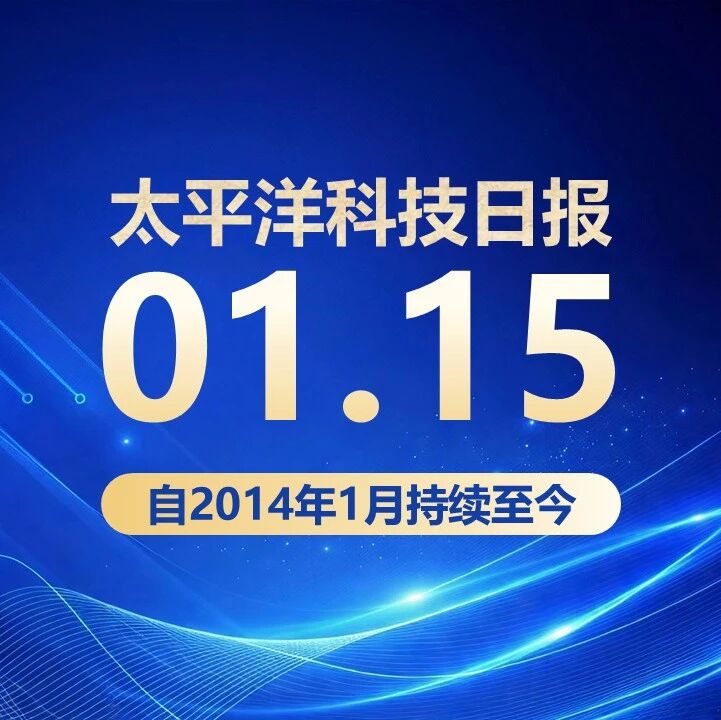
Core Viewpoint - Company Rongbai Technology has signed a significant six-year procurement agreement with CATL for lithium iron phosphate cathode materials, amounting to over 120 billion yuan, which is three times the company's revenue for the first three quarters of 2023 [1] Group 1: Agreement Details - The agreement stipulates a total supply of 3.05 million tons of products from Q1 2026 to 2031, marking it as the largest single procurement agreement in industry history [1] - The average price of the order is calculated at approximately 39,300 yuan per ton, which is over 30% lower than the current market price of around 55,000 yuan per ton [4][5] Group 2: Regulatory Concerns - The Shanghai Stock Exchange issued an inquiry regarding the compliance and performance capability of the agreement, questioning whether the company exaggerated its statements or used the large contract to manipulate stock prices [2] - The company’s current production capacity of 6,000 tons per year is significantly lower than the average annual supply requirement of approximately 508,000 tons, indicating a gap of over ten times [4] Group 3: Strategic Implications - The agreement is part of the company's strategic shift from ternary cathode materials to lithium iron phosphate, aiming to establish itself as a core supplier in the lithium battery supply chain [6] - The company plans to achieve a production capacity of 600,000 tons of lithium iron phosphate by 2026 and aims for a total of 3 million tons across various regions by 2030 [6] Group 4: Historical Context - This is not the first collaboration between Rongbai Technology and CATL; previous agreements include a strategic cooperation for high-nickel ternary materials and sodium battery cathode materials [7] - The trend of long-term agreements in the lithium battery industry is becoming more common, with other companies also entering into significant contracts with CATL [8]
1200亿元超级大单遭问询背后 锂电正极材料龙头深度绑定宁王
2 1 Shi Ji Jing Ji Bao Dao· 2026-01-14 12:03
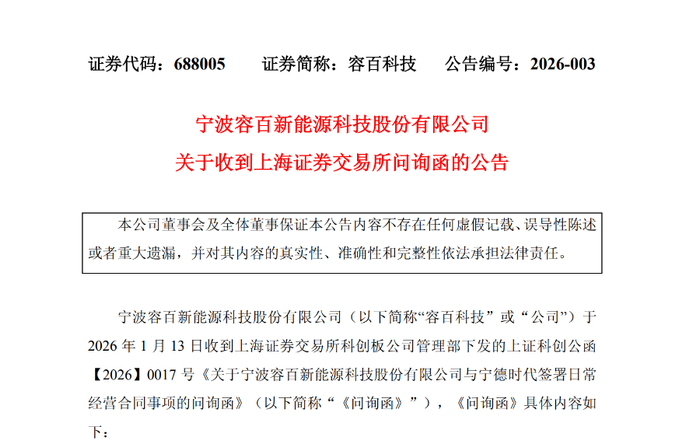
Core Viewpoint - Company Rongbai Technology signed a six-year procurement agreement with CATL for lithium iron phosphate cathode materials, totaling 3.05 million tons and exceeding 120 billion yuan, which is three times the company's revenue for the first three quarters of 2023 [2][5] Group 1: Agreement Details - The agreement is the largest single procurement contract in industry history, covering core materials for energy storage and power batteries [2] - The average price of the order is approximately 39,300 yuan per ton, which is over 30% lower than the current market price of around 55,000 yuan per ton [5][6] - The company plans to expand its production capacity to 600,000 tons by 2026 and aims for over 1 million tons by 2028 [7] Group 2: Regulatory Concerns - The Shanghai Stock Exchange issued an inquiry regarding the compliance and performance capability of the agreement, questioning potential exaggeration or stock price manipulation [3][5] - Concerns were raised about the company's current production capacity of only 60,000 tons per year, which is significantly lower than the average annual supply requirement of approximately 508,000 tons [5] Group 3: Strategic Implications - The agreement reflects Rongbai Technology's strategic shift from ternary cathode materials to lithium iron phosphate, aiming to establish itself as a core supplier in the lithium battery supply chain [6][9] - The company has previously collaborated with CATL, indicating a deepening partnership, with prior agreements for high-nickel ternary materials and sodium battery cathode materials [8][9] Group 4: Industry Context - The trend of long-term agreements in the lithium battery industry is increasing, with other companies also entering into significant contracts with CATL [9] - The competitive landscape is evolving, with major players reshaping supply chains by prioritizing technology, cost control, and delivery schedules over traditional procurement commitments [10]
拿下宁德时代1200亿元大单,5年需供305万吨!现有产线年产仅6万吨?监管发函:披露每年产能约定!
Mei Ri Jing Ji Xin Wen· 2026-01-14 11:28
Core Viewpoint - The long-term supply agreement between Rongbai Technology and CATL for lithium iron phosphate cathode materials signifies a strategic move amidst rising material costs and production adjustments by other leading manufacturers in the industry [2][3][5]. Group 1: Agreement Details - Rongbai Technology has signed a long-term supply agreement with CATL to supply approximately 3.05 million tons of lithium iron phosphate cathode materials from January 1, 2026, to December 31, 2030, with a total contract value exceeding 120 billion yuan [2][3]. - The average annual supply volume is expected to be 610,000 tons, which raises questions about Rongbai Technology's current production capacity of only 60,000 tons [2][9]. Group 2: Market Context - The market price for lithium iron phosphate has recently increased, with the average price for power-type materials rising by 2,500 yuan per ton to 56,800 yuan per ton, reflecting a 4.6% increase [5]. - The price per ton in the agreement with CATL is approximately 39,300 yuan, which is significantly lower than the current market price, indicating a strategic pricing decision by Rongbai Technology [4][5]. Group 3: Production Capacity and Technology - Rongbai Technology has developed a new production process that reduces the number of production steps from 15 to 6, leading to a 40% reduction in investment costs and a 30% decrease in energy consumption [6]. - The company is also expanding its production capabilities, including plans for a new lithium iron phosphate production line in Poland and investments in battery recycling projects in North America [9].
