MGI(688114)

Search documents
华大智造拟3.66亿收购两大标的 2025年减亏60%完善技术矩阵
Chang Jiang Shang Bao· 2026-02-04 00:06
Core Viewpoint - BGI Genomics plans to enhance its technology matrix through the acquisition of assets, aiming to solidify its position as a leading manufacturer in the life sciences sector by integrating cutting-edge technologies [1][4]. Group 1: Acquisition Details - BGI Genomics intends to acquire 100% equity of Sanjian Qifa and BGI Xifeng for a total cash consideration of 366 million yuan, which will incorporate two core technologies: spatial genomics and nanopore sequencing [2]. - The acquisition will enable BGI Genomics to establish a comprehensive technology ecosystem covering short-read, long-read, and spatial genomics, facilitating a one-stop service from library construction to sequencing and data analysis [2]. - The counterparties of the transaction have provided clear performance commitments, with Sanjian Qifa promising a cumulative net profit of no less than 50.1 million yuan from 2026 to 2028, and BGI Xifeng committing to a cumulative net profit of no less than 82.8 million yuan from 2028 to 2030 [2]. Group 2: Strategic Significance - The acquisition is expected to significantly reduce related-party transactions and resolve potential competition issues in the nanopore sequencing business, thereby enhancing the company's sustainable operational capabilities [2]. - Post-acquisition, BGI Genomics will achieve resource sharing and synergy in supply chain procurement, technology development, and customer service, which will serve as important growth engines for the company [2]. Group 3: Market Position and Performance - BGI Genomics has shown a notable improvement in its operational fundamentals, with a projected net loss of 221 million to 273 million yuan for 2025, representing a reduction in losses by approximately 60% compared to the previous year [3]. - The company secured 61% of the domestic high-throughput sequencing instrument market in 2025, with 232 units won in bids, demonstrating strong market penetration and customer recognition [3]. - BGI Genomics has been proactive in the AI pathology field since 2019, establishing the Spatial Pathology Alliance in 2025 and successfully registering its self-developed PMIF-20 pathology slide staining scanner, reinforcing its foundation for integrating AI with pathology analysis [3].

华大智造拟溢价收购实控人旗下未盈利资产
Xin Lang Cai Jing· 2026-02-03 17:46
Core Viewpoint - BGI Genomics (688114) plans to acquire 100% equity of two companies, Shenzhen BGI Sanjian Qifa Technology Co., Ltd. and Hangzhou BGI Xufeng Technology Co., Ltd., for a total of 366 million yuan, integrating cutting-edge technologies in spatial omics and nanopore sequencing into its business [1][3]. Group 1: Acquisition Details - The total acquisition price is 366 million yuan, with BGI Sanjian Qifa valued at 158 million yuan and BGI Xufeng at 208 million yuan [3]. - BGI Genomics will also inject 70 million yuan and 60 million yuan into BGI Sanjian Qifa and BGI Xufeng, respectively, to support their operations and business expansion [3][4]. - A loan of 70 million yuan will be provided to BGI Xufeng at an interest rate of 2.5% for three years to repay debts [3]. Group 2: Financial Performance - Both target companies are currently in a high-investment R&D phase and have not yet achieved profitability. BGI Sanjian Qifa reported revenues of 60.74 million yuan and 27.99 million yuan for 2024 and January-October 2025, respectively, with net losses of 11.71 million yuan and 44.98 million yuan [5]. - BGI Xufeng's revenues were 44.02 million yuan and 66.14 million yuan for the same periods, with net losses of 70.66 million yuan and 85.01 million yuan [5]. Group 3: Strategic Implications - The acquisition will enable BGI Genomics to create a comprehensive technology chain covering short-read, long-read, and spatial omics technologies, positioning it uniquely in the global market [5][6]. - The integration of these technologies is expected to enhance the company's competitive edge and profitability in the long term, with BGI Xufeng and BGI Sanjian Qifa projected to achieve profitability by 2026 and 2028, respectively [6][7]. Group 4: Valuation and Market Reaction - The valuation of BGI Sanjian Qifa shows a high appreciation rate of 2460.66%, while BGI Xufeng has a valuation increase of 296.55% [8]. - The acquisition pricing is considered reasonable compared to industry standards, with dynamic price-to-sales ratios around 3 times, significantly lower than comparable companies in their respective fields [9]. Group 5: Performance Commitments - Performance commitments have been established, with BGI Sanjian Qifa expected to achieve net profits of no less than 5 million yuan, 18.7 million yuan, and 26.4 million yuan from 2026 to 2028, totaling at least 50.1 million yuan [9]. - BGI Xufeng is expected to achieve net profits of no less than 5.2 million yuan, 24.6 million yuan, and 53 million yuan from 2028 to 2030, totaling at least 82.8 million yuan [9].


打通技术链 华大智造拟收购关联企业
Bei Jing Shang Bao· 2026-02-03 15:49
Core Viewpoint - BGI Genomics is making a significant move by acquiring 100% equity of two subsidiaries, Shenzhen Huada Sanjian Qifa Technology Co., Ltd. and Hangzhou Huada Xufeng Technology Co., Ltd., for a total of 366 million yuan, integrating cutting-edge technologies in spatial omics and nanopore sequencing into its operations [1][3]. Group 1: Acquisition Details - The total acquisition price is 366 million yuan, with Shenzhen Huada Sanjian Qifa valued at 158 million yuan and Hangzhou Huada Xufeng at 208 million yuan [3]. - BGI Genomics plans to inject 70 million yuan and 60 million yuan into the respective companies for operational expansion and working capital [3]. - A loan of 70 million yuan will be provided to Hangzhou Huada Xufeng at a 2.5% interest rate for three years to repay existing debts [3]. Group 2: Financial Performance - Both acquired companies are currently in a high-investment R&D phase and have not yet achieved profitability, with significant losses reported [5][7]. - Financial data shows that Shenzhen Huada Sanjian Qifa had revenues of 60.74 million yuan and 27.99 million yuan for 2024 and the first ten months of 2025, respectively, with net losses of 11.71 million yuan and 44.98 million yuan [7]. - Hangzhou Huada Xufeng reported revenues of 44.02 million yuan and 66.14 million yuan for the same periods, with net losses of 70.66 million yuan and 85.01 million yuan [7]. Group 3: Strategic Implications - The acquisition aims to create a comprehensive technology chain that includes short-read, long-read, and spatial omics technologies, positioning BGI Genomics as a unique player in the global market [6][8]. - The integration of these technologies is expected to enhance customer service capabilities and meet diverse research needs [8]. - The companies are projected to achieve profitability by 2026 and 2028, respectively, with specific profit commitments outlined [10]. Group 4: Valuation and Market Perception - The valuation of the acquired companies shows a high appreciation rate, with Shenzhen Huada Sanjian Qifa at 2460.66% and Hangzhou Huada Xufeng at 296.55% [9]. - The rationale behind the high valuation is attributed to the companies' technological advantages and potential strategic value in the market [9]. - The acquisition is viewed as a cost-effective move for BGI Genomics, aligning with industry standards and providing a competitive edge [9].

华大智造解读收购后协同效应,激活市场增长极全方位推动收入增长
Xin Lang Cai Jing· 2026-02-03 11:57
Core Viewpoint - The company Huada Zhi Zao (688114) has announced a plan to acquire "San Jian Qi Fa" and "Hua Da Xu Feng" for 366 million yuan, aiming to integrate spatial omics and nanopore sequencing technologies, positioning itself as the only life science company globally with a complete product matrix of "long-read sequencing + spatial omics" [1][7]. Group 1: Nanopore Sequencing Business - The Cyclone SEQ series has shown significant market expansion since its launch in September 2024, with a diverse customer base including universities, research institutes, and hospitals, and has successfully entered overseas markets in Asia-Pacific and Latin America [1][7]. - The nanopore sequencing business is expected to grow due to market space and synergy effects, with a projected global compound annual growth rate of approximately 22% for long-read sequencing [2][8]. - The company plans to enhance its market competitiveness through channel integration and cost optimization, leveraging its established global sales network and reducing unit costs via large-scale production [2][8]. Group 2: Spatial Omics Business - The spatial omics technology has accumulated over 200 clients, with about half from industrial sectors and the rest from academic and research institutions, indicating a high customer repurchase rate that reflects its practical value [3][9]. - The company has implemented a differentiated global strategy for spatial omics, focusing on local service capabilities in China, targeting top academic institutions in the Americas, and establishing a balanced cooperation network in Europe [4][10]. - The core competitive advantage of spatial omics lies in its ability to achieve high resolution and large field of view, addressing industry challenges and providing critical support for detailed research in tumor microenvironments and cellular interactions [5][11]. Group 3: Future Growth Directions - The company aims to expand its application boundaries in the research field, exploring potential uses in neuroscience, brain-machine interfaces, embryonic development, agricultural breeding, and forensic testing [6][12]. - In the clinical field, the company is collaborating with global pharmaceutical companies and hospital experts to advance digital spatial pathology analysis, fostering rapid implementation and industrial application of this leading technology [6][12]. - The company plans to enhance customer engagement by offering bundled solutions that integrate nanopore technology with single-cell sequencing and spatial omics, optimizing pricing strategies to attract a broader user base [3][9].
整合时空组学与纳米孔测序两大平台,华大智造拟溢价收购实控人旗下未盈利资产
Bei Jing Shang Bao· 2026-02-03 11:03
Core Viewpoint - BGI Genomics (688114) plans to acquire 100% equity of two companies, Shenzhen BGI Sanjian Qifa Technology Co., Ltd. and Hangzhou BGI Xufeng Technology Co., Ltd., for a total of 366 million yuan, integrating cutting-edge technologies in spatial omics and nanopore sequencing into its business [2][4]. Group 1: Acquisition Details - The total transaction price for the acquisition is 366 million yuan, with BGI Sanjian Qifa valued at 158 million yuan and BGI Xufeng at 208 million yuan [4]. - BGI Genomics will also inject 70 million yuan and 60 million yuan into BGI Sanjian Qifa and BGI Xufeng, respectively, to support their operations and business expansion [4]. - A loan of 70 million yuan will be provided to BGI Xufeng at an interest rate of 2.5% for three years to repay debts [4]. Group 2: Financial Performance and Projections - Both BGI Sanjian Qifa and BGI Xufeng are currently in the R&D phase and have not yet achieved profitability, with projected revenues of 607.43 million yuan and 279.96 million yuan for BGI Sanjian Qifa in 2024 and 2025, respectively [6]. - BGI Xufeng is expected to generate revenues of 440.23 million yuan and 661.38 million yuan in the same periods, with significant net losses reported [6]. - Profitability is anticipated for BGI Sanjian Qifa and BGI Xufeng by 2026 and 2028, respectively, with performance commitments set for net profits during these years [7][11]. Group 3: Strategic Implications - The acquisition will enable BGI Genomics to create a comprehensive technology chain covering short-read, long-read, and spatial omics technologies, positioning it uniquely in the global market [6][8]. - The integration of these technologies is expected to enhance BGI Genomics' competitive edge and profitability in the long term, potentially serving as a new growth engine [7][8]. - The strategic alignment of BGI Sanjian Qifa's spatial omics with BGI Genomics' existing platforms is anticipated to attract new customers and meet complex research needs [8]. Group 4: Valuation and Market Considerations - The valuation of BGI Sanjian Qifa shows a high appreciation rate of 2460.66%, while BGI Xufeng has a valuation increase of 296.55% [9][10]. - The assessment of these companies considers not only tangible assets but also intangible resources such as brand, technology, and customer relationships [10]. - The transaction is viewed as having a strong cost advantage compared to industry peers, with dynamic price-to-sales ratios around 3 times lower than comparable companies in their respective fields [10].
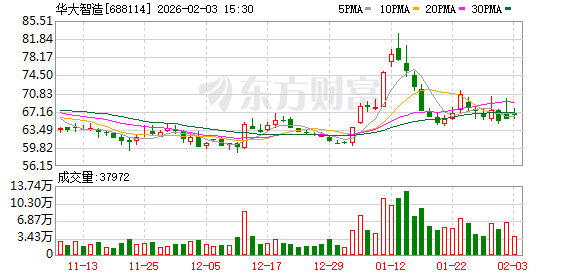
华大智造电话会详解双业务收购:现阶段为基于战略价值与性价比的双重最优
Jin Rong Jie· 2026-02-03 09:51
2月2日,深圳华大智造科技股份有限公司(以下简称"华大智造",股票代码:688114)召开投资者电话 会议,就公司近期推进的对深圳华大三箭齐发科技有限责任公司(以下简称"三箭齐发")和杭州华大序 风科技有限公司(以下简称"华大序风")的收购计划进行深入解读。本次收购总金额达3.66亿元,标志 着华大智造将推进时空组学与纳米孔测序两大前沿技术平台的整合,成为全球唯一覆盖"全读长测序 +空间组学"全链条产品矩阵的生命科技企业。 根据华大智造投资者关系活动记录表披露的内容,公司管理层在会上主要对此次交易的必要性、对价合 理性以及双方整合后对上市公司的长期利好进行了说明,以下为纪要中披露的两个核心问题: 问1:公司选择在时空组学、纳米孔测序业务发展阶段完成本次收购,核心考量是什么? 责任编辑:安东 答:本次收购完成后,公司将从技术产品、市场渠道、运营管理三大维度共同推进标的公司业务与现有 主业的深度协同整合,实现资源共享及优势互补。 在技术与产品层面,公司目前已实现装机量的高度突破,根据招投标公开信息整理,公司2025年中国区 公开招标市场占率已达70%左右。参考业内可比公司试剂收入占比的发展路径,智造也将迈入发展新 ...
华大智造回应收购战略考量:整合打造“全读长测序+空间组学”全球唯一技术链
Hua Xia Shi Bao· 2026-02-03 09:05
Core Viewpoint - The acquisition of Shenzhen Huada Zhi Zao Technology Co., Ltd. (Huada Zhi Zao) of Shenzhen Huada Sanjian Qifa Technology Co., Ltd. and Hangzhou Huada Xufeng Technology Co., Ltd. for a total amount of 366 million yuan marks a strategic move to integrate cutting-edge technologies in spatial omics and nanopore sequencing, positioning the company as a unique player in the life sciences sector with a comprehensive product matrix covering "full-length sequencing + spatial omics" [1][2][3] Financial Considerations - The acquisition is deemed strategically valuable and cost-effective, with the target companies still in the incubation stage and not yet profitable, allowing for a valuation that reflects their actual business value [1][2] - The dynamic price-to-sales (PS) ratios of the target companies are around 3 times, significantly lower than comparable companies in their respective fields, indicating a favorable acquisition price [1] Long-term Strategic Layout - The integration of spatial omics with the existing DNBSEQ platform and nanopore sequencing will create a complete solution that enhances technical synergy and fulfills complex research needs, thereby increasing customer loyalty [2][3] - The acquisition will internalize core technologies, R&D teams, and intellectual property, establishing a unique technological barrier that supports long-term growth [3] Integration and Synergy Plans - Post-acquisition, the company plans to enhance collaboration across technology products, market channels, and operational management to achieve resource sharing and complementary advantages [4] - The company has achieved a 70% market share in the public tender market in China by 2025, which will support the growth of reagent consumption driven by installed instruments [5] Market and Channel Development - The target companies' customer bases align well with the existing product offerings, facilitating rapid business expansion and enhancing the company's market presence in various fields, including clinical applications and agricultural research [6] - The company has established a global marketing network covering over 110 countries and regions, which will enable quick integration and support for the target companies [6] Operational Management - The integration will leverage the high connectivity of the entire research, production, and sales chain, maximizing synergy and reinforcing the company's competitive edge in life science instruments and solutions [7] - The established supply chain and production capabilities will facilitate the production of the target companies' products, ensuring quality and cost-effectiveness [7]
创新链系列:中国创新药研发景气度渐趋改善,早研产业链或显著受益
Changjiang Securities· 2026-02-02 15:09
Investment Rating - The investment rating for the healthcare industry is "Positive" and maintained [14] Core Insights - The funding levels for Chinese innovative pharmaceutical companies are increasing, leading to a gradual improvement in the research and development (R&D) investment sentiment within the industry. This is expected to usher in a new cycle of prosperity for the innovative drug industry chain [5][12] - The trend of external business development (BD) is likely to benefit the domestic early-stage research industry significantly, as new business models allow early-stage projects to become tradable and monetizable assets, enhancing R&D investment returns [13] Summary by Sections Innovative Chain Development Review - Before 2020, multiple factors converged to initiate a significant rise in China's innovative drug sector, leading to the rapid development of the innovative chain, including CXO and life sciences services [10][30] - From 2020 to the first half of 2022, the global public health crisis accelerated capital inflow into the biopharmaceutical sector, resulting in high demand and a leap in the innovative chain segment, which also triggered a wave of IPOs and substantial supply-side expansion [10][39] - The second half of 2022 to 2024 saw a transition from a heated to a cooling phase, with a significant shift in supply-demand dynamics leading to industry internal competition and pressure on revenues and profit margins [10][54][57] Improvement in R&D Investment Sentiment - Starting from 2025, the R&D investment sentiment in China's innovative drug sector is expected to improve, with companies experiencing increased funding levels. The total amount raised through IPOs and additional offerings in 2025 is projected to reach 201.5 billion yuan, a 145% year-on-year increase [11][62] - The potential milestone payments from external BD are expected to reach 880.5 billion yuan in 2025, marking a 185.9% year-on-year increase, indicating a robust funding environment for innovative drug companies [11] Benefits to Early-stage Research Industry - The new external BD business model enhances the R&D investment return rates for Chinese innovative drug companies, thereby increasing their willingness to invest in R&D [11][13] - The early-stage research industry, including drug discovery CROs and clinical trial services, is expected to benefit significantly from the external BD trend, with leading companies in these segments poised for rapid growth [13]



3.66亿,华大智造公布收购华大序风和华大时空
Xin Lang Cai Jing· 2026-02-02 10:51
Core Viewpoint - BGI Genomics plans to acquire two companies for 366 million yuan, integrating spatiotemporal omics and nanopore sequencing assets to establish a comprehensive technology chain of "short-read long + long-read long + spatial omics," becoming the only life science company globally to cover these three major technologies, while also strengthening its "AI + life sciences + brain-computer interface" layout [1][7][12] Transaction Details - BGI Genomics intends to acquire 100% equity of Shenzhen BGI Sanjianqifa Technology Co., Ltd. and Hangzhou BGI Xufeng Technology Co., Ltd. through cash transactions, with a total transaction price of 365.7 million yuan, comprising 158 million yuan for Sanjianqifa and 207.7 million yuan for Xufeng [3][10][12] - Following the acquisition of Sanjianqifa, BGI Genomics plans to increase its capital by 70 million yuan, with 22.15 million yuan allocated to registered capital and 47.85 million yuan to capital reserves [3][11] - After the acquisition of Xufeng, BGI Genomics plans to increase its capital by 60 million yuan, with 14.44 million yuan allocated to registered capital and 45.56 million yuan to capital reserves [4][11] Strategic Implications - The acquisition allows BGI Genomics to consolidate second-generation sequencing, long-read nanopore sequencing, and spatiotemporal omics technologies, completing a full technology chain and positioning itself as one of the few life science tool companies globally to cover this complete matrix [5][12] - This integration enhances the company's ability to provide independent and comprehensive solutions in upstream tools, broadening research and clinical application scenarios, and reshaping industry competition logic, transitioning from a single technology leader to a platform-based ecosystem leader [5][12]

3.66亿,华大智造公布收购华大序风和华大时空
仪器信息网· 2026-02-02 09:02
Core Viewpoint - BGI Genomics plans to acquire two companies for 366 million yuan, integrating spatiotemporal omics and nanopore sequencing assets to establish a comprehensive technology chain of "short-read long + long-read long + spatial omics," becoming the only life science enterprise globally to cover these three major technologies, while also strengthening its layout in "AI + life sciences + brain-computer interfaces" [1][6]. Transaction Details - BGI Genomics intends to acquire 100% equity of Shenzhen BGI Sanjian Qifa Technology Co., Ltd. and Hangzhou BGI Xufeng Technology Co., Ltd. through cash, with a total transaction price of 365.7 million yuan, where the equity of Sanjian Qifa is priced at 158 million yuan and that of BGI Xufeng at 207.7 million yuan [2][4]. Capital Increase Plans - After the acquisition of Sanjian Qifa, BGI Genomics plans to increase its capital by 70 million yuan, with 22.15 million yuan allocated to registered capital and 47.84 million yuan to capital reserves, ensuring that the funds are used for daily operations, business expansion, and payment for intellectual property rights [4][5]. - Following the acquisition of BGI Xufeng, BGI Genomics plans to increase its capital by 60 million yuan, with 14.44 million yuan allocated to registered capital and 45.56 million yuan to capital reserves, also ensuring that the funds are used for similar purposes [5]. Strategic Implications - The acquisition allows BGI Genomics to consolidate second-generation sequencing, nanopore long-read sequencing, and spatiotemporal omics technologies, completing a full technology chain from short-read to long-read and from sequence analysis to spatial dimensions, positioning the company among the few globally that cover this complete matrix in life science tools [6]. - This integration enhances the company's ability to provide autonomous and controllable upstream tools and one-stop solutions, broadening research and clinical application scenarios, and reshaping industry competition logic, facilitating a transition from single-point technology leadership to platform-based ecological dominance [6].