
细胞培养基

Search documents
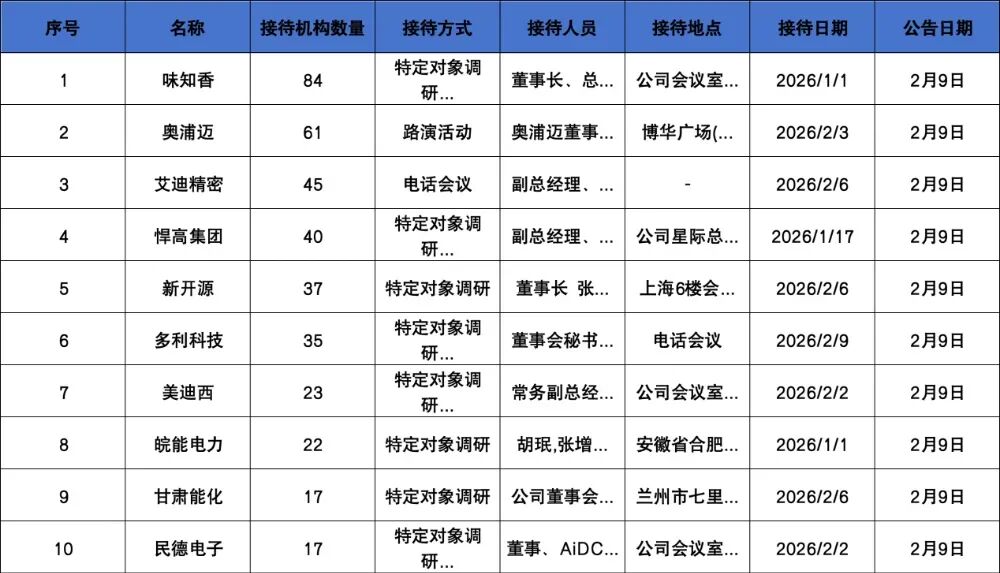
富国、泓德、华夏基金等84家明星机构调研味知香!
Xin Lang Cai Jing· 2026-02-10 12:40
Group 1 - The company adopts an online and offline dual-channel model for its current stir-fry stores, progressing from lower-tier markets to high-tier cities, and utilizes automatic cooking machines to ensure standardized and efficient output. The product range currently includes core categories such as stir-frying, stewing, and frying, with plans to continuously enrich the product library to match different regional consumer preferences [1][37] - The company is deeply engaged in the semi-finished dish sector, relying on standardized processes and core seasonings to provide convenient, safe, and diverse flavor products. It aims to upgrade from "single product" to "scenario-based solutions," targeting different occasions such as family daily meals and gatherings to drive product innovation [2][37] - In terms of store expansion, the company will continue to focus on franchise expansion in 2026, promoting a "city partner" plan to encourage multi-store development and deepen strategic penetration into third- and fourth-tier cities and town markets, thereby expanding market coverage in layers [2][37] Group 2 - The company reported a total revenue of 343 million yuan for the first half of 2025, a year-on-year increase of 4.70%, while the net profit attributable to shareholders was 32 million yuan, a decrease of 24.46%. In Q2 2025, total revenue was 170 million yuan, up 5.17%, with a net profit of 12 million yuan, down 46.79% [3][38] - The company’s revenue from meat and poultry products, aquatic products, and other categories for H1 2025 was 228 million, 95 million, and 15 million yuan, respectively, with year-on-year growth of 7.35%, 6.76%, and a decline of 31.50% [4][39] - The company’s gross profit margin for H1 2025 was 20.83%, a decrease of 4.02 percentage points year-on-year, primarily due to rising raw material prices. The net profit margin attributable to shareholders was 9.33%, down 3.60 percentage points year-on-year [6][41] Group 3 - The company expects net profits attributable to shareholders for 2025, 2026, and 2027 to be 79 million, 97 million, and 106 million yuan, respectively, with year-on-year growth rates of -10.03%, 23.02%, and 9.73%, corresponding to PE ratios of 46, 38, and 34 times [7][42] - The company’s retail, supermarket, wholesale, direct sales, and e-commerce revenues for H1 2025 were 210 million, 38 million, 88 million, 2 million, and 0.1 million yuan, respectively, with year-on-year changes of -4.56%, +155.55%, +4.82%, -51.83%, and -41.74% [4][39]


6亿融资耗尽、并购砸超11亿,多宁生物“烧钱”扩张难换盈利
3 6 Ke· 2026-02-04 12:16
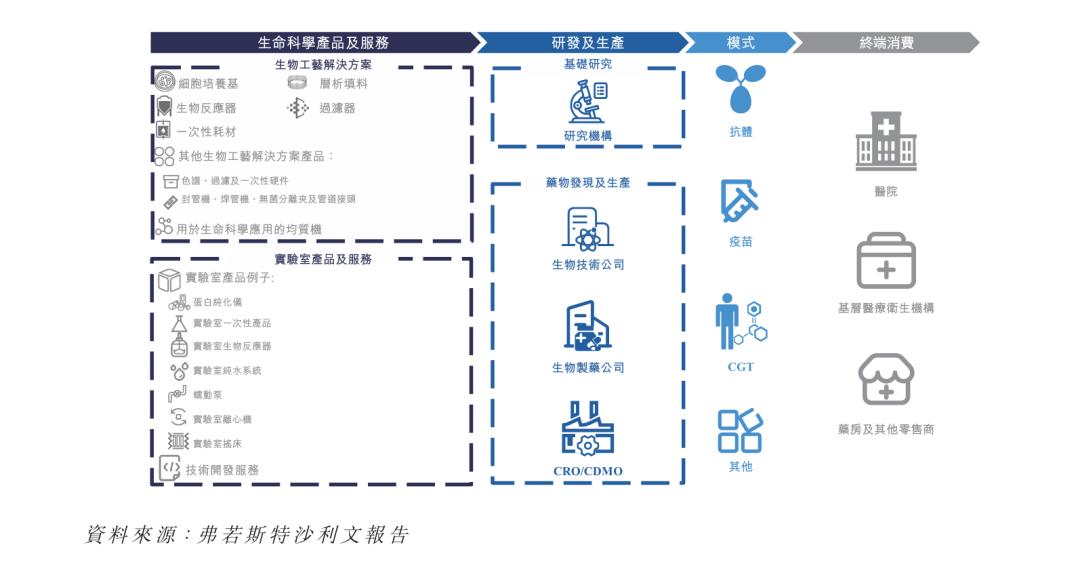
Core Viewpoint - Doning Bio, a domestic provider of serum-free culture media, is attempting its third IPO submission to the Hong Kong Stock Exchange, aiming for profitability by the third quarter of 2025, despite facing significant challenges including related party transactions, goodwill impairment risks, and short-term debt pressures [1][2][26]. Company Overview - Founded in 2005, Doning Bio started as a small technology company focused on cell culture media, which is essential for the growth of animal cells used in research and biopharmaceutical production [3]. - The company has evolved into a one-stop solution provider for biopharmaceutical processes, offering products and services that cover the entire development and commercialization process [4][5]. Business Performance - Doning Bio's revenue increased from 597 million RMB in 2021 to 840 million RMB in 2024, but the growth rate significantly slowed from 208% to 3.54% [7]. - The company reported a net profit of 234 million RMB in 2021, which plummeted to 38 million RMB in 2022, and further turned into a net loss of 310 million RMB in 2023, with a slight recovery to a loss of 24 million RMB in 2024 [7][8]. Financial Challenges - The company faces a significant financial burden with short-term borrowings of 389 million RMB against cash reserves of only 302 million RMB, indicating a tight liquidity situation [21]. - Doning Bio's goodwill stands at 843 million RMB, raising concerns about potential impairment if the performance of acquired entities does not meet expectations [1][19]. Investment and Acquisition Strategy - Since 2016, under the leadership of CEO Wang Meng, Doning Bio has pursued an aggressive acquisition strategy, spending over 1.142 billion RMB in cash for acquisitions to build a comprehensive biopharmaceutical service chain [18][19]. - The company has raised a total of 600 million RMB in financing prior to its IPO, but these funds have been fully utilized, primarily for R&D and acquisitions [14][15]. Related Party Transactions - WuXi Biologics, as the second-largest shareholder and primary customer, has raised concerns regarding the fairness of related party transactions, which accounted for significant portions of Doning Bio's revenue [26]. - In the years 2023 to 2025, WuXi Biologics contributed 1.2 billion RMB, 930 million RMB, and 800 million RMB to Doning Bio's revenue, representing 14.9%, 10.9%, and 12.1% of total revenue respectively [26]. IPO Prospects - The upcoming IPO is seen as a critical opportunity for Doning Bio to raise funds to alleviate financial pressures and support strategic expansion, but the company must demonstrate sustainable profitability and operational independence to succeed [23][24][26].
拥抱“十五五”新机遇:思拓凡四大举措,助力中国创新药走向全球
Jing Ji Guan Cha Wang· 2026-02-02 09:54
Core Insights - The forum focused on how to build a sustainable and resilient business ecosystem through open cooperation, technological innovation, and green transformation in the context of profound global economic changes [1] Group 1: Industry Trends - The Chinese biopharmaceutical industry has entered a period of innovation explosion, becoming a key source of global innovation [2][3] - In 2025, China approved 76 innovative drugs, significantly surpassing the 48 approved in 2024, marking a historical high [2] - China ranks second globally in the number of new drugs under research, with clinical trials accounting for 30% of the global total [2] Group 2: Company Strategies - Cytiva aims to transition from being a product and service provider to a co-builder of capabilities through deep localization in China [3][4] - The company emphasizes the importance of innovation capability, focusing on end-to-end support for research and development [5][6] - Cytiva plans to achieve over 50% of its revenue in China from local manufacturing within the next 3-5 years, enhancing supply chain stability [6] Group 3: Ecosystem Development - Cytiva promotes industry ecosystem co-construction, launching the Global Biopharmaceutical Index to analyze challenges and opportunities in the sector [7] - The company has trained thousands of professionals in biopharmaceutical processes over the past 20 years, contributing to a robust talent pipeline [7] Group 4: Global Collaboration - The "15th Five-Year Plan" signals a commitment to high-level opening up, accelerating the pace of Chinese innovation reaching global markets [8][9] - Cytiva's "Sail Plan" aims to enhance compliance and global connectivity for Chinese enterprises, with plans to upgrade to "Sail Plan 2.0" [9]
细胞培养基国产替代提速 我国生物医药自主创新再添动力
Xin Hua Wang· 2026-01-30 03:01
Core Viewpoint - The self-controllable production of cell culture media is crucial for the high-quality development of the biopharmaceutical industry in China, with Auscan Bio achieving significant breakthroughs in technology and supply chain management, thus reducing costs and enhancing innovation in the sector [1][2]. Industry Overview - The biopharmaceutical industry is a strategic pillar for the nation, with cell culture media being essential for cell growth and directly impacting production efficiency and product quality [1]. - Historically, this key area has been dominated by European and American companies, with domestic prices being 5 to 20 times higher than international markets, increasing cost burdens and supply chain risks for local enterprises [1]. Company Development - Auscan Bio, founded by Luo Shun, has focused on overcoming the "bottleneck" of cell culture media by innovating and industrializing production, aiming to strengthen the foundation of China's biopharmaceutical industry [2]. - Since 2014, Auscan has gradually replaced all raw materials with domestic alternatives, achieving full supply chain independence by 2017, which has significantly reduced costs and stimulated the development of related domestic industries [3]. Market Position - Auscan's subsidiary, Jianshun Bio, has established the world's largest single-line dry powder culture medium production line, surpassing overseas competitors, and has maintained a market-leading position in dry powder culture medium sales since 2017, with sales volumes exceeding 200 tons by 2025 [3]. - Currently, Auscan supplies 60% of the cell culture media in China's commercial biopharmaceutical sector, enabling 80% to 90% of the industry to achieve self-supply, thereby greatly reducing production costs [3]. Strategic Expansion - Auscan is extending its reach into the downstream of the industry chain by building a comprehensive CRDMO platform, which integrates early research and commercial production, ensuring that key raw materials and large-scale production capabilities are controlled internally [4]. - The company has established the largest ADC commercial production base in the Shanghai Free Trade Zone, which has already generated millions in revenue since its launch in August 2023 [4]. Future Outlook - The structural changes in market demand are expected to drive further domestic substitution, with the number of biopharmaceutical products in China projected to increase from 50-100 to over 500 by 2030, potentially leading to a tenfold growth in the culture medium market [5]. - The biopharmaceutical industry in China is transitioning from following innovation to leading it, with ongoing efforts in domestic substitution enhancing competitiveness and securing supply chain safety [5][6]. - Auscan plans to focus on cutting-edge areas such as ADC, AOC, and APC, continuing to enhance production scale and efficiency while promoting high-quality biopharmaceuticals for patients [6].
多宁生物三闯港交所终见盈利
Xin Lang Cai Jing· 2026-01-20 16:47
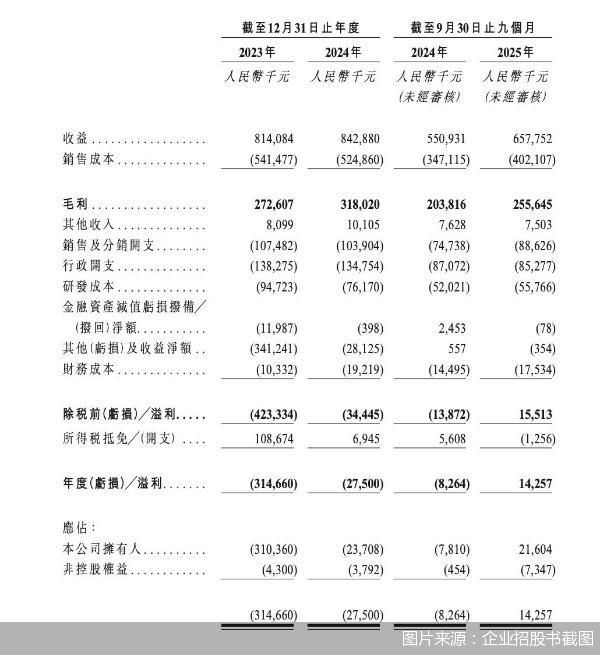
Core Viewpoint - The company, Duoning Biotechnology, is attempting to enter the capital market with a narrative of "profit turning point" after years of losses, reporting a net profit of 14.257 million yuan in the first three quarters of 2025, marking its first profitable period [1][3] Financial Performance - In 2023 and 2024, Duoning Biotechnology reported revenues of 814 million yuan and 843 million yuan, with net losses of 315 million yuan and 27.5 million yuan respectively; however, in the first three quarters of 2025, the company achieved a revenue of 658 million yuan and a net profit of 14.257 million yuan [3][6] - The company's main business segments include biological process solutions and laboratory products and services, with the former contributing over 70% of revenue in recent years [4] Business Segments - The biological process solutions segment generated revenues of 626 million yuan, 638 million yuan, and 507 million yuan from 2023 to September 2025, accounting for 77%, 75.7%, and 77.1% of total revenue respectively; the revenue from reagents and consumables significantly increased, making up 55.4% of total revenue in 2025, up from 44.1% in 2023 [4] - The overseas market has been a key growth driver, with revenues from international operations reaching 69.52 million yuan, 95.304 million yuan, and 112 million yuan from 2023 to September 2025, with the overseas revenue contribution rising from 9.8% to 17.1% [5] Strategic Expansion - Duoning Biotechnology plans to use part of the IPO proceeds to expand its global market presence, including establishing local production lines and hiring overseas personnel [5][9] - The company has a history of aggressive acquisitions, having acquired nine companies between 2019 and 2022, which has led to a significant goodwill of 843 million yuan as of September 2025 [8][9] Market Position and Risks - The transition to profitability is seen as a significant advantage for the company's IPO, aligning with market valuation logic and reducing investment risks; however, the sustainability of this profitability is questioned due to low net margins and high goodwill [6][9] - The company is positioned in a promising sector with substantial domestic replacement potential, but it must address risks related to goodwill impairment and ensure compliance with regulatory disclosures [9]

三闯港交所终见盈利,多宁生物尚未跨过8亿元商誉“暗雷”
Bei Jing Shang Bao· 2026-01-20 12:05
Core Viewpoint - Doning Biotechnology is attempting to enter the capital market with a narrative of "profit turnaround," having reported a net profit of 14.257 million RMB in the first three quarters of 2025 after consecutive losses from 2019 to 2022, although it faces challenges due to high goodwill from aggressive acquisitions totaling 843 million RMB [1][3][7]. Financial Performance - In 2023 and 2024, Doning Biotechnology reported revenues of 814.084 million RMB and 842.88 million RMB, with net losses of 314.66 million RMB and 27.5 million RMB respectively [2][3]. - For the first three quarters of 2025, the company achieved a revenue of 658 million RMB and a net profit of 14.257 million RMB, marking its first profitable period [3][5]. Business Segments - The company's operations are primarily divided into two segments: biological process solutions and laboratory products and services, with the former contributing over 70% of revenue in recent years [3][4]. - Revenue from biological process solutions was 626 million RMB in 2023, 638 million RMB in 2024, and 507 million RMB in 2025, maintaining a revenue share of approximately 75-77% [4]. Growth Drivers - A significant increase in overseas market contributions has been a key driver for the company's turnaround, with revenues from international markets growing from 69.52 million RMB in 2023 to 112 million RMB in 2025, increasing its share from 9.8% to 17.1% [4][5]. - The company plans to use part of the IPO proceeds to expand its global market presence, including establishing local production lines and hiring overseas personnel [5][8]. Acquisition Strategy - Doning Biotechnology has engaged in aggressive acquisitions, integrating nine companies from 2019 to 2022, which has led to a substantial goodwill of 843 million RMB on its balance sheet [7][8]. - The company is currently focusing on digesting and integrating its new acquisitions while also expressing intentions for selective strategic acquisitions to enhance its product and service offerings [8]. Market Position and Risks - The company operates in a favorable market for biological process solutions, with significant potential for domestic substitution and support from the WuXi Biologics supply chain [8]. - Despite the positive profit turnaround, concerns remain regarding the sustainability of profits, potential goodwill impairment, and compliance with related party transactions [5][8].
多宁生物三递港交所IPO:2025年前三季度扭亏但净利率仅2.2%
Sou Hu Cai Jing· 2026-01-20 10:46
Core Viewpoint - Dongning Biotechnology has submitted its IPO application to the Hong Kong Stock Exchange for the third time, following two previous failed attempts in September 2022 and March 2023, with Morgan Stanley and Huatai International as joint sponsors [1]. Group 1: Company Overview - Dongning Biotechnology, established in 2005, specializes in providing comprehensive solutions for the development and commercialization of biopharmaceutical products, being the first domestic provider of serum-free culture media [1]. - The company ranks sixth among all cell culture media suppliers in China, third among domestic suppliers, and fourth among single-use product suppliers, with a market share of 14.3% [1][3]. Group 2: Financial Performance - In the reporting period, the company achieved revenues of RMB 814.08 million, RMB 842.88 million, and RMB 658.93 million, while incurring annual losses of RMB -314.66 million, RMB -27.5 million, and RMB -8.26 million [2][4]. - Despite revenue growth, the company recorded losses in 2023 and 2024, with a net profit margin of only 2.2% in the first three quarters of 2025 [2]. Group 3: Business Segments - The core business consists of two main segments: bioprocess solutions and laboratory products and services, with bioprocess solutions being the primary revenue driver [1][4]. - The revenue contribution from bioprocess solutions was 77.0%, 75.7%, and 77.1% for 2023, 2024, and the first three quarters of 2025, respectively, indicating its dominance in the company's revenue structure [4]. Group 4: IPO Fund Utilization - The funds raised from the IPO will be primarily used for expanding global market reach, strategic acquisitions and equity investments, enhancing R&D capabilities, upgrading existing production capacity, and supplementing working capital [5]. Group 5: Challenges and Risks - The company faces operational challenges, having recorded losses in 2023 and 2024 due to high expenses and changes in the fair value of financial assets [5]. - WuXi Biologics, a major customer, supplier, and shareholder, has created multiple related-party relationships, and the company's goodwill value reached RMB 843 million by the end of the third quarter of 2025, which may impact future operations and valuations [5].
多宁生物递表港交所 摩根士丹利与华泰国际担任联席保荐人
Zheng Quan Shi Bao Wang· 2026-01-19 01:20
Core Viewpoint - Doning Bio has submitted its prospectus to the Hong Kong Stock Exchange, with Morgan Stanley and Huatai International serving as joint sponsors [1] Group 1: Company Overview - Doning Bio operates through a dual-driven model of "bioprocess solutions" and "laboratory products and services," providing high-quality media, bioreactors, single-use products, and filters to global pharmaceutical companies, CROs/CDMOs, and research institutions [1] - The company ranks sixth among all suppliers in China's bioprocess solutions market based on 2024 revenue, and second among local suppliers [1] - Doning Bio leads in several key product categories, including cell culture media, bioreactors, single-use products, and filters among domestic enterprises [1] Group 2: Business Model and Clientele - The company supports pharmaceutical companies, CROs/CDMOs, and research institutions by offering a comprehensive range of reagents, consumables, and equipment covering all major steps of bioprocessing [1] - Doning Bio has served over 3,700 clients, with approximately 80% of major clients opting for long-term cooperation [1] Group 3: Fundraising and Future Plans - The funds raised from the IPO will primarily be used for continuous product development and enhancing the competitive advantage of comprehensive solutions [1] - The company plans to establish R&D centers, production bases, and sales networks overseas to further expand its global market share [1] - There will be an enhancement of production facilities and ongoing investment in R&D to maintain technological leadership [1]
Shanghai Duoning Biotechnology Co., Ltd.(H0327) - Application Proof (1st submission)
2026-01-17 16:00
The Stock Exchange of Hong Kong Limited and the Securities and Futures Commission take no responsibility for the contents of this Application Proof, make no representation as to its accuracy or completeness and expressly disclaim any liability whatsoever for any loss howsoever arising from or in reliance upon the whole or any part of the contents of this Application Proof. Application Proof of Shanghai Duoning Biotechnology Co., Ltd. 上海多寧生物科技股份有限公司 (the "Company") (A joint stock company incorporated in the ...
“反向挂钩”等机制落地 将重塑并购重组市场生态
Zheng Quan Ri Bao· 2025-12-10 16:08
Core Viewpoint - The approval of Aopu Mai's asset acquisition through a share issuance marks a significant innovation in the A-share market, demonstrating the operational feasibility of new mechanisms introduced in the "Six Merger Rules" [1][2]. Group 1: Aopu Mai's Project Significance - Aopu Mai's restructuring project serves as a key innovation mechanism transitioning from policy to practice, providing a strong demonstration effect for the market [2]. - The acquisition of Chengli Biopharmaceutical Technology will enhance synergy and complementarity between the two companies, as Aopu Mai specializes in cell culture media and CDMO services, while Chengli focuses on CRO services [2]. Group 2: Innovative Payment Mechanism - The share issuance payment mechanism alters the traditional risk distribution model in mergers and acquisitions, transferring part of the future uncertainty risk from the acquiring company to the seller [2][3]. - This mechanism allows for performance-based installment payments, enabling the acquiring company to adjust payments based on actual operational performance, thus binding the interests of both parties more closely [2][3]. Group 3: Private Equity Fund Incentives - The "reverse linkage" policy between private equity fund investment duration and the lock-up period for shares acquired through restructuring significantly enhances the exit channels for patient capital, boosting confidence among private equity funds [3][4]. - The revised regulations shorten the lock-up period from 12 months to 6 months for qualifying funds, accelerating capital recovery and improving overall returns [3][4]. Group 4: Active M&A Market - The implementation of innovative mechanisms is reshaping the M&A market ecosystem, with the "Six Merger Rules" encouraging private equity funds to actively participate in mergers and acquisitions [5]. - Various regions have established new industrial merger funds, with scales ranging from several billion to over 10 billion, targeting sectors like high-end manufacturing and biomedicine [5][6]. Group 5: Government and Corporate Strategies - Local governments are increasingly using merger funds to attract quality industrial resources, which has become a vital strategy for regional industrial upgrades and economic restructuring [6][7]. - Companies are also setting up industrial merger funds across various sectors, indicating a growing trend in the market [6][7]. Group 6: Future Outlook - The ongoing implementation of the "Six Merger Rules" is expected to lead to more flexible industrial integration cases in strategic emerging industries like semiconductors and new materials [7]. - There is an anticipation for continuous optimization of the merger review process and diversification of payment tools, aiming for a better balance between market inclusivity and risk prevention [7].