
UIH(688271)

Search documents
XR设备:从技术突破到医疗影像新革命,解码体内影像“数字眼” 头豹词条报告系列
Tou Bao Yan Jiu Yuan· 2025-06-06 12:33
Investment Rating - The report does not explicitly state an investment rating for the XR equipment industry Core Insights - The XR equipment industry is experiencing significant growth driven by technological advancements, policy support for domestic alternatives, and increasing demand in the healthcare sector. The market is expected to expand due to factors such as the aging population, rising cardiovascular disease rates, and the implementation of new healthcare policies [4][20][32]. Summary by Sections Industry Definition - XR equipment utilizes X-rays to obtain internal imaging information based on the differential absorption and attenuation of X-rays by various tissues. It is widely used in medical diagnostics, security, and industrial applications, with a focus on medical health in this report [5]. Industry Characteristics - The XR equipment industry is characterized by: - **Technology-Intensive and Innovation-Driven**: The industry relies heavily on technological innovation, particularly in digitalization, AI integration, and low-dose imaging technologies [10]. - **Policy-Driven and Accelerated Domestic Replacement**: Government policies are significantly influencing the market, promoting the use of domestic medical devices [12]. - **Diverse Application Scenarios and Market Segmentation**: XR equipment applications extend beyond traditional medical diagnostics to include industrial inspection and security [13]. Development History - The development of XR equipment in China has gone through three phases: initial reliance on foreign technology, a period of domestic growth supported by policy, and a current phase of technological breakthroughs and international market expansion [14]. Industry Chain Analysis - The XR equipment industry chain includes: - **Upstream**: Comprising core component manufacturing such as chips and sensors, with low domestic production rates [17]. - **Midstream**: Focused on the assembly of devices and content development, with a notable shift towards domestic production [19]. - **Downstream**: Concentrated on application promotion and sales across various sectors, with hospitals being the primary customers [29]. Market Size and Growth - The XR equipment market size is projected to grow from 11.2 billion RMB in 2019 to 14.51 billion RMB in 2024, with a compound annual growth rate (CAGR) of 5.31% [33]. The market is expected to continue expanding due to increasing healthcare demands and supportive policies [36]. Policy Overview - Key policies influencing the XR equipment industry include: - **Equipment Update Policies**: Encouraging medical institutions to upgrade their imaging equipment [41]. - **Support for Domestic Production**: Policies aimed at promoting the use of domestic medical devices [42]. Competitive Landscape - The XR equipment market is dominated by major international players like Siemens, Philips, and GE in the high-end segment, while domestic companies such as United Imaging, Mindray, and Wandong Medical are gaining traction in the mid to low-end markets [44]. The competition is characterized by a clear segmentation based on hospital tiers and equipment preferences [45]. Future Outlook - The XR equipment industry is poised for growth driven by technological advancements, policy support for domestic manufacturers, and increasing healthcare needs, particularly in the context of an aging population and rising chronic disease prevalence [40][46].



XR设备:从技术突破到医疗影像新革命,解码体内影像“数字眼”头豹词条报告系列
Tou Bao Yan Jiu Yuan· 2025-06-06 12:06
Investment Rating - The report indicates a positive investment outlook for the XR equipment industry, driven by technological advancements and policy support for domestic manufacturers [4][11][41]. Core Insights - XR devices are essential in medical diagnostics, particularly for cardiovascular diseases, and are expected to evolve towards smart, low-dose, and high-precision technologies [4][5][9]. - The market for XR devices is projected to grow significantly due to increasing demand from grassroots medical institutions and the aging population [4][31][40]. - Domestic manufacturers are gaining market share due to favorable policies promoting local production and innovation [11][19][45]. Summary by Sections Industry Overview - XR devices are widely used in medical, security, and industrial fields, with a strong emphasis on medical applications for diagnosing various diseases [5][9]. - The industry is characterized by high technological intensity and innovation, with a focus on digitalization and AI integration [9][19]. Market Dynamics - The XR equipment market is expected to grow from 112 billion RMB in 2019 to 145.1 billion RMB by 2024, with a compound annual growth rate (CAGR) of 5.31% [33]. - The demand for XR devices is driven by policies that enhance the capabilities of grassroots medical services and the increasing prevalence of cardiovascular diseases [37][40]. Competitive Landscape - The market is dominated by international brands like Siemens, Philips, and GE in the high-end segment, while domestic brands such as United Imaging and Wandong Medical are gaining traction in the mid to low-end markets [45][46]. - The competitive dynamics are influenced by the differing needs of hospitals at various levels, with tertiary hospitals favoring high-end imported devices and secondary hospitals leaning towards cost-effective domestic options [46]. Policy Impact - Government policies are significantly influencing the XR equipment market, with initiatives aimed at promoting domestic production and upgrading medical equipment in grassroots healthcare settings [11][41][42]. - The "14th Five-Year Plan" for medical equipment development aims to enhance the technological capabilities and quality of medical devices, further supporting the growth of the XR equipment industry [41][42].
联影医疗: 联影医疗关于召开2024年年度股东会的通知
Zheng Quan Zhi Xing· 2025-06-06 10:18
证券代码:688271 证券简称:联影医疗 公告编号:2025-017 上海联影医疗科技股份有限公司 关于召开2024年年度股东会的通知 本公司董事会及全体董事保证公告内容不存在任何虚假记载、误导性陈述或 者重大遗漏,并对其内容的真实性、准确性和完整性依法承担法律责任。 重要内容提示: ? 股东会召开日期:2025年6月30日 ? 本次股东会采用的网络投票系统:上海证券交易所股东会网络投票系统 一、 召开会议的基本情况 (一) 股东会类型和届次 (二) 股东会召集人:董事会 (三) 投票方式:本次股东会所采用的表决方式是现场投票和网络投票相结合 的方式 (四) 现场会议召开的日期、时间和地点 本次股东会审议议案及投票股东类型 投票股东类型 序号 议案名称 A 股股东 召开日期时间:2025 年 6 月 30 日 14 点 00 分 召开地点:上海市嘉定区城北路 2258 号一楼 (五) 网络投票的系统、起止日期和投票时间。 网络投票系统:上海证券交易所股东会网络投票系统 网络投票起止时间:自2025 年 6 月 30 日至2025 年 6 月 30 日采用上海证券 交易所网络投票系统,通过交易系统投票平台的投 ...
联影医疗(688271) - 联影医疗关于召开2024年年度股东会的通知
2025-06-06 09:45
证券代码:688271 证券简称:联影医疗 公告编号:2025-017 上海联影医疗科技股份有限公司 关于召开2024年年度股东会的通知 本公司董事会及全体董事保证公告内容不存在任何虚假记载、误导性陈述或 者重大遗漏,并对其内容的真实性、准确性和完整性依法承担法律责任。 (四) 现场会议召开的日期、时间和地点 重要内容提示: 一、 召开会议的基本情况 (一) 股东会类型和届次 2024年年度股东会 (二) 股东会召集人:董事会 (三) 投票方式:本次股东会所采用的表决方式是现场投票和网络投票相结合 的方式 涉及融资融券、转融通业务、约定购回业务相关账户以及沪股通投资者的投 票,应按照《上海证券交易所科创板上市公司自律监管指引第 1 号 — 规范运作》 等有关规定执行。 二、 会议审议事项 本次股东会审议议案及投票股东类型 | 序号 | 议案名称 | 投票股东类型 | | --- | --- | --- | | | | 股股东 A | | | 非累积投票议案 | | | 1 | 关于公司 2024 年度董事会工作报告的议案 | √ | | 2 | 关于公司 2024 年度监事会工作报告的议案 | √ | | 3 ...
2025年中国创新医疗器械行业产业链、政策、市场现状及未来趋势研判:国家医疗器械创新审评审批质量效率明显提升,国内获批上市创新医疗器械数量持续增长[图]
Chan Ye Xin Xi Wang· 2025-06-05 01:16
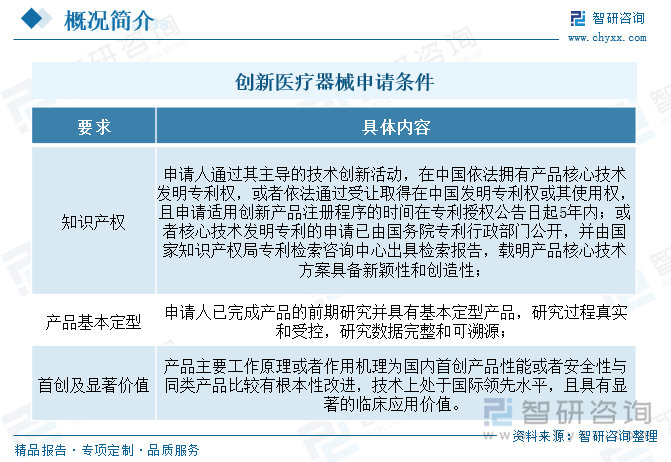
Industry Overview - Innovative medical devices refer to new medical equipment with core technology patents, internationally leading technology levels, and significant clinical application value, such as AI-assisted diagnostic devices, 3D-printed implants, and gene testing instruments [2][5] - The development process for innovative medical devices in China typically takes about 5-8 years, including R&D, clinical trials, and regulatory approval [2] - The number of approved innovative medical devices in China has been increasing, with 65 approved in 2024 and 34 in the first four months of 2025 [1][5] Market Status - The medical device industry is a crucial pillar of the modern healthcare system, with significant strategic importance and growth potential [5] - The Chinese government has implemented various policies to encourage innovation and the domestic production of high-end medical devices, leading to rapid industry development [5][7] Enterprise Landscape - The competitive landscape of the innovative medical device industry in China is still in the R&D investment phase, resulting in a low market concentration with over 200 approved production enterprises [11] - Leading companies in the innovative medical device sector include Beijing Pinchi Medical Equipment Co., Ltd., Shenzhen Xianjian Technology Co., Ltd., and Shanghai United Imaging Healthcare Co., Ltd., among others [12][11] Future Trends - The integration of artificial intelligence and the Internet of Things is accelerating in the medical device field, enhancing diagnostic efficiency and accuracy [16] - Domestic companies are rapidly advancing in high-end medical equipment and consumables, with increasing market share for products like vascular stents and artificial joints [17] - Chinese innovative medical device companies are actively expanding into overseas markets through technology licensing and cross-border cooperation [18]


中国创新医疗器械出海势头难挡,高质量临床数据登上国际舞台
Di Yi Cai Jing· 2025-06-04 08:30
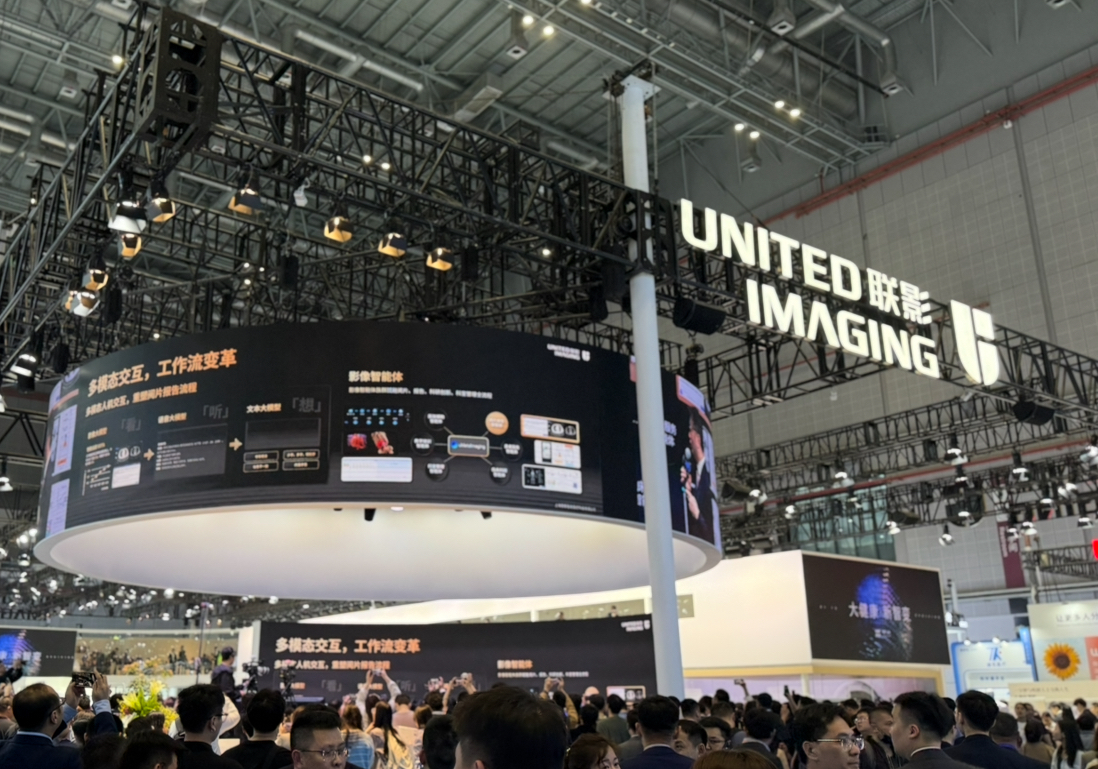
Core Viewpoint - Increasingly, Chinese companies with a global vision, advanced technology, compliant operations, and high-quality products are emerging in the internationalization process, showcasing their international influence, particularly in the medical device sector, with companies like United Imaging and Mindray accelerating their overseas expansion [1][3]. Group 1: Market Impact - Following recent news, shares of major medical device companies faced pressure, with United Imaging (688271.SH) dropping nearly 6%, Mindray (300760.SZ) down nearly 2%, and Yuyue Medical (002223.SZ) falling nearly 3% [1]. - The European Union plans to impose restrictive measures on Chinese enterprises under the "International Procurement Instrument," potentially limiting their participation in EU public tender projects for medical devices valued over 5 million euros in the next five years [1][3]. Group 2: Industry Growth - The global medical device industry is rapidly developing, characterized by active trade and high product added value, providing significant opportunities for Chinese medical device companies to expand internationally [3]. - Chinese medical device exports are shifting from low-value products to a growing number of innovative devices entering overseas markets, indicating a move towards higher-end products in the industry [3][4]. Group 3: Innovation and Quality - High-quality clinical data is essential for gaining global market recognition, as demonstrated by a Shanghai-developed transcatheter aortic valve system that achieved significant clinical milestones, offering new treatment options for millions of patients [4]. - The Chinese medical device sector is transitioning from "Made in China" to "Intelligent Manufacturing in China," with products meeting international clinical standards and defining new treatment paradigms globally [4]. - Chinese companies are leading innovation in the global medical device field, with some products and technologies reaching a level of global originality and strong competitiveness, making them indispensable in the market [4].

医药生物行业跨市场周报:PD-1(PD-L1)/VEGF双抗概念火爆,中国创新药企引领研发热潮
EBSCN· 2025-06-04 04:20
Investment Rating - The report maintains an "Overweight" rating for the pharmaceutical and biotechnology sector [5]. Core Insights - The PD-1 (PD-L1)/VEGF dual antibody concept is gaining significant attention, with Chinese innovative pharmaceutical companies leading the research and development efforts [2][20]. - The global market for dual antibodies is projected to exceed $80 billion by 2030, with PD-1 (PD-L1)/VEGF drugs expected to challenge traditional PD-1/PD-L1 therapies in cancer treatment [20][21]. - The report highlights the importance of clinical data barriers and international expansion for companies in this sector, suggesting that these factors will create differentiated investment opportunities [3][26]. Summary by Sections Market Review - The pharmaceutical and biotechnology index rose by 2.21%, outperforming the CSI 300 index by 3.30 percentage points [11][12]. - Among sub-industries, other biological products led with a 4.65% increase, while offline pharmacies saw a decline of 2.69% [12][19]. Clinical Progress - Notable advancements include the IND applications for BG-60366 by BeiGene and RFUS-949 by Renfu Pharmaceutical, as well as ongoing clinical trials for several drugs [29][30]. - Companies like Hengrui Medicine and Shijiazhuang Yiling Pharmaceutical are in Phase III trials, while others are in earlier stages [29][31]. Investment Strategy - The report emphasizes a structural selection of investment opportunities based on payment willingness and ability, focusing on three payment channels: hospital payments, out-of-pocket payments, and overseas payments [4][26]. - Key recommendations include Hengrui Medicine, Mindray Medical, United Imaging Healthcare, and Yuyue Medical [4]. Company Updates - Recent announcements include significant collaborations and product approvals, such as the $60.5 billion global licensing deal between 3SBio and Pfizer [2][28]. - The report notes that as of June 1, 2025, there are 14 PD-1 (PD-L1)/VEGF products in clinical stages, all associated with Chinese companies [21][24].

医药生物行业跨市场周报:PD-1(PD-L1)/VEGF双抗概念火爆,中国创新药企引领研发热潮-20250604
EBSCN· 2025-06-04 03:15
Investment Rating - The report maintains an "Overweight" rating for the pharmaceutical and biotechnology sector [5]. Core Insights - The PD-1 (PD-L1)/VEGF dual antibody concept is gaining significant attention, with Chinese innovative pharmaceutical companies leading the research and development efforts [2][20]. - The global market for dual antibodies is projected to exceed $80 billion by 2030, with PD-1 (PD-L1)/VEGF drugs expected to challenge the traditional PD-1/PD-L1 drugs in cancer treatment [20][21]. - The report highlights the importance of clinical data barriers and international expansion for companies in this sector, suggesting that these factors will create differentiated investment opportunities [3][26]. Summary by Sections Market Review - The pharmaceutical and biotechnology index rose by 2.21%, outperforming the CSI 300 index by 3.30 percentage points and the ChiNext index by 2.00 percentage points, ranking second among 31 sub-industries [11][12]. Clinical Progress - Notable advancements include the IND applications for BG-60366 by BeiGene and RFUS-949 by Renfu Pharmaceutical, as well as ongoing clinical trials for various drugs by companies like Hengrui Medicine and Stone Pharmaceutical [29][30]. Key Developments - The report notes that 14 PD-1 (PD-L1)/VEGF products are currently in clinical stages, all associated with Chinese companies, with the fastest progress seen in Ivonescimab by Kangfang Biotech, which has been approved in China [21][22]. Investment Strategy - The report emphasizes a structural selection of investment opportunities based on payment willingness and ability, focusing on three payment channels: hospital payments, out-of-pocket payments, and overseas payments [4][26]. - Recommended companies include Hengrui Medicine, Mindray Medical, United Imaging Healthcare, and Yuyue Medical [4]. Company Announcements - Recent announcements include various companies receiving approvals for new drugs and medical devices, indicating ongoing innovation and regulatory progress within the sector [28][29].
联影医疗(688271)6月3日主力资金净卖出5620.38万元
Sou Hu Cai Jing· 2025-06-04 00:24
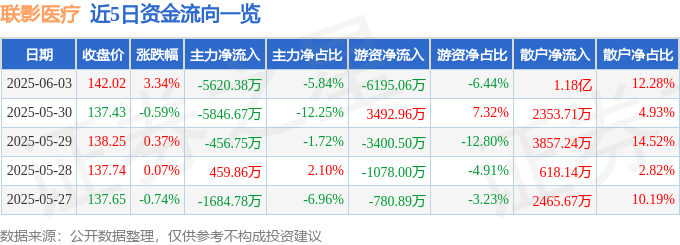
Core Viewpoint - The stock of United Imaging Healthcare (688271) has shown a price increase of 3.34% as of June 3, 2025, closing at 142.02 yuan, with significant net inflows from retail investors despite outflows from institutional and speculative funds [1][2]. Financial Performance - For Q1 2025, United Imaging Healthcare reported a main revenue of 2.478 billion yuan, a year-on-year increase of 5.42% [5]. - The net profit attributable to shareholders was 370 million yuan, up 1.87% year-on-year, while the net profit excluding non-recurring items was 379 million yuan, reflecting a 26.09% increase [5]. - The company has a debt ratio of 29.69% and reported investment income of 14.53 million yuan, with financial expenses of -16.94 million yuan [5]. Market Activity - On June 3, 2025, the stock experienced a trading volume of 67,700 hands and a total transaction amount of 962 million yuan [1]. - The net outflow of main funds was 56.20 million yuan, accounting for 5.84% of the total transaction amount, while retail investors saw a net inflow of 118 million yuan, representing 12.28% of the total [1][2]. Financing and Margin Trading - As of June 3, 2025, the financing balance was 370 million yuan, with a net repayment of 2.44 million yuan for the day [3]. - The margin trading balance stood at 376 million yuan, with a short selling volume of 876 shares and a remaining short selling balance of 632,320 yuan [3]. Industry Comparison - United Imaging Healthcare's total market capitalization is 117.05 billion yuan, significantly higher than the industry average of 10.84 billion yuan, ranking 2nd among 122 companies in the medical device sector [5]. - The company's net asset value is 20.28 billion yuan, also ranking 3rd in the industry [5]. - The price-to-earnings ratio (P/E) is 79.07, which is higher than the industry average of 55.75, ranking 77th [5]. Analyst Ratings - In the last 90 days, 26 institutions have rated the stock, with 17 buy ratings and 9 hold ratings, and the average target price set at 155.65 yuan [6].
中证全指医疗保健设备与服务指数上涨1.66%,前十大权重包含联影医疗等
Sou Hu Cai Jing· 2025-06-03 14:45
Core Viewpoint - The China Securities Index for Healthcare Equipment and Services has shown a recent increase, reflecting a positive trend in the healthcare sector despite some declines over the past months [1]. Group 1: Index Performance - The CSI Healthcare Equipment and Services Index rose by 1.66% to 13,712.97 points, with a trading volume of 18.353 billion yuan [1]. - Over the past month, the index has increased by 2.92%, while it has decreased by 3.79% over the last three months and by 1.46% year-to-date [1]. Group 2: Index Composition - The index is composed of listed companies in the healthcare sector, selected from the broader CSI Index to reflect the overall performance of healthcare-related securities [1]. - The top ten weighted companies in the index include Mindray Medical (9.66%), Aier Eye Hospital (7.85%), and United Imaging Healthcare (7.85%) among others [1]. - The index's holdings are primarily from the Shenzhen Stock Exchange (60.47%) and the Shanghai Stock Exchange (39.53%) [1]. Group 3: Fund Tracking - Several public funds track the CSI Healthcare Equipment and Services Index, including Southern CSI Healthcare Equipment and Services Link A, Tianhong CSI Healthcare Equipment and Services ETF, and others [2].