
Xiangyu Medical(688626)

Search documents
全链条布局领跑新赛道!翔宇医疗董事长何永正:“脑机接口+”重塑康复新生态
Zhong Guo Zheng Quan Bao· 2026-01-21 04:44
Core Viewpoint - The rehabilitation industry is viewed as a "golden track" with significant growth potential, driven by brain-computer interface (BCI) technology, which is expected to reshape the industry landscape [1] Group 1: Technological Innovation - The company focuses on three cutting-edge areas: brain-computer interfaces, rehabilitation robots, and AI medical technology, with BCI technology accelerating commercialization [2] - A comprehensive product matrix for rehabilitation robots has been established, with plans to launch 5-6 new products by 2026, including various specialized robots [2][4] - The company has initiated a brain science laboratory and developed five technical platforms to enhance its BCI technology, achieving compatibility between EEG devices and rehabilitation equipment [4] Group 2: Research and Development Investment - The company plans to maintain R&D investment at over 20% of revenue for the next 3-5 years, with more than 30% allocated to frontier technology research [5] - In the first three quarters of 2025, R&D investment reached approximately 49.09 million yuan, a year-on-year increase of 27.67%, accounting for 27.58% of quarterly revenue [5] Group 3: Market Transformation - The company has partnered with over 600 leading hospitals to establish BCI rehabilitation treatment and clinical research centers, enhancing treatment precision and effectiveness [6] - The company is transitioning from passive to active rehabilitation models, leveraging BCI technology to empower various rehabilitation products [6] Group 4: International Expansion - The company is accelerating its international market strategy, with overseas sales expected to double in 2024 compared to 2023, aiming for international revenue to account for over 30% by 2030 [7] - The company is pursuing compliance certifications such as EU CE and US FDA to facilitate international market entry and is exploring partnerships and acquisitions to enhance its global presence [7] Group 5: Ecosystem Development - The company is focused on building a comprehensive rehabilitation ecosystem, emphasizing the integration of BCI technology into rehabilitation devices, which is seen as essential for future products [8] - The trend towards lightweight, portable, and home-based rehabilitation devices is expected to drive significant growth in the home rehabilitation market [8] Group 6: Industry Integration - The company plans to strengthen its supply chain for core components and aims to execute 3-5 mergers and acquisitions between 2026 and 2030 to integrate high-growth startups [9] - The company targets to establish chain rehabilitation hospitals featuring BCI and rehabilitation robots, with a goal of achieving over 20% of service revenue by 2030 [9]


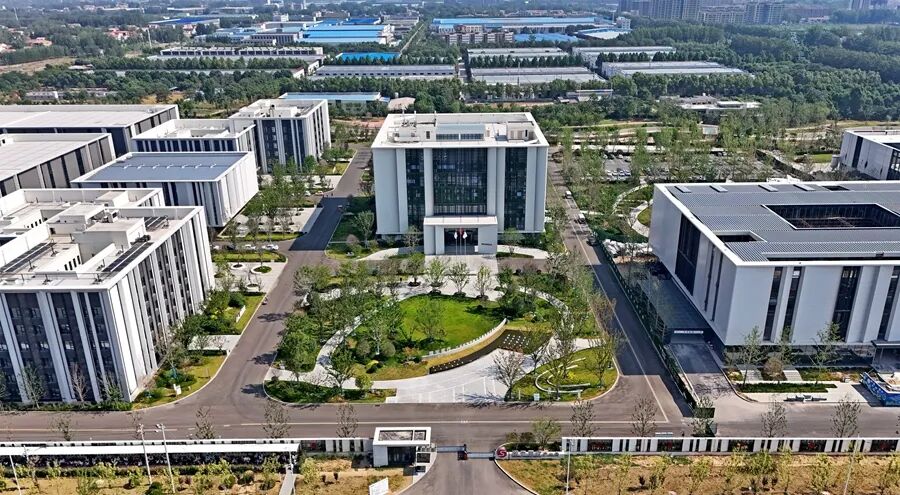
翔宇医疗董事长何永正:“脑机接口+”重塑康复新生态 全链条布局领跑新赛道
Zhong Guo Zheng Quan Bao· 2026-01-21 00:28
Core Viewpoint - The rehabilitation industry is viewed as a "golden track" with significant growth potential, driven by brain-computer interface (BCI) technology, which is expected to reshape the industry landscape [1] Group 1: Technological Innovation - The company focuses on three cutting-edge areas: brain-computer interfaces, rehabilitation robots, and AI medical technology, with BCI technology accelerating commercialization [2] - A comprehensive product matrix in rehabilitation robotics has been established, with plans to launch 5-6 medical device registrations by 2026 [2] - The company has initiated a brain science laboratory and developed five technical platforms to enhance BCI technology integration with rehabilitation equipment [3] - Continuous R&D investment is planned to remain above 20% of revenue over the next 3-5 years, with a significant portion allocated to frontier technology research [4] Group 2: Market Transformation - The company has partnered with over 600 leading hospitals to establish BCI rehabilitation treatment and clinical research centers, aiming to create regional treatment benchmarks [5] - The integration of BCI technology into multi-joint exoskeleton robots and various rehabilitation products is expected to enhance treatment precision and effectiveness [6] - A dual strategy of deepening medical institution engagement while expanding into outpatient markets is being implemented, targeting public hospitals, private hospitals, and rehabilitation institutions [6] Group 3: International Expansion - The company is accelerating its international business, with overseas sales expected to double in 2024 compared to 2023, aiming for international revenue to account for over 30% by 2030 [6][7] - Compliance with international certification standards, such as EU CE and US FDA, is being prioritized to facilitate market entry [7] Group 4: Ecosystem Development - The company is focused on building a comprehensive rehabilitation ecosystem, emphasizing the importance of BCI technology in future rehabilitation devices [8] - The trend towards lightweight, portable, and home-based rehabilitation devices is noted, with a vision to integrate rehabilitation equipment into everyday household items [8] Group 5: Industry Integration - Strengthening the supply chain for core components like chips and sensors is a priority, along with plans for mergers and acquisitions to consolidate industry resources [9] - The company aims to establish chain rehabilitation hospitals featuring BCI and rehabilitation robotics, targeting a service revenue contribution of over 20% by 2030 [9]
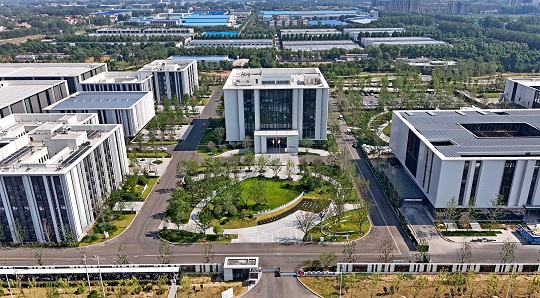
翔宇医疗康复设备产业园 公司供图
Zhong Guo Zheng Quan Bao - Zhong Zheng Wang· 2026-01-20 23:28
Group 1 - The article discusses the current state of the market, highlighting significant fluctuations in stock prices and investor sentiment [1] - It mentions a recent surge in technology stocks, which have outperformed other sectors, contributing to overall market gains [1] - The report indicates that economic indicators, such as unemployment rates and consumer spending, are showing signs of recovery, which may bolster investor confidence [1] Group 2 - The article provides data on quarterly earnings reports from major companies, revealing a mixed performance across different industries [1] - It notes that companies in the healthcare sector have reported strong growth, while those in the retail sector are facing challenges due to supply chain disruptions [1] - The analysis includes projections for future earnings, suggesting that technology and healthcare will continue to lead the market, while retail may struggle in the short term [1]
翔宇医疗董事长何永正: “脑机接口+”重塑康复新生态 全链条布局领跑新赛道
Zhong Guo Zheng Quan Bao· 2026-01-20 21:08
Core Viewpoint - The rehabilitation industry is viewed as a "golden track" with significant growth potential, and brain-computer interface (BCI) technology is emerging as a disruptive force reshaping the industry landscape [1] Group 1: Technological Innovation - The company focuses on three cutting-edge areas: brain-computer interfaces, rehabilitation robots, and AI medical technology, with BCI technology accelerating commercialization [2] - A comprehensive product matrix in rehabilitation robotics has been established, with plans to launch 5-6 medical device registrations by 2026 [2] - The company has initiated a brain science laboratory and developed five technical platforms to enhance BCI technology integration with rehabilitation equipment [3] - Continuous R&D investment is planned to remain above 20% of revenue over the next 3-5 years, with a significant portion allocated to frontier technology research [4] Group 2: Market Transformation - The company has partnered with over 600 leading hospitals to establish BCI rehabilitation treatment and clinical research centers, enhancing treatment precision and effectiveness [5] - A dual strategy of deepening medical institution engagement and expanding outpatient markets is being implemented, targeting various sectors including private hospitals and rehabilitation institutions [5] - International market expansion is accelerating, with a goal to double overseas sales in 2024 and achieve over 30% of revenue from international markets by 2030 [5][6] Group 3: Ecosystem Development - The company is focused on building a comprehensive rehabilitation ecosystem, emphasizing the importance of BCI technology in future rehabilitation devices [7] - There is a shift towards lightweight, portable, and home-based rehabilitation devices, with a vision to integrate rehabilitation equipment into everyday household items [7] - Industry chain integration is a key strategy for enhancing competitiveness, with plans for mergers and acquisitions to consolidate high-growth startups and expand rehabilitation services [8]
“脑机接口+”重塑康复新生态 全链条布局领跑新赛道
Zhong Guo Zheng Quan Bao· 2026-01-20 21:05
Core Insights - The rehabilitation industry is viewed as a "golden track" with significant growth potential, driven by brain-computer interface (BCI) technology, which is expected to reshape the industry landscape [1][4]. Group 1: Technological Innovation - The company focuses on three cutting-edge areas: brain-computer interfaces, rehabilitation robots, and AI medical technology, with BCI technology accelerating commercialization [1][2]. - A comprehensive product matrix for rehabilitation robots has been established, with plans to obtain medical device registration for 5-6 products by 2026, including various types of therapeutic robots [1][2]. - The company has initiated a dedicated research platform to enhance compatibility between rehabilitation equipment and BCI algorithms, emphasizing the importance of technical collaboration [2]. Group 2: Research and Development Investment - The company plans to maintain R&D investment at over 20% of revenue for the next 3-5 years, with more than 30% allocated to frontier technology research [3]. - In the first three quarters of 2025, R&D investment reached approximately 49.09 million yuan, a year-on-year increase of 27.67%, accounting for 27.58% of quarterly revenue [3]. Group 3: Market Expansion and Strategy - The company has established partnerships with over 600 leading hospitals in China to create centers for BCI rehabilitation treatment and clinical research, enhancing its market penetration [3]. - A dual strategy of deepening relationships with medical institutions while expanding into outpatient markets is being employed, targeting private hospitals, elderly care facilities, and specialized sectors [3][4]. Group 4: International Market Development - The international business of rehabilitation equipment is experiencing rapid growth, with plans to double sales in 2024 compared to 2023 and aim for over 30% of revenue from international markets by 2030 [4]. - The company is working on compliance certifications such as EU CE and US FDA to facilitate international market entry and is exploring partnerships for overseas expansion [4]. Group 5: Ecosystem Development - The company is focused on building a comprehensive rehabilitation ecosystem, leveraging BCI technology as a core driver for industry transformation [4][5]. - There is a shift towards lightweight, portable, and home-based rehabilitation devices, with a vision to integrate rehabilitation equipment into everyday household items [5]. - The company plans to enhance its supply chain for core components and aims to execute 3-5 mergers and acquisitions between 2026 and 2030 to consolidate industry resources [5].
密集“打卡”热门标的机构开年积极掘金A股机遇
Zhong Guo Zheng Quan Bao· 2026-01-20 21:05
Group 1 - The A-share market has seen structural investment opportunities emerge since 2026, particularly in sectors like brain-computer interfaces, commercial aerospace, and embodied intelligence [1][2] - Companies such as Xiangyu Medical and Haitan Ruisheng have become popular among institutional investors, with Xiangyu Medical receiving 208 institutional visits, the highest in its category [1][2] - Haitan Ruisheng is optimistic about the embodied intelligence data sector and has formed a dedicated team to develop related business, collaborating with various robotics manufacturers and tech giants [3] Group 2 - The commercial aerospace sector is also attracting attention, with Chaojie Co. receiving nearly 130 institutional visits in a short period, focusing on its rocket structural components and production capacity [3] - The overall situation shows that 373 listed companies have received institutional research since the beginning of 2026, with electronics and machinery equipment industries being the most popular [4] - Despite recent market adjustments, industry analysts believe that policy support and technological breakthroughs will continue to drive growth in sectors like brain-computer interfaces and commercial aerospace [4][5]

翔宇医疗:公司海外业务目前处于起步阶段
Zheng Quan Ri Bao Wang· 2026-01-20 13:14
Core Viewpoint - Xiangyu Medical's export business is primarily focused on Southeast Asia, the Middle East, Central Asia, South America, and Africa, with a relatively small share in the European Union [1] Group 1 - The company's overseas business is in its early stages but is maintaining a high growth trend [1] - Xiangyu Medical is expanding its medical market through international exhibitions and overseas distributors [1] - The company is actively promoting CE certification and other product access work [1]
翔宇医疗:公司出口业务主要销往东南亚、中东、中亚、南美、非洲等国家和地区,欧盟地区占比较小
Mei Ri Jing Ji Xin Wen· 2026-01-20 10:02
Group 1 - The company primarily exports to Southeast Asia, the Middle East, Central Asia, South America, and Africa, with a small proportion of sales to EU member countries [2] - The overseas business of the company is in its early stages but is maintaining a high growth trend [2] - The company is expanding its medical market through international exhibitions and overseas distributors, while actively promoting CE certification and other product access work [2]
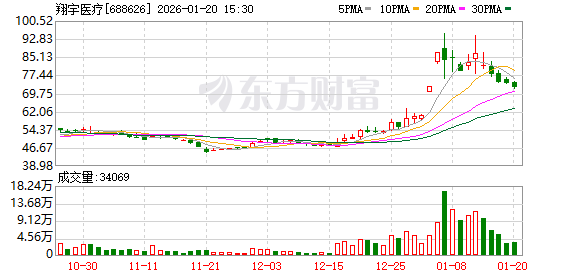
市场风格分化明显,1月20日24位基金经理发生任职变动
Sou Hu Cai Jing· 2026-01-20 08:18
Market Performance - On January 20, the Shanghai Composite Index fell by 0.01% to 4113.65 points, the Shenzhen Component Index decreased by 0.97% to 14155.63 points, and the ChiNext Index dropped by 1.79% to 3277.98 points [1] Fund Manager Changes - On January 20, 24 fund managers experienced changes in their positions, with 43 fund products announcing fund manager departures, involving 12 fund managers [3] - In the past 30 days (December 21 to January 20), a total of 564 fund products saw fund manager changes, indicating significant turnover in the industry [3] - The reasons for the changes included 4 fund managers leaving due to job changes, 2 due to personal reasons, 4 due to product expiration, and 2 due to the end of agency roles [3] New Fund Manager Appointments - On January 20, 40 fund products announced new fund manager appointments, involving 12 fund managers [5] - Notably, Xia Haoyang from GF Fund currently manages assets totaling 163.79 billion yuan, with his highest-performing product being the GF Hang Seng A-share Electric Power Equipment ETF, which achieved a return of 97.29% over 1 year and 39 days [5] Fund Research Activity - In the past month (December 21 to January 20), Huaxia Fund conducted the most company research, engaging with 51 listed companies, followed by Bosera Fund with 39 and Southern Fund with 32 [6] - The automotive parts industry was the most researched sector, with 165 instances of fund company inquiries, followed by the medical device industry with 132 inquiries [6] Individual Stock Research - The most researched company in the last month was Xiangyu Medical, with 61 fund management companies participating in the inquiry [8] - In the past week (January 13 to January 20), the company with the highest number of fund inquiries was Tiancheng Technology, receiving attention from 36 fund institutions [8]


脑机接口新团标发布 河南力量“添翼”新赛道
He Nan Ri Bao· 2026-01-18 23:45
Group 1 - The brain-computer interface (BCI) industry has introduced a new standard titled "Technical Requirements and Testing Methods for EEG-based Fatigue State Monitoring Systems," which aims to fill the existing gap in industry standards [1] - The standard was developed by the China Academy of Information and Communications Technology in collaboration with over 30 institutions, including Capital Medical University Xuanwu Hospital, Zhejiang University, and Tsinghua University, to clarify the working principles, structure, technical requirements, and testing methods of relevant systems [1] - Henan Xiangyu Medical Equipment Co., Ltd. played a significant role in drafting the standard, leveraging its expertise in rehabilitation and BCI technology integration [1] Group 2 - The BCI industry is currently experiencing a critical period of technological iteration and expansion of application scenarios, with both invasive and non-invasive technology paths developing concurrently [1] - Invasive technology requires surgical implantation of electrodes for high-precision brain signal acquisition, which limits its scalability due to high risks and costs, while non-invasive technology, such as EEG caps, is safer and more convenient for health monitoring and rehabilitation [2] - The rehabilitation equipment industrial park in Anyang City has attracted 62 upstream and downstream enterprises, including Xiangyu Medical, creating a complete industrial chain that integrates research, manufacturing, and services [2]