Xiangyu Medical(688626)

Search documents
翔宇医疗20260107
2026-01-08 02:07
Summary of Xiangya Medical's Conference Call Company Overview - **Company**: Xiangya Medical - **Industry**: Brain-Computer Interface (BCI) and Rehabilitation Equipment Key Points and Arguments Product Development and Market Entry - Xiangya Medical has launched a series of brain-computer interface products, including EEG machines and new products with multimodal technology, covering disease diagnosis and patient rehabilitation. Over 10 non-invasive brain-controlled products are expected to receive registration by Q1 2026, with plans to launch 70-80 new products by the end of the year, totaling over 100 products in the market [2][3][4] - The brain-controlled products have entered over 500 top hospitals, with a target of over 1,000 hospitals by the Lunar New Year of 2027, primarily through clinical research, scientific projects, or procurement methods [2][4] - New devices are classified as Class II medical devices, which do not require clinical trials, representing an upgrade to traditional rehabilitation equipment. The active rehabilitation effect is over 20% better than traditional passive rehabilitation methods, with this percentage continuously improving [2][6] Revenue and Growth Projections - Xiangya Medical anticipates approximately 100 million yuan in revenue from the brain-computer interface business by the end of 2026, despite a macroeconomic downturn, projecting single-digit growth in 2026 and a return to double-digit growth in 2027 [3][19] - The company has established a goal of achieving over 100 million yuan in revenue based on the progress of registration certificates and hospital procurement processes [19] Competitive Advantages - Xiangya Medical has a significant competitive edge in the BCI field due to 10 years of technical accumulation, including hardware, algorithms, and data collection precision. All key components are self-developed, which reduces costs and enhances compatibility with rehabilitation devices [11][12] - The company is the only one in the rehabilitation industry that simultaneously produces self-developed data collection devices and rehabilitation equipment, making it difficult for competitors to catch up quickly [11] Market Demand and Policy Support - There is strong demand and procurement willingness for BCI devices in top hospitals, driven by government policies supporting the industry. Nearly 20 provinces have published related charging directories, accelerating the clinical application of BCI devices [9][10] - The pricing for BCI rehabilitation training is affordable, ranging from tens to over a hundred yuan, which aligns with clinical needs and enhances the market's acceptance [10][16] Non-Medical BCI Products and Future Plans - Xiangya Medical is also developing non-medical BCI products focusing on attention, meditation, and insomnia, with plans to launch consumer-grade products in 2026 [22] - The company has established a robotics research center to focus on rehabilitation robots, with plans for lightweight portable exoskeleton products expected to receive registration in the first half of 2026 [23][25] Clinical Integration and Regulatory Environment - The integration of clinical specialties is increasingly recognized despite current procurement pressures. The company promotes a comprehensive clinical rehabilitation model, which is expected to improve hospital revenue structures in the long term [31] - The DRG system positively impacts the rehabilitation business, with evidence showing that rehabilitation revenue in high-level hospitals can account for one-third of total income [32][33] Conclusion - Xiangya Medical is positioned for significant growth in the BCI and rehabilitation equipment market, leveraging its technological advancements, strong market demand, and supportive government policies to achieve its revenue goals and expand its product offerings in both medical and non-medical applications [3][19][22]

翔宇医疗:脑机接口业务尚未实现规模化销售,对公司整体营收贡献较小
Cai Jing Wang· 2026-01-07 08:52
Core Viewpoint - Xiangyu Medical announced that its stock price experienced a cumulative deviation of 30% over three consecutive trading days on December 31, 2025, January 5, and 6, 2026 [1] Group 1: Business Overview - The company has established a comprehensive technology layout in the non-invasive brain-computer interface field, differing from mainstream invasive technology routes [1] - Although the company has formed a preliminary foundation in technology, products, and channels, the promotion of related product bidding and sales has been lagging [1] Group 2: Sales and Revenue - As of the end of 2025, the non-invasive brain-computer interface business has not achieved scaled sales, contributing minimally to the company's overall revenue [1]
大涨40%后股价转跌 翔宇医疗提示脑机接口相关产品尚未规模化销售
Zheng Quan Shi Bao Wang· 2026-01-07 05:45
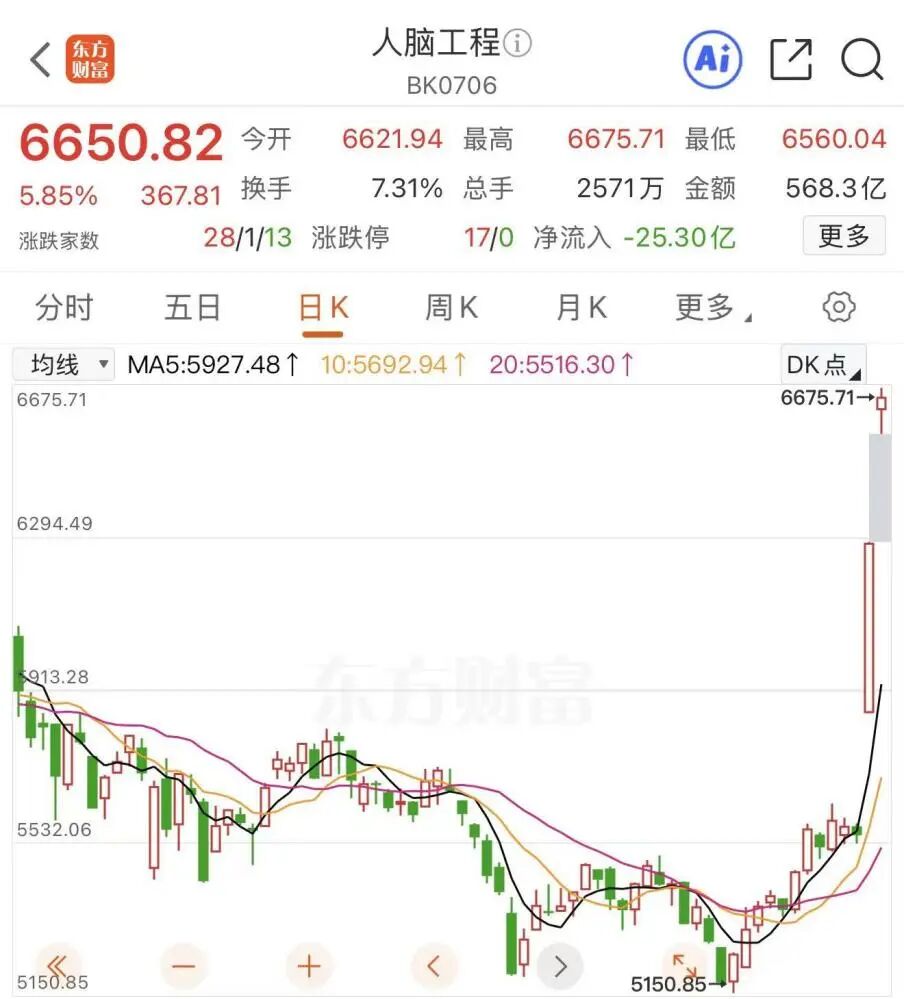
Core Viewpoint - The recent surge in stock price of Xiangyu Medical (688626) is attributed to the market's enthusiasm for brain-computer interface (BCI) concepts, with a notable 40% increase over two trading days, although the stock experienced a decline after peaking at 95 CNY per share [1]. Group 1: Company Overview - Xiangyu Medical has over 20 years of experience in the rehabilitation medical device industry, focusing on a comprehensive range of rehabilitation solutions, including 10 categories and over 1,000 products [1]. - The company has submitted registration applications for several BCI products, covering various therapeutic modes and applications, including cognitive training and sleep monitoring [1]. Group 2: Market Expansion and Product Development - The BCI project has been introduced to over 500 medical institutions, with plans to expand to over 700 by the Chinese New Year and over 1,000 top-tier hospitals by next year [2]. - The company aims to develop a comprehensive product matrix for BCI, with numerous new products expected to launch by 2026, enhancing its market presence [2]. Group 3: Financial Performance - For the first three quarters of 2025, the company reported a revenue of 537 million CNY, a 6% year-on-year increase, while net profit decreased by 40.09% to approximately 43.98 million CNY [4]. - Over 60% of the company's R&D investment is directed towards BCI-related projects, with successful registrations for EEG devices [4]. Group 4: Market Position and Future Outlook - The company has established a strong position in the BCI field with a multi-faceted approach in technology, products, and market channels, which is expected to accelerate product commercialization as regulatory and market conditions mature [2][3]. - The company has confirmed that there are no significant undisclosed events affecting stock price fluctuations, ensuring transparency in its operations [5].
2连板翔宇医疗:目前主要聚焦非侵入式脑机接口技术 截至2025年末尚未实现规模化销售
Di Yi Cai Jing· 2026-01-07 03:13
Core Viewpoint - The recent surge in market interest towards brain engineering and brain-machine interface concepts has led to significant stock price increases in related sectors [1] Company Focus - The company is primarily focused on non-invasive brain-machine interface technology, which encompasses a comprehensive rehabilitation layout including occupational therapy, motor therapy, cognitive speech, and swallowing [1] - This approach differs from the current international trend towards invasive brain-machine interface technologies [1] Market Position and Development - The company has made certain advancements in technology, products, and market channels related to brain-machine interfaces [1] - However, the company faces challenges in bidding and sales processes, which exhibit a lagging effect [1] - As of the end of 2025, the company does not expect to achieve large-scale sales of related products, resulting in a relatively small revenue contribution [1]
脑机接口,突传重磅!
Zheng Quan Shi Bao· 2026-01-07 03:00
Core Insights - The brain-computer interface (BCI) sector is experiencing significant growth, highlighted by the recent completion of approximately 2 billion yuan financing by Qiangnao Technology, marking it as the second-largest financing in the field globally, after Neuralink [1][2] Industry Overview - The BCI sector has become the hottest investment track in the A-share market since the beginning of 2026, with multiple stocks such as Innovation Medical, Aipeng Medical, and Xiangyu Medical achieving consecutive trading limits [1] - The industry is currently driven by both policy support and technological breakthroughs, with expectations for Neuralink's large-scale production and automated surgical solutions marking a transition from clinical validation to commercial viability [3] Company Highlights - Qiangnao Technology, founded in February 2015, focuses on non-invasive BCI technology and has received FDA and CE certifications, making it one of the largest investors in BCI R&D globally [2] - The company has launched several products, including smart bionic limbs and brain-machine intelligent sleep devices, and has been recognized by TIME magazine as one of the best inventions of the year [2] Recent Developments - On January 6, multiple BCI stocks, including Sanbo Brain Science and Maillande, issued announcements regarding abnormal trading fluctuations, warning investors of potential risks [4][5][6] - Sanbo Brain Science, while experiencing significant stock price increases, clarified that it does not engage in BCI product development, and its revenue from neuro-regulation technology is minimal [4] - Maillande and Xiangyu Medical also reported that their BCI products are still in the R&D phase and have not yet achieved significant sales impact [5][6]


多家公司出“降温”公告,部分脑机接口概念股明显回调
Ge Long Hui· 2026-01-07 02:42
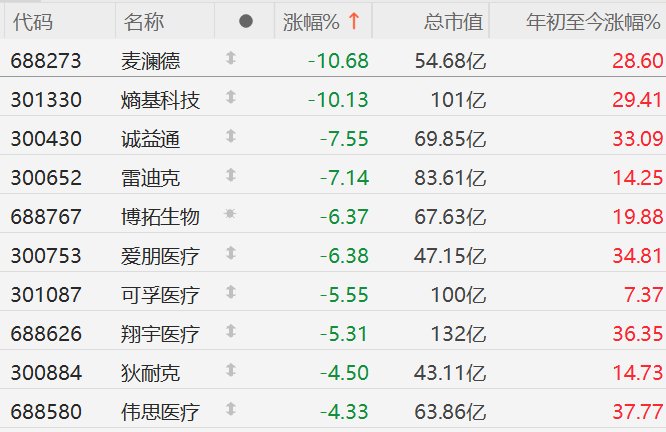
Core Viewpoint - The A-share market has seen a significant pullback in several brain-computer interface (BCI) concept stocks, with notable declines among various companies [1] Group 1: Stock Performance - Companies such as 麦澜德 (Mikland) and 熵基科技 (Entropy Technology) experienced declines exceeding 10% [1] - 诚益通 (Chengyi Tong) and 雷迪克 (Redik) fell over 7% [1] - 博拓生物 (Botuo Bio) and 爱朋医疗 (Aipeng Medical) dropped more than 6% [1] - 可孚医疗 (Kefu Medical) and 翔宇医疗 (Xiangyu Medical) decreased over 5% [1] - 狄耐克 (Dinaike) and 伟思医疗 (Weisi Medical) saw declines greater than 4% [1] Group 2: Company Announcements - Multiple BCI concept stocks issued announcements indicating a cooling off in the market [1] - 航天长峰 (Aerospace Changfeng) stated that the company has not actually engaged in BCI-related business [1] - 伟思医疗 (Weisi Medical) mentioned that new products in the BCI field are still in the early stages of market cultivation [1]



A股异动丨多家公司出“降温”公告,部分脑机接口概念股明显回调,熵基科技跌超10%
Ge Long Hui A P P· 2026-01-07 02:18
Group 1 - The A-share market has seen a significant pullback in brain-computer interface (BCI) concept stocks, with notable declines in companies such as Mailland and Entropy Technology, which fell over 10% [1] - Several BCI concept stocks have issued announcements indicating a cooling off, with Aerospace Changfeng stating that it has not actually engaged in BCI-related business [1] - Weisi Medical mentioned that its new products in the BCI field are still in the early stages of market cultivation [1] Group 2 - Specific stock performance includes Mailland down 10.68% with a market cap of 5.468 billion, Entropy Technology down 10.13% with a market cap of 10.1 billion, and Chengyi Tong down 7.55% with a market cap of 6.985 billion [2] - Other notable declines include Leedick down 7.14%, Botao Biological down 6.37%, and Aipeng Medical down 6.38% [2] - The overall trend shows that many BCI-related stocks are experiencing a downturn, with declines ranging from 4.33% to 10.68% across various companies [2]



A股密集公告!最火赛道再迎重磅利好!
天天基金网· 2026-01-07 01:09
Core Viewpoint - The brain-computer interface (BCI) sector is experiencing significant growth and investment, highlighted by the recent 2 billion yuan financing of Qiangnao Technology, marking it as the second-largest financing in the field after Neuralink [3][4]. Group 1: Investment and Market Dynamics - Qiangnao Technology, part of the "Hangzhou Six Little Dragons," has completed approximately 2 billion yuan in financing, positioning itself as a major player in the BCI market [3][4]. - The BCI sector has become the hottest investment track in A-shares since the beginning of 2026, with multiple stocks like Innovation Medical, Aipeng Medical, and Xiangyu Medical achieving consecutive trading limit increases [3]. - The market is witnessing a surge in interest, with several BCI-related stocks announcing abnormal trading fluctuations, prompting warnings about investment risks [7]. Group 2: Company Developments - Qiangnao Technology, founded in 2015, focuses on non-invasive BCI technology and has received FDA and CE certifications, making it one of the largest investors in BCI R&D globally [4][5]. - The company has launched several products, including smart bionic limbs and brain-machine sleep aids, and has been recognized by Time magazine as one of the best inventions of the year [4]. - Qiangnao's investor lineup includes prominent institutions such as IDG and various strategic partners, indicating strong market confidence [4]. Group 3: Industry Trends and Future Outlook - The BCI industry is in a high-growth phase driven by policy support and technological breakthroughs, with expectations for large-scale production and automated surgical solutions from companies like Neuralink [6]. - The transition from clinical validation to commercial scalability is underway, suggesting that BCI technology is moving towards becoming widely accessible products rather than just experimental tools [6]. - Companies like Xiangyu Medical and Weisi Medical are focusing on non-invasive BCI technologies, although they currently have limited revenue contributions from these products [8][9].
星河动力将发射“谷神星一号海射型”商业运载火箭 强脑科技完成约20亿融资
Xin Lang Cai Jing· 2026-01-07 00:46
Group 1: Data Standards and Regulations - The National Bureau of Statistics announced that by 2026, China will introduce over 30 national standards in the data field, focusing on emerging areas such as intelligent agents and embodied intelligence [2] - The development of standards for public data, high-quality datasets, and data infrastructure will be accelerated, along with key standards for urban digital transformation and a national integrated computing network [2] - In 2025, China developed 48 national standards and technical documents in the data field, with over one-third undergoing simultaneous validation trials during the drafting process [2] Group 2: Technology Developments - Huang Renxun stated at CES that server racks equipped with the new Rubin chip can be cooled without water cooling systems, requiring airflow similar to that of racks with Blackwell chips [3] - Following Huang's comments, data center cooling concept stocks experienced significant declines, with companies like Johnson Controls and Trane Technologies dropping by 10% and Modine by 20% [3] Group 3: Financing and Investment - XAI announced it raised $20 billion in its E round of financing, surpassing its $15 billion target, with strategic investors including Nvidia and Cisco [4] - Qiang Brain Technology, a brain-computer interface "unicorn," completed approximately 2 billion yuan in financing, making it the second-largest financing in the brain-computer interface field after Neuralink [5] Group 4: Market Trends - Two listed companies in lithium iron phosphate confirmed price increases of 1,500 to 2,000 yuan per ton for major clients [6] - Companies like Xiangyu Medical and Weisi Medical are focusing on non-invasive brain-computer interface technologies, but have not achieved large-scale sales as of the end of 2025 [7][8] - Micron's products in the brain-computer interface field are still in the research and market cultivation phase, with no significant impact on company performance yet [9] Group 5: Corporate Actions - Chip Origin announced the completion of the acquisition of Zhudian Semiconductor, with a new registered capital of 9.5 billion yuan, making it the largest shareholder [11] - Shengke Communication's second-largest shareholder plans to reduce its stake by up to 3% through trading methods [12] - Yandong Micro's fourth-largest shareholder reduced its stake from 6.08% to 6.00% as part of a previously disclosed plan [13]



脑机接口彻底火了!多家A股回应
Zhong Guo Ji Jin Bao· 2026-01-07 00:40
Core Viewpoint - The brain-computer interface (BCI) concept continues to gain traction, with multiple listed companies responding positively to the trend, leading to significant stock price increases in the sector [1]. Company Responses - On January 6, several companies, including Weisi Medical, Sanbo Brain Science, Aipeng Medical, and others, saw their stocks hit the daily limit, with many achieving consecutive gains [3]. - Weisi Medical reported a 20.01% increase in stock price, indicating a strong market response to its developments in the neuro-rehabilitation field, expanding from single-device solutions to comprehensive "diagnosis-treatment-rehabilitation" offerings [4][5]. - Sanbo Brain Science highlighted the promising applications of BCI technology in clinical diagnosis and neuro-rehabilitation, also achieving a 20.01% stock price increase [7]. - Xiangyu Medical announced the establishment of a BCI laboratory and aims to develop a product system covering four major categories, also achieving a two-day stock increase [8]. - Aipeng Medical's stock rose by 20%, emphasizing the role of BCI as a bridge between the brain and external devices [9][10]. - Entropy Technology and Meihua Medical also reported significant stock increases, with the former focusing on BCI and vehicle-road collaboration technologies [11][12]. Industry Developments - Companies are actively engaging in the BCI sector, with Xiangyu Medical entering over 500 medical institutions and aiming for over a thousand top-tier hospitals nationwide, indicating a robust commercialization strategy [15]. - Mcland anticipates obtaining its first BCI medical device registration certificate by Q1 2026, which could accelerate the application of BCI technology in existing product lines [15]. - Chengdu Huayi and Yingjixin are focusing on the foundational hardware for BCI, with Chengdu Huayi developing high-precision ADCs and low-power FPGAs for signal processing [15][16]. - The integration of BCI with embodied intelligence is gaining attention, with companies exploring applications in smart healthcare and rehabilitation [17]. - Blue Si Technology announced its strategic investment in Qiang Brain Technology, which recently secured approximately 2 billion yuan in funding, marking it as the second-largest financing in the BCI field after Neuralink [18]. Market Outlook - The global BCI market is projected to reach approximately $12.4 billion by 2034, with a CAGR of 17% from 2025 to 2034, driven by technological advancements and increased capital investment [20]. - The transition of BCI from clinical validation to commercial scalability is expected to unlock significant market opportunities in healthcare and consumer sectors [20].