IFLYTEK(002230)

Search documents
科大讯飞股份有限公司2025年第一次临时股东会决议公告
Shang Hai Zheng Quan Bao· 2025-09-09 20:40
登录新浪财经APP 搜索【信披】查看更多考评等级 证券代码:002230 证券简称:科大讯飞 公告编号:2025-035 科大讯飞股份有限公司2025年第一次临时股东会决议公告 本公司及董事会全体成员保证信息披露内容真实、准确和完整,没有虚假记载、误导性陈述或者重大遗 漏。 特别提示 1.本次股东会未出现否决议案的情形。 2.本次股东会未涉及变更前次股东会决议。 一、会议召开和出席情况 1、会议召开时间: 现场会议开始时间:2025年9月9日14:00; 网络投票时间:通过深圳证券交易所交易系统进行网络投票的具体时间为2025年9月9日的交易时间,即 9:15一9:25,9:30一11:30 和13:00一15:00;通过深圳证券交易所互联网投票系统进行网络投票的具体时 间为2025年9月9日9:15至15:00期间的任意时间。 2、现场会议召开地点:安徽省合肥市高新开发区望江西路666号科大讯飞会议室 3、会议召开方式:本次股东会采取现场投票表决与网络投票表决相结合的方式 4、会议召集人:公司董事会 5、会议主持人:董事长刘庆峰先生 6、本次会议的召集、召开与表决程序符合《公司法》《上市公司股东会规则》等有 ...

科大讯飞:2025年第一次临时股东会决议公告
Zheng Quan Ri Bao· 2025-09-09 14:13
Group 1 - The company Keda Xunfei announced the convening of its first extraordinary general meeting of shareholders in 2025 on September 9, 2025 [2] - The meeting will review the "Special Report on the Use of Previous Fundraising" among other agenda items [2]

科大讯飞(002230) - 募集资金管理办法(2025年9月)
2025-09-09 11:32
科大讯飞股份有限公司 募集资金管理办法 第一章 总 则 第一条 为规范科大讯飞股份有限公司(以下简称"公司")募集资金管理, 提高募集资金使用效率,根据《中华人民共和国公司法》《中华人民共和国证券 法》《深圳证券交易所股票上市规则》《上市公司募集资金监管规则》等有关法律 法规和规范性文件的规定,结合公司实际情况,特制定本办法。 公司存在两次以上融资的,应当独立设置募集资金专户。实际募集资金净额 超过计划募集资金金额(以下简称"超募资金")也应当存放于募集资金专户管 理。 1 第七条 公司应当在募集资金到账后 1 个月内与保荐机构、存放募集资金的商 业银行(以下简称"商业银行")签订三方监管协议(以下简称"协议")。协议至 少应当包括以下内容: (一)公司应当将募集资金集中存放于专户中; 第六条 公司应当审慎选择商业银行并开设募集资金专项账户(以下简称"专 户"),公司募集资金应当存放于董事会决定的专项账户集中管理,专户不得存放 非募集资金或用作其他用途。 第四条 募集资金投资项目(以下简称"募投项目")通过公司的子公司或公 司控制的其他企业实施的,适用本办法。 第五条 保荐机构在持续督导期间应当对公司募集资金 ...
科大讯飞(002230) - 2025年第一次临时股东会决议公告
2025-09-09 11:30
科大讯飞股份有限公司 2025年第一次临时股东会决议公告 本公司及董事会全体成员保证信息披露内容真实、准确和完整,没有虚假记载、误导性 陈述或者重大遗漏。 特别提示 1.本次股东会未出现否决议案的情形。 2.本次股东会未涉及变更前次股东会决议。 一、会议召开和出席情况 证券代码:002230 证券简称:科大讯飞 公告编号:2025-035 1、会议召开时间: 现场会议开始时间:2025 年 9 月 9 日 14:00; 网络投票时间:通过深圳证券交易所交易系统进行网络投票的具体时间为 2025 年 9 月 9 日的交易时间,即 9:15—9:25,9:30—11:30 和 13:00—15:00;通过深圳证券交易所 互联网投票系统进行网络投票的具体时间为 2025 年 9 月 9 日 9:15 至 15:00 期间的任意 时间。 2、现场会议召开地点:安徽省合肥市高新开发区望江西路 666 号科大讯飞会议室 3、会议召开方式:本次股东会采取现场投票表决与网络投票表决相结合的方式 4、会议召集人:公司董事会 5、会议主持人:董事长刘庆峰先生 6、本次会议的召集、召开与表决程序符合《公司法》《上市公司股东会规则》 ...
科大讯飞(002230) - 安徽天禾律师事务所关于公司2025年第一次临时股东会的法律意见书
2025-09-09 11:30
本法律意见书是天禾律师根据对本次股东会事实的了解及对我国现行法律、 法规和规范性文件的理解而出具的。 天禾律师事务所 股东会法律意见书 安徽天禾律师事务所 关于科大讯飞股份有限公司 2025 年第一次临时股东会的法律意见书 天律意 2025 第 02425 号 致:科大讯飞股份有限公司 根据《中华人民共和国公司法》(下称"《公司法》")、《中华人民共和 国证券法》(下称"《证券法》")、中国证券监督管理委员会《上市公司股东 会规则》(下称"《股东会规则》")以及《科大讯飞股份有限公司章程》(下 称"《公司章程》")的有关规定,安徽天禾律师事务所接受科大讯飞股份有限 公司(下称"公司")的委托,指派本所费林森、杨春波律师(下称"天禾律师") 出席公司 2025 年第一次临时股东会(下称"本次股东会"),并对本次股东会 相关事项进行见证,出具法律意见。 天禾律师同意将本法律意见书作为本次股东会的法定必备文件予以公告,并 依法对所出具的法律意见书承担责任。 天禾律师根据《证券法》相关规定的要求,按照律师行业公认的业务标准、 道德规范和勤勉尽责精神,对本次股东会的召集、召开、与会人员资格、表决程 序及其他相关法律问题 ...
科大讯飞等在湖北新设智能建造公司
Zheng Quan Shi Bao Wang· 2025-09-08 03:13
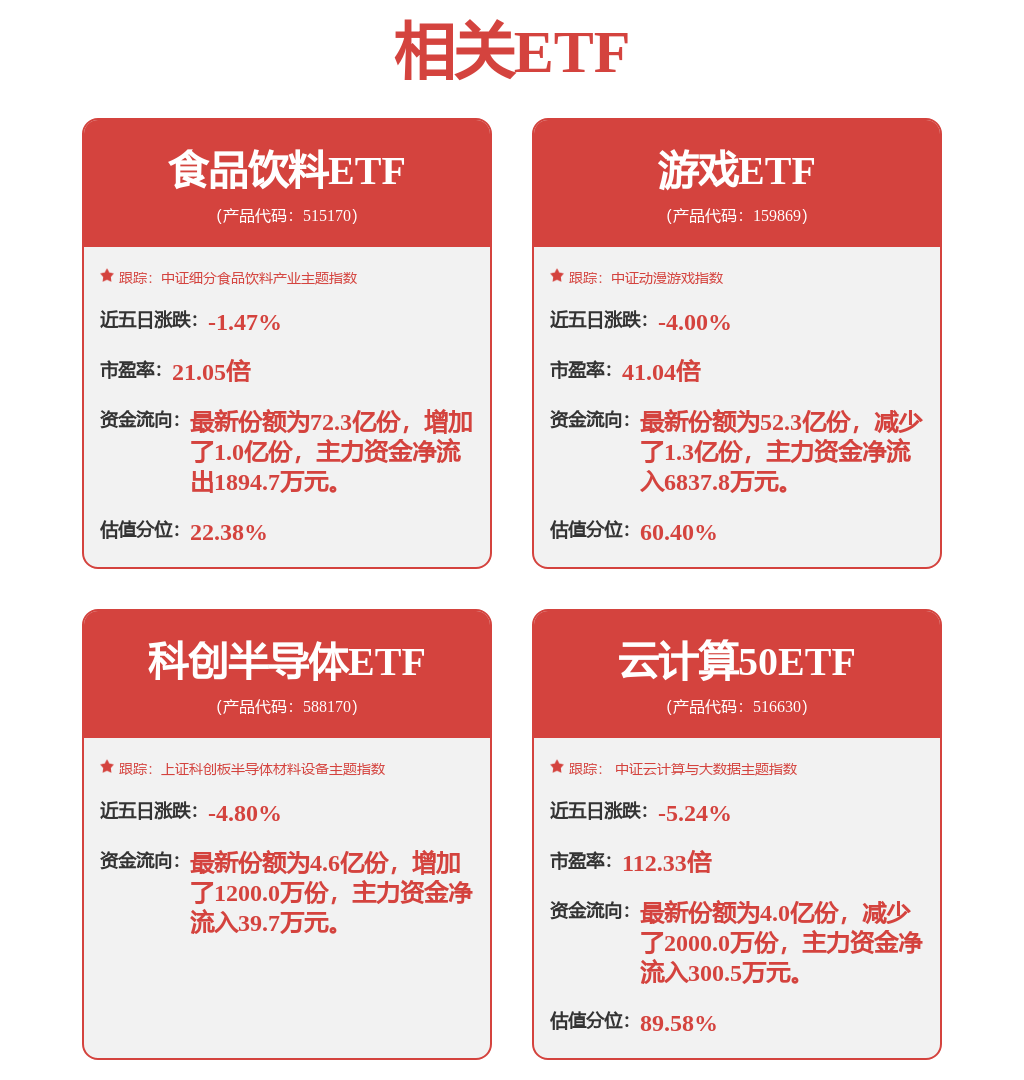
沂五日涨跌: -1.47% 市盈率: 21.05倍 资金流向: 最新份额为72.3亿份,增加 了1.0亿份,主力资金净流 出1894.7万元。 估值分位:22.38% (原标题:科大讯飞等在湖北新设智能建造公司) 人民财讯9月8日电,企查查APP显示,近日,湖北省汉江科讯智能建造有限公司成立,法定代表人为靖普,注册资本1000万元,经营范围包括承 接总公司工程建设业务、计算机软硬件及外围设备制造、计算机软硬件及辅助设备零售等。企查查股权穿透显示,该公司由汉江城建集团有限公 司、科大讯飞旗下讯飞智元信息科技有限公司共同持股。 相关ETF 食品饮料ETF (产品代码: 515170) ★ 跟踪:中证细分食品饮料产业主题指数 ★ 跟踪:中证动漫游戏指数 估值分位:60.40% 近五日涨跌: -4.00% 游戏ETF 资金流向: 最新份额为52.3亿份,减少 了1.3亿份,主力资金净流 入6837.8万元。 (产品代码:159869) 科创半导体ETF (产品代码: 588170) ★ 跟踪: 上证科创板半导体材料设备主题指数 市盈率: 41.04倍 (产品代码: 516630) ★ 跟踪: 中证云计算与大数据主题指 ...
超53%教育股营收下滑,头部公司回暖,考证的少了,教辅不赚钱了
2 1 Shi Ji Jing Ji Bao Dao· 2025-09-07 06:12
Core Insights - The A-share education sector showed improvement in performance in the first half of 2025, with total revenue reaching 15.61 billion yuan, a year-on-year increase of 4.8% [2] - The top 10 education companies generated a total revenue of 12.9 billion yuan, reflecting a year-on-year growth of 7.1% [4] Company Performance - The top 10 companies in the A-share education sector include: iFlytek, Xueda Education, Visionox, Huatu Shandian, Zhonggong Education, Honghe Technology, Angli Education, Doushen Education, Action Education, and Zhengyuan Wisdom [4] - iFlytek maintained its leading position with a revenue of 3.53 billion yuan, up 23.47% year-on-year, although the growth rate narrowed by 1.67 percentage points [5] - Xueda Education reported a revenue of 1.916 billion yuan, an increase of 18.27%, with a net profit of 230 million yuan, up 42.18% [5] - Visionox reversed a previous decline, achieving a revenue growth of 13.79% [6] - Doushen Education emerged from bankruptcy restructuring, reporting a revenue increase of 36% [6] Industry Trends - The education sector remains fragmented, with over half of the 28 companies reporting negative growth, indicating a significant disparity in performance [9] - The education information technology sector is the largest segment, with 13 out of 28 companies, but it also shows a mix of growth and decline [13] - AI technology is enhancing productivity and driving product upgrades across the education sector, with companies like iFlytek and Visionox embedding AI into their product lines [16] - The education industry is influenced by macroeconomic conditions, with consumer expectations and choices affecting enrollment in various training programs [17] - The number of school-age children is peaking, and policy changes are reshaping the tutoring market, leading to negative growth in some segments [19]





超53%教育股营收下滑,头部公司回暖,考证的少了,教辅不赚钱了
21世纪经济报道· 2025-09-07 06:05
Core Viewpoint - The performance of A-share education stocks has improved compared to the same period last year, with total revenue reaching 15.61 billion yuan in the first half of 2025, a year-on-year increase of 4.8% [1]. Group 1: Top Companies Performance - The top 10 education companies in A-shares for the first half of 2025 include: iFLYTEK, Xueda Education, Visionox, Huatu Shandian, Zhonggong Education, Honghe Technology, Angli Education, Doushen Education, Xingdong Education, and Zhengyuan Wisdom, with a total revenue of 12.9 billion yuan, reflecting a year-on-year growth of 7.1% [3]. - iFLYTEK continues to lead the A-share education sector with a revenue of 3.53 billion yuan, marking a year-on-year growth of 23.47% [5]. - Xueda Education has over 300 personalized learning centers and more than 5,200 full-time teachers, showing strong demand in the K12 sector with continuous growth for ten consecutive quarters [6]. Group 2: Industry Trends - The education sector is experiencing significant differentiation, with over half of the 28 companies reporting negative growth, indicating a challenging environment for many players [9]. - The education information technology sector remains the largest segment, with 13 companies, of which 6 reported growth and 7 reported negative growth, highlighting the competitive landscape [12]. - AI technology is enhancing productivity and driving product upgrades across the education sector, with companies like iFLYTEK and Visionox embedding AI deeply into their product lines [15][16]. Group 3: Market Dynamics - The education industry is influenced by macroeconomic conditions, with consumer expectations and choices shifting based on economic uncertainty, leading to varying participation rates in different educational training sectors [17]. - The number of school-age children in China has peaked in 2023, and policy changes are reshaping the tutoring market, with several companies experiencing negative growth due to reduced enrollment and regulatory measures [18].

科大讯飞与昭通市人民政府签署战略合作协议
Xin Lang Cai Jing· 2025-09-07 01:28
Group 1 - The core viewpoint of the article is the strategic cooperation agreement signed between iFlytek Co., Ltd. and the People's Government of Zhaotong City, Yunnan, aimed at accelerating practical collaboration in various fields [1] - The agreement will serve as an important opportunity to deepen cooperation in the construction of a digital economy industrial park and a data labeling base [1] - The collaboration will focus on the application of artificial intelligence and other related areas [1]
行业专家亮相智博会 共话智能产业发展新图景
Zhong Guo Xin Wen Wang· 2025-09-06 08:59
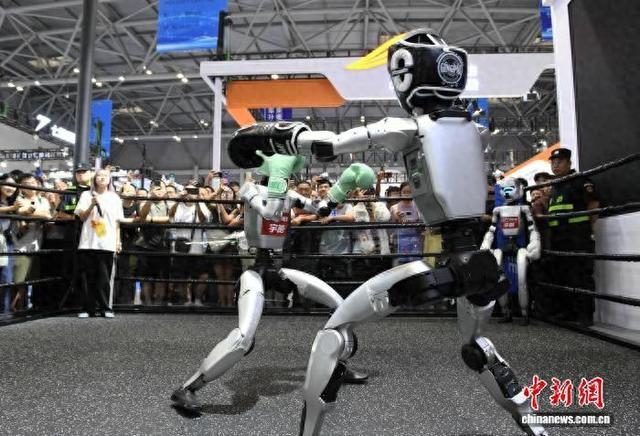
Group 1 - The 2025 World Intelligent Industry Expo is taking place in Chongqing, featuring industry leaders and experts sharing innovative practices and insights on the future of the intelligent industry [1][3] - Hong Kong University of Science and Technology's Chairman, Shen Xiangyang, emphasizes the need for visual models in AI, predicting that 2025 will mark the year humanoid robots begin to see widespread application [1] - The humanoid robot boxing match by Yushu Technology at the expo highlights the growing interest in robotics technology [3] Group 2 - iFLYTEK's simultaneous interpretation service has been implemented in over 50 countries, supporting more than 400,000 meetings, showcasing the company's advancements in multilingual technology [3] - iFLYTEK's latest model, Spark X1, supports over 130 languages for general Q&A and translation, demonstrating its commitment to lowering barriers in AI adoption across various sectors [3] - The company has collaborated with universities to train over 20,000 AI talents, significantly improving employment rates, and has conducted nearly 1 billion medical diagnoses, correcting 1.7 million misdiagnoses [3] Group 3 - Unisplendour's Chairman, Yu Yingtao, discusses the structural challenges in the AI industry, advocating for continuous innovation to drive high-quality development [4] - The concept of "AI+" is highlighted as a means to achieve value realization through deep integration of large models and industry data [4] Group 4 - Qianhai Capital's founder, Ni Zhengdong, notes that over 1 trillion yuan has been invested in the intelligent connected and new energy vehicle sectors over the past six years, enhancing China's competitiveness in the global market [5] - The successful integration of capital and industry is identified as a key strategy for building national core competitiveness in the "big intelligent era" [5]