NAURA(002371)

Search documents
北方华创(002371) - 北京金诚同达律师事务所关于北方华创科技集团股份有限公司2022年股票期权激励计划预留授予部分第二个行权期行权条件成就及注销部分股票期权相关事项的法律意见书
2026-03-23 10:31
北京金诚同达律师事务所 关于 北方华创科技集团股份有限公司 2022 年股票期权激励计划预留授予部分第二个行权 期行权条件成就及注销部分股票期权相关事项的 法律意见书 中国北京市建国门外大街1号国贸大厦A座十层 100004 电话:010-5706 8585 传真:010-8515 0267 金诚同达律师事务所 法律意见书 北京金诚同达律师事务所 关于北方华创科技集团股份有限公司 2022 年股票期权激励计划预留授予部分第二个行权期行权条件 成就及注销部分股票期权相关事项 的法律意见书 金证法意[2026]字 0323 第 0151 号 致:北方华创科技集团股份有限公司 3.北方华创保证已提供本所律师认为出具本法律意见书所必需的、真实的、 完整的原始书面材料、副本材料或复印件,并保证所提供的文件资料真实、准确, 副本材料或复印件与正本材料或原件一致,不存在虚假陈述、重大遗漏和隐瞒。 本所律师根据核查和验证的结果,就本次行权及本次注销出具法律意见如下: 北京金诚同达律师事务所(以下简称"本所")接受北方华创科技集团股份 有限公司(以下简称"北方华创"或"公司")的委托,担任北方华创 2022 年股 票期权激励计 ...

北方华创(002371) - 中信建投证券股份有限公司关于北方华创科技集团股份有限公司2022年股票期权激励计划预留授予部分第二个行权期行权条件成就之独立财务顾问报告
2026-03-23 10:31
二〇二六年三月 1 | (一)本计划预留授予部分第二个行权期行权条件成就情况的说明 | 9 | | --- | --- | | (二)本计划预留授予部分第二个行权期行权安排 | 11 | | (三)结论性意见 | 12 | 股票简称:北方华创 股票代码:002371 中信建投证券股份有限公司 关于北方华创科技集团股份有限公司 2022年股票期权激励计划预留授予部分 第二个行权期行权条件成就 之独立财务顾问报告 独立财务顾问 一、释义 在本独立财务顾问报告中,除非另有说明,下列简称具有如下含义: | 北方华创、上市公司、公 | 指 | 北方华创科技集团股份有限公司 | | --- | --- | --- | | 司 | | | | 中信建投证券、本独立财 | 指 | 中信建投证券股份有限公司 | | 务顾问 | | | | 本激励计划、本计划 | 指 | 《北方华创科技集团股份有限公司2022年股票期权 | | | | 激励计划(草案)》 | | 独立财务顾问报告 | 指 | 《中信建投证券股份有限公司关于北方华创科技集 | | | | 团股份有限公司2022年股票期权激励计划预留授予 | | | | 部分第二 ...
北方华创(002371) - 第八届董事会第三十一次会议决议公告
2026-03-23 10:30
证券代码:002371 证券简称:北方华创 公告编号:2026-009 北方华创科技集团股份有限公司 本议案已经公司董事会薪酬与考核委员会审议通过。 表决结果:11票同意,0票反对,0票弃权。 2.审议通过了《关于 2022 年股票期权激励计划预留授予部分第二个行权 期行权条件成就的议案》 第八届董事会第三十一次会议决议公告 本公司及董事会全体成员保证信息披露的内容真实、准确、完整,没有虚 假记载、误导性陈述或者重大遗漏。 北方华创科技集团股份有限公司(以下简称"公司")第八届董事会第三十 一次会议通知于 2026 年 3 月 13 日以电子邮件方式发出。2026 年 3 月 23 日上午 会议如期在公司会议室以现场和通讯相结合方式召开,应到董事 11 名,实到 11 名,会议由董事长赵晋荣先生主持,公司高级管理人员列席了会议。会议的召集、 召开符合《公司法》和《公司章程》的规定。 本次会议决议如下: 1.审议通过了《关于注销 2022 年股权激励计划预留授予部分股票期权的 议案》 根据《北方华创科技集团股份有限公司 2022 年股票期权激励计划》(简称 "2022 年股权激励计划")的规定,预留授予的部分激 ...
北方华创(002371) - 董事会薪酬与考核委员会关于公司2022年股权激励计划预留授予部分相关事项的核查意见
2026-03-23 10:30
鉴于公司 2022 年股权激励计划预留授予中有 4 名激励对象离职,4 名激励 对象绩效考核结果不达标,已不符合激励条件。上述激励对象持有的已获授但尚 未获准行权的 62,270 份股票期权无偿收回并统一注销。 北方华创科技集团股份有限公司 董事会薪酬与考核委员会关于 公司2022年股票期权激励计划预留授予部分相关事项的 核查意见 北方华创科技集团股份有限公司(以下简称"公司")第八届董事会薪酬与 考核委员会 2026 年第一次会议于 2026 年 3 月 20 日召开,审议通过了《关于注 销 2022 年股权激励计划预留授予部分股票期权的议案》《关于 2022 年股票期权 激励计划预留授予部分第二个行权期行权条件成就的议案》。依据《公司 2022 年股票期权激励计划(草案)》(以下简称《激励计划》)及《公司 2022 年股 票期权激励计划实施考核管理办法》的有关规定,对注销 2022 年股权激励计划 预留授予部分期权、第二个行权期行权条件成就相关事项进行了核查,发表核查 意见如下: 一、关于注销 2022 年股权激励计划预留授予部分期权的核查意见 董事会薪酬与考核委员会对本次股票期权注销数量及涉及的激励对象 ...
北方华创:刻蚀及薄膜沉积设备持续突破,受益存储技术演进-20260323
Orient Securities· 2026-03-23 08:24
Investment Rating - The report maintains a "Buy" rating for the company with a target price of 721.65 CNY based on a 51x PE valuation for comparable companies in 2026 [3][10][6]. Core Insights - The company is expected to benefit from advancements in storage technology, which will significantly increase the demand for etching and thin film deposition equipment. The share of these technologies in capital expenditures for storage production lines is projected to rise substantially due to the trend towards 3D stacking technology [9][3]. - The company has established a comprehensive product lineup in the thin film deposition equipment sector, achieving significant breakthroughs in high-end products. The revenue from thin film deposition equipment is expected to exceed 6.5 billion CNY in the first half of 2025 [9]. - In the etching equipment sector, the company has a well-rounded product offering, with its CCP equipment dominating applications in 8-inch production lines and successfully applied in 12-inch production lines as well. Revenue from etching equipment is anticipated to surpass 5 billion CNY in the first half of 2025 [9]. Financial Forecasts - The company's projected net profits for 2025, 2026, and 2027 are 7.04 billion CNY, 10.26 billion CNY, and 13.05 billion CNY respectively, with corresponding year-on-year growth rates of 25.3%, 45.7%, and 27.2% [5][10]. - Revenue forecasts indicate a growth trajectory from 22.08 billion CNY in 2023 to 62.54 billion CNY by 2027, reflecting a compound annual growth rate of approximately 30.3% [5][10]. - The gross margin is expected to stabilize around 43% by 2027, with net profit margins projected to reach 20.9% [5][10].
北方华创(002371):刻蚀及薄膜沉积设备持续突破,受益存储技术演进
Orient Securities· 2026-03-23 07:30
Investment Rating - The report maintains a "Buy" rating for the company with a target price of 721.65 CNY based on a 51x PE valuation for comparable companies in 2026 [3][10][6]. Core Insights - The company is expected to benefit from advancements in storage technology, which will drive growth in the etching and film deposition equipment sectors. The share of these technologies in capital expenditures for storage production lines is anticipated to increase significantly due to the trend towards 3D stacking technology [9][10]. - The company has established a comprehensive product lineup in the film deposition equipment sector, achieving significant breakthroughs in high-end products. In the first half of 2025, revenue from film deposition equipment is projected to exceed 6.5 billion CNY [9]. - The etching equipment segment is well-positioned, with the company's CCP equipment dominating applications in 8-inch production lines and successfully applied in 12-inch production lines. Revenue from etching equipment is expected to surpass 5 billion CNY in the first half of 2025 [9]. Financial Forecasts - The company's projected net profits for 2025, 2026, and 2027 are 7.04 billion CNY, 10.26 billion CNY, and 13.05 billion CNY respectively, reflecting growth rates of 25.3%, 45.7%, and 27.2% [3][10]. - Revenue forecasts indicate a growth trajectory from 22.08 billion CNY in 2023 to 62.54 billion CNY by 2027, with year-on-year growth rates of 50.3%, 35.1%, 30.8%, 30.3%, and 23.0% [5][12]. - The gross margin is expected to improve slightly from 40.8% in 2023 to 43.9% in 2027, while the net profit margin is projected to increase from 17.7% to 20.9% over the same period [5][12].
湾芯展:执棋破局,筑就中国集成电路全球引领新标杆
半导体行业观察· 2026-03-23 02:10
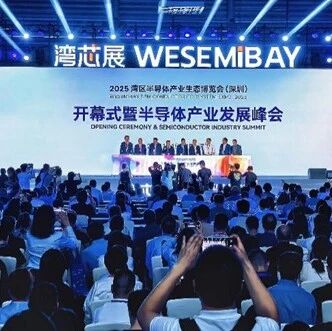
Core Viewpoint - The article emphasizes the strategic importance of the semiconductor industry in the context of global technological competition and highlights China's efforts to enhance its semiconductor capabilities through the "14th Five-Year Plan" and the upcoming Bay Area Semiconductor Industry Expo (Bay Chip Expo) [1][12]. Group 1: Market Overview - The global semiconductor market is projected to reach $980 billion by 2026, with a year-on-year growth rate of 27% [1]. - The Guangdong-Hong Kong-Macao Greater Bay Area has become a significant growth engine for China's semiconductor industry, housing over 12,000 industry-related enterprises [1]. Group 2: Bay Chip Expo Achievements - In 2025, the Bay Chip Expo covered over 60,000 square meters, featured more than 600 global exhibitors, and attracted 112,300 professional visitors, marking it as a focal point in the industry [5]. - The event received extensive media coverage, with over 1 billion online exposures, and introduced the "Bay Chip Award," which engaged nearly 4 million professional votes [5]. Group 3: Industry Collaboration - The Bay Chip Expo aims to break down barriers across the semiconductor supply chain, creating a collaborative platform that encompasses chip design, wafer manufacturing, compound semiconductors, and advanced packaging [3]. - The expo facilitates efficient connections between global semiconductor resources, promoting both "bringing in" and "going out" strategies [7]. Group 4: Future Developments - The 2026 Bay Chip Expo is set to take place from October 14-16 in Shenzhen, with an exhibition area exceeding 70,000 square meters and over 800 exhibitors expected [12]. - The event will focus on key areas such as AI chips, RISC-V ecosystems, and advanced packaging, aligning with industry upgrade needs [14]. Group 5: International Strategy - The expo plans to enhance its international strategy by targeting semiconductor core regions in Japan, South Korea, and Southeast Asia, aiming to increase overseas participation significantly [9]. - It will invite top global semiconductor experts and executives to discuss industry trends and share insights on advanced technologies [10].




机械设备行业跟踪周报:继续看好AI+机械设备投资机会,建议关注短期调整较大的机器人、油服设备-20260322
Soochow Securities· 2026-03-22 10:13
Investment Rating - The report maintains a "Buy" rating for the mechanical equipment industry, with a focus on AI and mechanical equipment investment opportunities [1]. Core Insights - The report emphasizes the potential of AI-driven mechanical equipment, particularly in the robotics sector, where companies like Yushu Technology are showing significant growth in revenue and profitability [1]. - The GTC conference highlighted the increasing demand for AI computing power, which is expected to drive growth in PCB and liquid cooling segments [2]. - The solar equipment sector is poised to benefit from Tesla's procurement of photovoltaic equipment and Blue Origin's satellite launch plans, indicating strong demand for leading equipment manufacturers [3]. Summary by Sections Recommended Companies - The report suggests a focus on companies such as Northern Huachuang, Sany Heavy Industry, and Zhongwei Company, among others, across various segments including robotics, AI devices, and solar equipment [1][2][3]. Industry Trends - The robotics industry is experiencing a significant rebound, with Yushu Technology's IPO materials indicating a revenue increase of 335.36% and a net profit increase of 674.29% for 2025 [1]. - The AI device sector is seeing advancements in architecture and cooling solutions, with Nvidia's LPU architecture expected to enhance performance and drive PCB demand [2]. - The solar equipment market is benefiting from increased demand driven by major companies like Tesla and innovative projects like Blue Origin's satellite constellation [3]. Market Dynamics - The oil service equipment sector is facing short-term adjustments due to geopolitical tensions, but long-term demand is expected to rise as oil prices remain high and reconstruction efforts in conflict areas increase [7]. - The mechanical equipment industry is projected to see significant growth opportunities due to China's increasing foreign investments and the global demand for advanced machinery [37].



机械行业2026春季策略报告:顺周期盈利修复,逢低布局成长主线-20260319
Shanghai Aijian Securities· 2026-03-19 09:51
Group 1 - The mechanical equipment sector is expected to outperform the market, driven by a combination of cyclical recovery and growth potential, with engineering machinery and rail transit equipment showing significant profit recovery and low valuations [3][10] - The commercial aerospace sector is anticipated to reach a critical turning point in 2026, with advancements in reusable rocket technology and an increase in launch frequency, leading to a projected 197% year-on-year growth in payload quality [3][4] - The humanoid robotics industry is transitioning towards large-scale production, with significant cost reductions and improved capabilities expected, particularly with the launch of the Optimus V3 model [3][4] Group 2 - The semiconductor equipment sector is poised for growth due to increased demand from storage expansion and advanced packaging upgrades, with key players expected to benefit from ongoing capital expenditure recovery [3][4] - The PCB equipment market is experiencing a shift towards high-end products, driven by the penetration of AI servers and HPC architectures, leading to increased demand for new capacity and upgrades of existing production lines [3][4] - The controllable nuclear fusion sector is advancing with the construction of experimental devices and the bidding for key equipment, with high-temperature superconducting materials expected to become a core beneficiary of technological evolution [3][4] Group 3 - The mechanical equipment sector has shown a significant recovery in profitability, with 17 out of 19 sub-industries reporting improved net profit margins, indicating a broad-based recovery [12][33] - The sector's valuation has rebounded to a historically high level, with the current PE ratio at 35.42, reflecting a strong market preference for growth-oriented manufacturing assets [13][26] - The demand side remains weak but is stabilizing, with high-tech manufacturing and equipment manufacturing showing better performance compared to traditional sectors, indicating a gradual recovery in the overall manufacturing landscape [34][38]


国产存储产业链10家核心企业
是说芯语· 2026-03-18 14:04
Core Insights - The storage industry chain is a critical pillar of the semiconductor industry, supporting various high-growth sectors such as AI servers, automotive electronics, industrial control, IoT, and cloud computing [1] - The domestic storage industry chain is experiencing a surge in orders across leading enterprises, with many companies seeing order volumes exceeding 10 billion, indicating a strong growth trajectory and a rapid pace of domestic substitution [1] Company Summaries Giantec (聚辰股份) - Founded in 2009, Giantec specializes in non-volatile storage chips and mixed-signal chips, with a global customer base [2] - Core products include DDR5 SPD chips and EEPROM chips, with a focus on high reliability for automotive and industrial applications [3] - Holds over 40% global market share in DDR5 SPD chips and ranks first in the domestic EEPROM market, benefiting from the AI server upgrade cycle with orders extending to Q1 2027 [4] Dosilicon (东芯股份) - Established in 2014, Dosilicon focuses on small to medium capacity storage chips, providing comprehensive solutions including NAND, NOR, and DRAM [5] - Main products include SLC NAND and SPI NOR Flash chips, with a complete range of automotive-grade certifications [6] - Holds over 30% market share in domestic SLC NAND, with orders extending to the end of 2026, driven by surging demand in industrial and automotive sectors [8] Ingenic (北京君正) - Founded in 2005, Ingenic is a leader in CPU and storage chips, with a strong focus on high-performance, low-power solutions for smart hardware and automotive electronics [9] - Key products include automotive-grade SRAM and DRAM chips, all meeting stringent automotive standards [10] - Holds approximately 29% global market share in automotive SRAM, with a strong order pipeline extending to the end of 2026 [11] Biwin (佰维存储) - Established in 2010, Biwin integrates R&D, packaging, testing, and sales of storage solutions, focusing on AI and embedded storage [12] - Core products include embedded storage and consumer-grade SSDs, with the ePOP module leading the global market [13] - Positioned as a leader in AI storage, with orders extending to Q1 2026, benefiting from the rapid adoption of AI devices [14] TFME (通富微电) - Founded in 1994, TFME is a leading integrated circuit packaging and testing company, providing a one-stop service from design to testing [15] - Core business includes packaging and testing for storage chips and AI accelerators, with advanced packaging technologies in mass production [17] - As a key partner for AMD, the company has a robust order pipeline extending through 2026, driven by high demand for advanced packaging [18] JCET (长电科技) - Established in 1972, JCET is a global leader in integrated circuit manufacturing and services, focusing on advanced packaging for storage chips [19] - Key products include HBM3 packaging with a high yield rate of 98.5%, serving major storage companies [20] - Orders extend to Q2 2028, benefiting from the surge in AI computing and advanced packaging demand [21] Naura (北方华创) - Founded in 2001, Naura specializes in semiconductor equipment, covering 80% of the front-end process equipment [22] - Core products include etching and deposition equipment, with significant involvement in domestic storage wafer expansion [23] - Orders extend to 2027, driven by the acceleration of domestic equipment substitution [24] Longsys (江波龙) - Established in 1999, Longsys is a leading semiconductor storage brand, focusing on enterprise, industrial, and consumer storage solutions [25] - Core products include enterprise-grade NVMe SSDs and DDR5 RDIMM modules, catering to AI server demands [26] - Orders extend to the end of 2026, supported by strong demand from domestic cloud service providers [27] Montage (澜起科技) - Montage is a leading data processing and interconnect chip design company, focusing on memory interface chips [28] - Core products include memory interface solutions from DDR2 to DDR5, with a strong market position in AI server applications [29] - Orders extend to Q1 2027, benefiting from the AI computing boom [30] GigaDevice (兆易创新) - Founded in 2005, GigaDevice is a top player in storage chip design, with a focus on NOR Flash and niche DRAM [31] - Core products include NOR Flash with approximately 19% global market share, and a strong presence in automotive and industrial storage [33] - Orders extend to the end of 2026, supported by the growing demand for AI servers and IoT devices [34]