
Sino Biological(301047)

Search documents
义翘神州(301047) - 2025 Q3 - 季度财报
2025-10-27 08:25
Financial Performance - The company's operating revenue for Q3 2025 reached ¥186,989,841.86, representing a year-on-year increase of 17.39%[5] - Net profit attributable to shareholders was ¥42,493,181.41, up 49.76% compared to the same period last year[5] - The net profit excluding non-recurring gains and losses increased by 180.35% to ¥29,130,578.62[5] - Basic earnings per share rose by 57.86% to ¥0.3493[5] - The company achieved a total operating revenue of CNY 51,144.50 million for the first three quarters of 2025, representing a year-on-year growth of 10.00%[19] - The net profit for the first three quarters reached CNY 11,017.95 million, a year-on-year increase of 10.94%[20] - In Q3 2025, the company reported a net profit of CNY 4,249.32 million, which is a 49.76% increase compared to the same quarter last year[20] - Total operating revenue for the current period reached ¥511,445,016.65, an increase of 10% compared to ¥464,949,715.92 in the previous period[24] - Net profit for the current period was ¥110,179,472.73, representing a 10.5% increase from ¥99,315,298.46 in the previous period[25] - Basic earnings per share increased to ¥0.9058 from ¥0.7787, marking a growth of 16.3%[25] Assets and Liabilities - Total assets at the end of the reporting period were ¥5,477,775,495.59, a decrease of 9.53% from the end of the previous year[5] - The total current assets decreased to CNY 3,556.78 million from CNY 4,207.57 million[22] - The company’s total assets included fixed assets valued at CNY 725.17 million, down from CNY 780.15 million[22] - Total assets decreased to ¥5,477,775,495.59 from ¥6,054,708,956.79, a decline of approximately 9.5%[24] - Total liabilities decreased to ¥200,806,504.98 from ¥281,796,824.83, a reduction of about 28.7%[24] - Total equity attributable to shareholders decreased by 8.59% to ¥5,276,968,990.61[5] - Total equity attributable to shareholders decreased to ¥5,276,968,990.61 from ¥5,772,912,131.96, a decline of approximately 8.6%[24] Cash Flow - The company's cash flow from operating activities for the year-to-date was ¥82,991,441.81, an increase of 11.22%[5] - The company reported a significant increase in cash and cash equivalents, with a 74.69% rise to ¥407,636,599.70, primarily due to the redemption of financial products[11] - Operating cash flow for the current period is ¥82,991,441.81, an increase of 11.5% from ¥74,621,967.39 in the previous period[26] - Total cash inflow from investment activities is ¥6,246,971,819.72, down 30.8% from ¥9,039,299,721.91 in the previous period[26] - Net cash flow from investment activities is ¥587,562,619.06, significantly up from ¥182,467,910.11 in the previous period[26] - Cash outflow for financing activities is ¥630,798,194.49, a decrease of 13% from ¥725,204,154.49 in the previous period[27] - The net increase in cash and cash equivalents is ¥40,055,933.57, compared to a decrease of ¥473,338,318.06 in the previous period[27] - The ending balance of cash and cash equivalents is ¥165,366,499.87, down from ¥714,196,283.76 in the previous period[27] - Cash received from the recovery of investments is ¥6,191,197,583.70, a decrease from ¥8,975,000,000.00 in the previous period[26] - Cash paid for the acquisition of fixed assets is ¥53,258,845.87, an increase from ¥44,454,066.30 in the previous period[26] - Cash paid for investments is ¥5,555,802,330.68, down from ¥8,527,406,120.55 in the previous period[26] Shareholder Information - The major shareholder, Lhasa Ailike Investment Consulting Co., Ltd., holds a 53.55% stake in the company[18] Other Information - Research and development expenses remained stable at ¥66,516,826.75, slightly up from ¥66,432,065.32[24] - Other comprehensive income after tax for the current period was ¥916,910.26, compared to a loss of ¥2,548,209.11 in the previous period[25] - The company reported a total comprehensive income of ¥111,096,382.99, an increase from ¥96,767,089.35 in the previous period[25] - The company is focusing on expanding its regular business while addressing the decline in non-regular business revenue[19] - The company’s third-quarter financial report is unaudited[28]
义翘神州10月9日获融资买入1334.85万元,融资余额2.86亿元
Xin Lang Cai Jing· 2025-10-10 01:31
Core Insights - Yiqiao Shenzhou's stock price decreased by 0.59% on October 9, with a trading volume of 85.39 million yuan [1] - The company reported a financing buy-in of 13.35 million yuan and a net financing buy of 0.93 million yuan on the same day [1][2] - As of October 9, the total financing and securities lending balance for Yiqiao Shenzhou reached 287 million yuan, indicating a high level of financing activity [1] Financing Overview - On October 9, Yiqiao Shenzhou had a financing buy-in of 13.35 million yuan, with a current financing balance of 286 million yuan, accounting for 3.19% of its market capitalization [1] - The financing balance is above the 90th percentile of the past year, indicating a high level of leverage [1] - The company had no shares repaid in securities lending on October 9, with 600 shares sold, amounting to 44,300 yuan at the closing price [1] Business Performance - For the first half of 2025, Yiqiao Shenzhou achieved a revenue of 324 million yuan, representing a year-on-year growth of 6.15% [2] - The net profit attributable to the parent company was 67.69 million yuan, showing a year-on-year decrease of 4.59% [2] - The company's main business revenue composition includes: recombinant proteins (45.04%), CRO services (30.74%), antibodies (13.68%), and others [1] Shareholder Information - As of September 10, the number of shareholders for Yiqiao Shenzhou was 20,700, a decrease of 1.44% from the previous period [2] - The average number of circulating shares per shareholder increased by 1.46% to 5,787 shares [2] - The company has distributed a total of 1.802 billion yuan in dividends since its A-share listing, with 1.122 billion yuan in the last three years [3]
义翘神州:2025年半年度权益分派实施公告
Zheng Quan Ri Bao· 2025-09-12 14:12
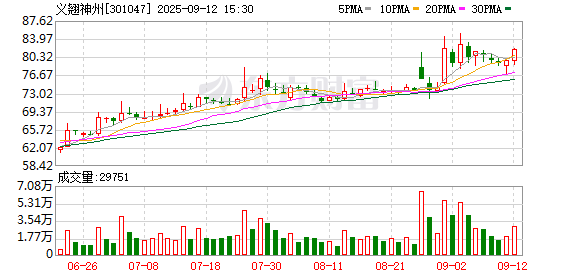
Group 1 - The company announced a cash dividend distribution plan for the first half of 2025, proposing a payout of 40.00 yuan per 10 shares (including tax) [2] - The record date for the dividend distribution is set for September 19, 2025, while the ex-dividend date is September 22, 2025 [2]

义翘神州(301047) - 2025年半年度权益分派实施公告
2025-09-12 10:00
证券代码:301047 证券简称:义翘神州 公告编号:2025-035 北京义翘神州科技股份有限公司 2025 年半年度权益分派实施公告 本公司及董事会全体成员保证信息披露内容的真实、准确和完整,没有虚假 记载、误导性陈述或重大遗漏。 北京义翘神州科技股份有限公司(以下简称"公司")2025 年半年度权益 分派方案已获 2025 年 9 月 11 日召开的 2025 年第一次临时股东大会审议通过, 现将权益分派事宜公告如下: 一、股东大会审议通过权益分派情况 1、公司于 2025 年 9 月 11 日召开 2025 年第一次临时股东大会,审议通过《关 于 2025 年半年度利润分配预案的议案》,公司 2025 年半年度利润分配方案为: 以公司总股本 121,636,742 股为基数,向全体股东每 10 股派发现金红利 40.00 元 (含税),拟合计派发现金红利总额为 486,546,968.00 元(含税),不送红股, 不以资本公积金转增股本。本次分红后的剩余未分配利润结转以后年度分配。 在权益分派预案披露日至实施权益分派股权登记日期间,若公司总股本发生变 动,将按照分配总额不变的原则相应调整,具体以实际派 ...
生物制品板块9月12日涨0%,奥浦迈领涨,主力资金净流出3.1亿元
Zheng Xing Xing Ye Ri Bao· 2025-09-12 08:31
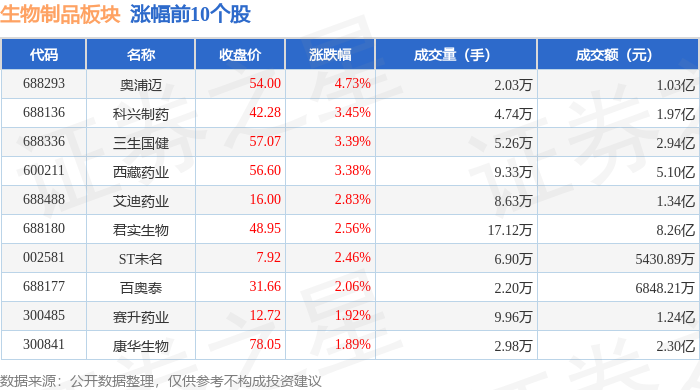
Market Overview - The biopharmaceutical sector experienced a slight increase of 0.0% on September 12, with Aopumai leading the gains [1] - The Shanghai Composite Index closed at 3883.69, up by 0.22%, while the Shenzhen Component Index closed at 12996.38, up by 0.13% [1] Top Gainers in Biopharmaceutical Sector - Aopumai (688293) closed at 54.00, with a rise of 4.73% and a trading volume of 20,300 lots, totaling a transaction value of 103 million [1] - Kexing Pharmaceutical (688136) closed at 42.28, increasing by 3.45% with a trading volume of 47,400 lots, amounting to 197 million [1] - Sanofi (688336) closed at 57.07, up by 3.39% with a trading volume of 52,600 lots, totaling 294 million [1] - Tibet Pharmaceutical (600211) closed at 56.60, rising by 3.38% with a trading volume of 93,300 lots, totaling 510 million [1] - Wenqu Pharmaceutical (688488) closed at 16.00, increasing by 2.83% with a trading volume of 86,300 lots, amounting to 134 million [1] Top Decliners in Biopharmaceutical Sector - Rongchang Biopharmaceutical (688331) closed at 107.22, down by 2.68% with a trading volume of 56,400 lots, totaling 611 million [2] - Wanze Shares (000534) closed at 16.02, decreasing by 2.61% with a trading volume of 135,500 lots, amounting to 218 million [2] - Kangtai Biopharmaceutical (300601) closed at 18.63, down by 1.48% with a trading volume of 156,700 lots, totaling 292 million [2] Capital Flow Analysis - The biopharmaceutical sector saw a net outflow of 310 million from institutional investors, while retail investors experienced a net inflow of 132 million [2] - Notable net inflows from retail investors were observed in Kanghua Biological (300841) with 94.86 million, and Xizang Pharmaceutical (600211) with 49.76 million [3] - Conversely, significant net outflows were noted in Rongchang Biopharmaceutical (688331) with 17.13 million and Aopumai (688293) with 18.19 million from retail investors [3]



义翘神州(301047) - 2025年第一次临时股东大会决议公告
2025-09-11 10:54
证券代码:301047 证券简称:义翘神州 公告编号:2025-034 北京义翘神州科技股份有限公司 2025 年第一次临时股东大会决议公告 本公司及董事会全体成员保证信息披露内容的真实、准确和完整,没有虚假 记载、误导性陈述或重大遗漏。 特别提示: 1、本次股东大会未出现否决议案的情形; 2、本次股东大会不涉及变更以往股东大会已通过决议的情况。 一、会议召开情况 (一)会议召开时间 (1)现场会议时间:2025 年 9 月 11 日(星期四)14:30。 (2)网络投票时间:通过深圳证券交易所交易系统进行网络投票的具体时 间为:2025 年 9 月 11 日 9:15-9:25、9:30-11:30 和 13:00-15:00;通过深圳证券交 易所互联网投票系统投票的具体时间为:2025 年 9 月 11 日 9:15-15:00 期间的任 意时间。 (二)会议召开方式:本次股东大会采取现场投票与网络投票相结合的方式。 (三)会议召开地点:北京市北京经济技术开发区科创十街 18 号院 11 号楼 215 会议室。 (四)会议召集人:公司董事会。 (五)会议主持人:公司董事长谢良志博士。 (六)本次会议的召集 ...
义翘神州(301047) - 北京市金杜律师事务所关于北京义翘神州科技股份有限公司2025年第一次临时股东大会的法律意见书
2025-09-11 10:54
北京市金杜律师事务所 关于北京义翘神州科技股份有限公司 2025 年第一次临时股东大会的法律意见书 致:北京义翘神州科技股份有限公司 北京市金杜律师事务所(以下简称本所)接受北京义翘神州科技股份有限公 司(以下简称公司)的委托,根据《中华人民共和国证券法》(以下简称《证券 法》)、《中华人民共和国公司法》(以下简称《公司法》)、中国证券监督管 理委员会(以下简称中国证监会)《上市公司股东会规则》(以下简称《股东会 规则》)等中华人民共和国境内(以下简称中国境内,为本法律意见书之目的, 不包括中国香港特别行政区、中国澳门特别行政区和中国台湾省)现行有效的法 律、行政法规、部门规章、规范性文件和现行有效的《北京义翘神州科技股份有 限公司章程》(以下简称《公司章程》)的规定,指派律师出席了公司于 2025 年 9 月 11 日召开的 2025 年第一次临时股东大会(以下简称本次股东大会), 并就本次股东大会相关事项出具本法律意见书。 为出具本法律意见书,本所律师审查了公司提供的以下文件,包括但不限于: 1. 经公司 2024 年年度股东大会审议通过并于 2025 年 4 月 19 日刊登于深 圳证券交易所网站等中国 ...
义翘神州:关于控股股东部分股份质押的公告
Zheng Quan Ri Bao· 2025-09-05 15:40
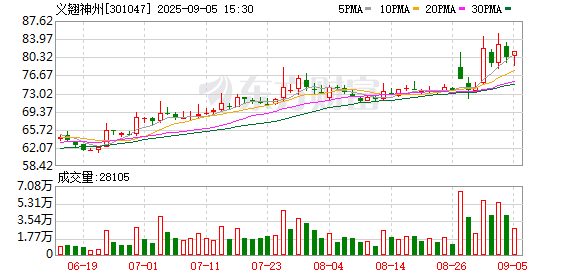
Group 1 - The core point of the article is that Yiqiao Shenzhou announced the pledge of shares by its controlling shareholder, Lhasa Ailike Investment Consulting Co., Ltd. [2] - The number of pledged shares is 4,500,000, which represents 6.91% of the shares held by the controlling shareholder and 3.70% of the total share capital of the company [2]
义翘神州:控股股东爱力克质押3.70%公司股份
Xin Lang Cai Jing· 2025-09-05 08:15
Group 1 - The controlling shareholder of Yiqiao Shenzhou, Lhasa Ailike Investment Consulting Co., Ltd., pledged 4.5 million shares of the company on September 4, 2025, which accounts for 6.91% of its holdings and 3.70% of the company's total share capital [1] - The purpose of the pledged shares is for financing [1] - There are no significant asset restructuring or performance compensation obligations associated with the pledged shares [1]
义翘神州(301047) - 关于控股股东部分股份质押的公告
2025-09-05 08:15
证券代码:301047 证券简称:义翘神州 公告编号:2025-033 2、股东股份累计质押基本情况 截至公告披露日,上述股东及其一致行动人所持质押股份情况如下: | | | | 本次质押 | 本次质押 | 占其所 | 占公司 | 已质押股份情况 | | 未质押股份情况 | | | --- | --- | --- | --- | --- | --- | --- | --- | --- | --- | --- | | 股东 名称 | 持股数量 (股) | 持股 比例 | 前质押股 | 后质押股 | 持股份 | 总股本 | 已质押股份 限售和冻 | 占已 质押 | 未质押股 份限售和 | 占未质 | | | | | 份数量 (股) | 份数量 (股) | 比例 | 比例 | 结、标记数 | 股份 | 冻结数量 | 押股份 比例 | | | | | | | | | 量(股) | 比例 | (股) | | | 爱力克 | 65,140,056 | 53.55% | 15,000,000 | 19,500,000 | 29.94% | 16.03% | 0 | 0.00% | 0 | 0.00% | | 谢良志 | 2 ...