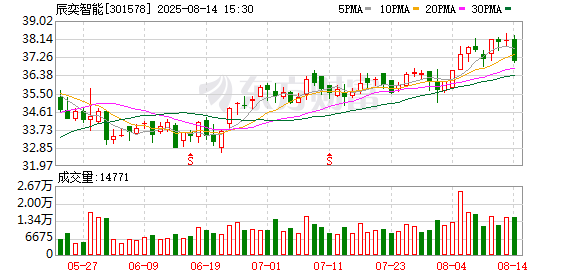
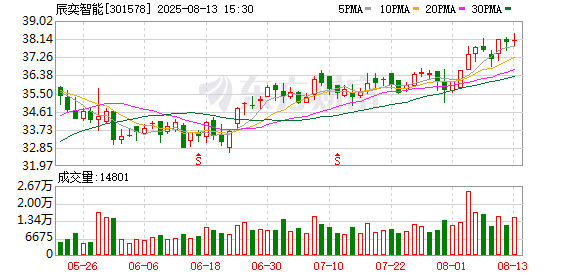
Guangdong Seneasy Intelligent Technology (301578)
Search documents
黑色家电板块8月6日涨0.45%,*ST高斯领涨,主力资金净流入1.84亿元
Zheng Xing Xing Ye Ri Bao· 2025-08-06 08:31
Market Performance - The black home appliance sector rose by 0.45% on August 6, with *ST Gauss leading the gains [1] - The Shanghai Composite Index closed at 3633.99, up 0.45%, while the Shenzhen Component Index closed at 11177.78, up 0.64% [1] Stock Performance - Key stocks in the black home appliance sector showed varied performance, with *ST Gauss closing at 7.72, up 2.12%, and Sichuan Changhong at 9.98, up 2.04% [1] - Other notable performers included Jiuliang Technology at 11.05, up 1.28%, and Tongzhou Electronics at 10.43, up 1.16% [1] Capital Flow - The black home appliance sector saw a net inflow of 184 million yuan from institutional investors, while retail investors experienced a net outflow of 90.32 million yuan [1] - The capital flow data indicates that Sichuan Changhong had a net inflow of 19.6 million yuan from institutional investors, while retail investors had a net outflow of 12.7 million yuan [2]
黑色家电板块8月5日涨0.46%,辰奕智能领涨,主力资金净流出8888.96万元
Zheng Xing Xing Ye Ri Bao· 2025-08-05 08:37
Market Overview - The black home appliance sector rose by 0.46% on August 5, with Chenyi Intelligent leading the gains [1] - The Shanghai Composite Index closed at 3617.6, up 0.96%, while the Shenzhen Component Index closed at 11106.96, up 0.59% [1] Stock Performance - Key stocks in the black home appliance sector showed varied performance, with Chenyi Intelligent closing at 37.37, up 2.13% [1] - Other notable performers included Fei Axis Co., up 1.55% to 4.58, and Chuangwei Digital, up 1.38% to 11.75 [1] Trading Volume and Capital Flow - The total trading volume for the black home appliance sector was significant, with Chenyi Intelligent seeing a transaction amount of approximately 92.48 million [1] - The sector experienced a net outflow of 88.89 million from main funds, while retail investors contributed a net inflow of 78.22 million [1] Capital Flow Analysis - Among individual stocks, Chuangwei Digital had a main fund net inflow of 11.28 million, but also saw a retail net outflow of 4.74 million [2] - Sichuan Changhong experienced a significant main fund net outflow of 66.21 million, while retail investors contributed a net inflow of 56.73 million [2]
辰奕智能:智能遥控器的渗透性进一步增强,应用领域日趋广泛
Zheng Quan Ri Bao Wang· 2025-08-04 10:17
Group 1 - The core viewpoint is that the replacement cycle for remote controls is generally 3-5 years, indicating a stable market for these products [1] - The penetration of smart remote controls is increasing as various electrical devices are becoming more digital, integrated, and intelligent [1] - The application areas for smart remote controls are becoming increasingly diverse, suggesting potential growth opportunities in the industry [1]
辰奕智能:智能遥控器应用拓展至汽车、会议系统等领域
Jin Rong Jie· 2025-08-04 04:51
Core Viewpoint - The company addresses concerns regarding the performance of its main product, the smart remote control, and highlights the increasing value and application of smart remotes in various sectors due to technological advancements [1] Group 1: Product Lifecycle and Market Trends - The typical replacement cycle for remote controls is 3-5 years, indicating a stable market demand [1] - The penetration of smart remotes is increasing as various electronic devices become more digital, integrated, and intelligent [1] - The application range of smart remotes is expanding from traditional devices like TVs and air conditioners to automobiles and smart home systems [1] Group 2: Technological Advancements - Recent advancements in smart home technology, artificial intelligence, the Internet of Things, and wireless communication are driving the growth of the smart remote control industry [1] - The transition from infrared remotes to advanced smart remotes featuring voice, touch, and radar control is enhancing the added value of these products [1] Group 3: Company Strategy - The company is actively expanding its product offerings in the smart living ecosystem, including smart cameras, microphones, controllers, and control panels [1] - The company is focusing on broadening the application fields of its smart remote controls to include automotive and conferencing systems [1]
辰奕智能参股成立深圳华辰智控技术有限公司,持股比例30%
Zheng Quan Zhi Xing· 2025-07-31 00:36
数据来源:天眼查APP 证券之星消息,根据天眼查APP数据整理,近日,深圳华辰智控技术有限公司成立,法定代表人为李晓 宇,注册资本2000万元,经营范围包含:电子产品销售;计算机软硬件及辅助设备批发;机械设备研 发;电机及其控制系统研发;智能控制系统集成;配电开关控制设备销售;配电开关控制设备研发;工 业自动控制系统装置销售;工业控制计算机及系统销售;集成电路销售;集成电路设计;集成电路芯片 设计及服务;集成电路芯片及产品销售;电子元器件零售;电子元器件批发;软件销售;软件开发。 (除依法须经批准的项目外,凭营业执照依法自主开展经营活动)无。天眼查APP股权穿透显示,该公司 由辰奕智能、深圳华睿辰投资企业(有限合伙)、深圳华与辰投资控股有限公司共同持股。 ...
黑色家电板块7月29日跌0.13%,同洲电子领跌,主力资金净流出4565.16万元
Zheng Xing Xing Ye Ri Bao· 2025-07-29 08:34
证券之星消息,7月29日黑色家电板块较上一交易日下跌0.13%,同洲电子领跌。当日上证指数报收于 3609.71,上涨0.33%。深证成指报收于11289.41,上涨0.64%。黑色家电板块个股涨跌见下表: | 代码 | 名称 | 收盘价 | 涨跌幅 | 成交量(手) | 成交额(元) | | | --- | --- | --- | --- | --- | --- | --- | | 000801 | 四川九洲 | 15.94 | 4.39% | 62.66万 | | 26886 | | 688609 | 九联科技 | 10.71 | 0.56% | 15.65万 | | 1.67亿 | | 000810 | 创维数字 | 11.71 | 0.26% | C 11.77万 | | 1.37亿 | | 002848 | *ST高斯 | 7.71 | -0.13% | - 2.18万 | | 1671.09万 | | 301578 | 辰奕智能 | 36.45 | -0.25% | 8832.43 | | 3210.85万 | | 002429 | 非驰股份 | 4.63 | -0.43% | 37.87万 | ...
辰奕智能(301578) - 兴业证券股份有限公司关于广东辰奕智能科技股份有限公司2025年度持续督导培训情况的报告
2025-07-29 07:56
兴业证券股份有限公司 关于广东辰奕智能科技股份有限公司 2025 年度持续督导培训情况的报告 兴业证券股份有限公司(以下简称"兴业证券"或"保荐机构")作为广东辰奕 智能科技股份有限公司(以下简称"辰奕智能"或"公司")首次公开发行股票并在 创业板上市的保荐机构,根据《证券发行上市保荐业务管理办法》《深圳证券交 易所上市公司自律监管指引第 13 号—保荐业务》《深圳证券交易所创业板股票上 市规则》及《深圳证券交易所上市公司自律监管指引第 2 号—创业板上市公司规 范运作》等相关规定,对公司董事、监事、高级管理人员、中层以上管理人员及 控股股东和实际控制人等相关人员进行了持续督导培训,具体情况如下: 一、本次培训的基本情况 1、培训时间:2025 年 7 月 23 日 2、培训地点:辰奕智能会议室 3、培训方式:现场授课、线上会议相结合的方式 4、培训对象:公司董事、监事、高级管理人员、中层以上管理人员及控股 股东和实际控制人 本次培训持续督导项目组通过演示培训讲义、解读法规条文及案例分析等形 式,介绍了包括《上市公司募集资金监管规则》以及相关配套文件的修订情况、 募集资金监管案例、监管要求、新规落实要点等上市 ...
辰奕智能: 内部审计制度
Zheng Quan Zhi Xing· 2025-07-28 16:39
Core Viewpoint - The internal audit system of Guangdong Chenyi Intelligent Technology Co., Ltd. aims to enhance internal management and control, standardize internal audit work, improve audit quality, and protect investors' rights [1]. Group 1: General Principles - The internal audit is defined as a systematic and standardized method to supervise and evaluate the effectiveness of internal controls, risk management, and the authenticity and completeness of financial information [1][2]. - The board of directors is responsible for establishing and implementing internal control systems, which must be approved by the board [1][2]. Group 2: Internal Audit Organization and Personnel - The board of directors establishes an audit committee composed of non-executive directors, with independent directors forming a majority [2][3]. - The internal audit department operates independently and is not under the financial department's leadership [2][3]. - Internal audit personnel must possess relevant professional knowledge and adhere to ethical standards [3][4]. Group 3: Responsibilities and Requirements of Internal Audit - The audit committee guides and supervises the internal audit department, reviews annual audit plans, and reports on audit progress and quality to the board [4][5]. - The internal audit department is responsible for evaluating the integrity and effectiveness of internal controls and auditing financial data for legality and compliance [4][5]. - Internal audit reports must be submitted at least quarterly to the board or audit committee, detailing audit findings and issues [5][6]. Group 4: Specific Implementation of Internal Audit - The internal audit process includes planning, notification, execution, reporting, and follow-up on audit findings [28][29]. - The internal audit department must conduct audits on significant transactions, including fundraising, asset purchases, and related party transactions, ensuring compliance with regulations [21][22][24][25]. Group 5: Supervision and Management - The company must establish an incentive and restraint mechanism for the internal audit department, evaluating performance and addressing non-compliance [36][37]. - Internal audit personnel are subject to disciplinary actions for obstructing audits or engaging in misconduct [37][38].
辰奕智能: 董事、高级管理人员离职管理制度
Zheng Quan Zhi Xing· 2025-07-28 16:39
Core Points - The document outlines the management system for the resignation of directors and senior management at Guangdong Chenyi Intelligent Technology Co., Ltd, aiming to ensure corporate governance stability and protect shareholder rights [1][2]. Group 1: Resignation Procedures - Directors can resign before their term ends by submitting a written resignation report, which becomes effective upon receipt by the company, with disclosure required within two trading days [2]. - The company must complete the election of new directors within sixty days after a resignation to maintain compliance with legal and regulatory requirements [2]. - If a director's term ends without re-election, they automatically resign on the day the new board is elected [2]. Group 2: Responsibilities and Obligations - Resigning directors and senior management must transfer all relevant documents and assets to the board within five working days after their resignation [3]. - They are required to cooperate with the company regarding any follow-up investigations related to significant matters during their tenure [4]. - The obligations of confidentiality regarding trade secrets remain in effect even after resignation, until such information becomes public [4]. Group 3: Accountability Mechanism - If a resigning director or senior management fails to fulfill commitments or transfer responsibilities properly, the board will review and propose accountability measures, which may include compensation for losses incurred [6]. - Resigning individuals have the right to appeal the board's accountability decisions within fifteen days of notification [6]. Group 4: General Provisions - The management system is subject to relevant national laws and regulations, and any inconsistencies with these laws will defer to the legal provisions [6]. - The board of directors is responsible for the formulation, interpretation, and revision of this management system, which takes effect upon approval [6].
辰奕智能: 财务资助管理制度
Zheng Quan Zhi Xing· 2025-07-28 16:39
Core Viewpoint - The document outlines the financial assistance management system of Guangdong Chenyi Intelligent Technology Co., Ltd, aiming to regulate financial assistance behaviors, mitigate financial risks, and enhance information disclosure quality [2][3]. Summary by Sections General Principles - The financial assistance referred to in this system includes both compensated and uncompensated funding provided by the company and its controlling subsidiaries to entities within the consolidated financial statements, where the holding ratio exceeds 50% [2]. - The system is established in accordance with various laws and regulations, including the Company Law and the Securities Law of the People's Republic of China [2]. Approval of Financial Assistance - Financial assistance must be approved by at least two-thirds of the attending board members, with related directors abstaining from voting [3]. - Certain conditions require shareholder meeting approval after board review, such as when the asset-liability ratio of the recipient exceeds 70% or when the assistance amount exceeds 10% of the company's latest audited net assets [3][4]. Information Disclosure - The company must disclose financial assistance details, including the nature of the assistance, recipient's basic information, risk prevention measures, and board opinions [5][6]. - If the recipient fails to repay or faces financial difficulties, the company must disclose the situation and any remedial measures taken [6]. Responsibilities and Division of Work - The finance department is responsible for assessing the recipient's asset quality, operational status, and creditworthiness before providing assistance [7]. - After board or shareholder approval, the securities affairs department handles the information disclosure [7]. Penalties - Any violations of the financial assistance regulations that result in losses or negative impacts on the company will lead to legal accountability for the responsible individuals [8]. Supplementary Provisions - The system will be interpreted and revised by the company's board and will take effect upon approval by the shareholder meeting [8].