AstraZeneca(AZN)

Search documents
进博八载,“全勤生”的深耕与跨越:跨国药企的中国式成长|聚焦2025进博会
Hua Xia Shi Bao· 2025-11-08 02:57
Core Insights - The article highlights the significant growth and transformation of multinational pharmaceutical companies in China over the past eight years, particularly through their participation in the China International Import Expo (CIIE) [11] - Companies like Roche and Gilead are expanding their product offerings and localizing their operations, indicating a shift towards more comprehensive engagement in the Chinese market [3][5] Group 1: Roche's Expansion - Roche has evolved from showcasing a few oncology drugs at the first CIIE to presenting over 40 products and solutions this year, covering the entire industry chain from early research to localized production [3] - The company has launched nearly 15 products in China over the past eight years, with a new biopharmaceutical base in Shanghai aimed at producing large molecule antibody drugs locally [3][5] Group 2: Gilead's Innovations - Gilead is actively advancing local research and development, currently conducting 16 projects in China, including 10 in oncology, with 90% of these projects synchronized with global timelines [5] - The company introduced Lenacapavir, the first long-acting HIV prevention drug requiring only two doses per year, marking a significant milestone in HIV prevention [2][5] Group 3: AstraZeneca's Investments - AstraZeneca signed a $136 million investment agreement for its Qingdao base during the expo, emphasizing China's role as its second-largest market and a source of innovation [3] - The company has invested over $1.7 billion in projects driven by previous CIIE events, embedding its production supply chain deeply into the Chinese market [3] Group 4: Merck and Eli Lilly's Contributions - Merck showcased its first HIF-2α inhibitor for VHL syndrome patients and announced plans to introduce over 40 new products and indications in the next five years [5] - Eli Lilly has invested over 20 billion RMB in China, establishing a comprehensive industry chain from research to commercialization, and plans to continue expanding its local collaborations [5][10] Group 5: Amway's Local Innovations - Amway introduced a vitamin and mineral powder product, the first "blue hat" multivitamin in China, reflecting its commitment to local research and development [6][10] - The company has established a plant research center in Wuxi and is integrating AI and traditional Chinese medicine to enhance its product offerings [8][10] Group 6: The Broader Impact of CIIE - The CIIE has become a platform for global companies to redefine their roles in China, with many establishing local R&D centers and committing to long-term investments [10][11] - The event is seen as a bridge for innovation and trust between China and the world, showcasing the potential for Chinese-developed products to reach global markets [11][12]


第八届进博会|约百家企业及机构在“四叶草”续写“进博之约”
Xin Hua Wang· 2025-11-08 01:21
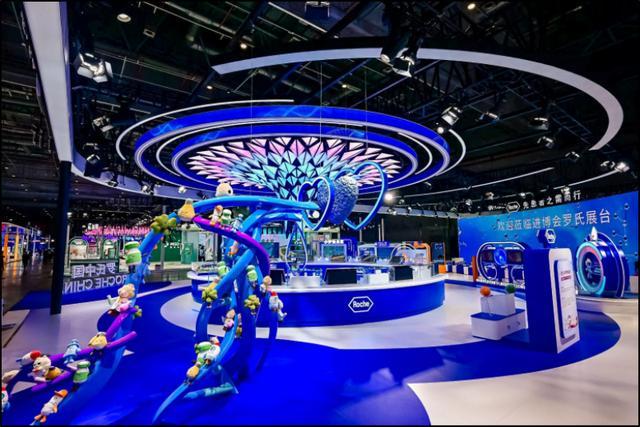
"当中国以开放的姿态拥抱世界,世界也以蓬勃的活力回应中国。"资生堂中国及旅游零售CEO梅津 利信说,多年来连续参展,资生堂早已不仅是"参展商",而是"投资中国"与"共享全球"故事的同行者。 值得注意的是,10家企业及机构在现场签约参加2025进博优品交易会。即将在12月首次举办的2025 进博优品交易会,是在中国国际进口博览会会期之外,针对特定领域优质产品的延展,重点面向消费端 展销,同时吸引采购商、服务商、渠道商等各类主体参加,将让更多"进博好物"直达消费端。 根据计划,进博优品交易会展览面积6万平方米,将吸引约3000家采购商,超8万人次专业观众和个 人消费者到场洽谈和直接消费,构建全面多元"进博生态圈"。 新华社上海11月7日电(记者周蕊)在第八届进博会期间,约百家企业及机构续写"进博之约",以 实际行动投下进博"信任票"。 记者在现场看到,64家企业及机构签约参展第九届进博会企业商业展,28家企业及机构签约成为虹 桥国际经济论坛会员及智库伙伴,10家企业及机构在现场签约参加2025进博优品交易会。 "中国国际进口博览会充分彰显了中国推动高质量发展、深化全球开放合作的坚定承诺。"签约企业 阿斯利康全球执 ...
约百家企业及机构在“四叶草”续写“进博之约”
Xin Hua She· 2025-11-07 16:46
新华财经上海11月8日电(记者周蕊)在第八届进博会期间,约百家企业及机构续写"进博之约",以实 际行动投下进博"信任票"。 "当中国以开放的姿态拥抱世界,世界也以蓬勃的活力回应中国。"资生堂中国及旅游零售CEO梅津利信 说,多年来连续参展,资生堂早已不仅是"参展商",而是"投资中国"与"共享全球"故事的同行者。 值得注意的是,10家企业及机构在现场签约参加2025进博优品交易会。即将在12月首次举办的2025进博 优品交易会,是在中国国际进口博览会会期之外,针对特定领域优质产品的延展,重点面向消费端展 销,同时吸引采购商、服务商、渠道商等各类主体参加,将让更多"进博好物"直达消费端。 根据计划,进博优品交易会展览面积6万平方米,将吸引约3000家采购商,超8万人次专业观众和个人消 费者到场洽谈和直接消费,构建全面多元"进博生态圈"。 (文章来源:新华社) 记者在现场看到,64家企业及机构签约参展第九届进博会企业商业展,28家企业及机构签约成为虹桥国 际经济论坛会员及智库伙伴,10家企业及机构在现场签约参加2025进博优品交易会。 "中国国际进口博览会充分彰显了中国推动高质量发展、深化全球开放合作的坚定承诺。" ...
阿斯利康携手本土企业:从赋能到共创 重塑全球创新价值链
2 1 Shi Ji Jing Ji Bao Dao· 2025-11-07 15:09
Core Viewpoint - The 8th China International Import Expo (CIIE) showcases global high-quality resources, with the medical devices and healthcare section being a major highlight, particularly featuring AstraZeneca's commitment to innovation and collaboration in the Chinese pharmaceutical market [2][4]. AstraZeneca's Role and Contributions - AstraZeneca has participated in all eight editions of the CIIE, presenting 20 innovative products that address various medical needs, including respiratory, renal, digestive, rare diseases, autoimmune conditions, and multiple cancers [2]. - The company emphasizes its role in facilitating Chinese innovation on a global scale, hosting a roundtable forum during the expo to discuss key drivers of pharmaceutical innovation in China [2][4]. Evolution of Collaboration Models - AstraZeneca's collaboration in China has evolved from simple licensing agreements to a comprehensive ecosystem of partnerships, focusing on research collaboration, strategic investments, and AI empowerment [5][6]. - The partnership with Heptares Therapeutics exemplifies this evolution, transitioning from single molecule licensing to a deep strategic collaboration covering multiple targets and projects [5][6]. Focus on Early Research and AI Integration - AstraZeneca's strategy in China prioritizes early-stage research and clinical development, leveraging China's unique advantages in research efficiency and diverse patient demographics [8][9]. - The integration of AI technology is revolutionizing research efficiency, with AI applications expanding from drug discovery to the entire clinical development process [9][10]. Impact on Global Pharmaceutical Landscape - AstraZeneca's collaborations with Chinese pharmaceutical companies are elevating their status from participants to co-creators in the global value chain, enhancing the quality of healthcare solutions available to patients worldwide [11].
阿斯利康携手本土企业:从赋能到共创,重塑全球创新价值链
2 1 Shi Ji Jing Ji Bao Dao· 2025-11-07 15:00
Core Insights - The 8th China International Import Expo (CIIE) showcased a strong focus on the medical devices and healthcare sector, with AstraZeneca being a prominent participant, highlighting its commitment to innovation and investment in the Chinese market [1][2] - AstraZeneca has introduced 20 innovative products over the past eight years, addressing various medical needs across multiple disease areas, and is actively promoting Chinese innovations on a global scale [1][4] - The company has evolved its collaboration model in China from simple licensing to a comprehensive ecosystem approach, emphasizing research and development partnerships, strategic investments, and AI integration [2][6] Company Strategy - AstraZeneca's long-term presence in China since 1993 has allowed it to align closely with the development of the local pharmaceutical industry, transitioning from a focus on generic drugs to fostering innovation [2][4] - The company has established a global strategic R&D center in Beijing, marking its commitment to leveraging China's growing innovation ecosystem [4][5] - AstraZeneca's partnerships with local firms, such as the collaboration with Chengyi Biotech, exemplify a shift towards shared risk and reward models, enhancing the capabilities of Chinese biotech firms in global clinical trials [3][6] Industry Trends - The pharmaceutical industry is witnessing a shift in focus from mere capital investment to recognizing the intrinsic value of innovation and efficient R&D capabilities [3][8] - AI technology is becoming integral to drug discovery and clinical development, enhancing efficiency and enabling a collaborative approach between AI systems and research teams [6][8] - The Chinese pharmaceutical market is characterized by unique advantages, including a large patient base and favorable regulatory environments for innovative therapies, positioning local companies for success in early-stage research [7][8]
Wall Street Navigates Tech Sell-Off and Government Shutdown Concerns on Friday, November 7, 2025
Stock Market News· 2025-11-07 14:07
Market Overview - U.S. equity markets are experiencing a challenging end to the week, with premarket indicators showing continued pressure following a tech-led sell-off [1] - Concerns over elevated valuations in the AI sector, a prolonged government shutdown, and mixed labor market signals are contributing to investor anxiety [1] Premarket Trading Activity - U.S. stock index futures are trending lower, with S&P 500 futures down approximately 0.2% to 0.5%, Nasdaq 100 futures down between 0.3% and 0.7%, and Dow Jones futures down about 0.1% to 0.3% [2] - Tesla shares rose by 1.22% to 2.08% in premarket trading, reaching $451.37 per share after the approval of CEO Elon Musk's $1 trillion compensation package [3] - Take-Two Interactive Software shares fell over 4% due to the postponement of "Grand Theft Auto VI" release to November 19, 2026 [3] Major Market Indexes Performance - The U.S. stock market closed sharply lower on November 6, with the Nasdaq Composite down 1.90%, S&P 500 down 1.12%, and Dow Jones down 0.84% [5] - As of Friday morning, the Nasdaq Composite is down approximately 2.8% for the week, S&P 500 down around 1.8%, and Dow Jones off about 1.4% [6] Corporate Earnings and Developments - Constellation Energy Corporation reported adjusted operating earnings of $3.04 per share for Q3 2025, up from $2.74 per share in Q3 2024 [11] - AstraZeneca shares rose after exceeding third-quarter adjusted earnings per share estimates, while Cummins Inc., Planet Fitness Inc., and Parker-Hannifin Corp. also saw share price increases after strong earnings reports [14] Technology Sector Insights - The tech sector is under scrutiny due to concerns over "stretched valuations" in AI-related stocks, impacting major players like Nvidia, AMD, Palantir Technologies, and Microsoft [13] - Datadog shares soared over 23% following multiple analyst upgrades and strong Q3 growth, while Coherent shares surged over 18% on strong earnings [4]


US Stock Futures Signal Rebound Amid Lingering AI Valuation Concerns and Government Shutdown Woes
Stock Market News· 2025-11-07 11:07
Market Overview - U.S. stock index futures indicate a cautiously optimistic start for Wall Street, with major index futures showing gains after a challenging week marked by a tech sell-off and economic uncertainties [1][2] - S&P 500 futures and Nasdaq 100 futures are both up approximately 0.3%, while Dow Jones Industrial Average futures reflect a modest increase of about 0.2% [2] Recent Market Performance - On November 6, 2025, all three major U.S. stock indexes closed sharply lower, with the Dow Jones Industrial Average falling by 0.8%, S&P 500 sliding 1.1%, and Nasdaq Composite tumbling 1.9% [3] - The Nasdaq Composite is down 2.8% for the week, S&P 500 off 1.8%, and Dow Jones down approximately 1.4% [3] Economic Context - The ongoing U.S. government shutdown has lasted 38 days, injecting uncertainty into financial markets and delaying the release of crucial economic data [4] - Investors are monitoring private indicators and upcoming economic announcements closely [4] Federal Reserve Insights - Several Federal Reserve speakers, including Vice Chair Philip Jefferson, are scheduled to deliver remarks, which will be scrutinized for hints regarding monetary policy direction [5] Corporate Developments - Tesla's CEO Elon Musk secured shareholder approval for a proposed $1 trillion compensation package, leading to a 1.6% increase in Tesla's shares in premarket trading [8] - Concerns about a potential bubble in AI and stretched valuations for Big Tech are weighing on investor sentiment [7] Earnings Reports and Stock Movements - Cummins Inc. saw shares climb 5.4% after reporting third-quarter adjusted earnings that surpassed analyst estimates [14] - Planet Fitness Inc. jumped 12.6% following better-than-expected third-quarter adjusted earnings [14] - Robinhood reported a significant 129% increase in transaction revenues, driven by over 300% growth in its crypto business [14] - Notable declines were observed for Nvidia (down 3.7%), Microsoft (down 2%), and Amazon (down 2.9%) [9]




进博侧记 | 阿斯利康携手本土创新力量,共商全球健康解决方案
Di Yi Cai Jing· 2025-11-07 10:59
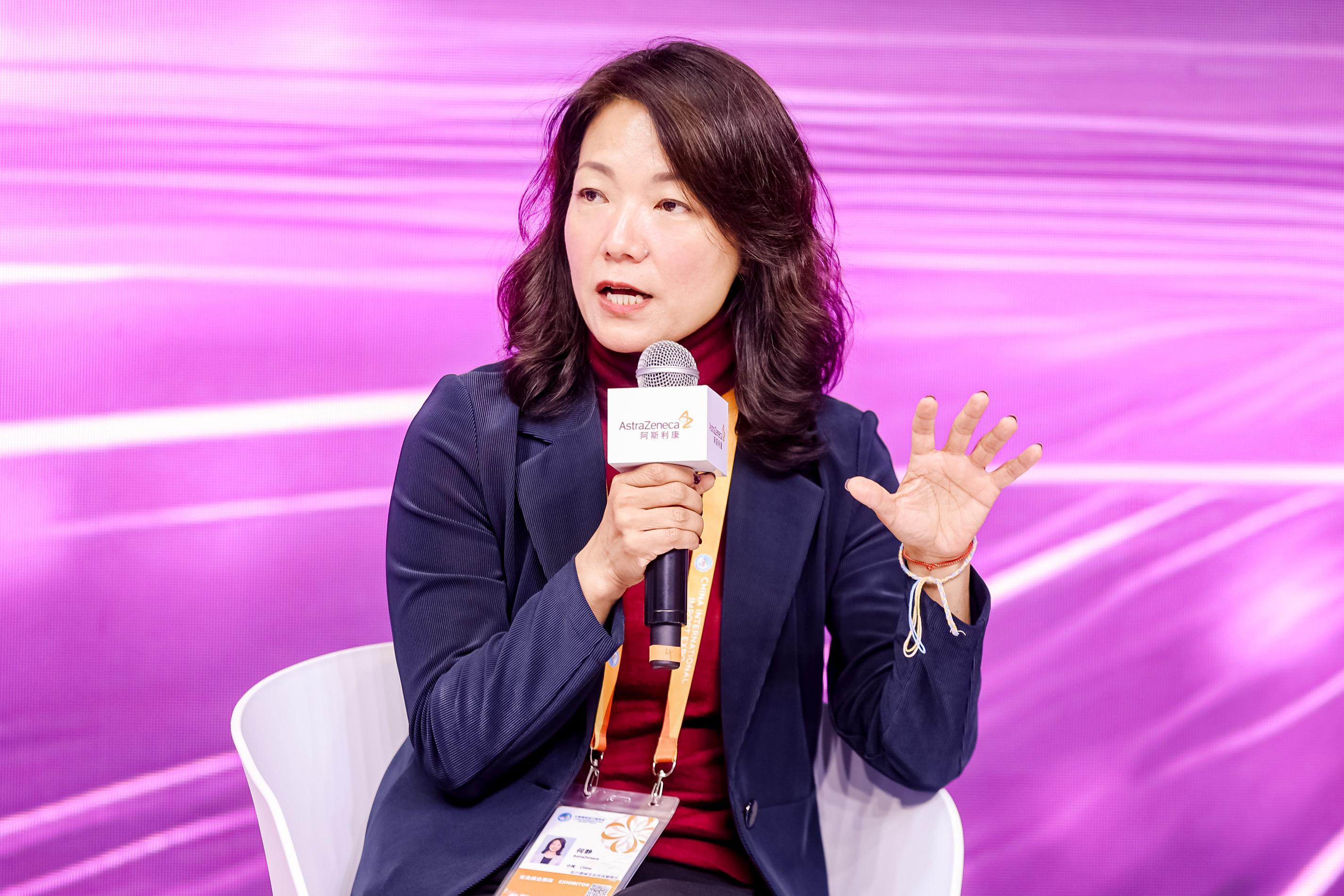
"阿斯利康一直在讲的,不只是在中国,为全球,中间有非常重要的一个部分,就是在中国,携中国,为全球。" 本次论坛荟聚跨国企业及本土创新力量,阿斯利康全球高级副总裁、全球研发中国负责人何静,阿斯利康国际业务拓展合作与战略投资副总裁陈冰,诚益生 物中国临床研发负责人朱波,和铂医药产品开发事业部总裁陶晓路,Evinova中国总经理张杰共同出席,围绕中国医药创新的关键驱动力、前沿疗法、产学 研合作等话题深入交流,共同展望中国医药创新生态的可期未来。 作为阿斯利康合作企业的代表,诚益生物在2023年与阿斯利康达成了基于一款口服小分子GLP-1药物的独家许可协议;和铂医药则在进博会前夕落成了全新 创新实验室,毗邻阿斯利康全球研发北京战略中心。 诚益生物与和铂医药只是阿斯利康创新生态圈的合作伙伴代表。自2023年以来,阿斯利康已经和14家中国本土创新药企达成15次授权合作,覆盖抗体偶联药 物、细胞疗法、小分子和抗体等前沿技术领域。并且,阿斯利康自2023年来已支持28家中国创新企业全球化发展。 "我们对自己的定位,不仅仅是一家在中国开展业务的跨国公司,而是要内嵌到整个中国研发生态体系建设当中,成为这个体系重要贡献者之一,同时 ...
直击进博会 | 创新药迎来历史性一刻
盐财经· 2025-11-07 09:48
Core Viewpoint - The China International Import Expo (CIIE) is significantly accelerating the speed at which innovative drugs enter the Chinese market, transforming the landscape for multinational pharmaceutical companies and benefiting countless patients [3][8]. Group 1: Innovative Drug Launches - A groundbreaking drug for delaying the progression of type 1 diabetes, Trelagliptin, made its Asian debut at the CIIE and received approval for market entry in September [10]. - Sanofi's innovative cardiovascular drugs and Gilead Sciences' long-acting HIV prevention drug, Lenacapavir, were showcased at the CIIE, indicating a trend of faster access to top-tier medications for Chinese patients [6][18]. - The "CIIE speed" is exemplified by Sanofi's drug Dupixent, which received approval in China ahead of the U.S. FDA, showcasing a record time for innovative drugs to benefit Chinese patients [11]. Group 2: Market Strategy and Investment - Multinational pharmaceutical companies are shifting from merely introducing products to deeper, full-industry chain strategies in China, with Sanofi establishing China as an independent strategic market unit [20][22]. - Novartis has conducted over 100 clinical trials in China and aims for 90% of new drug registrations to align with global timelines within the next two years [28]. - Gilead Sciences is focusing on synchronizing its research and development projects in China with global efforts, emphasizing the importance of the Chinese market [23][26]. Group 3: CIIE's Spillover Effect - The CIIE is not only expediting drug launches but also creating a "spillover effect" that enhances the overall healthcare landscape in China, allowing for broader access to innovative treatments [15][17]. - Since its inception, Novartis has had over 40 innovative drugs and indications approved in China, accounting for 40% of its total approvals in the country since 1987 [15]. - The CIIE serves as a high-level open platform that fosters consensus, innovation, and collaboration among pharmaceutical companies, ultimately changing the lives of Chinese patients [17].





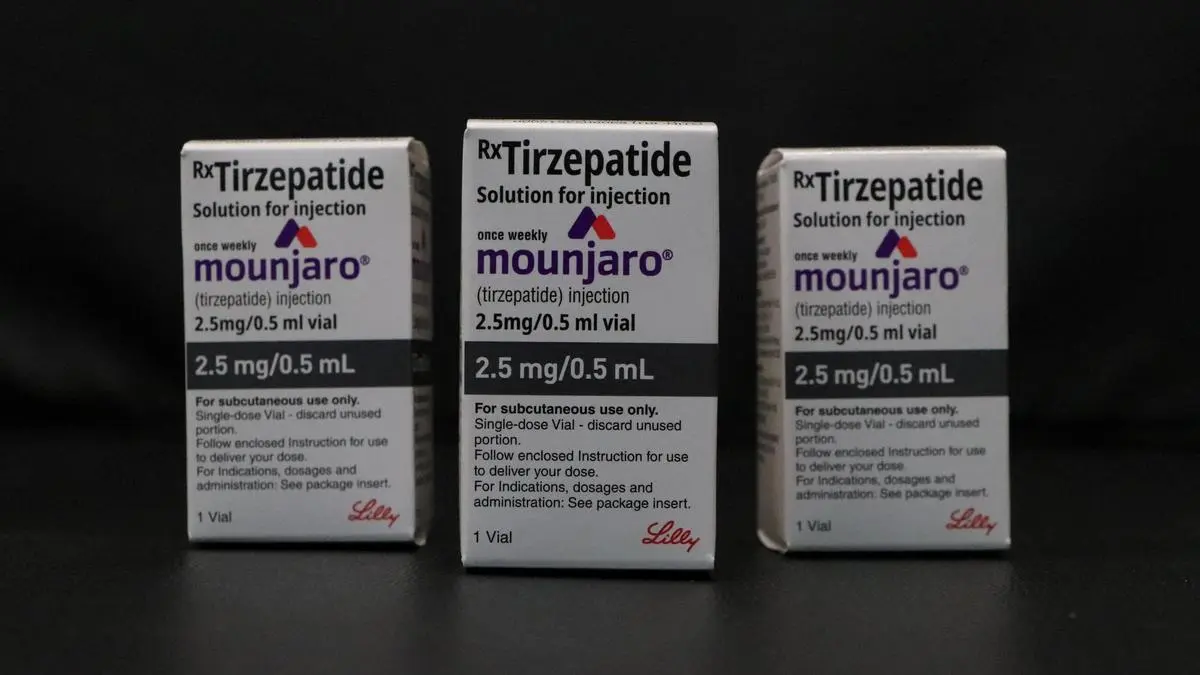
Lilly, Novo to lower obesity drug prices in Trump deal
BusinessLine· 2025-11-07 06:15
Core Insights - Eli Lilly & Co. and Novo Nordisk A/S have reached agreements with the Trump administration to reduce prices for their weight-loss drugs, Zepbound and Wegovy, in exchange for tariff relief and expanded Medicare access [1][2][4] - The deals will allow broader Medicare coverage for weight-loss medications, previously restricted, enabling more patients to access these treatments [4][7] Pricing and Accessibility - Starting next year, eligible patients will be able to purchase Lilly's Zepbound and Novo's Wegovy for $245 a month, with a co-pay of $50 for Medicare patients [4] - Current list prices for these drugs exceed $1,000 a month, with Lilly offering a reduced price of $50 less through its LillyDirect platform, while Novo's Wegovy is priced at $499 via NovoCare [5] Market Impact - Approximately 8 to 9 million people in the US currently use GLP-1 drugs, and the inclusion of Medicare coverage could potentially increase this number by up to 40 million new eligible patients [7] - The agreement includes fast-track reviews for new weight-loss medications from both companies, potentially expediting the approval process significantly [8] Competitive Landscape - The agreements follow similar initiatives by other pharmaceutical companies like Pfizer, AstraZeneca, and Merck to mitigate regulatory pressures and criticism from the Trump administration [9] - Novo Nordisk has pledged significant investments in US manufacturing, including a $4.1 billion factory expansion in North Carolina, as it seeks to regain market share against Lilly [14]