AstraZeneca(AZN)

Search documents
支持建设“心肌病诊疗协作网”!阿斯利康以创新合作绘就慢病防控新图景
Yang Zi Wan Bao Wang· 2025-11-10 05:50
Core Viewpoint - The China International Import Expo (CIIE) provides a significant platform for multinational companies to deepen their engagement in the Chinese market and share development opportunities [1] Group 1: Company Initiatives - AstraZeneca hosted over 30 events at the CIIE and announced multiple significant investments and collaborations [1] - During the "Chronic Disease Health Day" event, AstraZeneca focused on various health issues including hypertension, diabetes, severe asthma, and chronic obstructive pulmonary disease [1] - AstraZeneca established a strategic partnership with the Suzhou Industrial Park Oriental Huaxia Cardiovascular Health Research Institute to support the construction of a "China Cardiomyopathy Diagnosis and Treatment Collaborative Network" aimed at improving screening and treatment rates for cardiomyopathy patients [1] Group 2: Health Strategy - The "Healthy China 2030" plan emphasizes the importance of early diagnosis, treatment, and rehabilitation to achieve the goal of "national health" [1] - AstraZeneca is collaborating with various partners to build a comprehensive management system for diseases, enhancing the standardization of diagnosis and treatment to ensure quality medical services reach a broader population [1]

“联通世界的‘中国之桥’”
Ren Min Ri Bao· 2025-11-09 22:01
Core Insights - The China International Import Expo (CIIE) serves as a valuable platform for cross-industry and cross-border dialogue, providing significant opportunities for global companies to deepen cooperation in the Chinese market [2] - AstraZeneca has consistently participated in the CIIE, showcasing over 40 innovative drugs introduced to the Chinese market over the past 30 years, including two globally innovative cancer drugs at this year's expo [2] - AstraZeneca has signed 14 licensing agreements with Chinese innovative pharmaceutical companies in 2023, aiming to promote local research achievements internationally [2] Company Developments - China is AstraZeneca's second-largest market globally, and the company has been increasing its investment in local research, production, and supply chain systems [3] - AstraZeneca has announced expansions of its production bases in Wuxi, Taizhou, and Qingdao over the past three expos, with a new strategic research center in Beijing launched on October 25, 2023, as part of a $2.5 billion investment plan [3] - The new research center features advanced AI and data science capabilities to accelerate the transition of early drug research results to clinical development [3] Industry Context - The Chinese government is committed to expanding openness and attracting foreign investment, which enhances global companies' confidence in China's economic development [3] - AstraZeneca aims to contribute to the "Healthy China 2030" initiative and promote high-quality development through continued investment and collaboration with local partners [3]


“联通世界的‘中国之桥’” ——访阿斯利康全球首席执行官苏博科
Ren Min Ri Bao· 2025-11-09 22:01
阿斯利康是8届进博会的"全勤生",前7届展会累计带来18款全球创新药品。本届进博会上,阿斯利康全 面展示了30多年来引入中国市场的40余款创新药品,并首次展出两款肿瘤领域的全球创新药。苏博科介 绍,得益于中国推进药品审评审批制度改革等利好政策,阿斯利康多款原研新药在中国市场获得加速审 批、快速上市,"展品变商品"进程不断加快。"去年进博会上展出的一款罕见病领域全球首创药物,今 年已在中国获批上市,正惠及更多患者。" "通过进博会平台,我们深切感受到中国政府坚定不移扩大对外开放、积极吸引和利用外资的决心,这 极大增强了全球企业对中国经济发展的信心。"苏博科表示,"阿斯利康将继续坚定投资中国的决心,携 手本土伙伴,为实现'健康中国2030'目标和推动高质量发展贡献更大力量。" "进博会是促进跨行业、跨国界对话的宝贵平台。作为世界上首个以进口为主题的国家级展会,进博会 为各国企业深耕中国市场、深化在华合作提供了重要机遇,也见证了中国在提升科技创新能力、优化营 商环境方面的显著成效。"生物制药企业阿斯利康全球首席执行官苏博科近日在接受本报记者专访时表 示。 (文章来源:人民日报) "进博会不仅是展示成果的舞台,更是联 ...
第八届进博会 | 新华社经济随笔:从八届进博会看中国经济大海浩荡奔涌
Xin Hua She· 2025-11-09 22:01
Core Insights - The eighth China International Import Expo (CIIE) showcases the robust growth and openness of the Chinese economy, emphasizing its vast market potential and commitment to high-level opening-up [1][2]. Economic Growth and Market Potential - The CIIE has attracted a cumulative total of 23,000 foreign exhibitors and has generated an intended transaction amount exceeding $500 billion over the past seven years. This year, 4,108 foreign companies participated, with exhibition space surpassing 430,000 square meters, both setting new records [2]. - China's retail sales of consumer goods are projected to exceed 48 trillion yuan in 2024, with expectations to surpass 50 trillion yuan this year. From 2021 to 2024, domestic demand is expected to contribute an average of 86.8% to economic growth, with final consumption expenditure accounting for 59.9% [3]. Innovation and Industry Upgrades - The CIIE serves as a platform for significant market opportunities linked to new production capacities, dual carbon goals, and future industries. Companies like Ingersoll Rand express confidence in the Chinese market's potential for green transformation and industrial upgrades [4]. - AstraZeneca has seen over $100 million in cumulative imports from products first launched at the CIIE in 2018, and the company announced a $2.5 billion investment to establish its sixth global strategic R&D center in Beijing [4]. Global Engagement and Open Economy - The CIIE highlights the importance of innovation, application, technology, and industry convergence, which injects vitality into domestic and international economic cycles. The event underscores China's commitment to an open economy, as evidenced by the reduction of the foreign investment negative list and the expansion of service sector openings [5]. - The expo has facilitated global engagement, allowing countries like Rwanda, Afghanistan, and Syria to showcase their products, contributing to local employment and income [5].
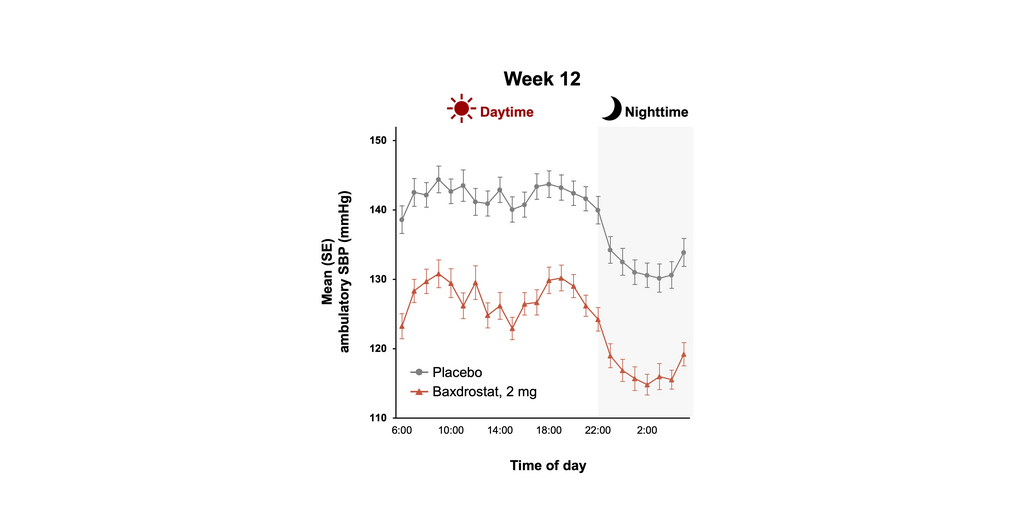
Baxdrostat demonstrated a statistically significant and highly clinically meaningful placebo-adjusted reduction of 14.0 mmHg in 24-hour ambulatory systolic blood pressure in patients with resistant hypertension in the Bax24 Phase III trial
Businesswire· 2025-11-09 21:33
Core Insights - The Bax24 Phase III trial results indicate that baxdrostat significantly reduces ambulatory 24-hour average systolic blood pressure (SBP) compared to placebo at 12 weeks [1] Efficacy - Patients with treatment-resistant hypertension (rHTN) received baxdrostat 2mg or placebo in addition to standard care [1] - The efficacy of baxdrostat was consistent throughout the 24-hour period, including early morning measurements [1]
EOS: An Attractive Fund For The Income Investors, Nearly 8% Yield
Seeking Alpha· 2025-11-09 13:00
Core Insights - The "High Income DIY Portfolios" service aims to provide high income with low risk and capital preservation for DIY investors, particularly targeting income investors such as retirees [1] - The service offers a total of ten model portfolios, including three buy-and-hold portfolios, three rotational portfolios, and a conservative NPP strategy portfolio, designed to create stable, long-term passive income with sustainable yields [2] Portfolio Details - The portfolios include two high-income portfolios, two dividend growth investing (DGI) portfolios, and a conservative NPP strategy portfolio that focuses on low drawdowns and high growth [1] - The investment approach emphasizes a unique 3-basket strategy that targets 30% lower drawdowns and aims for a 6% current income with market-beating growth over the long term [2] Additional Features - The service provides buy and sell alerts, live chat, and strategies for portfolio management and asset allocation to enhance income generation [2]





1.36亿美元追加投资 多项合作签约 阿斯利康林骁:将以进博为桥梁持续深化在华布局
Zheng Quan Shi Bao Wang· 2025-11-09 10:44
Core Insights - AstraZeneca has participated in the China International Import Expo (CIIE) for eight consecutive years, showcasing its commitment to the Chinese market and announcing a new investment of approximately $136 million to expand its production capacity for inhalation aerosol products [1][2] Group 1: Investment and Expansion - AstraZeneca announced an additional investment of approximately $136 million to enhance the production capacity of inhalation aerosol products in Qingdao, aimed at better serving patients with respiratory diseases such as asthma and COPD [1] - Over the past two years, AstraZeneca has invested more than $1.8 billion in China, with the recent establishment of a new global strategic R&D center in Beijing, which is part of a broader $2.5 billion investment plan [1] Group 2: Product and Innovation - At the CIIE, AstraZeneca showcased over 40 innovative drugs developed over the past 30 years for Chinese patients and plans to accelerate the introduction of several new drugs in the next two years, covering chronic diseases, oncology, and rare diseases [1] - The company emphasized its role in transforming exhibition products into market-ready goods, contributing to the rapid development of China's healthcare industry [2] Group 3: Health Initiatives - During the CIIE, AstraZeneca hosted over 30 events focusing on chronic diseases, oncology, and rare diseases, including a new "Health Day" series aimed at strengthening the foundation of a healthy China [2] - The company highlighted the CIIE as a platform for global innovation collaboration and exchange, providing unprecedented opportunities for multinational companies to deepen their engagement in the Chinese market [2]
跨国药企为何将更多的钱投入中国市场?
Sou Hu Cai Jing· 2025-11-09 01:37
Core Insights - The attractiveness of the Chinese market is a primary driver for multinational pharmaceutical companies to increase investments in China [3] - The Chinese government's support for innovative drugs has bolstered the confidence of multinational companies in investing in the country [4] Group 1: Investment Trends - AstraZeneca reported a 5% year-on-year revenue growth in China for the first three quarters, reaching $5.279 billion, accounting for over 12% of its global revenue [3] - Novartis achieved $3.2 billion in sales in China, also reflecting a 5% year-on-year growth [3] - Novo Nordisk's revenue in China reached $2.234 billion, with an 8% year-on-year increase [3] - Eli Lilly's sales in China grew by 20% year-on-year, totaling $1.477 billion [3] - Sanofi's sales in China amounted to $1.3 billion [3] Group 2: Government Support and Policy Changes - The National Healthcare Security Administration (NHSA) showcased its role as a significant global pharmaceutical purchaser at the China International Import Expo [4] - The NHSA and the National Health Commission released measures to support the high-quality development of innovative drugs, including 16 specific initiatives [4] - Approximately 80% of innovative drugs can be included in the medical insurance directory within two years of market approval [4] Group 3: Company-Specific Investments - AstraZeneca announced an additional investment of approximately $136 million to expand its production capacity in Qingdao, bringing its total investment in the area to $886 million [5] - Roche plans to invest 2.04 billion yuan in a new biopharmaceutical production base in Shanghai to enhance its local supply chain [6] - Eli Lilly is establishing an innovation incubator in Shanghai and has invested over 20 billion yuan in China to create a full industry chain from R&D to commercialization [8] - Sanofi is investing 1 billion euros in a new insulin raw material project in Beijing, marking the largest investment in the pharmaceutical industry in the city since the 14th Five-Year Plan [12] Group 4: Market Dynamics - The insulin market in China is projected to reach 32 billion yuan by 2024, with foreign companies holding a combined market share of 75% in third-generation insulin products [13]



进博观察:罕见病用药保障需破局,上千种疾病仍等“药”来
2 1 Shi Ji Jing Ji Bao Dao· 2025-11-08 08:21
Core Insights - The article emphasizes the increasing attention and efforts towards rare disease treatment in China, highlighting the government's initiatives and the role of international pharmaceutical companies in improving drug accessibility for patients [2][4][10]. Government Initiatives - The Chinese government has been enhancing the rare disease prevention and treatment system, with the first batch of 121 rare diseases and treatment guidelines released in 2018 [2]. - By 2025, the new national medical insurance drug list will add 13 rare disease medications, covering over 90 types of rare disease drugs, significantly reducing the financial burden on patients [2][4]. - As of the end of 2023, 165 rare disease drugs have been approved in China, covering 92 types of rare diseases [4]. Pharmaceutical Industry Engagement - Multinational pharmaceutical companies, such as AstraZeneca, are actively participating in events like the China International Import Expo (CIIE) to showcase their rare disease drugs, which have been approved in China [2][3]. - AstraZeneca has established a company in Qingdao specifically for the import of rare disease medications, indicating a commitment to the Chinese market [3]. Challenges in Treatment - The article outlines significant challenges faced by rare disease patients, including difficulties in diagnosis, lack of effective treatment options, and high drug costs [3][4][6]. - Currently, only 5% of known rare diseases have effective treatments, leaving many patients without options [4][9]. Insurance and Financial Support - Approximately 100 rare disease medications are included in the national medical insurance drug list, covering 42 types of rare diseases, but patients still face out-of-pocket expenses [4][6]. - The government is encouraged to further reduce the self-payment ratio for rare disease drugs and explore innovative insurance solutions to alleviate financial burdens on patients [6][7]. Collaborative Efforts - The establishment of a rare disease collaboration network involving 419 hospitals aims to improve diagnosis and treatment through a multidisciplinary approach [5][8]. - AstraZeneca supports the establishment of rare disease centers of excellence in provinces to enhance patient referral and diagnosis processes [8]. Future Directions - The article calls for the establishment of an innovative drug fund to support cutting-edge treatments for rare diseases, independent of the standard insurance system [7]. - Continuous policy updates and market innovations are expected to enhance the accessibility and affordability of rare disease medications in China [10][11].

进博八载,“全勤生”的深耕与跨越:跨国药企的中国式成长|聚焦2025进博会
Hua Xia Shi Bao· 2025-11-08 02:57
Core Insights - The article highlights the significant growth and transformation of multinational pharmaceutical companies in China over the past eight years, particularly through their participation in the China International Import Expo (CIIE) [11] - Companies like Roche and Gilead are expanding their product offerings and localizing their operations, indicating a shift towards more comprehensive engagement in the Chinese market [3][5] Group 1: Roche's Expansion - Roche has evolved from showcasing a few oncology drugs at the first CIIE to presenting over 40 products and solutions this year, covering the entire industry chain from early research to localized production [3] - The company has launched nearly 15 products in China over the past eight years, with a new biopharmaceutical base in Shanghai aimed at producing large molecule antibody drugs locally [3][5] Group 2: Gilead's Innovations - Gilead is actively advancing local research and development, currently conducting 16 projects in China, including 10 in oncology, with 90% of these projects synchronized with global timelines [5] - The company introduced Lenacapavir, the first long-acting HIV prevention drug requiring only two doses per year, marking a significant milestone in HIV prevention [2][5] Group 3: AstraZeneca's Investments - AstraZeneca signed a $136 million investment agreement for its Qingdao base during the expo, emphasizing China's role as its second-largest market and a source of innovation [3] - The company has invested over $1.7 billion in projects driven by previous CIIE events, embedding its production supply chain deeply into the Chinese market [3] Group 4: Merck and Eli Lilly's Contributions - Merck showcased its first HIF-2α inhibitor for VHL syndrome patients and announced plans to introduce over 40 new products and indications in the next five years [5] - Eli Lilly has invested over 20 billion RMB in China, establishing a comprehensive industry chain from research to commercialization, and plans to continue expanding its local collaborations [5][10] Group 5: Amway's Local Innovations - Amway introduced a vitamin and mineral powder product, the first "blue hat" multivitamin in China, reflecting its commitment to local research and development [6][10] - The company has established a plant research center in Wuxi and is integrating AI and traditional Chinese medicine to enhance its product offerings [8][10] Group 6: The Broader Impact of CIIE - The CIIE has become a platform for global companies to redefine their roles in China, with many establishing local R&D centers and committing to long-term investments [10][11] - The event is seen as a bridge for innovation and trust between China and the world, showcasing the potential for Chinese-developed products to reach global markets [11][12]