BlackRock(BLK)

Search documents
Citi investment head shifts to BlackRock to run $80 billion partnership
Reuters· 2025-12-15 13:59
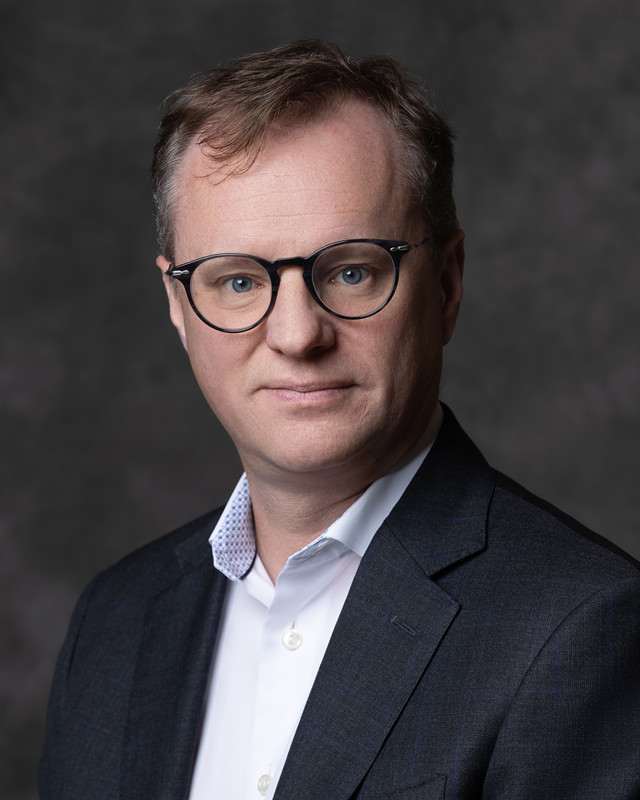
BlackRock said on Monday that the head of Citi's investment management arm has joined the asset manager to lead an expanded partnership under which BlackRock will oversee about $80 billion in assets f... ...


JPMorgan To Rival BlackRock, Goldman Sachs With $100M Tokenized Money Market Fund - JPMorgan Chase (NYSE:JPM)
Benzinga· 2025-12-15 12:14
JPMorgan Chase & Co. (NYSE:JPM) has launched its first tokenized money-market fund on Ethereum (CRYPTO: ETH) , marking a significant step in Wall Street's push toward on-chain finance.JPMorgan Launches Tokenized Money FundJPMorgan's asset-management arm is rolling out its first tokenized money-market fund, branded My OnChain Net Yield Fund, or MONY, the Wall Street Journal reported on Monday. The private fund will run on the Ethereum blockchain and is seeded with $100 million of JPMorgan's own capital.The b ...



贝莱德(BlackRock)对药明康德的多头持仓比例降至4.57%
Guo Ji Jin Rong Bao· 2025-12-15 09:14
Group 1 - BlackRock's long position in Wuxi AppTec Co., Ltd. H-shares decreased from 5.24% to 4.57% as of December 9, 2025 [1]

贝莱德(BlackRock)对中国石油股份的多头持仓比例增至6.03%
Guo Ji Jin Rong Bao· 2025-12-15 09:14
据香港交易所披露,贝莱德(BlackRock)对中国石油天然气股份有限公司-H股的多头持仓比例于2025年 12月9日从5.82%增至6.03%。 ...

贝莱德(BlackRock)对宁德时代的多头持仓比例增至5.23%
Guo Ji Jin Rong Bao· 2025-12-15 09:13
据香港交易所披露,贝莱德(BlackRock)对宁德时代新能源科技股份有限公司-H股的多头持仓比例于 2025年12月9日从4.99%增至5.23%。 ...

贝莱德:在中国银行持股比例升至6.03%
Ge Long Hui· 2025-12-15 09:09
格隆汇12月15日|香港交易所信息显示,贝莱德在中国银行H股的持股比例于12月09日从5.76%升至 6.03%。 ...

贝莱德:借AI风口继续增配美股
Ge Long Hui A P P· 2025-12-15 05:59
格隆汇12月15日|贝莱德最新观点认为,多项大趋势正重塑全球经济与市场,其中以人工智能(AI)最为 关键。科技业正从"轻资产"转向"高度资本密集",而AI基础建设的速度与规模都可能达到前所未见的程 度。因此,贝莱德维持风险偏好立场,并在AI主题下持续加码美国股票。贝莱德同时提醒,AI有可能 催生全新的获利模式,并在不同产业与整体经济中扩散。同样的,科技产业内部的最终赢家也尚未明 朗。虽然整体资本支出投资可能带来正面成果,但不一定会平均落在每一家企业上。因此,AI主题将 转变为主动式投资题材。 ...
11 Most Profitable NYSE Stocks to Buy Right Now
Insider Monkey· 2025-12-15 04:41
Core Viewpoint - The article discusses the most profitable NYSE stocks to buy currently, emphasizing the importance of earnings estimates over traditional valuation methods in stock selection [1][2][4]. Group 1: Market Outlook - Daniel McCormack from Macquarie Asset Management predicts a solid growth year in 2026, estimating global growth at 3.5%, aligning with long-term averages [3]. - The US economy is expected to remain strong, with gradual recoveries in Europe and the UK, contributing to a constructive environment for asset prices [4]. Group 2: Methodology - The list of profitable NYSE stocks was created using stock screeners, focusing on those with the highest trailing twelve months (TTM) net income and net income margins [6]. - The final selection included 11 stocks with the highest number of hedge fund holders as of Q3 2025, sourced from Insider Monkey's database [6][7]. Group 3: Company Highlights - **Novartis AG (NYSE:NVS)**: - TTM Net Income: $14.39 billion, Net Income Margin: 25.53%, Hedge Fund Holders: 33 [9]. - HSBC raised the price target to $112 from $106 while maintaining a Reduce rating, indicating a positive outlook for the pharma sector [10]. - Novartis announced positive Phase III trial results for ianalumab, showing a 45% extension in disease control for patients with primary immune thrombocytopenia [10][11]. - **BlackRock, Inc. (NYSE:BLK)**: - TTM Net Income: $6.1 billion, Net Income Margin: 26.64%, Hedge Fund Holders: 63 [12]. - Barclays reduced its price target to $1,340 from $1,360 but maintained an Overweight rating, reflecting a constructive market outlook for 2026 [13]. - BofA raised the price target to $1,464 from $1,456, reaffirming a Buy rating, favoring alternative asset managers due to a stronger macro backdrop [15].

BlackRock CEO Calls Crypto an ‘Asset of Fear’ — Do Other Experts Agree?
Yahoo Finance· 2025-12-14 21:36
Core Insights - BlackRock CEO Larry Fink describes cryptocurrency as "assets of fear," indicating that some investors are motivated by concerns over financial security and potential dollar collapse [1][3] - Fink's perspective contrasts with other experts who highlight a structural shift in institutional approaches to cryptocurrency, suggesting that motivations extend beyond fear [2][5] Group 1: Fink's Perspective - Fink believes that both cryptocurrency and gold serve as defensive hedges against uncertainty, particularly in light of the U.S. government's debt projected to reach 143% of GDP [3][4] - His recent comments mark a significant change from 2017, when he dismissed cryptocurrency entirely [4] Group 2: Alternative Views - Josip Rupena, CEO of Milo, partially agrees with Fink but emphasizes that factors such as inflation fears and geopolitical risks are important, alongside access through ETFs and compliance frameworks [5][6] - The establishment of financial infrastructure has shifted cryptocurrency from a speculative asset to a mainstream investment, with regulations like MiCA enhancing legitimacy [6] Group 3: Investment Dynamics - Many investors now view bitcoin as a low-correlation portfolio diversifier rather than solely a hedge, with significant inflows into gold and bitcoin ETFs as diversification tools [7] - The comparison between gold and cryptocurrency highlights differences in volatility and investor composition, with crypto being more volatile and attracting a different type of investor [8]
对话贝莱德智库主管:AI将重塑生产率,中美模式各有所长
Di Yi Cai Jing· 2025-12-14 06:57
Core Viewpoint - The development path of AI is expected to be "full of twists and turns but ultimately positive" according to BlackRock's 2026 investment outlook report, which emphasizes the opportunities in AI and its potential impact on productivity and the macroeconomy [1][9]. Group 1: AI Investment and Economic Impact - BlackRock's report highlights unprecedented global investment in AI infrastructure, with projections suggesting that capital expenditures could reach $5 trillion to $8 trillion by 2030, marking the fastest expansion in capital spending in history, primarily in the U.S. [4] - The report raises concerns about the mismatch between massive capital expenditures and potential AI returns, questioning whether the scale of investment aligns with expected benefits [4]. - The ability of AI to drive U.S. GDP growth beyond the long-standing 2% threshold is seen as crucial, with AI potentially acting as an "innovation that drives innovation" [5]. Group 2: Differentiated Approaches in AI Development - The U.S. and China are at the forefront of AI development but are employing different models: the U.S. focuses on "brute force" through significant computational power to push technological boundaries, while China emphasizes lightweight, vertical models for broader application [2][8]. - Both approaches are viewed as necessary for the widespread adoption of AI, with the U.S. model potentially creating value for the entire industry despite not guaranteeing exclusive benefits for early investors [8]. Group 3: Financing and Market Dynamics - The private sector is taking the lead in AI financing, with companies increasingly relying on debt to navigate the financing bottleneck, as upfront investments in computing resources and infrastructure are essential for future returns [6]. - The capital markets have shown cautious attitudes towards this financing model, with discussions around the risks of "circular investment" [6]. - Increased leverage is expected to lead to higher credit issuance in both public and private markets, pushing up interest rates and overall capital costs [7]. Group 4: Long-term Outlook and Challenges - The competition in the AI sector is characterized as a long-term marathon rather than a "winner-takes-all" scenario, with the speed of technology application being more critical than merely developing the most powerful models [8]. - While AI applications in sectors like healthcare and pharmaceuticals are anticipated to generate significant new revenues, challenges such as energy supply constraints, fluctuating financing environments, and social adjustments due to employment changes pose risks to AI's development path [9].