Bristol-Myers Squibb(BMY)

Search documents
Bristol Myers Squibb’s Alzheimer’s Drug, BMS-986446, Granted FDA Fast Track Status
Yahoo Finance· 2025-10-11 13:48
Core Insights - Bristol-Myers Squibb Company (NYSE:BMY) is identified as a potentially undervalued stock for the next five years, particularly due to its advancements in Alzheimer's treatment [1] - The company's experimental drug, BMS-986446, has received Fast Track designation from the US FDA, which accelerates its review process [2][3] Drug Development - BMS-986446 is currently in Phase 2 testing for early-stage Alzheimer's patients and has shown significant efficacy in preclinical studies, including a sharp reduction in tau uptake and spread [2] - The drug targets the tau protein, aiming to neutralize its spread in the brains of Alzheimer's patients and potentially modify the disease's progression [3] Competitive Advantage - The Fast Track status provides Bristol-Myers Squibb with a competitive edge in the Alzheimer's treatment market, which is becoming increasingly crowded [2][3]

15亿美元,BMS收购一家in vivo CAR-T公司,诺奖得主与华人学者联合创立,利用环状RNA在体内生成CAR-T细胞
生物世界· 2025-10-11 08:15
Core Viewpoint - The in vivo CAR-T field has rapidly evolved over three years, marked by significant acquisitions and clinical advancements, culminating in major deals such as AbbVie’s $2.1 billion acquisition of Capstan Therapeutics and BMS’s $1.5 billion acquisition of Orbital Therapeutics [3][4]. Group 1: Acquisitions and Market Activity - AbbVie announced the acquisition of Capstan Therapeutics for $2.1 billion in cash, highlighting the growing interest in in vivo CAR-T therapies [3]. - BMS acquired Orbital Therapeutics for $1.5 billion, expanding its portfolio into the in vivo CAR-T cell therapy space [4]. - These acquisitions reflect a broader trend of increasing investment and collaboration in the CAR-T sector, indicating a robust market outlook [3][4]. Group 2: Technological Advancements - BMS's acquisition of Orbital enhances its cell therapy research platform, focusing on a potential best-in-class therapy aimed at autoimmune diseases [6]. - The therapy OTX-201, developed by Orbital, is in the pre-IND research stage and is expected to enter clinical trials in the first half of 2026 [6]. - OTX-201 utilizes optimized circular RNA (circRNA) to generate CAR-T cells in vivo, targeting CD19 to treat B-cell driven autoimmune diseases [7]. Group 3: Research and Development Focus - Orbital Therapeutics aims to develop next-generation RNA drugs that reprogram cells to treat diseases at their source, offering a simpler and safer alternative to current CAR-T therapies [10]. - The company’s platform integrates circRNA, linear RNA, targeted delivery systems, and AI-driven design to create durable and programmable therapies [10]. - In addition to autoimmune diseases, Orbital is also exploring in vivo CAR-T therapies for cancer and developing next-generation mRNA vaccines [12].


百时美施贵宝拟斥15亿美元收购细胞疗法开发商Orbital
Ge Long Hui A P P· 2025-10-11 03:10
Core Viewpoint - The acquisition of Orbital Therapeutics by Bristol-Myers Squibb for $1.5 billion in cash aims to enhance the company's CAR T cell immunotherapy product portfolio, particularly focusing on the candidate drug OTX-201 for autoimmune diseases [1] Group 1 - Bristol-Myers Squibb is acquiring privately held Orbital Therapeutics for $1.5 billion in cash [1] - The acquisition will expand Bristol-Myers Squibb's CAR T cell immunotherapy offerings [1] - OTX-201, a key experimental candidate from Orbital, targets autoimmune diseases [1]
Trump's China threat slams stocks — plus, our best and worst of the 3-year bull market
CNBC· 2025-10-10 18:47
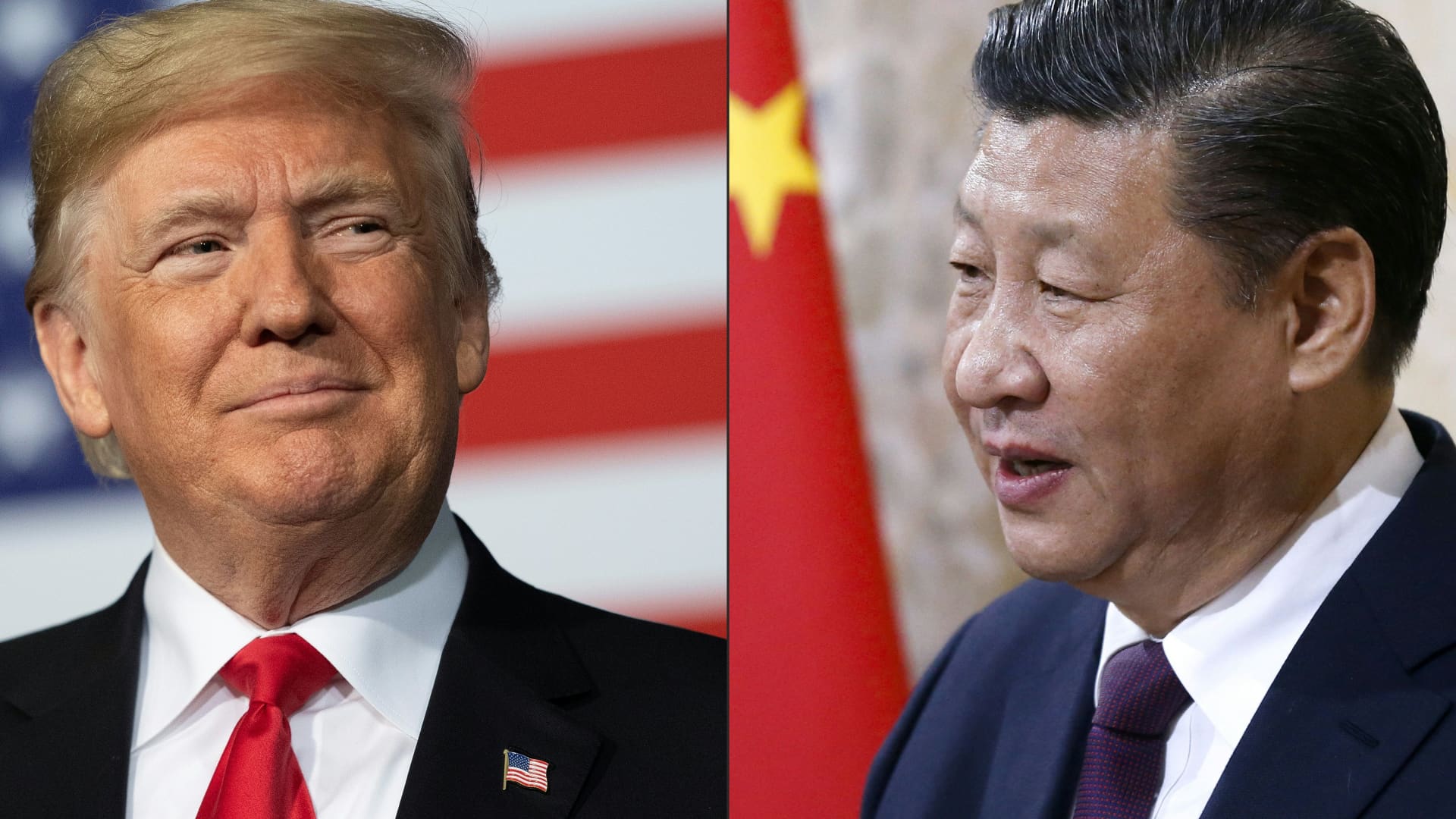
Market Overview - Stocks experienced a sell-off as President Trump threatened a "massive" tariff increase on China, particularly concerning rare earth minerals, which surprised the market given recent improvements in trade relations [1] - The S&P 500 index was down 1.9% and the Nasdaq fell approximately 2.6%, marking the first 1% drop for the S&P 500 since August 1 [1] Company Performance - Nvidia emerged as the best performer in the Investing Club portfolio, soaring approximately 1,527% over the three-year bull market [1] - Other top performers included Broadcom, which increased more than 665%, Meta Platforms with a gain of almost 458%, and CrowdStrike, which rose over 224% [1] - The bottom performers included Bristol Myers Squibb, down more than 36%, Nike, down nearly 26%, and both Danaher and Starbucks, each down nearly 9% [1] Upcoming Earnings - The third-quarter earnings season is set to begin, with over 30 S&P 500 companies scheduled to report next week [1] - Major banks such as Goldman Sachs, Wells Fargo, JPMorgan, and Citigroup will kick off earnings reports on Tuesday, along with BlackRock and Johnson & Johnson [1] - Other notable companies reporting next week include Abbott Laboratories, Bank of America, Morgan Stanley, American Express, CSX, Charles Schwab, SLB, and Prologis [1]


百时美施贵宝15亿美元收购细胞疗法公司Orbital
Di Yi Cai Jing· 2025-10-10 13:47
10月10日,百时美施贵宝(BMS)宣布,拟以15亿美元现金收购私人控股的细胞疗法开发商 Orbital Therapeutics。此次交易将扩大百时美施贵宝CAR-T细胞免疫疗法产品组合。(第一财经记者 钱童心) 此次交易将扩大百时美施贵宝CAR-T细胞免疫疗法产品组合。 ...
Bristol Myers buys Orbital Therapeutics for $1.5 billion in cell therapy push
Yahoo Finance· 2025-10-10 13:37
Core Viewpoint - Bristol Myers Squibb is acquiring Orbital Therapeutics for $1.5 billion in cash to diversify its portfolio and enhance its CAR T-cell immunotherapy offerings, particularly targeting autoimmune diseases [1][2]. Group 1: Acquisition Details - The acquisition marks Bristol Myers Squibb's first major deal of the year, shifting focus from established products like Eliquis and Revlimid to newer therapies for future growth [2]. - The deal is seen as a strategic fit, although analysts suggest it may not significantly alter the company's narrative [2]. Group 2: Product and Technology Insights - Orbital's lead candidate, OTX-201, operates in vivo, allowing CAR-T cell generation within the patient's body, which simplifies the process compared to traditional methods [4]. - The acquisition also provides Bristol access to Orbital's RNA technology, which utilizes advanced delivery methods and artificial intelligence for customizable treatments across various diseases [4]. Group 3: Financial Context - In March, Bristol Myers made a smaller acquisition of 2seventy bio for approximately $286 million, aimed at reducing future profit-sharing costs related to its CAR T-cell therapy, Abecma [5]. - Abecma and another blood cancer therapy, Breyanzi, contributed about 1.7% to Bristol Myers' total revenue last year [5].
百时美施贵宝(BMY.US)斥资15亿美元收购生物技术公司Orbital 强化细胞治疗产品布局
智通财经网· 2025-10-10 11:57
Core Viewpoint - Bristol-Myers Squibb (BMY) has agreed to acquire Orbital Therapeutics for $1.5 billion in cash, aiming to enhance its cell therapy product portfolio [1] Group 1: Acquisition Details - The acquisition is valued at $1.5 billion in cash [1] - The deal is expected to strengthen Bristol-Myers Squibb's capabilities in cell therapy [1] Group 2: Orbital Therapeutics' Innovations - Orbital is developing next-generation RNA drugs designed to reprogram cells in vivo to treat diseases at their source [1] - The leading RNA immunotherapy candidate, OTX-201, aims to reset the immune system by clearing B cells for the treatment of autoimmune diseases [1] - The acquisition includes Orbital's proprietary RNA platform, which integrates circular and linear RNA engineering technologies, advanced lipid nanoparticle delivery systems (LNP), and AI-driven drug design [1] Group 3: Strategic Implications - The acquisition presents an exciting opportunity for Bristol-Myers Squibb to enhance the efficiency of CAR-T cell therapies and benefit more patients [1]
Bristol Myers buys Orbital Therapeutics for $1.5 billion
Reuters· 2025-10-10 11:05
Drugmaker Bristol Myers Squibb said on Friday it will acquire privately held cell therapy developer Orbital Therapeutics for $1.5 billion in cash. ...
Bristol Myers Squibb Strengthens and Diversifies Cell Therapy Portfolio with Acquisition of Orbital Therapeutics
Businesswire· 2025-10-10 10:59
Core Insights - Bristol Myers Squibb has announced the acquisition of Orbital Therapeutics to enhance and diversify its cell therapy portfolio [1] Company Summary - The acquisition aims to strengthen Bristol Myers Squibb's position in the cell therapy market, which is a rapidly growing segment within the biopharmaceutical industry [1] - This strategic move is expected to expand the company's capabilities in developing innovative therapies for patients [1] Industry Context - The cell therapy market is witnessing significant advancements and investments, making it a key area for growth in the biopharmaceutical sector [1] - Companies are increasingly focusing on acquiring technologies and platforms that can enhance their therapeutic offerings in this competitive landscape [1]
Bristol Myers Squibb and TV Host Gail Simmons Tackle Stigma in Schizophrenia with New Initiative Spotlighting the Power of Support and Connection
Businesswire· 2025-10-10 10:45
Core Insights - Bristol Myers Squibb launched the COBENFY Connections initiative to address the stigma surrounding schizophrenia and promote open conversations about the condition [1][4] - The initiative features personal stories from individuals living with schizophrenia, including culinary expert Gail Simmons, who shares her family's experience [1][3] - COBENFY is an oral medication indicated for the treatment of schizophrenia in adults, combining xanomeline and trospium chloride [8][9] Company Overview - Bristol Myers Squibb is a global biopharmaceutical company focused on discovering, developing, and delivering innovative medicines for serious diseases [28] - The company aims to create supportive environments for individuals affected by schizophrenia through initiatives like COBENFY Connections [4] Industry Context - Schizophrenia affects nearly 24 million people globally, with 2.8 million in the United States, making it one of the leading causes of disability worldwide [6] - The initiative seeks to empower individuals with schizophrenia and their families by fostering community connections and sharing experiences [2][4]