Berkshire Hathaway(BRK.A)

Search documents
华尔街见闻早餐FM-Radio | 2025年10月1日
Hua Er Jie Jian Wen· 2025-09-30 23:26
Market Overview - US stock market showed resilience amid government shutdown pressures, with the Dow Jones reaching a new high and the S&P 500 recording its largest September gain in 15 years [2] - Tesla's stock surged by 33% in September, while Google's stock rose by 38%, marking its largest quarterly increase since 2005 [2] - CoreWeave's stock increased by nearly 12% following a significant deal with Meta [5] - Pfizer's stock rose nearly 7% after a price reduction agreement was announced [4] - The European stock index recorded its best September performance in six years [2] Economic Indicators - China's official manufacturing PMI rose to 49.8 in September, marking the second consecutive month of improvement [11] - The RatingDog manufacturing PMI in China increased to 51.2, with new orders growing at the fastest rate since February [21] - The top 100 real estate companies in China achieved sales of 252.78 billion yuan in September, a year-on-year increase of 0.4% [12] Corporate Developments - OpenAI launched Sora 2.0, a video generation model, and reported a revenue of $4.3 billion in the first half of the year, despite a cash burn of $2.5 billion and a net loss of $13.5 billion [14] - CoreWeave signed a $14.2 billion computing supply agreement with Meta, highlighting the high costs associated with developing advanced AI models [16] - Berkshire Hathaway is reportedly negotiating a $10 billion acquisition of Occidental Petroleum's chemical division, which would be its largest deal since 2022 [16] Industry Trends - The AI infrastructure investment is accelerating, with Citigroup raising its AI capital expenditure forecast to $490 billion by 2026 [23] - The demand for new housing in China is expected to stabilize, with a significant increase in supply anticipated [12] - The Japanese government is expected to reduce its bond purchases, leading to rising yields in the bond market [22]





重磅!巴菲特100亿美元收购OxyChem,或为伯克希尔2022年来最大交易
美股IPO· 2025-09-30 23:26
Core Viewpoint - Berkshire Hathaway, led by Warren Buffett, is in talks to acquire Occidental Petroleum's chemical division OxyChem for approximately $10 billion, marking its largest acquisition since 2022 and a significant investment in the chemical industry [1][3][4]. Group 1: Acquisition Details - The potential acquisition of OxyChem could be finalized within days and represents a strategic move for Berkshire, which already holds a 28.2% stake in Occidental Petroleum valued at over $11 billion [4]. - Occidental Petroleum, headquartered in Houston, has a market capitalization of around $46 billion and is primarily known for its oil and gas operations [4]. - OxyChem, the chemical division, generated nearly $5 billion in sales over the past 12 months, producing various chemical products used in water chlorination, battery recycling, and paper manufacturing [4]. Group 2: Historical Context - This would be Buffett's second major investment in the chemical sector, following the nearly $10 billion acquisition of specialty chemicals producer Lubrizol in 2011 [7]. - Berkshire's last significant acquisition was in 2022 when it agreed to purchase insurance company Alleghany for $11.6 billion [8]. Group 3: Investment Background - Buffett began investing in Occidental Petroleum in 2019, initially purchasing $10 billion in preferred stock to assist the company in acquiring Anadarko Petroleum [9]. - Since then, Occidental has faced challenges, including significant debt and criticism from activist investors, leading to asset sales to reduce debt by $7.5 billion [10]. Group 4: Financial Position - Berkshire Hathaway currently holds a record cash and U.S. Treasury bond position of $344 billion, indicating a strong financial capacity for acquisitions [11]. - Buffett has expressed a preference for acquiring businesses over holding cash, emphasizing the value of ownership in good companies [12].

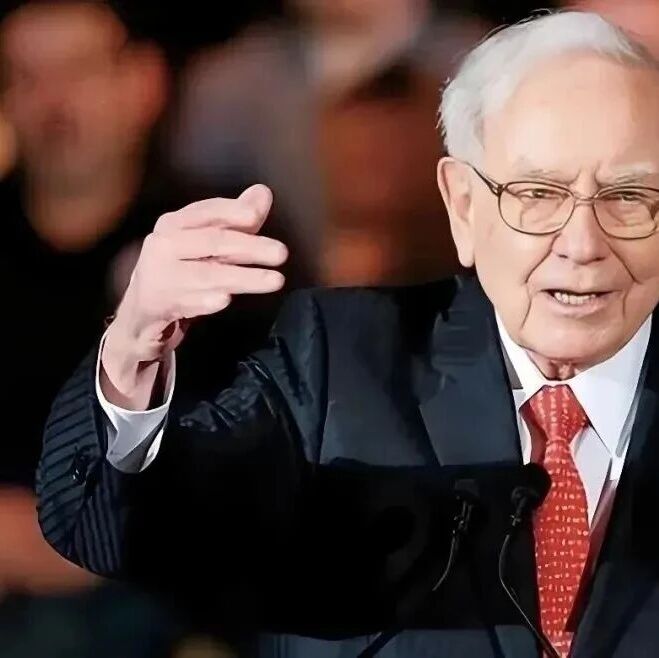
消息人士:巴菲特旗下伯克希尔(BRK.A.US,BRK.B.US)接近达成收购西方石油(OXY.US)石化业务部门协议
智通财经网· 2025-09-30 23:05
Core Viewpoint - Berkshire Hathaway is in negotiations to acquire Occidental Petroleum's petrochemical business for approximately $10 billion, which would be its largest acquisition since 2022 [1] Group 1: Acquisition Details - The deal could be finalized in the coming days, indicating a swift progression in negotiations [1] - Berkshire Hathaway has been increasing its stake in Occidental Petroleum, showing a strong interest in the company's strategic adjustments and asset disposals [1] Group 2: Occidental Petroleum's Financial Moves - Occidental Petroleum has sold nearly $4 billion in assets since last year to help pay down debt incurred from a $10.8 billion acquisition of CrownRock LP in 2023 [1] - The divestiture of the petrochemical business is viewed as a significant step in Occidental's strategy to streamline operations [1] Group 3: Implications of the Deal - If the acquisition is successful, it will strengthen Berkshire Hathaway's position in the energy sector [1] - The transaction is expected to improve Occidental Petroleum's balance sheet, providing more room for future growth [1]
Recession fears are a ‘new concern' for retail investors, says Investopedia's Caleb Silver
Youtube· 2025-09-30 22:27
Core Insights - Investors remain cautiously optimistic despite concerns over tariffs and inflation, showing loyalty to established stocks [1][2] - The top holdings of investors mirror the NASDAQ 100, with major companies like Apple, Alphabet, and Microsoft dominating their portfolios [2][4] - There is a notable fear of a bubble in AI and mega-cap tech stocks, yet investors continue to hold these stocks due to significant gains [3][4] Investor Sentiment - The current sentiment among global fund managers and individual investors is the most optimistic it has been all year, despite concerns about overvaluation [5][7] - The market environment is reminiscent of 2020 and 2021, characterized by a resurgence of IPOs and a risk-on mentality among investors [5][6] Market Trends - The performance of stocks like Coinbase indicates a strong risk-on mentality, with significant activity in IPOs and SPACs [6] - Investors are hesitant to sell their long-held stocks, even as market conditions appear frothy, reflecting a commitment to their investment choices [4][7]




X @Bloomberg
Bloomberg· 2025-09-30 20:05
Warren Buffett’s Berkshire Hathaway is in talks to buy Occidental Petroleum’s petrochemical business for around $10 billion, according to The Wall Street Journal https://t.co/u6celyPPZQ ...
Warren Buffett Says Don’t Bother Investing in Companies Solving Hard Problems, ‘What We Have Learned Is to Avoid Them’
Yahoo Finance· 2025-09-30 19:30
Warren Buffett, the long-time chairman and CEO of Berkshire Hathaway (BRK.A) (BRK.B), has often framed his investment wisdom in terms that are both practical and memorable. One of his most enduring lessons centers on the value of avoiding unnecessarily difficult challenges in favor of straightforward opportunities. As he put it, “After 25 years of buying and supervising a great variety of businesses, Charlie [Munger] and I have not learned how to solve difficult business problems. What we have learned is t ...
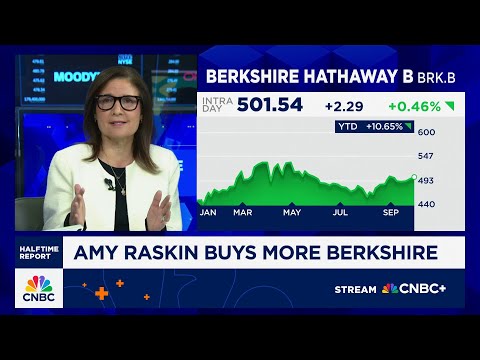
Trade Tracker: Amy Raskin buys more Berkshire
CNBC Television· 2025-09-30 17:35
Market Performance & Outlook - Q3 saw major averages rise, with the S&P up 7%, NASDAQ up 105%, Dow up 45%, and Russell up 11% [2] - The rally is expected to continue, but not necessarily at the same pace as Q3 [2] - US XUS is performing even better, with some stocks like Santandere up 130% year-to-date [3] - Over half of the portfolio is up over 20% year-to-date, with financials like Goldman and JP Morgan performing well [4] Portfolio Adjustments & Strategy - Goldman is up 70% and JP Morgan is up 50% over the last 52 weeks, leading to trimming positions and adding to Berkshire [5] - Berkshire is viewed as insurance, providing a safety net in case of an economic slowdown, with a large cash pile for potential deployment [6] Individual Stocks & Sectors - UBS includes Amazon and Disney on their highest conviction calls list [7] - Disney needs to regain momentum through earnings, particularly from streaming growth including ESPN [8] - Apploving is on the list, with skepticism built into the stock price despite revenue growth [12] - Snowflake, a software name related to AI, has performed well year-to-date and is differentiated in the AI software conversation [13][14] - Mastercard is a long-term holding, with potential opportunities related to stable coins [15] Fintech & IPOs - Wealthfront, a robo advisor, is going public after VCs have been invested for 13 years [17] - Robo advice has become a commodity offering, with limited unique value proposition [18][19] - Wealthfront's business model is primarily a customer acquisition cost (CAC) business [19] - Despite a hospitable tape for fintech investments, the potential for Wealthfront as a great investment is uncertain [20]
Helzberg Survey Reveals Paradoxes of the Modern Proposal - and Clear Gen Z vs. Millennial Splits
Prnewswire· 2025-09-30 16:39
Core Insights - A national study reveals that most couples prefer a private proposal while collaborating on the ring selection and planning to share the moment online, particularly among Gen Z [2][3] Expectations and Collaboration - 83% of respondents prefer a private proposal, with 88% viewing proposals as the ultimate romantic gesture [6] - 88% of those being proposed to plan to share ring preferences before engagement, yet 59% desire no involvement in the proposal itself [6] - 51% of proposers prefer their partner to be uninvolved in planning the proposal, while Gen Z proposers are more inclined to involve their partners compared to millennials [6] Shopping and Research Behavior - 79% of Gen Z and 63% of millennials use social media for education on engagement rings, with YouTube being the most popular platform [6] - 41% of men versus 22% of women utilize YouTube for engagement ring education, indicating a gender disparity in research behavior [6] - 83% of respondents value the ability to purchase in-store, while 56% find online purchasing important [6] Product Priorities and Values - 96% of respondents consider ring quality important, with 79% deeming it very important [10] - 76% are willing to invest more for a customized ring, with Gen Z showing a stronger preference for customization [10] - 88% of Gen Z prioritize sustainability when selecting a retailer, compared to 81% of millennials [10]

Warren Buffett Warns Not to Repeat His Mistakes, ‘We’ve Never Succeeded in Making a Good Deal with a Bad Person’
Yahoo Finance· 2025-09-30 12:00
Core Insights - Warren Buffett emphasizes the importance of trust and character in business partnerships, stating that financial metrics alone are insufficient for evaluating opportunities [1][2][4] - Buffett's successful acquisitions at Berkshire Hathaway highlight the significance of aligning with managers who possess integrity and long-term vision [3] Group 1: Business Philosophy - Buffett believes that a "bad person" undermines trust, regardless of their financial appeal, leading to disappointing deals [2] - The quality of individuals behind a business is as crucial as financial performance, influencing overall outcomes [1][4] Group 2: Successful Acquisitions - Notable acquisitions like See's Candies, Nebraska Furniture Mart, and GEICO were successful not only due to strong fundamentals but also because they were led by respected managers [3] - The alignment of values allows Berkshire Hathaway to maintain decentralized operations, trusting local managers to act in the best interests of the business [3] Group 3: Market Implications - Investors often face short-term opportunities from questionable individuals or organizations, which may carry hidden risks that can negate potential gains [4] - Buffett's insights serve as a reminder that the character of those involved in a deal can significantly impact its success [4]
‘Warren Buffett Indicator' Signals Danger: His 4 Highest-Yielding Stocks Offer Safety
247Wallst· 2025-09-30 10:19
Core Insights - Warren Buffett is recognized as a long-standing and successful investor, demonstrating resilience and strategic acumen in the investment landscape [1] Group 1 - The article highlights Warren Buffett's ability to withstand market fluctuations and maintain a successful investment strategy over time [1]