
Citi(C)

Search documents
X @Bloomberg
Bloomberg· 2026-01-30 07:10
Citigroup’s India unit has hired Ankur Khurana as head of commercial banking as the Wall Street Bank seeks to beef up its business with the country’s rapidly expanding mid-sized companies, sources say https://t.co/3XjdSYZt1z ...

Citigroup or Wells Fargo: Which Bank Stock Has More Upside in 2026?
ZACKS· 2026-01-29 19:01
Core Insights - The U.S. banking sector is dominated by major players, notably Citigroup Inc. and Wells Fargo & Company, both facing challenges and opportunities shaped by economic conditions and internal strategies [1][2] Citigroup's Strategy and Financial Outlook - Citigroup is undergoing a multi-year restructuring, focusing on leaner operations and exiting lower-return international consumer businesses, including a significant exit from 14 markets [3][4] - The company is preparing for an IPO of its Mexican consumer banking units, which is expected to free up capital for investments in wealth management and investment banking [4][28] - Citigroup's net interest income (NII) rose by 11% year-over-year in 2025, with projections for a 5-6% increase in 2026 [8][10] - The company anticipates significant EPS growth of 27.7% in 2026, supported by cost cuts and improved operating leverage [22][29] Wells Fargo's Strategy and Financial Outlook - Wells Fargo is focusing on consumer banking and commercial lending by exiting non-core, lower-return businesses, targeting $10 billion in annual cost cuts [5][6] - The Federal Reserve lifted the asset cap on Wells Fargo, allowing for balance-sheet expansion and a raised medium-term return on tangible common equity (ROTCE) target to 17-18% from 15% [6][10] - Wells Fargo's NII is expected to grow to $50 billion in 2026, up from $47.8 billion in 2025, despite some offset from expected rate cuts [10][30] - The bank's EPS growth estimate for 2026 is 9.9%, indicating steady but less compelling growth compared to Citigroup [22][30] Stock Performance and Valuation - In the past year, Wells Fargo shares increased by 11.7%, while Citigroup's stock surged by 39.5%, outperforming the industry average of 20.6% [14] - Citigroup's trailing P/E ratio is 11.1X, compared to Wells Fargo's 12.6X, both trading below the industry average of 14.5X, indicating Citigroup is the cheaper option [16][29] - Both companies offer competitive dividend yields, with Citigroup at 2.1% and Wells Fargo at 2.05% [19] Conclusion - Citigroup is positioned for greater upside potential in 2026 due to its ongoing transformation and strategic focus on higher-margin areas, while Wells Fargo's recent improvements are largely priced in [27][30][31] - Investors seeking higher growth potential may find Citigroup's fundamentals and valuation more attractive compared to Wells Fargo [31]



花旗集团CEO:为17.5万名员工开展培训应对AI冲击
财富FORTUNE· 2026-01-29 13:10
Core Insights - Citigroup, led by CEO Jane Fraser, is proactively implementing mandatory AI training for its 175,000 employees across 80 global locations to help them adapt to the changing workplace dynamics brought about by AI technology [2][3][4]. Group 1: AI Training Implementation - Citigroup has confirmed that it sent a memo to its 175,000 employees, mandating AI training with a focus on prompt engineering to alleviate fears and misconceptions about AI tools [3]. - The training aims to enhance employees' skills in using AI tools effectively, which is expected to benefit their work and lives significantly [3][4]. - Fraser emphasizes that the training is not just an investment in employees' livelihoods but also a strategic move for the company, as about 50% of new positions are filled by internal employees [4]. Group 2: Training Outcomes and Effectiveness - The AI training program has shown significant results, with employees inputting over 6.5 million prompts into the company's AI tools last year [4]. - The internal memo indicated that the use of AI has drastically reduced the time required for tasks, with some jobs that previously took hours now completed in minutes [4]. - By Q4 2025, the usage rate of Citigroup's proprietary AI tools is projected to reach 70%, with over 21 million interactions from employees across 84 countries [4]. Group 3: Employee Perspective and Support - The training initiative is designed to reassure employees that AI is a collaborative partner rather than a threat to their careers [5]. - Experts suggest that such training is crucial in reinforcing the understanding that AI acts as a co-pilot in the workplace, rather than a replacement for human roles [5].

More Layoffs Are Coming at Citigroup in March. What Does That Mean for C Stock and Its 2% Dividend?
Yahoo Finance· 2026-01-29 00:30
Core Insights - Major banks are reporting earnings amid expectations of new Federal Reserve signals and inflation data, highlighting the current state of U.S. finance [1] - Citigroup's stock has increased by nearly 43% over the past year, while the company plans to cut 20,000 jobs by the end of 2026 [2][3] Company Overview - Citigroup is a global bank with approximately $203.2 billion in equity value and a forward annual dividend of $2.40, yielding 2.08% [4] - The current stock price is $113.67, with a year-to-date return of -2.3% and a 52-week gain of 43% [4] Valuation Metrics - The market values Citigroup at 11.29 times forward earnings and 1.07 times book value, compared to sector medians of 11.20 times and 1.30 times, indicating earnings are in line with peers but the balance sheet is at a discount [5] Recent Earnings Performance - For the quarter ending December 25, Citigroup reported EPS of $1.81, exceeding the consensus of $1.65, resulting in a 9.70% positive surprise [6] - Quarterly sales were $40.9 billion, reflecting a sales growth decline of 6.81% as the company exits non-core businesses [6] - Net income was reported at $2.47 billion, with a 34.14% decline in net income growth due to restructuring and credit costs [7] - Operating cash flow for December 2025 was approximately -$94.2 billion, despite a 1.15% growth in operating cash flow [7]
Best Citi credit cards for April 2026
Yahoo Finance· 2026-01-28 19:51
Core Insights - The article highlights the best Citi credit cards for February 2026, focusing on various categories such as cash back, travel, and balance transfers [1] Group 1: Best Credit Cards - The Citi Custom Cash Card is recommended as the best overall card, offering a $0 annual fee, a welcome offer of $200 cash back after spending $1,500 in the first 6 months, and a 0% introductory APR on balance transfers for the first 18 months [3][5] - The Citi Strata Premier Card is noted as the best travel card, featuring a $95 annual fee, a welcome offer of 60,000 bonus points after spending $4,000 in the first 3 months, and a strong rewards rate of 3x points at supermarkets and gas stations [6][8] - The Citi Double Cash Card is highlighted as the best balance transfer card, providing a $0 annual fee, a welcome offer of $200 cash back after spending $1,500 in the first 6 months, and a 0% introductory APR on balance transfers for the first 18 months [9][13] Group 2: Rewards and Benefits - The Citi Custom Cash Card offers 5% cash back on purchases in the top eligible spend category each billing cycle (up to the first $500 spent), 4% cash back on hotels and car rentals booked through Citi Travel, and 1% on all other purchases [5] - The Citi Strata Premier Card provides 10x points on hotels, car rentals, and attractions booked through CitiTravel.com, 3x points on air travel and other hotel purchases, and 1x points on all other purchases [11] - The Citi / AAdvantage Platinum Select World Elite Mastercard offers 80,000 bonus miles after spending $3,500 in the first 4 months, with benefits including a free checked bag for the cardholder and up to four companions on domestic American Airlines flights [17][21] Group 3: Additional Card Options - The Citi Secured Mastercard is designed for individuals looking to establish or rebuild credit, requiring a security deposit that acts as the credit limit, with a $0 annual fee [22][26] - The Citi Diamond Preferred Card and Citi Simplicity Card are noted for their 0% introductory APR offers on purchases and balance transfers, although they do not earn rewards [29] - The article mentions the Citi / AAdvantage Executive World Elite Mastercard as a premium travel card offering significant benefits for frequent American Airlines travelers, including a complimentary Admirals Club membership [39]
Citi's Sheets on US Dollar Lows, Yen Rally
Yahoo Finance· 2026-01-28 17:38
As the US dollar continues to fall a new four year low, investors are grappling with US policy risks and there is speculation that Japan will intervene to support the yen. Citi Research Global Chief Economist Nathan Sheets speaks on the issue with Scarlet Fu on 'Bloomberg Markets.' Interview occurred on January 27, 2026. ...
Participation notifications by Citigroup Inc.
Globenewswire· 2026-01-28 16:45
Group 1 - Citigroup Inc. has crossed the 3% voting rights threshold in Solvay, with notifications indicating a change in their holdings [1][5] - On January 19, 2026, Citigroup reported a 0.56% increase in voting rights, bringing their total to 3.06% [1] - On January 22, 2026, Citigroup reported a downward adjustment of voting rights to 0.00%, resulting in no change in total voting rights [1][5] Group 2 - Solvay is a leading chemical company with a commitment to sustainability and innovation, employing approximately 9,000 people [2] - The company reported net sales of €4.7 billion in 2024 and aims for a carbon-neutral future by 2050 [2] - Solvay's operations focus on essential solutions for air and water purification, food preservation, health protection, and sustainable materials [2]

Citi Denies Sexual Harassment Claims Against Wealth Head Andy Sieg, Seeks Arbitration
Yahoo Finance· 2026-01-28 16:19
You can find original article here WealthManagement. Subscribe to our free daily WealthManagement newsletters. Citigroup is pushing back against a lawsuit from a former wealth management executive who claimed that Citi’s Head of Wealth Andy Sieg had sexually harassed her. In a separate filing from Julia Carreon’s complaint against the bank in Texas federal court, Citigroup asked the court to compel arbitration to settle Carreon’s claims, arguing there was “absolutely no factual or legal basis for any such ...
Dollar slump lifts precious metals complex to fresh high
BusinessLine· 2026-01-28 14:44
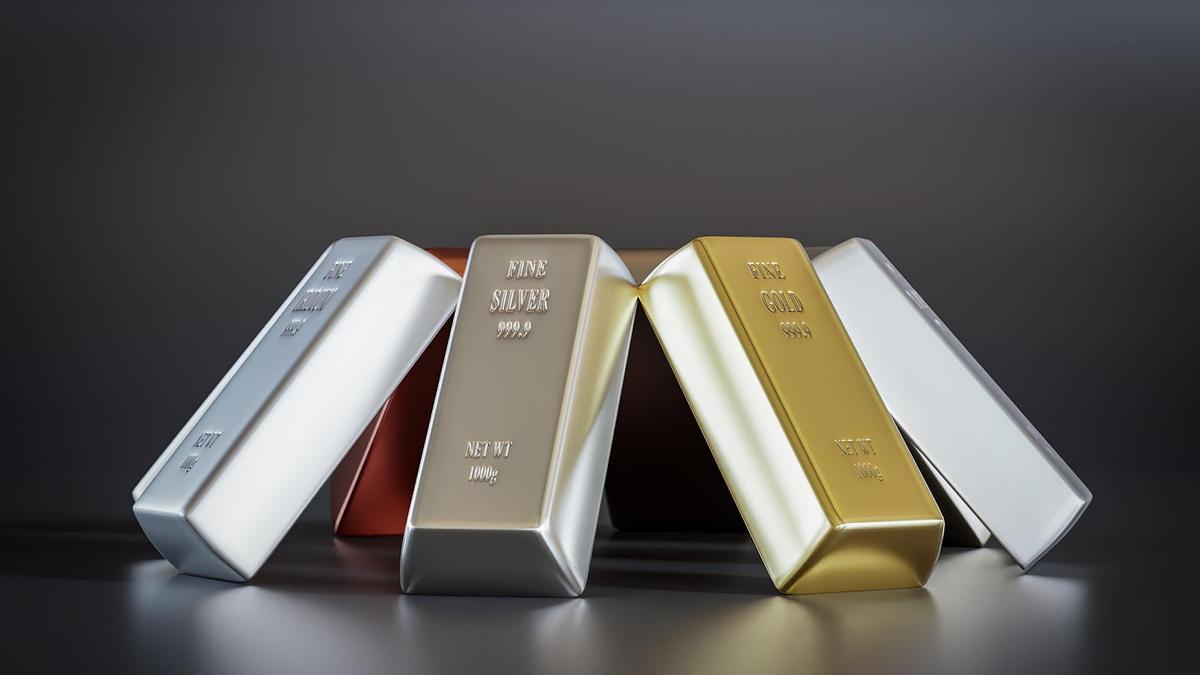
Core Viewpoint - The decline of the dollar to a four-year low has provided momentum for precious metals, with mixed reactions from analysts regarding future price movements [1] Precious Metals Prices - Gold reached $5,295 per ounce, with April futures peaking at $5,344 before settling [2] - Silver prices fluctuated, starting over $115 per ounce and ending at $113.93, while March futures were at $114.20 [3] - Platinum recovered to $2,655.50 per ounce after a significant drop, and palladium rose to $2,015.50 [3] Price Forecasts - BMI has raised its gold price forecast for 2026 to an average of $4,600 per ounce, expecting it to remain between $4,500 and $5,500 in the coming weeks [4] - Goldman Sachs indicated a potential upside risk to its gold forecast of $5,400 per ounce by December 2026, while Deutsche Bank suggested prices could reach $6,900 [6] - Société Générale anticipates gold at $6,000 per ounce by the end of 2026, and Morgan Stanley sees potential for prices to exceed $5,700 [6] Market Dynamics - The silver market remains tight, with elevated implied lease rates near 3%, indicating strong demand [8] - In India, retail demand for silver is increasing, but the gold-to-silver ratio is at a four-year low, suggesting silver may be expensive relative to gold [9] - BMI expects silver prices to ease as supply tightness diminishes and industrial demand peaks, particularly from China's solar industry [10] Speculative Interest - Citigroup forecasts that spot silver could surge to $150 per ounce in the next three months, driven by Chinese buying [11] - Analysts describe silver as "gold squared," indicating its heightened volatility and potential for significant price movements [12] Year-to-Date Performance - Year-to-date gains for precious metals include gold up 22%, silver up 58%, platinum up 28%, and palladium up 19% [13]
Is Wall Street Bullish or Bearish on Citigroup Stock?
Yahoo Finance· 2026-01-28 14:07
Core Viewpoint - Citigroup Inc. is undergoing a significant restructuring under CEO Jane Fraser, aiming to reduce its workforce by 20,000 by the end of 2026, which has positively influenced market reactions despite a recent drop in net income [2][5]. Financial Performance - For Q4 2025, Citigroup reported total revenues of $19.87 billion, a 2% increase year-over-year, driven by growth in various segments [5]. - The net income for Q4 dropped 13% year-over-year to $2.47 billion, while the full-year profit increased by 13% to $14.31 billion [5]. - Analysts expect Citigroup's EPS to grow 32.1% year-over-year to $2.59 for the current quarter and anticipate further growth to $10.17 in fiscal 2026 and $12 in fiscal 2027 [6]. Stock Performance - Over the past 52 weeks, Citigroup's stock has gained 41.6%, outperforming the S&P 500 Index, which gained 16.1% in the same period [3]. - The stock reached a 52-week high of $124.17 on January 6 but has since declined by 7.6% from that level [3]. - The stock has also outperformed the State Street Financial Select Sector SPDR ETF, which is up 3.1% over the past 52 weeks [4]. Analyst Ratings - Among 25 Wall Street analysts covering Citigroup, the consensus rating is a "Moderate Buy," with 15 "Strong Buy" ratings, four "Moderate Buys," and six "Holds" [6]. - The ratings configuration has become more bullish compared to a month ago, with an increase in "Strong Buy" ratings from 14 to 15 [7].