Chegg(CHGG)

Search documents
Chegg Announces Repurchase of 0% Convertible Senior Notes Due 2026
Businesswire· 2025-12-29 14:10
Core Viewpoint - Chegg, Inc. has announced a repurchase agreement for approximately $8.9 million of its outstanding 0% Convertible Senior Notes due 2026, with a cash repurchase price of about $8.3 million, as part of its securities repurchase program [1] Group 1: Repurchase Transactions - The notes repurchase transactions are expected to close on December 30, 2025, pending customary closing conditions [1] - After the completion of the repurchase, approximately $53.9 million of the Notes will remain outstanding [1] - Chegg will have approximately $141.8 million available under its securities repurchase program following the transactions [1] Group 2: Company Overview - Chegg is a learning platform focused on the skilling market, which is valued at $40 billion and is growing [3] - The company provides tools for workplace readiness, professional upskilling, and language learning, along with AI-driven personalized support for students [3] - Chegg is publicly traded on the NYSE under the symbol CHGG and is based in Santa Clara, California [3]



Can Chegg's Restructure Help Drive Better Cost Control for 2026?
ZACKS· 2025-12-23 14:21
Core Insights - Chegg, Inc. (CHGG) has undergone a significant restructuring to enhance operational efficiency and financial discipline in response to a changing market environment [1][4] - The restructuring divides operations into two main units: a legacy academic business focused on cash generation and a skilling business aimed at long-term growth [1][8] - The company aims to reduce total non-GAAP expenses from $536 million in 2024 to under $250 million by 2026, indicating a strategic shift towards tighter spending and improved operational focus [2][4] Financial Performance - In Q3 2025, non-GAAP operating expenses decreased by 46% year-over-year due to restructuring efforts, contributing to better operating discipline [2] - Adjusted EBITDA surpassed internal expectations, reflecting improved cost execution and operational efficiency [2][8] - The earnings per share (EPS) estimate for 2026 has risen to 18 cents from break-even, with an expected growth of 228.6% [12] Market Position - Chegg operates in a competitive ed tech landscape alongside companies like Duolingo, Inc. and Udemy, Inc., which have established strong market positions [5][6] - Duolingo leads in the language-learning niche with a gamified app, while Udemy focuses on professional skill development and AI enablement [6] - Chegg's stock is currently trading at a forward 12-month price-to-sales (P/S) ratio of 0.33, indicating a discounted valuation compared to industry peers, which may present an attractive entry point for investors [10] Operational Challenges - The company continues to face challenges such as declining traffic in legacy academic services and significant year-over-year revenue contraction [3][4] - Broader industry trends, including AI-driven disruptions and reduced traditional online traffic, are impacting performance [3]

Internet Stocks Need AI Profits In 2026, Analyst Says
Benzinga· 2025-12-18 17:54
Core Viewpoint - Internet stocks are facing challenges entering 2026, having underperformed the broader market in 2025 due to operational missteps, increased competition from generative AI, and inconsistent margins, necessitating companies to demonstrate real AI-driven growth and profitability [1][2]. Market Performance - Internet stocks lagged behind both the S&P 500 and the Russell 2000 in 2025, attributed to operational missteps and competitive threats from generative AI [2]. - Consumer sentiment remains approximately 28% lower year over year, influenced by recent government shutdowns and tariff actions, despite a 5% month-over-month improvement in early December [3][2]. 2026 Outlook - A stable consumer environment alone will not sustain valuations in 2026; companies must show stronger execution and tangible progress in AI monetization and profitability [4]. - In the education sector, deeper integration with AI platforms is expected to diversify traffic sources, alongside scaling AI-enhanced learning products [5]. AI Adoption and Impact - AI-driven traffic is becoming significant, accounting for about 1% of Etsy's total traffic, with industry-wide AI referrals increasing by approximately 1,200% year over year in October [6]. - AI-driven traffic has a conversion rate that is about 16% better than non-AI traffic [6]. Company-Specific Insights - For Duolingo, investor sentiment is negative, but early 2026 bookings and adjusted EBITDA guidance could indicate potential upside; the company needs to achieve over 20% bookings growth and stabilize daily active users [7]. - Etsy shows mixed sentiment, but sustained gross merchandise sales growth could mitigate margin pressures from investments in Depop, supporting stronger share performance in 2026 [8]. - Coursera has been upgraded to Overweight, with expectations that consensus estimates underestimate improving execution across product, go-to-market, and profitability [8]. - The pending merger with Udemy is anticipated to create a more competitive AI-skills platform and accelerate AI product development [9]. Ratings Summary - Duolingo and Coursera are rated Overweight, while Etsy and Udemy are rated Neutral; Nerdy Inc. and Chegg, Inc. are rated Underweight [9].

Chegg vs. Udemy: Which EdTech Stock Has the Edge Heading Into 2026?
ZACKS· 2025-12-17 14:51
Core Insights - The online education market is experiencing a structural reset driven by shifts in learner behavior towards flexible, outcome-oriented skill development and the influence of generative AI on knowledge consumption [1] - Chegg, Inc. (CHGG) and Udemy, Inc. (UDMY) represent two distinct approaches to monetizing digital learning platforms, each adapting to similar industry pressures from different starting points [1][2] Chegg (CHGG) Overview - Chegg is undergoing a structural reset, separating its legacy academic services from growth-oriented skilling operations to align resources with long-term demand trends in workforce education [4] - In Q3 2025, Chegg's non-GAAP operating expenses decreased by 46% year-over-year, with adjusted EBITDA exceeding expectations due to aggressive cost actions [5] - Total revenues for Chegg fell by 42% year-over-year in Q3 2025, primarily due to reduced traffic in legacy academic services and advertising revenue pressure [6] - The Chegg Skilling unit is projected to achieve 14% year-over-year revenue growth in Q4 2025, with expectations for sustained double-digit growth beyond 2025 [7] Udemy (UDMY) Overview - Udemy is shifting towards a subscription-led business model, focusing on professional skill development and enterprise learning, which allows for improved revenue quality and visibility [8][9] - In Q3 2025, Udemy's total revenues reached $196 million, slightly up year-over-year, with subscription revenues increasing by 8% and accounting for 74% of total revenues [10] - Despite improvements, Udemy faces challenges with a net dollar retention rate of 93% in its business segment and constrained growth in the consumer segment due to a strategic deemphasis on transactional course sales [11] Stock Performance & Valuation - Chegg's share price performance has lagged behind Udemy's and the broader industry over the past six months [13] - Udemy currently trades at a higher forward 12-month price-to-sales (P/S) ratio compared to Chegg [15] - Chegg's earnings estimates for 2026 have trended upward, indicating a projected year-over-year growth of 228.6% [17] - In contrast, Udemy's 2026 EPS estimates have trended downward, indicating only 0.8% growth [19] Investment Outlook - Chegg is emerging from a significant restructuring with a leaner cost structure and improving earnings visibility, positioning it for potential upside heading into 2026 [21] - Udemy benefits from its transition to a subscription model and expanding enterprise presence, but faces execution risks and a more measured growth outlook [21][22] - Chegg currently holds a Zacks Rank 1 (Strong Buy), while Udemy has a Zacks Rank 3 (Hold), appealing more to investors seeking stability [22]


Here are 5 School Stocks to Buy Before Moving Into 2026
ZACKS· 2025-12-15 14:31
Core Insights - The U.S. education market is transitioning from traditional methods to digital and career-focused programs, driven by student demand and government initiatives [2][11] - The Zacks Schools industry shows resilience, with median share prices above the S&P 500 composite, indicating promising mid to long-term prospects despite current stock performance [3] - Five education stocks are identified with expected earnings growth of over 10% year-over-year by 2026, including Chegg, Adtalem Global Education, Grand Canyon Education, Nerdy, and Legacy Education [4] Market Trends - The shift towards hybrid and AI-based learning models is gaining traction, with education companies adapting to meet the demand for flexible learning formats [5][8] - Companies like Chegg and Nerdy are benefiting from the rise of online and hybrid learning, leveraging AI-enhanced tools and subscription-based digital offerings [6][8] - The focus on career-oriented programs is increasing, particularly in high-demand fields like healthcare, aligning with workforce needs and supporting enrollment growth [9][10] Government Support - Federal and state initiatives are promoting EdTech adoption and workforce development, enhancing the prospects for education companies [11] - New interagency agreements aim to streamline program delivery and reduce administrative burdens, while a national policy established in April 2025 focuses on advancing AI education [11][12] Stock Performance - Chegg (CHGG) has a Zacks Rank of 1, with a projected earnings growth of 228.6% for 2026 despite a year-to-date drop of 42.9% [16] - Adtalem (ATGE) holds a Zacks Rank of 2, with a fiscal 2026 EPS estimate of $7.85 and expected growth of 17.7% [17] - Grand Canyon Education (LOPE) has a Zacks Rank of 2, with a projected earnings growth of 11.2% for 2026 [18] - Nerdy (NRDY) carries a Zacks Rank of 2, with an expected growth of 35.9% for 2026 despite a year-to-date decline of 16.7% [19] - Legacy Education (LGCY) also holds a Zacks Rank of 2, with a projected earnings growth of 11.9% for 2026 and a year-to-date gain of 23.8% [20]




Can Chegg Turn Its Skilling Pivot Into a True 2026 Comeback?
ZACKS· 2025-12-11 16:20
Core Insights - Chegg, Inc. has redefined its business model with the introduction of Chegg Skilling, integrating Busuu and Chegg Skills to tap into the growing global skilling market, estimated at over $40 billion [1] Business Model and Growth Strategy - Chegg Skilling focuses on AI skills and upskilling for frontline workers, with both Busuu and Chegg Skills showing double-digit growth. The segment is projected to achieve $70 million in annual revenues by 2025, with a year-over-year growth rate of 14% [2] - The company is enhancing its B2B focus through successful partnerships, such as with Guild, to secure contracts from employers seeking scalable training solutions, with plans for expansion into Latin America [2] Financial Restructuring - Chegg is implementing a significant cost restructure, aiming to reduce non-GAAP expenses from $536 million in 2024 to under $250 million by 2026, alongside a 60% cut in capital expenditures next year [3] - Improved operational discipline has led to better-than-expected adjusted EBITDA results in Q3 2025, indicating that the new leaner model is starting to yield positive outcomes [3] Market Position and Competition - Chegg operates in a competitive ed-tech landscape alongside Duolingo and Udemy, each employing different strategies to capture market share [5][7] - Duolingo excels in language learning with a gamified app, while Udemy leverages a vast marketplace model with independent instructors to meet evolving professional learning needs [6] Stock Performance and Valuation - Chegg's stock has declined by 22.6% over the past month, underperforming compared to the Zacks Internet - Software industry and the S&P 500 Index [8] - The stock is currently trading at a forward 12-month price-to-sales (P/S) ratio of 0.35, indicating a discounted valuation compared to industry peers, which may present an attractive entry point for investors [11] Earnings Estimates - The Zacks Consensus Estimate for Chegg's 2025 loss has widened to 14 cents, while estimates for 2026 earnings have increased to 18 cents, reflecting a year-over-year decline of 118.7% for 2025 and a projected growth of 228.6% for 2026 [13][14]

Chegg Stock Plunges 45% in 3 Months: Should Investors Buy the Dip?
ZACKS· 2025-12-09 14:16
Core Insights - Chegg, Inc. (CHGG) has experienced a significant decline of 45.4% in its stock price over the past three months, contrasting with a 10.1% decline in the Zacks Internet-Software industry and an 8.9% gain in the broader Computer and Technology sector [2][3] Company Performance - Chegg is facing multiple pressures, including declining traffic in its legacy academic services, substantial year-over-year revenue contraction, and an operational reset due to recent restructuring [3] - The company is transitioning towards a skilling-focused model, which is influenced by shifts in student behavior and competition from AI-driven alternatives [3] Restructuring and Cost Management - Chegg has implemented a major restructuring to enhance long-term profitability, dividing operations into a legacy academic business and a growth-oriented skilling business [9][10] - The restructuring has led to a 46% year-over-year reduction in non-GAAP operating expenses in Q3 2025, with expectations for total non-GAAP expenses to drop from $536 million in 2024 to under $250 million by 2026 [11] Skilling Business Growth - The consolidation of Busuu and Chegg Skills into a single "Chegg Skilling" unit is projected to achieve 14% year-over-year revenue growth for Q4 2025, with sustained double-digit growth anticipated beyond 2025 [12] - Demand for workforce training in areas such as AI and language learning is increasing, aligning with broader corporate training trends [12][13] Legacy Academic Operations - Despite challenges, the legacy academic services segment remains valuable, with over 130 million questions in its database, allowing for efficient operation with fewer resources [14] - This segment is expected to continue generating solid cash flow, providing funding for future investments in the skilling business [15] Financial Outlook - Chegg anticipates significant improvement in free cash flow in 2026, supported by lower operating expenses and capital expenditures [16] - Capital expenditures fell by 63% year-over-year in Q3 2025, with an additional 60% reduction expected in 2026, enhancing cash preservation while maintaining product quality [17] Valuation and Earnings Estimates - Chegg's stock is currently trading at a forward price-to-sales (P/S) ratio of 0.34X, significantly lower than industry peers like Coursera and Udemy [18][20] - Earnings estimates for 2026 have increased to 18 cents per share, indicating a year-over-year growth of 228.6% [21] Investment Opportunity - Chegg's strategic restructuring, growth in the skilling business, and disciplined cost management create a solid foundation for potential recovery, making it an attractive investment opportunity despite near-term uncertainties [23]

教育公司的 AI 分水岭:增长、效率与重塑价值的三种答案
3 6 Ke· 2025-11-27 02:11
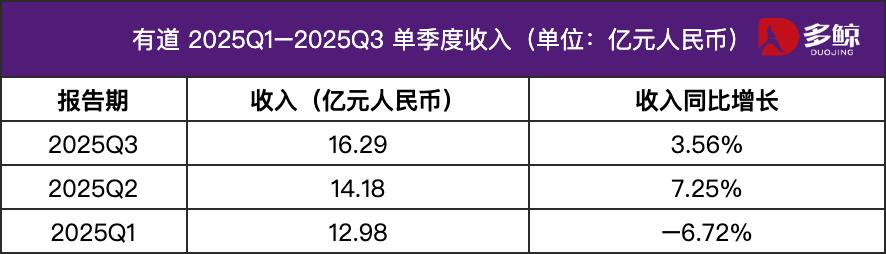
Core Insights - The education industry is shifting focus from "digital transformation" to "AI native" solutions, as evidenced by the distinct trajectories of three representative companies: Youdao, Duolingo, and Chegg, highlighting the profound impact of AI on educational business models [1] Youdao - Youdao's transformation is marked by a significant shift in revenue structure, with online marketing services surpassing learning services for the first time in Q3 2025, generating 7.4 billion RMB, a 51.1% increase year-on-year [3][4] - The company's total net revenue for Q1 2025 was 1.3 billion RMB, showing a slight decline, but operating profit reached 104 million RMB, a 248% increase year-on-year, marking a historical high for Q1 [2] - Youdao's AI-driven strategy has restructured its business model, with AI becoming a core component of its advertising and technology services, leading to a more profitable revenue stream [9] Duolingo - Duolingo has maintained a revenue growth rate of around 40% for six consecutive quarters, with Q3 2025 revenue reaching 271.7 million USD, a 41.08% year-on-year increase [10][11] - The integration of generative AI into course production and teaching processes has allowed Duolingo to rapidly launch 148 new language courses, significantly reducing reliance on human content creators [12] - The AI-driven teaching model has shifted the role of traditional teachers to a more supportive position, with the AI model taking on primary responsibilities in content generation and personalized feedback [12] Chegg - Chegg has experienced a steep decline in revenue, with Q3 2025 revenue dropping to 77.74 million USD, a 43.08% year-on-year decrease, marking the largest annual decline since its IPO [13][15] - The company is attempting to pivot towards "CheggMate," an AI learning partner, to shift from providing answers to offering explanations and personalized teaching, but faces challenges in attracting users accustomed to free solutions like ChatGPT [15][16] - Chegg's situation illustrates the urgent need for educational companies to redefine their value propositions in the face of AI's ability to directly replace traditional learning services [16] Industry Trends - The three companies represent different paths towards AI native solutions in the education sector, emphasizing a shift in core competitive advantages from product forms to AI capabilities that can redefine value chains [17][18] - AI is not merely an enhancement but a core force driving the direction of business models in the education industry, with the Chinese AI+ education market expected to exceed 70 billion RMB by 2025 [18]


Chegg: Changing Segments Doesn’t Stem These Declines (CHGG)
Seeking Alpha· 2025-11-18 19:24
Group 1 - The article highlights that AI is the dominant narrative in the stock market this year, with Chegg, Inc. (CHGG) being significantly impacted by developments related to ChatGPT [1] - Chegg was previously known for its educational services, but its market position has been challenged due to the rise of AI technologies [1] - The author, Gary Alexander, has extensive experience in technology sectors and has contributed insights on the evolving themes in the industry since 2017 [1]

Top Economist Warns White-Collar Workers Are Facing Their 'Detroit Auto Worker' Moment As AI Begins Replacing Cognitive Jobs - Chegg (NYSE:CHGG), Amazon.com (NASDAQ:AMZN)
Benzinga· 2025-11-17 11:09
Core Insights - Economist Justin Wolfers warns that white-collar professionals are facing a significant threat from artificial intelligence (AI), likening their situation to that of Detroit auto workers in the 1970s [1][4] - Unlike previous technological revolutions that primarily affected blue-collar jobs, AI is now targeting cognitive work, impacting white-collar roles [2][3] Job Market Impact - Major corporations, including Amazon and UPS, have announced substantial layoffs, with Amazon planning to cut nearly 30,000 jobs and UPS increasing its job cuts to 48,000 [5][8] - Other companies also reported significant workforce reductions, including Chegg Inc. (45% of workforce), Target Corp. (1,800 roles), and Paramount Skydance Corp. (2,000 jobs) [8] AI and Market Performance - Despite employment concerns, AI-linked instruments have shown positive market performance, with futures for major indices like S&P 500, Nasdaq 100, and Dow Jones trading higher [6] - A list of AI-linked ETFs indicates strong year-to-date and one-year performance, with some ETFs like Defiance Quantum ETF showing a 29.73% YTD return and 66.04% over one year [9]