Capital One(COF)

Search documents
Trump's 10% Rate Cap: What Does it Mean for Capital One Stock?
The Motley Fool· 2026-01-25 12:00
Core Viewpoint - A proposed 10% cap on credit card interest rates could significantly impact major credit card issuers like Capital One Financial, JPMorgan Chase, and American Express [1] Group 1: Impact on Companies - The implementation of a 10% cap on credit card interest rates would affect Capital One Financial (COF), potentially altering its revenue model and profitability [1] - Other credit card issuers, including JPMorgan Chase (JPM) and American Express (AXP), would also face similar challenges in adjusting to the new interest rate cap [1]




Capital One (COF) Upside Persists Despite Regulatory Risks
Yahoo Finance· 2026-01-25 04:37
Capital One Financial Corporation (NYSE:COF) ranks among the best financial stocks to buy according to billionaire Israel Englander. On January 12, JPMorgan analyst Richard Shane boosted Capital One Financial Corporation (NYSE:COF)’s price target to $256 from $237 while maintaining a Neutral rating on the company’s shares. The hike comes after President Trump’s proposal directing issuers to cap credit card interest rates to 10% for a year, adding to the industry’s near-term volatility. If enacted, this r ...
Trump's 10% Interest Rate Cap On Credit Cards Will 'Likely Bring On A Recession,' Says Capital One CEO: $6 Trillion Consumer Spending At Stake
Yahoo Finance· 2026-01-24 12:31
Core Viewpoint - Capital One Financial Corp. CEO Richard Fairbank warns that President Trump's proposed 10% cap on credit card interest rates could severely limit consumer access to credit and destabilize the economy [1][2]. Group 1: Impact of Interest Rate Caps - Fairbank argues that implementing price controls on credit will not make it more affordable but will reduce its availability across the credit spectrum [2]. - He emphasizes that banks would be forced to cut credit lines, restrict accounts, and limit new credit originations to a small subset of consumers [2]. - A significant contraction in available credit could lead to economic shocks and potentially trigger a recession due to reduced consumer spending [3]. Group 2: Role of Consumer Credit in the Economy - Consumer credit is crucial to the U.S. economy, with 70% of GDP driven by consumer spending, and $6 trillion of that spending occurring on credit cards [3]. - Fairbank highlights that credit cards serve as an essential entry point for many consumers to build credit history, with some relying on them as their only access to credit [3]. Group 3: Capital One's Vulnerability - Analysts indicate that Capital One is particularly vulnerable to interest rate caps due to its heavy reliance on revolving credit card balances and net interest income [4]. - The company reported $279.6 billion in credit card loans, which constitutes the largest share of its total loan portfolio of $453.6 billion [4]. Group 4: Industry Consensus - Fairbank's concerns align with warnings from other economists and industry experts regarding the potential negative effects of interest rate caps on credit cards [5].
Capital One Shares Slide 6% After Brex Acquisition Plan and Earnings Miss
Financial Modeling Prep· 2026-01-23 21:57
Core Viewpoint - Capital One Financial's shares dropped over 6% after announcing the acquisition of Brex Inc. for $5.15 billion and reporting fourth-quarter earnings that fell short of expectations [1][2]. Acquisition Details - Capital One has entered into a definitive agreement to acquire Brex, a corporate credit card specialist, for $5.15 billion, structured as approximately 50% cash and 50% stock [2]. - This acquisition is seen as a strategic move to diversify Capital One's revenue sources beyond consumer lending, potentially enhancing resilience during economic downturns [2]. Fourth Quarter Earnings - For Q4 2025, Capital One reported adjusted earnings per share of $3.86, which was below the analyst consensus estimate of $4.17 [3]. - The company's revenue for the quarter totaled $15.6 billion, slightly exceeding expectations of $15.47 billion and higher than the same period last year [3]. Credit Losses and Loan Growth - The provision for credit losses increased by $1.4 billion to $4.1 billion, which includes $3.8 billion in net charge-offs and a $302 million increase in loan reserves [4]. - Loans held for investment rose by 2% to $453.6 billion, with credit card loans increasing by 3% to $279.6 billion [4]. - Total deposits grew by 1% to $475.8 billion [4]. Financial Ratios and Annual Performance - The net interest margin declined by 10 basis points from the previous quarter to 8.26% [5]. - As of December 31, 2025, the Common Equity Tier 1 capital ratio was reported at 14.3% under the Basel III standardized framework [5]. - For the full year 2025, Capital One experienced a 37% increase in total net revenue to $53.4 billion, while total non-interest expenses rose by 42% to $30.5 billion [5].

Capital One Stock Is a Big Loser Today. But It Still Has Some Big Fans.
Investopedia· 2026-01-23 21:45
Core Viewpoint - Capital One's stock has been negatively impacted by President Trump's proposal to cap credit card interest rates, despite analysts maintaining a bullish outlook on the company [1][3][10]. Group 1: Stock Performance and Analyst Sentiment - Credit card stocks, including Capital One, have seen declines following Trump's interest rate cap announcement, with Capital One being one of the top decliners in the S&P 500 [1][10]. - Analysts are generally optimistic about Capital One, with 11 out of 15 analysts giving it a buy rating, suggesting a potential upside of nearly 20% based on a mean target price of around $281 [4]. - CNBC's Jim Cramer highlighted Capital One as a strong investment, predicting its shares could reach $400 within a year, indicating a potential return of over 80% from current prices [5]. Group 2: Financial Performance - In Q4, Capital One reported revenue of $15.6 billion, slightly exceeding analyst expectations, but its diluted EPS of $3.86 fell short of the estimated $4.17 [6]. Group 3: Acquisition and Market Position - Capital One announced plans to acquire Brex, a fintech company specializing in corporate credit, for over $5 billion, which is expected to enhance its presence in the business payments sector [7]. Group 4: Regulatory Concerns - CEO Richard Fairbank expressed concerns regarding the potential consequences of the proposed interest rate cap, warning it could lead to reduced credit availability and negatively impact consumer spending and the economy [8][9].

Capital One’s Acquisition of Brex Signals Broader Fintech Ecosystem Consolidation Trend
Crowdfund Insider· 2026-01-23 20:43
Core Viewpoint - Capital One Financial Corporation has agreed to acquire Brex for $5.15 billion, combining cash and stock, with the deal expected to close by mid-year pending regulatory approvals [1][2]. Group 1: Acquisition Details - The acquisition is valued at $5.15 billion, significantly lower than Brex's peak valuation of $12.3 billion during its 2022 funding round, reflecting market pressures on fintech valuations [4]. - The deal will maintain Brex's operational independence, with co-founder and CEO Pedro Franceschi continuing to lead the company under Capital One's umbrella [5]. - Capital One views this acquisition as a strategic fit to enhance its business payments segment rather than a cost-cutting measure [6]. Group 2: Strategic Implications - The partnership aims to leverage Brex's AI-driven platform for corporate cards and expense management alongside Capital One's substantial resources, including $900 billion in annual card volume [2]. - This acquisition is expected to drive innovation and expand services to underserved businesses across the U.S. [2][9]. - The deal may signal a trend of consolidations in the fintech sector as traditional banks seek to integrate innovative technologies amid economic changes [6]. Group 3: Financial Insights - Brex has raised $1.7 billion in funding since its inception in 2017, supporting its growth from a niche startup to a service provider for tens of thousands of clients [3]. - Tax strategist Nick King highlighted potential tax benefits for early Brex stakeholders, including gains exceeding $100 million tax-free through Qualified Small Business Stock (QSBS) provisions [7]. - Strategies such as "trust stacking" and QSBS rollovers can help maximize tax outcomes for investors and founders involved in the acquisition [8].

Capital One to Pay $5.15 Billion for Fintech Brex
Youtube· 2026-01-23 19:08
Core Insights - The acquisition represents the largest bank fintech deal in history, highlighting a unique synergy between Brex and Capital One that is expected to create significant value [2][3] Valuation and Market Context - Brex's previous valuation in 2022 was $12 billion, but the current acquisition is at a steep discount of $5.15 billion, which is a 57.1% decrease [1] - The acquisition is priced at a 13 times multiple, which is a premium compared to public market comps that are trading between 8 to 11 times [4] Growth Opportunities - Capital One sees a massive growth opportunity in building a leading financial platform for businesses in the U.S., combining Brex's technology with Capital One's scale and distribution [5][9] - The collaboration is expected to enhance product development and accelerate market entry, creating a more robust offering for businesses [3][11] Strategic Decisions - The decision to pursue this acquisition rather than remaining private is based on the belief that aligning with public market realities is crucial for long-term success [6][8] - Brex has transitioned to a cash flow positive company and has made strategic decisions to accelerate growth, which positions it well for this partnership [7] Resource Synergy - Capital One's substantial marketing budget of $6 billion, compared to Brex's less than 1%, will significantly enhance distribution capabilities [10] - The combined R&D budgets of both companies will allow for accelerated product development and a more ambitious roadmap, benefiting customers with improved offerings [11]

Trade Tracker: Bryn Talkington buys Capital One
Youtube· 2026-01-23 18:18
It's been a tricky year uh in some respects for financials, hasn't it. Yeah. You know, they they kick off earnings season, the stocks look pretty good going into that and now they're pacing for the third negative week of the past four.Uh you can maybe hang on some headlines that have come out obviously some of the social media posts and some of the planned executive orders or the like that has weighed on on names here. Some of the credit card ones for obvious reasons. Bin, speaking of your new buy is Capita ...

Capital One just made a $5.15 billion move that could change how businesses manage money
Fastcompany· 2026-01-23 17:07
Core Viewpoint - The acquisition of Brex by Capital One signifies a strategic move to enhance corporate card offerings while integrating advanced software and automation technologies into financial operations [1][2] Group 1: Acquisition Details - The acquisition of Brex, a corporate card and expense management company based in San Francisco, is expected to close in mid-2026, subject to regulatory approval and customary conditions [1] - Brex CEO and cofounder Pedro Franceschi will continue to lead the company under Capital One [1] Group 2: Brex's Business Model - Brex has established its reputation by providing corporate cards to startups without requiring personal guarantees, along with tools that simplify expense tracking and approvals [3] - The company has evolved into a comprehensive platform that integrates payments, spend management, and banking services, utilized by over 25,000 companies, including notable clients like DoorDash, Robinhood, Zoom, and Plaid [3] Group 3: Industry Implications - The deal represents more than just an expansion into corporate cards; it highlights the growing importance of software, automation, and artificial intelligence in transforming financial operations within companies [2]
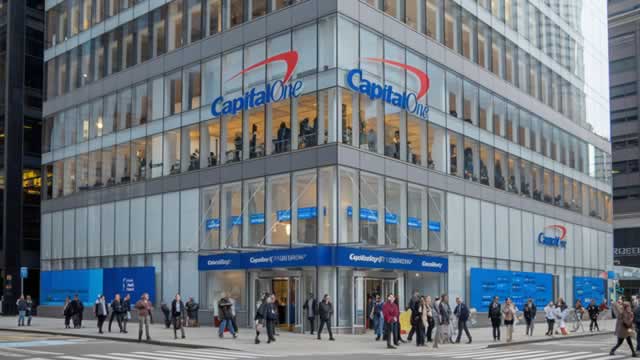
COF Falls on Q4 Earnings Miss as Costs Rise Y/Y, Announces Brex Deal
ZACKS· 2026-01-23 16:40
Core Viewpoint - Capital One's fourth-quarter 2025 results fell short of expectations, with adjusted earnings of $3.86 per share missing the Zacks Consensus Estimate of $4.12, despite showing year-over-year growth from $3.09 [1][8] Financial Performance - Adjusted earnings for 2025 were $19.61 per share, below the Zacks Consensus Estimate of $19.82, but improved from $13.96 in the previous year [3] - Total quarterly net revenues reached $15.58 billion, a 52.9% increase year over year, surpassing the Zacks Consensus Estimate of $15.37 billion [4] - Net revenues for 2025 were $53.43 billion, up 36.6% year over year, also exceeding the Zacks Consensus Estimate of $53.29 billion [4] - Quarterly net interest income (NII) surged 53.9% year over year to $12.5 billion, with net interest margin (NIM) expanding 123 basis points to 8.26% [4] Expense and Income Analysis - Non-interest income grew 49% year over year to $3.12 billion, driven by higher service charges and customer-related fees [5] - Non-interest expenses rose 53.4% year over year to $9.34 billion, attributed to increases in various cost components, particularly amortization of intangibles [5] - The efficiency ratio increased to 59.95%, indicating a decline in profitability compared to 59.75% in the prior-year quarter [6] Credit Quality - Provision for credit losses was $4.12 billion, a 56.8% increase from the prior-year quarter, with the allowance as a percentage of reported loans held for investment at 5.16%, up 20 basis points [7] - The net charge-off rate decreased by 14 basis points year over year to 3.45%, and the 30-plus-day-performing delinquency rate declined by 28 basis points to 3.41% [7] Strategic Developments - Capital One announced the acquisition of fintech Brex for $5.15 billion in a stock-and-cash deal, expected to close in mid-2026 [10][11] - The acquisition aims to enhance Capital One's position in the business payments marketplace, leveraging Brex's integrated platform [11] Capital Ratios - As of December 31, 2025, the Tier 1 risk-based capital ratio improved to 15.3% from 14.8% a year earlier, while the common equity Tier 1 capital ratio rose to 14.3% from 13.5% [9]