Deutsche Bank AG(DB)

Search documents
德意志银行:欧洲持有巨额美国资产 欧元受格陵兰危机冲击或低于预期
Jin Rong Jie· 2026-01-18 23:36
针对特朗普因格陵兰威胁对欧洲多国加征关税,德意志 银行驻伦敦外汇研究全球主管George Saravelos 表示,我们认为,相关举措对欧元的负面影响可能不像普遍假设的那样大。欧洲国家持有8万亿美元的 美国债券和股票,几乎是世界其他国家总和的两倍。在欧洲对美元敞口依然处于高位的情况下,过去几 天的发展可能会进一步推动美元资产再平衡。 ...

告别“内卷”!德意志银行熊奕:2025年是重要转折,“动物精神”正在回归
券商中国· 2026-01-18 09:33
Group 1: Economic Trends and Shifts - The year 2025 is identified as a significant turning point for the Chinese economy and market, with a notable shift in the perception of China's innovation capabilities and competitiveness in the global economic system [5] - The term "Deep Seek moment" reflects China's accelerated pace in the key technology field of artificial intelligence, surpassing previous expectations [5] - The return of "animal spirits" in the industry indicates a collective optimistic outlook, leading to increased investments and expansions among enterprises [6] Group 2: Innovation and Market Dynamics - Despite the emergence of many innovative companies, there is a challenge regarding the profitability of some firms not keeping pace with their innovation [8] - The "anti-involution" policy aims to optimize market competition ecology, ensuring that innovative firms receive reasonable returns, which could alleviate macroeconomic pressures like demand shortages and low prices [9] - The current economic environment shows similarities to past supply-side structural reforms, but the "anti-involution" approach addresses new characteristics such as simultaneous demand growth and declining profit margins in industries like automotive [9] Group 3: Service Consumption Potential - The development potential of the service sector is crucial for domestic demand, with current spending on services being relatively low compared to physical goods [11] - Key areas for service consumption growth include entertainment, healthcare, and public services, with specific constraints identified such as limited leisure time and the need for improved service quality [12] - The aging population is expected to drive demand for healthcare services, necessitating a focus on high-quality, personalized medical services alongside basic healthcare accessibility [12] Group 4: External Demand Trends - The trend of enterprises "going global" is anticipated to remain significant over the next five years, indicating a focus on expanding international markets [13]


All You Need to Know About Deutsche Bank (DB) Rating Upgrade to Buy
ZACKS· 2026-01-16 18:00
Core Viewpoint - Deutsche Bank has been upgraded to a Zacks Rank 2 (Buy), indicating a positive trend in earnings estimates which is a significant factor influencing stock prices [1][3]. Earnings Estimates and Stock Price Impact - The Zacks rating system is based on changes in earnings estimates, which are closely correlated with stock price movements, particularly due to institutional investors adjusting their valuations based on these estimates [4][6]. - An increase in earnings estimates typically leads to higher fair value for a stock, prompting institutional investors to buy or sell, which in turn affects stock prices [4]. Deutsche Bank's Earnings Outlook - Deutsche Bank's rising earnings estimates and the Zacks rating upgrade suggest an improvement in the company's underlying business, likely leading to increased stock prices [5]. - The Zacks Consensus Estimate for Deutsche Bank has increased by 3.7% over the past three months, with expected earnings of $3.67 per share for the fiscal year ending December 2025, indicating no year-over-year change [8]. Zacks Rank System - The Zacks Rank system classifies stocks into five groups based on earnings estimates, with only the top 20% receiving a "Strong Buy" or "Buy" rating, reflecting superior earnings estimate revisions [9][10]. - The upgrade of Deutsche Bank to a Zacks Rank 2 places it in the top 20% of Zacks-covered stocks, suggesting potential for market-beating returns in the near term [10].

格陵兰会是下一个“黑天鹅”吗?德银总结了未来走向的四种情景
Hua Er Jie Jian Wen· 2026-01-16 12:15
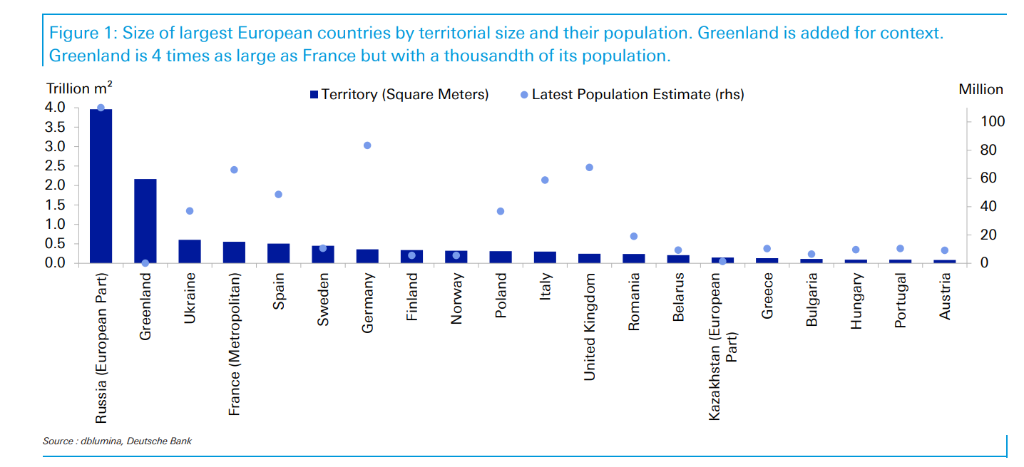
在战略层面,格陵兰为美国及其竞争对手提供了独特的北极优势。该岛不仅拥有位于皮图菲克(Pituffik)的关键导弹跟踪系统,更紧邻新兴的北 极海上航道。据预测,在未来几十年内,这些航道可能将亚洲至欧洲的航运时间缩短高达50%,这将彻底重塑全球物流版图。此外,格陵兰拥有 巨大的稀土储备,据估计高达150万吨(1.5m tonnes)。在美国极力减少对中国矿产主导地位依赖的大背景下,这一资源储备构成了另一个无法抗 拒的诱因。 德银推演:决定未来的四种路径 德意志银行认为,格陵兰岛可能成为冲击全球市场的"黑天鹅"。 据央视新闻报道,特朗普总统已公开重申美国对收购或控制格陵兰的长期兴趣。值得警惕的是,这一政策背景建立在美国近期单边军事行动的模 式之上——包括2025年对伊朗和2026年对委内瑞拉的行动。白宫方面已确认,军事选项仍在审查之中。 据追风交易台,1月15日,德意志银行发布的研究报告显示,格陵兰的局势已经到了临界点。尽管格陵兰位于北美大陆,人口不足60,000人,但其 领土面积却相当于除俄罗斯以外欧洲最大国家的四倍。为了让投资者直观理解这一比例,德银指出,法国的人口是格陵兰的1000多倍,但领土面 积仅为格陵兰 ...
金属价格暴涨,美国CPI的下一个上行风险?
Hua Er Jie Jian Wen· 2026-01-16 10:57
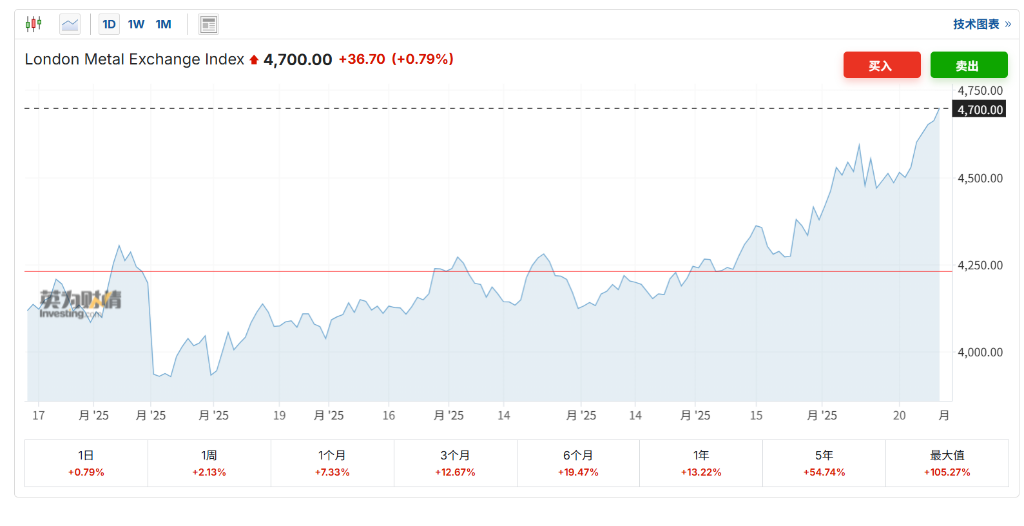
工业金属价格的持续上涨正成为美国通胀前景的潜在威胁。随着油价近期反弹、关税成本传导以及经济增长保持韧性,多重因素叠加可能推动 CPI在未来数月出现上行压力,最高法院即将就关税问题作出的裁决也为短期通胀走势增添了不确定性。 据追风交易台消息,德银分析师Markus Heider在15日公布的报告中表示,金属市场正经历一轮强劲涨势。LMEX工业金属指数自去年12月以来已 上涨近20%,自9月以来累计涨幅达到30%。这一始于去年秋季的上涨行情在最近几周明显提速。 通胀风险正在累积。本周公布的11月生产者价格指数(PPI)报告已显示核心消费品通胀出现加速迹象。与此同时,此前一直作为重要抵消因素的 能源价格近期止跌回升,过去一周油价出现反弹,削弱了成本端的缓冲空间。 对于美国市场而言,这一风险尤为突出。近几个月来关税政策已为成本端增添压力。如果油价维持在当前水平且经济增长保持强劲,金属价格上 涨将更明显地构成美国CPI的上行风险。 金属价格与通胀市场估值之间存在显著的正相关关系,这种关联建立在两个基础之上。首先,基础金属是生产成本的重要驱动因素,价格上涨会 直接传导至制造业成本,进而影响终端消费价格。其次,金属价格与通 ...
这不是科幻!2030年,太空数据中心成本将追平地面
华尔街见闻· 2026-01-15 07:56
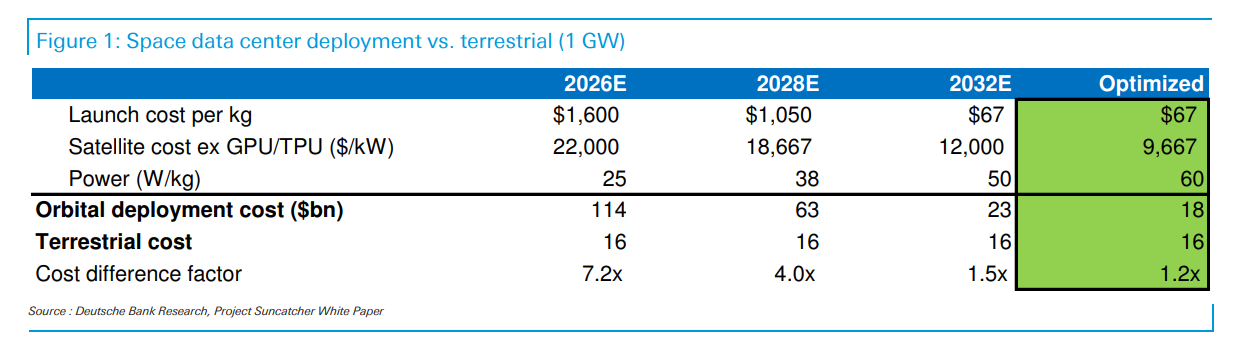
Core Viewpoint - The transition of high-energy AI computing to space is moving from theoretical discussions to economically viable validation, with the cost gap between space and terrestrial data centers rapidly narrowing [2][3]. Cost Gap Rapidly Closing - Deutsche Bank's model indicates that while the current cost of deploying a 1 GW space data center is at least 7 times that of terrestrial centers, this ratio is expected to decrease to 4 times by the late 2020s and reach cost parity in the 2030s [3][4]. - The decline in costs is primarily driven by reductions in launch costs and improvements in satellite design and energy efficiency, leading to a significant decrease in the mass required for orbital deployment [3][4]. Projected Cost Data - In the estimated scenario for 2026, the cost of space deployment is projected to be $114 billion, compared to $16 billion for terrestrial deployment, resulting in a difference factor of 7.2 times. By the "optimized scenario" in 2032, space deployment costs are expected to drop to $18 billion, nearly equal to the terrestrial cost of $16 billion, with a difference factor of 1.2 times [4][5]. Key Factors for Economic Reversal - The critical variable for achieving this economic reversal is the dramatic drop in launch costs, which are projected to fall from $1,600 per kg in 2026 to $67 per kg by 2032 [6]. - The report emphasizes the importance of fully reusable rockets and economies of scale in operations, suggesting that launch costs could potentially decrease to as low as $1 million or even below $70 per kg over time [7]. Hardware Optimization - In addition to launch costs, significant advancements in orbital hardware are anticipated. By the 2030s, the cost of a single satellite is expected to drop below $2 million, or just $10,000 per kW, featuring a 150 kW power system and custom chips designed for space AI infrastructure [9]. - However, the model's assumptions are based on the premise that ground capacity costs remain unchanged, and it does not account for the expensive procurement costs of GPU/TPU chips. The report warns that if ground-based energy sources, such as nuclear power, become rapidly available and inexpensive, the assumptions may no longer hold [9][10].

这不是科幻!2030年,太空数据中心成本将追平地面
Hua Er Jie Jian Wen· 2026-01-15 06:12
Core Insights - The transition from theoretical discussions to economic feasibility for deploying high-energy AI computing in space is underway, with significant cost reductions anticipated in the coming decade [1] Cost Gap Rapidly Closing - Deutsche Bank's model indicates that while current costs for deploying a 1 GW space data center are at least seven times higher than terrestrial costs, this gap is expected to narrow to four times by the late 2020s and achieve cost parity in the 2030s [2] - In a projected scenario for 2026, the cost for space deployment is estimated at $114 billion compared to $16 billion for terrestrial setups, resulting in a 7.2x difference. By the "2032 optimized scenario," space deployment costs could drop to $18 billion, nearly equal to terrestrial costs at $16 billion, with a difference factor of only 1.2x [2] Launch Cost Decline as a Key Factor - The dramatic decrease in launch costs is identified as a critical variable for achieving economic viability. The model predicts that launch costs per kilogram will plummet from $1,600 in 2026 to $67 by 2032 [4] - The report emphasizes the importance of complete rocket reusability and operational scaling, suggesting that launch costs could potentially fall to as low as $1 million or even below $70 per kilogram over time [4] Hardware Optimization - Significant advancements in orbital hardware are also expected, with projections indicating that the cost of a single satellite could drop below $2 million (or just $10,000 per kW) by the 2030s [7] - These optimized satellites will feature a 150 kW power system and custom chips designed specifically for space AI infrastructure, connected via optical laser terminals [7] Considerations and Assumptions - Deutsche Bank acknowledges that its model is based on the assumption that terrestrial capacity costs remain unchanged. The model primarily compares costs related to power, cooling, and weight, excluding expensive GPU/TPU chip procurement costs [8] - The report warns that if rapid and inexpensive power generation methods (e.g., nuclear energy) emerge on the ground, the assumptions regarding space data centers may no longer hold true [8] - This indicates that the logic behind space data centers depends not only on advancements in space technology but also on the stagnation of ground energy revolutions [9]
ETO Markets:美国12月核心CPI创新低,为何华尔街仍不买账?
Sou Hu Cai Jing· 2026-01-14 06:42
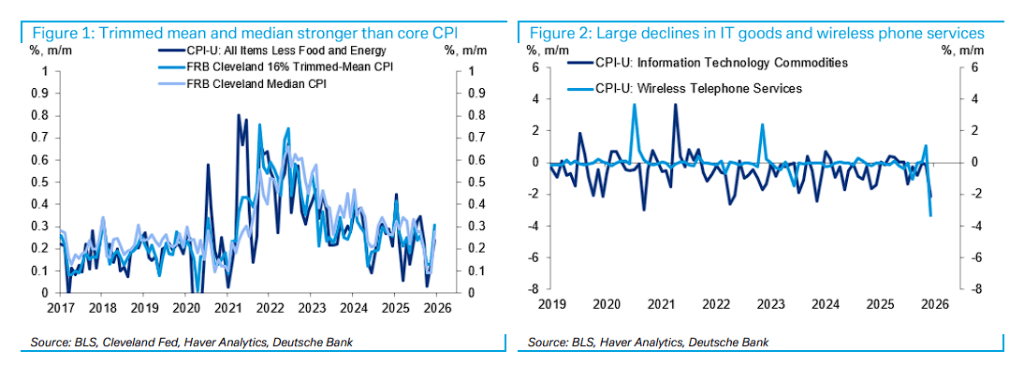
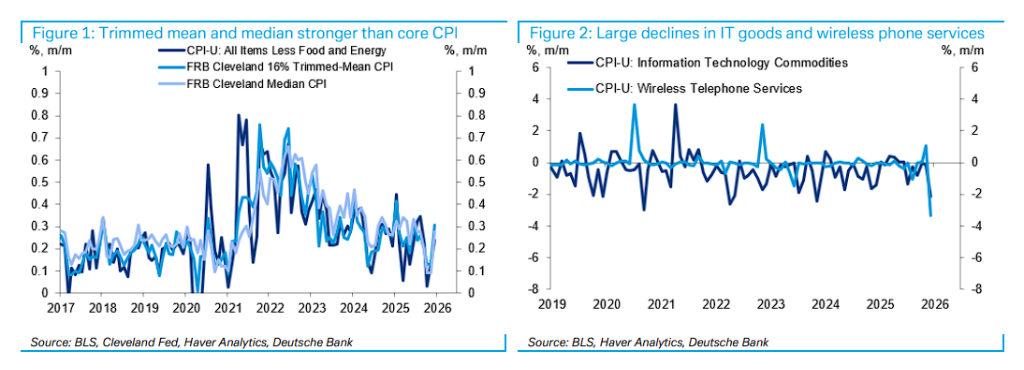
Core Viewpoint - The December CPI data released by the U.S. Bureau of Labor Statistics indicates a year-on-year increase of 2.6%, the lowest since March 2021, with a month-on-month increase of 0.2%, below the expected 0.3%. However, this report did not ignite investor optimism, as the market did not interpret it as a clear signal for the Federal Reserve to accelerate interest rate cuts [1] Group 1: CPI Analysis - Deutsche Bank and Morgan Stanley have raised concerns about the December CPI, suggesting it is filled with unsustainable statistical noise and distortions, indicating that the true inflation trend should be assessed through the upcoming core PCE price index, which the Federal Reserve pays more attention to and is expected to rebound significantly [1][3] - The December CPI's cooling is seen as a technical factor leading to a false impression, with significant data distortions masking the true inflation intensity. For instance, prices for information technology goods fell by 2.16%, and wireless telephone services dropped by 3.33%, collectively lowering the core CPI by about 6 basis points [1] Group 2: Alternative Inflation Indicators - The Cleveland Fed's trimmed-mean CPI and median CPI for December showed month-on-month increases of 0.31% and 0.28%, respectively, both higher than the core CPI, indicating that underlying inflation pressures in the U.S. are more entrenched than suggested by the core CPI [3] - Price data for specific categories supports this view, with clothing prices rising by 0.59%, the second-largest monthly increase since February 2025, and household goods prices increasing by 0.54%, the third-largest increase since November 2024 [3] Group 3: PCE Forecast Adjustments - Morgan Stanley has raised its December core PCE month-on-month forecast from 0.37% to 0.46%, contrasting sharply with the overall CPI performance. The key difference lies in the weight distribution of the two inflation indicators, with stronger price increases in higher-weighted categories in the PCE basket [4] - Notably, video media rental prices surged by 19.5% month-on-month, contributing approximately 8 basis points to the core PCE, while software prices also contributed 8 basis points. Even excluding these two items, the core PCE month-on-month rate would still reach 0.30% [4] Group 4: Tariff Impact on Inflation - Both Deutsche Bank and Morgan Stanley have observed that prices for tariff-sensitive goods rose again in December, continuing the upward trend after a brief decline in October and November. Deutsche Bank noted that while clothing prices have not yet significantly reflected tariff pressures, upstream supply chain pressures are accumulating, indicating that consumer price increases may be imminent [6] Group 5: Federal Reserve's Response - The Federal Reserve's reaction to the noisy CPI data is under scrutiny. Deutsche Bank believes that the December CPI represents a mix of distorted data recovery and genuine weakness signals, suggesting that the Fed will require more data to support further interest rate cuts [8] - Morgan Stanley assesses that the Fed can identify the "noise" in the data and may downplay the strong performance indicated in the core PCE projections, but the uncertainty in the data will likely lead the Fed to maintain a cautious stance [8]

美国CPI降温,市场为何无动于衷?数据失真,关键要看下周的PCE
Hua Er Jie Jian Wen· 2026-01-14 03:07
Core Viewpoint - The December CPI data appears mild but is filled with unsustainable noise and statistical distortions, according to Deutsche Bank and Morgan Stanley. The true test will be the upcoming PCE data [1][3]. CPI Analysis - The December CPI data showed a year-over-year core CPI increase of 2.6%, the lowest since March 2021, and a month-over-month increase of 0.2%, both below expectations [1]. - Deutsche Bank highlighted that the CPI data is distorted, with significant downward pressure from abnormal declines in information technology goods and wireless phone services, which together lowered the core CPI by about 6 basis points [4][6]. - The trimmed mean CPI and median CPI, which exclude extreme values, were reported at 0.31% and 0.28% respectively, indicating stronger underlying inflation pressures [1][6]. PCE Forecast - Morgan Stanley warned that despite the lower-than-expected core CPI, their forecast for the December PCE price index suggests a month-over-month increase of 0.46%, significantly higher than the CPI performance [2][9]. - The divergence between CPI and PCE is attributed to the differing weightings of goods and services in the two indices, with PCE showing stronger price increases in categories that have higher weights [9][11]. Market Implications - The market is awaiting the PCE data to confirm the true inflation trend. If the PCE rebounds as expected, it will limit the Federal Reserve's ability to continue lowering interest rates [3]. - Deutsche Bank noted that the CPI data reflects a mix of distorted November data recovery and genuine weakness, suggesting the Fed will likely wait for more data before signaling further rate cuts [14]. Tariff Effects - Both Deutsche Bank and Morgan Stanley observed signs of tariff impacts on inflation data, with prices of tariff-sensitive goods rising again in December, indicating potential future consumer price increases [12].
PayPal Teams With Deutsche Bank to Scale Payment Solutions
PYMNTS.com· 2026-01-13 17:48
Core Insights - PayPal is expanding its partnership with Deutsche Bank to enhance payment solutions across the U.S., Europe, and the Asia-Pacific region [2][3] - The collaboration aims to leverage PayPal's global reach and Deutsche Bank's expertise in cash management and merchant solutions to improve commerce solutions for customers worldwide [4] Group 1: Partnership Expansion - The agreement will enable Deutsche Bank to scale up merchant settlement, payouts, and initiate withdrawals and collection solutions for PayPal in the U.S., while also providing additional support in Europe and APAC [2] - This partnership reflects a long-standing relationship between PayPal and Deutsche Bank, emphasizing their commitment to innovation [3] Group 2: Technological Integration - PayPal has recently partnered with Microsoft to support the launch of Copilot Checkout, allowing shoppers to browse and pay without leaving the Copilot platform [4][5] - The integration aims to enhance AI-powered shopping experiences by combining PayPal's commerce services with Microsoft's intelligent shopping platform [6] Group 3: Fraud and Security - The evolution of fraud has shifted from traditional email scams to social media platforms, targeting younger, digitally native users who are more comfortable with quick transactions [7][8] - PayPal's focus on addressing these emerging fraud challenges highlights the need for robust security measures in the evolving digital landscape [6]