IBM(IBM)

Search documents
Opinion | Lou Gerstner, the Man Who Revived IBM
WSJ· 2025-12-29 22:52
Core Insights - The individual significantly transformed the culture and established a new business mission for the company, which had previously experienced difficulties [1] Company Impact - The company had fallen on hard times prior to the individual's leadership, indicating a period of struggle and potential decline [1] - The individual passed away at the age of 83, marking the end of an influential era for the company [1]



2026 Big Tech Quantum Bets: IBM and Amazon's Edge Over Pure-Plays?
ZACKS· 2025-12-29 21:01
Core Insights - Pure-play quantum computing stocks such as Rigetti Computing (RGTI) and D-Wave Quantum (QBTS) experienced significant gains in early 2025, with QBTS rising 157% and RGTI increasing by 49% due to investor enthusiasm for early-stage breakthroughs and potential revenue streams [2] - Recently, the momentum for these stocks has diminished, with QBTS gaining only 2.3% and RGTI losing 24.9% from October 2025 to date, as large tech companies like Amazon and IBM gained investor favor due to their established business models and quantum initiatives [3][4] Quantum Computing Market Dynamics - Analysts have indicated potential further downside for pure-play quantum stocks as revenue scale and sustainable profitability are still years away, making it challenging to project significant gains for 2026 [4] - Large technology firms such as Amazon and IBM are positioned to benefit from quantum computing due to their diversified and profitable business models, allowing them to invest in quantum initiatives without relying on immediate monetization [8] Company-Specific Developments - Amazon Web Services (AWS) is advancing quantum computing through its Braket platform, which provides access to various quantum devices and has introduced the Ocelot chip for improved error correction efficiency [9][10] - IBM's quantum strategy includes the Quantum Nighthawk, a 120-qubit processor aimed at achieving scientific quantum advantage by the end of 2026, supported by its open Qiskit software and partnerships [13][14] Financial Projections - Amazon is projected to report a 2026 earnings growth of 9.5% on revenue growth of 11.3%, with a Zacks Rank of 2 (Buy) [10] - IBM is expected to achieve a 2026 earnings growth of 7.5% on revenue growth of 4.9%, also holding a Zacks Rank of 2 [15]



Louis Gerstner Jr., Former CEO Who Transformed IBM, Dies at 83
WSJ· 2025-12-29 19:33
Core Insights - The company was perceived to be in an unfixable decline when leadership was taken over in 1993, prompting a strategic shift from hardware to services [1] Company Focus Shift - The strategic change involved moving the company's focus from hardware products to service-oriented offerings, indicating a significant transformation in its business model [1]

Can IBM's AI Investments Secure Future Market Leadership?
ZACKS· 2025-12-29 16:41
Core Insights - IBM has partnered with Pearson to develop AI-powered learning tools aimed at enhancing its presence in the education sector and expanding its AI applications globally [1][8] - The company has launched a $500 million venture fund to invest in early-stage AI companies, enhancing its AI portfolio through the WatsonX platform for secure and scalable AI solutions [2][8] - IBM's collaboration with Confluent, Inc. and SAP aims to strengthen its AI capabilities by providing real-time data streaming and utilizing generative AI to improve productivity in retail and consumer goods [3][8] - The global AI market is projected to grow to nearly $3,680 billion by 2034, with a CAGR of 19.20%, positioning IBM as a long-term leader through investments in R&D and strategic partnerships [4] - IBM's stock has increased by 38.6% over the past year, although this is lower than the industry's growth of 85.6% [7] Investment and Valuation - IBM trades at a forward price-to-sales ratio of 4.06, which is below the industry average [10] - Earnings estimates for 2025 have risen by 1.2% to $11.39, and for 2026, they have increased by 1.8% to $12.24 [11]

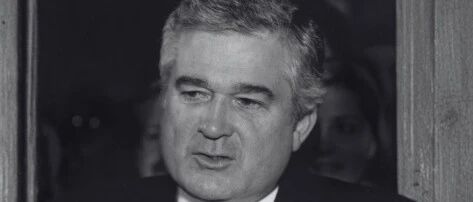
IBM前CEO郭士纳逝世
财联社· 2025-12-29 16:07
Core Viewpoint - The article highlights the legacy of Louis Gerstner, former Chairman and CEO of IBM, who transformed the company from a struggling hardware manufacturer into a leading IT services and solutions provider, marking a significant era in corporate history [2][11]. Group 1: Background and Challenges - Louis Gerstner was born in 1942 and had a background in consulting, becoming the youngest partner at McKinsey & Company before taking on leadership roles in major corporations [4]. - He became IBM's first external CEO on April 1, 1993, during a time when the company faced severe financial difficulties, with cumulative losses of $16.8 billion over three years and a stock price at an all-time low [4][5]. Group 2: Strategic Actions and Reforms - Gerstner's approach focused on returning to the essence of business rather than technology, emphasizing integrated solutions over fragmented products [5]. - He shifted IBM's core focus from hardware manufacturing to high-value IT services and software, exemplified by the $3.5 billion acquisition of Lotus in 1995, which was the largest software acquisition at the time [6]. - Gerstner reformed IBM's corporate culture by implementing significant layoffs, selling non-core assets, and linking employee compensation to overall company performance, while promoting a "customer first" principle [6][7]. Group 3: Achievements and Impact - Under Gerstner's leadership, IBM returned to profitability by the end of 1994, earning $3 billion, and saw its stock price increase by approximately 800% during his tenure, with market capitalization rising from about $29 billion to over $100 billion [7]. - His strategic transformation defined IBM's direction for the next two decades, positioning the company as a pioneer in cloud computing and e-commerce [7]. - Gerstner's influence extended beyond IBM, shaping future leaders in the tech industry and inspiring companies like Huawei to adopt similar management practices [8]. Group 4: Legacy - Gerstner's management philosophy is encapsulated in his autobiography, "Who Says Elephants Can't Dance?", which has become a classic for global managers [8]. - His passing marks the end of a significant chapter in corporate leadership, with current IBM CEO Arvind Krishna acknowledging Gerstner's focus on future customer needs [11].
IBM前CEO郭士纳去世,曾深刻影响任正非!
Sou Hu Cai Jing· 2025-12-29 11:38
Core Insights - The passing of former IBM CEO Lou Gerstner has had a profound impact on figures like Ren Zhengfei, highlighting Gerstner's legendary status in the IT industry [1] - Gerstner took over IBM during a crisis in 1993, when the company faced three consecutive years of losses totaling $8 billion, and successfully turned it around, leading IBM to rank among the top ten in the Fortune 500 [1] - Gerstner's management philosophy emphasized a clear, pragmatic, and customer-oriented approach rather than relying on technical expertise, which allowed IBM to achieve a historic turnaround [1] Group 1 - Gerstner's management principles can be summarized in three key points: maintaining technological leadership with a customer-centric focus, grounding decisions in reality, and ensuring execution as a guarantee [2] - The transformation of great companies relies not on technological miracles but on returning to the essence of business, which is Gerstner's most valuable legacy to management [2] - Ren Zhengfei's admiration for IBM's management model led Huawei to invest heavily in adopting IBM's management processes, laying the foundation for its evolution into a world-class enterprise [1][2] Group 2 - The importance of effective management is emphasized, as shrinking a company's scale can lead to a loss of competitiveness, while expanding without effective management can lead to failure [2] - Companies must strengthen management and service to survive in a challenging environment, as external factors are often beyond control [2] - The necessity for companies to find the right mentors during critical phases is underscored, with IBM serving as a prime example [2]
Former IBM chairman and CEO Louis Gerstner dies at 83
Youtube· 2025-12-29 11:33
Core Insights - Lewis Gersner, former IBM chairman and CEO, passed away at age 83, recognized for transforming IBM's business model towards services and significantly increasing its stock value during his tenure [1][2]. Company Overview - Gersner was the first outsider to lead IBM, taking the role in 1993 after serving as CEO of RJR Nabisco [1]. - Under his leadership, IBM's stock rose over 700%, although the company faced challenges in revenue and was perceived as "legacy tech" in later years [2]. Workforce Changes - In the early 1990s, IBM employed approximately 350,000 people, but this number has since decreased to around 270,000, reflecting significant workforce reductions during Gersner's restructuring efforts [3]. Industry Context - Gersner's strategies in the 1990s are seen as relevant today as large companies navigate technological shifts and productivity challenges, highlighting a historical trend of legacy companies reducing costs and workforce [4].

IBM传奇CEO郭士纳去世
YOUNG财经 漾财经· 2025-12-29 11:24
Core Viewpoint - The article discusses the legacy of Louis Gerstner, the former CEO of IBM, who passed away at the age of 83, highlighting his transformative leadership that saved IBM from potential bankruptcy and shifted its focus towards business services [3][4]. Group 1: Leadership and Transformation - Louis Gerstner was appointed as the first external CEO of IBM in 1993 during a time when the company faced a potential bankruptcy crisis [3]. - Instead of splitting the company, Gerstner redirected IBM's focus towards business services, fundamentally changing its corporate culture and priorities [3][4]. - Under Gerstner's leadership, IBM's stock price increased by approximately 800% by the time he stepped down in 2002, creating significant value for shareholders [4]. Group 2: Post-IBM Contributions - After leaving IBM, Gerstner became the chairman of Carlyle Group and retired in 2008, continuing to influence the business world [4]. - He authored the bestselling book "Who Says Elephants Can't Dance?" and co-authored "Reinventing Education: Entrepreneurship in America's Public Schools," showcasing his business acumen [4]. - Gerstner was also involved in philanthropy, founding the Gerstner Foundation in 1989, which supports biomedical research, environmental and educational programs, and social welfare initiatives in various regions [4].
IBM告别传奇拯救者,前CEO郭士纳逝世
Sou Hu Cai Jing· 2025-12-29 09:56
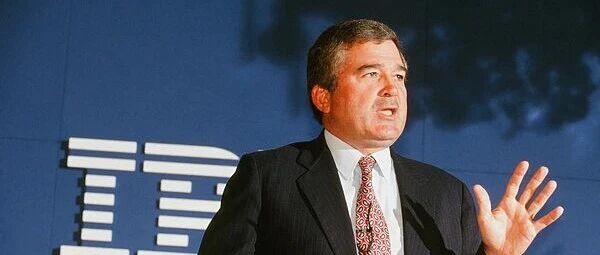
Core Insights - Lou Gerstner, former CEO of IBM, passed away, leaving a significant legacy in transforming the company during a critical period [1][3] Group 1: Leadership and Transformation - Gerstner took over as IBM's first external CEO in 1993 when the company was facing severe challenges, including record losses and potential disintegration into independent units [3][4] - He implemented drastic reforms, including cutting 35,000 jobs, selling non-core assets, and restructuring the compensation system to align employee pay with overall company performance [3][4] - One of his most impactful decisions was to maintain IBM's corporate integrity instead of pursuing a breakup, focusing on integrated solutions rather than fragmented technologies [4][5] Group 2: Business Performance - Under Gerstner's leadership from 1992 to 2001, IBM's services revenue grew from $7.4 billion to $30 billion, and the stock price increased from $13 to $80, raising the market capitalization from $29 billion to approximately $168 billion [5] - Gerstner shifted the company's focus from the OS/2 operating system to middleware solutions, establishing IBM as a key integrator in the network and systems space [4][5] Group 3: Legacy and Influence - Gerstner maintained a long-term relationship with IBM after his tenure, providing advice and insights while remaining engaged with the company's developments [5] - He authored a book detailing his leadership journey at IBM, emphasizing the importance of creating a truly integrated entity, which he considered his most significant legacy [5]

「让大象跳舞」的人,走了,苏姿丰曾当他助理,库克曾给他打工
3 6 Ke· 2025-12-29 09:08
Core Insights - Louis V. Gerstner Jr. is credited with saving IBM from near collapse during his tenure as CEO from 1993 to 2002, transforming the company from a struggling giant into a profitable entity [1][4][5] - His leadership style emphasized a shift in corporate culture, focusing on customer satisfaction and cross-department collaboration rather than internal processes [10][12][21] Group 1: Background and Challenges - In 1993, IBM faced significant challenges, including declining sales of mainframes and PCs, resulting in massive losses and a reduced market value [5][9] - By the time Gerstner left in 2002, he had increased IBM's market value from $29 billion to $168 billion, achieving an 800% rise in stock price [7] Group 2: Leadership and Cultural Change - Gerstner, an outsider to the tech-centric culture of IBM, introduced a new approach that prioritized direct communication and customer needs over internal bureaucracy [10][12] - He recognized that IBM's crisis stemmed from an inward-looking culture that neglected customer satisfaction, leading to a focus on compliance rather than problem-solving [10][27] Group 3: Strategic Decisions - One of Gerstner's most controversial decisions was to reject the idea of splitting IBM into separate entities, believing that the company's value lay in providing integrated solutions rather than isolated products [16][17] - He initiated a long-term strategy to transform IBM towards enterprise services and systems integration, which laid the groundwork for future growth in IT outsourcing and consulting [17][19] Group 4: Performance and Accountability - Gerstner linked employee compensation to overall company performance rather than departmental success, fostering collaboration and breaking down silos within the organization [21][22] - He emphasized the importance of quick decision-making and accountability, encouraging a culture where employees were rewarded for completing tasks efficiently [21][27] Group 5: Legacy and Influence - Gerstner's leadership style and decisions have had a lasting impact on the technology industry, shaping a generation of leaders who emerged from IBM, such as AMD's Lisa Su and Apple's Tim Cook [28][30] - His approach to management, which balanced results with a strong sense of values, remains relevant as companies navigate technological transformations today [32][33]