Workflow
Intel(INTC)
icon
Search documents
Factbox-From OpenAI to Meta, firms channel billions into AI infrastructure as demand booms
Yahoo Finance· 2025-10-13 13:54
Core Insights - OpenAI has partnered with Broadcom to create its first in-house AI processors, responding to the increasing demand for its services [1] - The collaboration will see OpenAI design chips that Broadcom will develop and deploy, with a planned rollout of 10 gigawatts of custom chips by the second half of 2026 [2] AI and Chip Deals - AMD has entered a multi-year agreement to supply AI chips to OpenAI, which includes an option for OpenAI to acquire up to 10% of AMD [2] - Nvidia plans to invest up to $100 billion in OpenAI and will supply data center chips, solidifying OpenAI's status as a key customer for Nvidia [3] - CoreWeave has signed a $14 billion deal with Meta to provide computing power [4] - Nvidia will invest $5 billion in Intel, acquiring approximately 4% of the company after new shares are issued [5] - Oracle is negotiating a multi-year cloud computing deal with Meta valued at around $20 billion [6] - Oracle is also reported to have signed a significant cloud deal with OpenAI, expected to involve $300 billion in computing power over five years [7] - CoreWeave has an initial order worth $6.3 billion with Nvidia, ensuring the AI chipmaker will purchase any unsold cloud capacity [8] - Nebius Group will provide Microsoft with GPU infrastructure capacity in a $17.4 billion deal over five years [9] - Google has established a six-year cloud computing agreement with Meta worth over $10 billion [10] - Intel is receiving a $2 billion investment from SoftBank Group, making SoftBank one of Intel's top-10 shareholders [11] - Tesla has signed a $16.5 billion deal with Samsung Electronics for chip sourcing, with plans for Samsung's new factory in Texas to produce Tesla's next-generation AI6 chip [13]
Intel downgraded, Micron upgraded: Wall Street's top analyst calls
Yahoo Finance· 2025-10-13 13:49
Upgrades - Deutsche Bank upgraded Public Storage (PSA) and CubeSmart (CUBE) to Buy from Hold with price targets of $325 and $45, citing a positive outlook for the self-storage REIT sector ahead of Q3 reports [2] - BNP Paribas Exane upgraded Ciena (CIEN) to Outperform from Neutral with a price target of $185, up from $120, highlighting benefits from increasing data center investments [3] - Goldman Sachs upgraded Estee Lauder (EL) to Buy from Neutral with a price target of $115, up from $76, anticipating a fundamental inflection and potential return to sales growth in the September quarter [3] - BTIG upgraded Palo Alto Networks (PANW) to Buy from Neutral with a price target of $248, based on positive feedback from industry contacts regarding the company's growth targets of 14% total revenue growth and 26% growth in NGS ARR for FY26 [4] - BNP Paribas Exane double upgraded Micron (MU) to Outperform from Underperform with a price target of $270, up from $100, emphasizing the potential of high-bandwidth memory as a sustainable growth vector and the early stages of a memory supercycle [5] Downgrades - BofA downgraded Intel (INTC) to Underperform from Neutral with an unchanged price target of $34, citing challenges in competitive outlook and lack of a discernible AI strategy despite recent market cap gains [6] - Goldman Sachs downgraded PayPal (PYPL) to Sell from Neutral with a price target of $70, predicting transaction margin headwinds in 2026 due to interest rate pressures and changes in credit product performance [6] - BofA downgraded Texas Instruments (TXN) to Underperform from Neutral with a price target of $190, down from $208, noting that global tariff turmoil may hinder near- to medium-term demand improvement [6] - BofA downgraded GlobalFoundries (GFS) to Underperform from Neutral with an unchanged price target of $35, indicating a need for faster gross margin improvement and pricing power [6] - BofA downgraded Axcelis (ACLS) to Underperform from Neutral with a price target of $90, up from $81, while acknowledging the potential benefits of a proposed merger with Veeco Instruments (VECO) as being more long-term [6]
成败在此一举:英特尔320亿美元豪赌18A工艺
Hua Er Jie Jian Wen· 2025-10-13 13:34
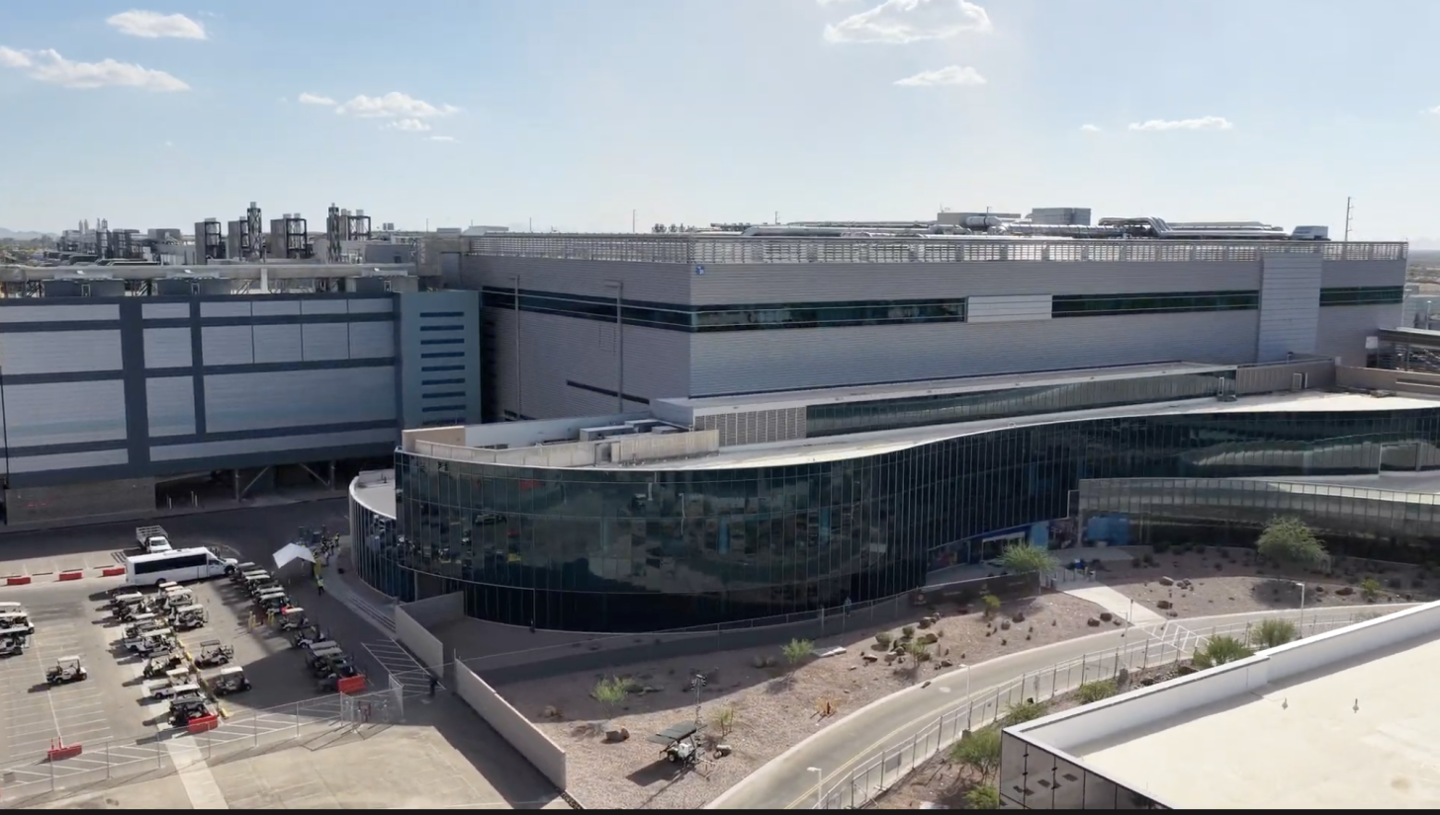
Core Insights - Intel has begun mass production at its new $32 billion chip factory in Arizona, aiming to regain leadership in advanced manufacturing [1][4] - The company's 18A semiconductor production technology is touted as the most advanced globally, but Intel acknowledges the need to earn customer trust [1][5] - Key customers like Apple, Nvidia, and Qualcomm will test Intel's new chips in the next 6-8 months, which will be crucial for the company's future [1][4] Investment and Financial Implications - The investment in the Arizona factory exceeds half of Intel's projected revenue for 2024, raising concerns about the valuation of its loss-making foundry business [4] - Intel's foundry division is currently losing over $10 billion annually and carries a net debt of $20 billion [1][4] - The U.S. government has converted planned subsidies into equity investments, acquiring a 10% stake in Intel, which has boosted investor confidence [5] Production and Technology Challenges - The Fab 52 facility has commenced operations, while the Fab 62 facility is still under construction, requiring significant resources [4] - Early yield issues have reportedly been resolved, and Intel plans to launch two new chips: Panther Lake for PCs and Clearwater Forest for servers [4] - Intel must demonstrate the scalability of its 18A process to secure pre-orders for its planned 14A process set for 2028 [5] Market Position and Competitive Landscape - Intel faces the challenge of competing with TSMC, which has long dominated the high-end chip foundry market [5] - The company's ability to attract customers hinges not only on technology but also on establishing trust in its execution capabilities [5]
Former Intel CEO Pat Gelsinger: 'Of course' we're in an AI bubble
CNBC Television· 2025-10-13 13:20
Let's get into the world of AI and the chips economy now with a special guest who is on the set with us this morning. Pat Gellzinger, former Intel CEO. He's now general partner at venture capital firm Playground Global.And if there's one person who uh knows what's going on uh around this whole space and around what happened at Intel, what's going on with Intel now, it is you. I'm just so curious where you land on what's what's transpired here specifically before we even get into just everything else. this i ...
Former Intel CEO Pat Gelsinger: 'Of course' we're in an AI bubble
Youtube· 2025-10-13 13:20
Core Insights - The U.S. government's stake in Intel is viewed as potentially beneficial if it leads to the construction and operation of Intel fabs in the U.S. [3][4] - Intel's recent performance shows a 54% increase in shares over the past year, but a decline of over 33% over the last five years, indicating ongoing challenges [11][12] - The shift towards AI technology is seen as a significant factor affecting Intel's market position and future prospects [14][18] Government Involvement - The Chips Act, initiated under the Trump administration, aimed to support national security and economic resilience through grants to companies like Intel [5][6] - There is criticism regarding the slow deployment of funds from the Chips Act, which has hindered Intel's progress [10] - The current administration is open to reevaluating and improving the execution of such programs to ensure they effectively support the industry [9][10] Industry Dynamics - Intel has faced challenges in maintaining its technological leadership due to a series of poor decisions over the past 15 years [14] - The company is in a rebuilding phase, focusing on core technology and manufacturing processes to regain its competitive edge [13][14] - The rise of competitors like Nvidia and AMD has intensified the pressure on Intel to innovate and adapt to the rapidly changing tech landscape [12][14] AI Market Trends - There is a recognition of an AI boom, with significant investment and leverage in the system, although concerns about a potential bubble exist [17][18] - The transition to AI is expected to displace existing internet and service provider industries, indicating a major shift in the market [18] - Future advancements in AI technology are anticipated to bring radical improvements in efficiency, with significant developments expected by the end of the decade [20][21]
【产业互联网周报】《时代》公布年度发明榜单,宇树、DeepSeek上榜;AI相关债券已达1.2万亿美元,超越银行成投资级市场最大板块;AMD和OpenA...
Tai Mei Ti A P P· 2025-10-13 08:01
Group 1: AI Models and Technologies - Tencent's Hunyuan-Vision-1.5-Thinking ranks third globally and first in China in the latest LMArena visual model rankings, showcasing advanced multi-language and multi-modal understanding capabilities [2] - Alibaba's Lin Junyang announces the establishment of a small team focused on robotics and embodied intelligence, indicating a shift towards foundational intelligent agents capable of long-horizon reasoning [2] - Xiaopeng Motors announces significant breakthroughs in "physical AI," with a new model aimed at enhancing L4 autonomous driving capabilities [5] Group 2: Strategic Partnerships and Collaborations - Silicon-based Flow and China Mobile's Guizhou branch sign a strategic cooperation agreement focusing on collaborative operations and AI infrastructure development [3] - Sairus's subsidiary signs a framework agreement with Volcano Engine to collaborate on embodied intelligence technologies [3] - Worth Buying Technology and Weimeng establish a strategic partnership to develop integrated AI e-commerce services [4] Group 3: Investments and Financial Developments - AMD's CFO states that the partnership with OpenAI is expected to generate hundreds of billions in revenue, with a significant investment in AI infrastructure [12] - Didi Autonomous Driving secures 2 billion yuan in D-round financing to enhance AI research and L4 autonomous driving applications [24] - SoftBank's Graphcore plans to invest 1 billion pounds in India over the next decade to establish an AI engineering park [18] Group 4: Industry Trends and Market Insights - Morgan Stanley reports that AI-related bonds have reached $1.2 trillion, becoming the largest segment in the investment-grade market [26] - The Chinese government aims to establish over 30 new national and industry standards for cloud computing by 2027 [27] - The Ministry of Industry and Information Technology emphasizes the need for enhanced new-type information infrastructure and AI integration in manufacturing [30]
异动盘点1013|中远海能涨超3%,光伏股集体走低;贝壳跌超3%,霸王茶姬美股跌超2%
贝塔投资智库· 2025-10-13 03:59
Group 1: Hong Kong Stocks - MicroPort Scientific Corporation-B (02252) rose over 3% as it announced that its commercialization process has accelerated, with overseas orders exceeding 60 units [1] - COSCO Shipping Energy Transportation Co., Ltd. (01138) increased over 3% following new sanctions announced by the U.S. OFAC against companies related to Iranian oil exports [1] - InnoCare Pharma-B (09606) gained over 3% as the company is expected to submit its first ADC for listing within the year [1] - Zijin Mining Group International (02259) rose over 4% after completing the acquisition of the Raygorodok gold mine project in Kazakhstan [1] - Hong Kong Travel International (00308) surged over 8% after announcing a proposal for the physical distribution of its tourism real estate business, which is expected to reduce the drag from non-core assets [1] - Kingsoft Corporation (03888) increased over 10% following the Chinese Ministry of Commerce's announcement of export controls on certain overseas rare earth-related items containing Chinese components [1] Group 2: Solar and Insurance Stocks - Solar stocks collectively declined, with Flat Glass Group Co., Ltd. (06865) down over 8%, Xinyi Solar Holdings Limited (00968) down over 7%, and Xinyi Glass Holdings Limited (00868) down over 6%, as the market focuses on capacity clearing and future installation demand [2] - Domestic insurance stocks fell across the board, with New China Life Insurance Co., Ltd. (01336) down over 5%, China Pacific Insurance (Group) Co., Ltd. (02328) down over 3%, and China Life Insurance Company Limited (02628) down nearly 4%, following Tianan Insurance's announcement of a 5.3 billion yuan debt default [2] Group 3: U.S. Stocks - Beike (BEKE.US) fell 3.87% as a report indicated that the sales of the top 100 real estate companies in September increased month-on-month, driven by seasonal factors and policy relaxations [3] - Stellantis (STLA.US) dropped 7.37% after preliminary third-quarter sales data showed a 13% year-on-year increase in global deliveries to 1.3 million units [3] - Intel (INTC.US) decreased 3.78% after revealing details about its new Core Ultra series processors [3] - Venture Global (VG.US) plummeted 24.88% after losing a legal dispute related to LNG cargo sales with BP [4] - Nokia (NOK.US) rose 2.70% after announcing a technology asset licensing agreement with HPE to enhance its AI wireless access network capabilities [4]
全球要闻:美股指期货集体反弹贸易担忧情绪缓和 美股Q3财报季本周揭幕
Sou Hu Cai Jing· 2025-10-13 00:17
Market Overview - The U.S. stock market experienced significant declines last Friday, with the S&P 500 index falling by 2.71% to 6552.51 points, the Dow Jones down by 1.90% to 45479.60 points, and the Nasdaq dropping by 3.56% to 22204.43 points, marking the largest drop in six months [2][3] - Weekly performance showed the Dow Jones index down 2.73%, Nasdaq down 2.53%, and S&P 500 down 2.43% [3] Trade Relations and Market Sentiment - U.S. Vice President Vance indicated a willingness for rational negotiations with China, following President Trump's announcement of a 100% tariff on certain Chinese goods starting November 1 [5] - Market sentiment improved after Vance's comments, with Bitcoin rising over 2% and Ethereum increasing by over 7%, reflecting optimism about potential negotiations [5] Upcoming Economic Indicators - Investors are closely monitoring developments regarding Trump's tariff statements and the ongoing U.S. government shutdown, which has delayed the release of key economic data, including the September CPI report now scheduled for October 24 [6] - The upcoming earnings season for U.S. companies will be scrutinized for insights into the economic outlook and potential layoffs [6] Federal Reserve Developments - The last week before the Federal Reserve's October meeting is marked by increased communication from Fed officials, including Chairman Powell's scheduled speech [6] Bond Market - U.S. Treasury yields rose sharply, with the 10-year yield closing at 4.036% and the 2-year yield at 3.512% [9] Stock Performance - Notable declines in major tech stocks included Nvidia down 4.89%, Microsoft down 2.19%, Apple down 3.45%, and Amazon down 4.99% [10] - Nvidia's CEO sold 225,000 shares for over $42.8 million during the recent trading period [10][16] Global Market Trends - European and Asian markets also faced declines, with the FTSE 100 down 0.86%, CAC 40 down 1.53%, and Nikkei 225 down 1.01% [10] Chinese Stocks - Chinese stocks listed in the U.S. saw significant drops, with Alibaba down 8.45% and Tencent down 3.55% [11] Commodity Market - Gold prices reached a new high of $4060 per ounce before retreating, while silver also saw gains [14] - Oil prices fell sharply, with WTI crude dropping 5.43% to $58.17 per barrel, marking a five-month low [14]
全球芯片供应链正在为中国稀土限制做准备
傅里叶的猫· 2025-10-12 14:35
Core Viewpoint - The article discusses the implications of China's new export controls on rare earth elements, particularly in the semiconductor industry, highlighting the potential risks and adjustments that companies may need to make in response to these regulations [2][3]. Group 1: Impact on Semiconductor Industry - The new export controls from China are the strictest to date, targeting rare earth minerals essential for semiconductor production, such as precision lasers and magnets [2]. - China dominates the global supply of rare earth elements, with over 90% of the mining and processing of critical elements like dysprosium, terbium, and gadolinium occurring within its borders [2]. - Companies like ASML, a leading supplier of chip lithography machines, are assessing the potential disruptions, as their machines rely on rare earth magnets, which could lead to price increases if supply is restricted [2][3]. Group 2: Broader Implications - Rare earth elements are crucial not only for semiconductors but also for electric vehicles, wind power, and defense sectors, indicating a widespread impact across various industries [3]. - Major chip manufacturers, including Intel, TSMC, and Samsung, rely on ASML's equipment, and any disruption in rare earth supply could affect the entire value chain from chemicals to tool manufacturing [3]. - The U.S. government is reviewing the implications of these new regulations, which were implemented suddenly to control global technology supply, prompting companies to reassess their dependencies on Chinese rare earths [3].
为什么中国稀土王牌威力这么大?美国有破解的方法吗?
Sou Hu Cai Jing· 2025-10-12 09:27
Core Viewpoint - The recent export control regulations by China on rare earth materials and technologies significantly impact the semiconductor industry and other high-tech sectors in the U.S. [1][3][4] Group 1: New Regulations and Their Implications - On October 9, China's Ministry of Commerce announced new regulations that impose export controls on certain rare earth-related items and technologies containing Chinese components [1]. - The new rules require foreign manufacturers to obtain permission from China to sell rare earth magnets and semiconductor materials that contain 0.1% or more of Chinese heavy rare earth elements [1][3]. - The regulations particularly affect the semiconductor industry, as they require applications for the use of Chinese rare earth materials in the production of advanced chips and military-related AI technologies [3][4]. Group 2: Impact on Semiconductor Manufacturers - TSMC, the world's leading semiconductor foundry, relies heavily on rare earth elements for chip manufacturing, which are primarily imported from mainland China [4][6]. - If TSMC uses Chinese rare earth elements in producing chips below 14nm, it will need Chinese permission to sell these chips to U.S. companies like Apple and Intel [4][6]. - The potential inability to source these materials could lead to significant challenges for U.S. chip manufacturers, affecting their production capabilities [6]. Group 3: Broader Implications for U.S. Industries - The U.S. military and aerospace sectors also heavily depend on rare earth elements, which are critical for various advanced weapon systems and technologies [6][7]. - For instance, the F-35 fighter jet requires 417 kg of rare earth materials, and a Virginia-class submarine needs 4600 kg, highlighting the extensive reliance on these materials [6]. - The automotive industry, particularly electric vehicles like those produced by Tesla, also utilizes rare earth elements in their manufacturing processes [6]. Group 4: China's Dominance in Rare Earth Production - China accounts for approximately 70% of global rare earth production and over 90% of rare earth refining capacity, particularly in heavy rare earths, where it holds more than 98% of the global market share [10][11]. - The technical expertise in rare earth processing and purification is predominantly held by China, making it difficult for other countries to establish competitive production capabilities [12][14]. - The U.S. has been unable to significantly improve its rare earth production and technology despite efforts to develop its own supply chain since 2010 [18][20]. Group 5: Challenges for U.S. Rare Earth Initiatives - The U.S. faces significant challenges in re-establishing its rare earth supply chain due to high production costs and environmental risks associated with rare earth mining [21][22]. - Many U.S. companies are reluctant to invest in rare earth mining and processing due to the potential for high costs and environmental liabilities [21][22]. - Collaborative efforts with other countries to develop rare earth industries have been slow and may take decades to yield results, leaving the U.S. reliant on Chinese imports in the near term [23][24].