Intel(INTC)

Search documents
\十五五\规划中的发展指标:环球市场动态2026年3月26日
citic securities· 2026-03-26 03:02
Market Overview - A-shares collectively rose on Wednesday, with the Shanghai Composite Index up 1.30% to 3,931.84 points, and nearly 4,900 stocks increased in value[15] - U.S. stocks rebounded significantly, with the Dow Jones up 0.66% to 46,428 points, driven by hopes for diplomatic resolutions in the U.S.-Iran conflict[9] - European markets also saw gains, with the Euro Stoxx 600 rising 1.4%, reflecting improved market sentiment[9] Commodity and Currency Trends - International oil prices fell, with WTI crude down 2.20% to $90.32 per barrel, easing inflation concerns and cooling interest rate hike expectations[28] - Gold prices increased by 3.41% to $4,552.3 per ounce, benefiting from the drop in oil prices[28] - The U.S. dollar index rose 0.2% to 99.6, marking its second consecutive day of gains[28] Fixed Income Market - U.S. Treasury yields declined, with the 10-year yield down 2.8 basis points to 4.33%, as liquidity improved following the drop in oil prices[31] - The Chinese IG spread narrowed by 3-10 basis points, indicating a strengthening sentiment in the Asian bond market[31] Key Economic Indicators - The Chinese government set a GDP growth target range of 4.5%-5.0% for 2026, emphasizing the need for labor productivity to exceed GDP growth[6] - Urbanization rate target was raised to 71.0%, focusing on quality improvements to unleash domestic demand potential[6] Individual Stock Highlights - Pinduoduo reported a 12% year-on-year revenue increase to 124 billion RMB, exceeding expectations, with GMV projected to grow 70% to $30 billion[9] - Meituan's stock surged nearly 14% following regulatory support for ending the "takeout war" in the internet sector[11]






全球大公司要闻 | SpaceX冲刺万亿IPO,谷歌Meta败诉
Wind万得· 2026-03-26 01:16
Group 1 - SpaceX is preparing for its largest IPO, planning to submit confidential documents to regulators soon, with a target valuation of $1.75 trillion and expected fundraising of $50 billion to $75 billion [2] - OpenAI will shut down its Sora video generation service and terminate its partnership with Disney to streamline its AI product line [3] - Pop Mart's revenue for 2025 is projected to reach 37.12 billion yuan, a year-on-year increase of 184.7%, with adjusted net profit expected to be 13.08 billion yuan, up 284.5% [3] - Pinduoduo's Q4 2025 revenue is expected to be 123.91 billion yuan, a 12% year-on-year increase, while adjusted net profit is projected to decline by 12% [4] - Meta faces a lawsuit regarding social media addiction, with a ruling requiring it to pay 70% of damages, and plans to lay off hundreds of employees [4] Group 2 - China Life achieved a revenue of 615.68 billion yuan in 2025, a 16.5% year-on-year increase, with a net profit of 154.08 billion yuan, up 44.1% [6] - China Eastern Airlines signed a purchase agreement for 101 A320NEO aircraft with a catalog price of approximately $15.802 billion [7] - Zijin Mining reported a 62% increase in net profit for 2025, marking a historical high [7] - Alibaba Health partnered with Novartis to provide integrated services for chronic spontaneous urticaria [7] - BASF announced price increases for its commodity amines portfolio in Europe, with increases potentially reaching 30% due to rising costs from geopolitical tensions [16]






日韩半导体股下挫,SK海力士跌超3%
21世纪经济报道· 2026-03-26 00:56
Market Overview - Japanese and South Korean stock markets showed mixed performance, with Nikkei 225 up by 0.61% and KOSPI down by 1.23% [1] - Semiconductor sector experienced declines, with Advantest down nearly 2%, Samsung Electronics down over 2.5%, and SK Hynix down over 3% [1] - SoftBank Group saw a significant increase of 6.9%, attributed to a substantial rise in its chip design subsidiary ARM's stock price [1] Stock Performance - KOSPI200 index decreased by 1.50%, closing at 826.15, while KOSPI index fell by 1.23% to 5572.92 [2] - Nikkei 225 index rose by 0.61%, reaching 54077.69 [2] - U.S. stock indices collectively rose, with ARM's stock increasing by over 16% and major chip companies AMD and Intel rising by over 7% [2] Oil Market - WTI crude oil futures increased by 1.05%, trading at $91.265 per barrel, while Brent crude oil rose by 0.82% to $98.055 per barrel [2] - Japan's government began releasing national oil reserves, with a total expected release of approximately 8.5 million kiloliters, equivalent to about one month of domestic oil consumption [5]


CPO爆发前夜,回顾硅光40年
半导体行业观察· 2026-03-26 00:36
Core Viewpoint - The article discusses the evolution of silicon photonics technology, highlighting its historical development, current applications, and future potential in the context of AI and data centers. It emphasizes the transition from theoretical concepts to practical implementations, particularly the emergence of Co-Packaged Optics (CPO) as a solution to bandwidth and power challenges in modern computing environments [4][48]. Historical Development - In the late 1980s, the concept of silicon photonics emerged, but it was largely overlooked due to the dominance of silicon-based semiconductor technology and III-V compound semiconductors in communication [7][20]. - Richard Soref's foundational work in the mid-1980s established silicon as a viable platform for photonic integrated circuits, demonstrating the potential for electrical manipulation of light in silicon [10][12]. - The 1990s marked a paradigm shift as silicon photonics began to establish itself with the development of Silicon-On-Insulator (SOI) technology, allowing for precise control of light propagation [20][23]. Technological Breakthroughs - The introduction of low-loss silicon waveguides by Graham Reed's team validated the feasibility of optical circuits on silicon wafers, paving the way for practical applications [12][13]. - The discovery of photoluminescent porous silicon by Leigh Canham challenged the notion that silicon could not emit light, stimulating further research in silicon-based optoelectronics [17][19]. - The 2000s saw significant advancements, including the development of hybrid silicon lasers that combined silicon with III-V materials, enabling active optical components [31][34]. Current Applications - The rise of hyperscale data centers in the 2010s created a demand for high-bandwidth, low-cost optical interconnects, positioning silicon photonics as a key technology to meet these needs [36][40]. - Intel's introduction of 100G silicon photonic modules demonstrated the scalability and cost-effectiveness of silicon photonics, leading to widespread adoption in data centers [40][41]. - The industry has seen a shift towards integrated photonic-electronic solutions, with companies like Luxtera pioneering the monolithic integration of optical and electronic components on a single chip [34][35]. Future Prospects - The ongoing demand for higher bandwidth and lower power consumption in AI and computing applications is driving the development of Co-Packaged Optics (CPO), which integrates optical components directly with ASIC chips to minimize signal loss and power consumption [51][52]. - Innovations in optical I/O architectures aim to embed optical interconnects within computing chips, potentially revolutionizing data transfer speeds and efficiency in high-performance computing environments [53][54]. - The article concludes by highlighting the potential for silicon photonics to play a critical role in the future of computing, particularly as the industry moves towards more integrated and efficient solutions to meet the demands of AI and large-scale data processing [55].


AMD and Intel Are Leading a Chip Stock Rally Today. Here's Why.
Investopedia· 2026-03-25 19:55
Core Insights - Intel and AMD are leading a rally in semiconductor stocks due to reports of price hikes across their CPU lines, with shares of both companies rising approximately 7% [2][5] - The PHLX Semiconductor Index increased by 1%, with other tech stocks like Nvidia, Marvell Technology, and Qualcomm also experiencing gains [2] - The price increases are attributed to sustained demand, rising component and material costs, and changing market dynamics, as stated by an Intel spokesperson [2][3] Price Hike Significance - The growing pricing power of chip companies amid rising demand could enhance their financial performance and stock valuations [3] - This price adjustment follows multiple increases earlier in the year, indicating ongoing supply constraints and increased delivery lead times [3] Market Performance Context - Intel's stock has shown strong performance this year, with nearly a 20% increase through the previous trading day, driven by optimism regarding government support and potential deal rumors [4] - In contrast, AMD's shares had declined about 4% year-to-date prior to the recent session, reflecting concerns about competition with Nvidia and skepticism in certain AI market segments [6]

Arm Holdings Shares Jump, but It Won't Be the Only CPU Winner
Yahoo Finance· 2026-03-25 18:43
While Arm is projecting massive growth from this new initiative, it is not the only semiconductor stock set to benefit from the potential surge in demand for CPUs. Let's look at two others. Shares of Arm Holdings (NASDAQ: ARM) surged after the semiconductor company launched its own data central processing units (CPUs) and forecast it would hit $25 billion in total revenue in 2031, with $15 billion of that coming from its new CPUs. This is a shift in Arm's business model, as it has historically licensed or s ...
Intel Rallies 8% on New Chip Launch and Rising CPU Prices: Is the Turnaround Real?
247Wallst· 2026-03-25 18:10
Core Insights - Intel's stock surged by 8% following the launch of its Core Ultra Series 3 enterprise chips and an increase in CPU prices, indicating positive momentum for the company [2][4] - The company has seen a 29% increase in stock value year-to-date and a remarkable 96% recovery from its April 2025 lows of approximately $22 [5] Product Launch and Technology - The Core Ultra Series 3 chips are built on Intel's new 18A process node, marking the first high-volume shipment using this advanced manufacturing technology [2][7] - This launch is significant as it demonstrates Intel's capability to produce competitive chips at scale, a critical milestone for the company's foundry strategy [8][9] Pricing Strategy and Market Demand - Intel is raising prices across its CPU lineup due to supply shortages and increased material costs, reflecting a market condition where demand exceeds supply [10] - The company's Q4 2025 non-GAAP gross margin was reported at 34.5%, with expectations to maintain this figure in Q1 2026, suggesting potential for improved profitability if pricing power continues [11] Financial Position and Strategic Moves - Intel has accepted advanced lithography tools from ASML, indicating progress in its manufacturing capabilities [12] - The company is exploring a sales-leaseback of its Folsom campus to enhance financial flexibility, having ended Q4 with $14.27 billion in cash [13] Challenges and Analyst Sentiment - Despite the positive developments, analysts maintain a cautious outlook with an average "Reduce" rating and a consensus price target of $45.74, which is below current trading levels [14] - The foundry segment reported a significant operating loss of $2.51 billion in Q4 2025, highlighting ongoing challenges in achieving profitability [14][16]
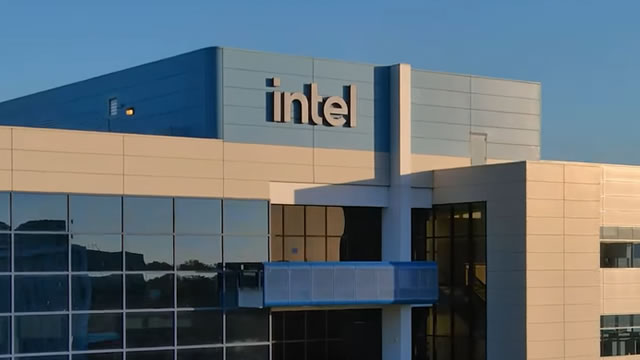
Intel's stock is climbing. Here's why the company's new chip launch is so significant.
MarketWatch· 2026-03-25 13:56
Core Viewpoint - The company's launch of enterprise-focused processors indicates its readiness to deliver high volumes of products utilizing its new chip technology [1] Group 1 - The new chip technology is aimed at the enterprise market, suggesting a strategic shift towards meeting business needs [1] - Analysts view this launch as a significant step for the company, highlighting its capability to produce and ship products at scale [1]
RAMageddon Arrives: AI’s Endless Appetite Just Killed the PC Comeback
Yahoo Finance· 2026-03-25 13:49
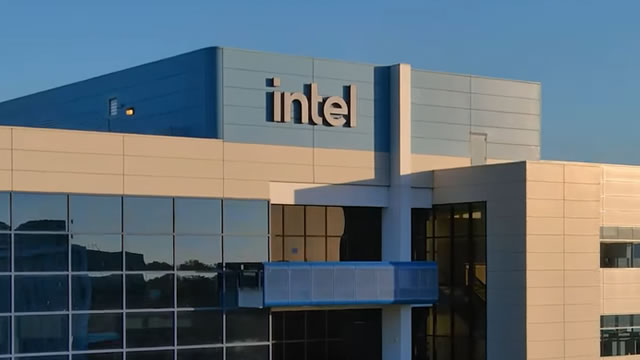
Core Insights - The semiconductor industry is experiencing a supply squeeze due to the overwhelming demand for AI chips from hyperscalers like Microsoft, Google, and Meta, which is diverting resources away from traditional PC markets [3][6][14] - AMD and Intel have raised CPU prices by approximately 15% year-to-date, prioritizing supply allocation to AI customers who offer higher margins, which is impacting the pricing and availability of traditional CPUs [4][7][10] - The global PC market, which showed signs of recovery in 2024, is now facing challenges as rising costs and limited supply threaten to stifle growth and consumer demand [5][15] Group 1: Semiconductor Supply Dynamics - The most advanced silicon is produced by a limited number of fabs, primarily Taiwan Semiconductor Manufacturing, which are operating at full capacity, making expansion a lengthy and costly process [1] - AI chips are significantly more profitable than traditional PC components, leading chipmakers to prioritize production for data-center customers over consumer and commercial PC orders [1][3] Group 2: Price Increases and Market Impact - AMD and Intel's price hikes on CPUs are a response to the supply-demand imbalance, with both companies rationing their limited processor supply to the highest-paying AI customers [4][7][10] - The rising bill-of-materials costs for PC manufacturers like HP and Dell are forcing them to either absorb costs, which would reduce margins, or pass them on to consumers, risking a decline in demand [12][13] Group 3: Memory Supply Constraints - A critical shortage of high-bandwidth memory (HBM) is exacerbating the situation, as cutting-edge AI chips require this specialized DRAM, leading to increased prices across the memory stack [8][9] - The memory bottleneck is affecting the overall pricing of CPUs, as the costs associated with memory are being transferred to CPU pricing [8][10] Group 4: Long-term Market Outlook - The AI demand is creating a classic supply-war dynamic where the supply is fixed and cannot be quickly scaled, leading to a situation where hyperscalers consistently outbid traditional PC buyers [14] - The anticipated recovery in the PC industry has been undermined by these larger forces, resulting in consumers facing higher prices and reduced choices in the market [15]
ControlUp Collaborates with Intel to Integrate Intel Device IQ with ControlUp for Desktops
Globenewswire· 2026-03-25 13:30
Core Insights - ControlUp has announced a strategic collaboration with Intel to integrate Intel Device IQ into ControlUp for Desktops, enhancing Digital Employee Experience (DEX) management through silicon-level telemetry and AI-driven intelligence [1][3] - The partnership aims to provide organizations with proactive detection and remediation of endpoint performance issues, shifting from reactive troubleshooting to a more automated approach [2][4] Group 1: Partnership and Integration - The integration of Intel Device IQ into ControlUp for Desktops allows for real-time DEX analytics, enabling organizations to detect and contextualize performance issues before they impact productivity [1][2] - ControlUp ONE has been validated as an Intel vPro Certified Application, ensuring optimized performance on Intel vPro-based PCs and reinforcing the solution's efficiency [5][6] Group 2: Benefits of the Collaboration - The collaboration provides continuous telemetry and AI-driven analysis at the silicon level, correlating hardware data with user experience metrics, leading to improved device performance and reduced support burdens [4][7] - Organizations can expect enhanced battery life, power efficiency, and lower CPU utilization, contributing to a more reliable and efficient IT environment [5][6] Group 3: Autonomous Endpoint Management - The partnership supports the transition towards Autonomous Endpoint Management (AEM), allowing IT teams to resolve issues proactively and reduce operational complexity [7][8] - By integrating real-time monitoring with guided decision-making, ControlUp helps create a self-healing environment that enhances employee productivity and optimizes digital workspace operations [7][8]