Intel(INTC)

Search documents
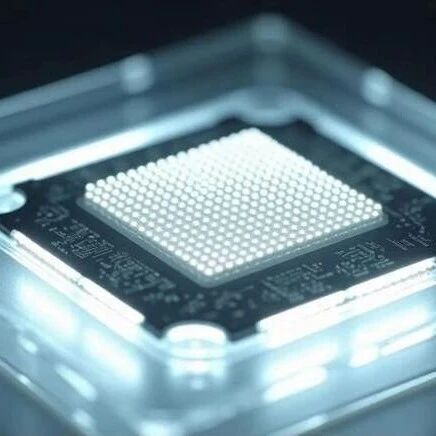
玻璃芯片,新救星
半导体行业观察· 2026-03-23 02:10
Core Viewpoint - The article discusses the potential of glass substrates in enhancing the performance and energy efficiency of next-generation AI chips, with companies like Absolics and Intel leading the commercialization efforts [2][3]. Group 1: Glass Technology and Its Advantages - Absolics plans to start commercial production of advanced glass panels aimed at improving computer hardware performance and energy efficiency [2]. - Glass substrates can withstand higher temperatures than existing materials, allowing for smaller chip packaging without mechanical bottlenecks, thus enhancing speed and efficiency [2][5]. - Intel's research indicates that glass can achieve ten times the connection density per millimeter compared to organic substrates, enabling a 50% increase in silicon chip integration within the same packaging area [5][6]. Group 2: Industry Developments and Market Potential - The glass substrate market is projected to grow significantly, with estimates suggesting an increase from $1 billion in 2025 to $4.4 billion by 2036 [6]. - Absolics has built a factory in the U.S. capable of producing up to 12,000 square meters of glass panels annually, sufficient for 2 to 3 million chip packages [9]. - Major manufacturers like Samsung and LG Innotek are accelerating their research and development in glass packaging, indicating a shift towards a more competitive ecosystem [10]. Group 3: Challenges and Innovations - Despite its advantages, glass is fragile, with substrates ranging from 700 microns to 1.4 millimeters in thickness, making them prone to cracking [5]. - Intel has made significant progress in reliably manufacturing glass panels and has successfully produced functional devices using glass substrates [6]. - The integration of glass in semiconductor manufacturing is still in the early stages, but the potential for improved data transmission speeds and reduced energy consumption is substantial [7].


全球半导体_高位建仓,更高位卖出;先进封装成核心,助力 AI 性能指数级提升-Global Semiconductor_ Stack ‘Em High, Sell ‘Em Higher; Advanced packaging takes center stage to deliver exponential AI performance gains
2026-03-22 14:35
Summary of Key Points from the Conference Call Industry Overview - The semiconductor industry is facing challenges due to explosive performance requirements for AI infrastructure, marking the end of Moore's Law. Chips are becoming more expensive to manufacture with diminishing returns [1][5]. Core Insights - **Advanced Packaging Growth**: Advanced packaging is becoming the primary driver of semiconductor performance as traditional scaling slows. The industry expects 2.5D and 3D advanced packaging to grow approximately 7x by 2030, with wafer consumption projected to reach around 3.5 million wafers per month (wpm) by 2030 [2][6]. - **Stacking Technologies**: Stacking technologies, including CoWoS, SoIC, and HBM, are crucial for enhancing chip performance by increasing bandwidth and are essential for AI chips. These technologies are also being extended to frontend processes to facilitate upcoming node migrations [3][5]. - **Testing Market Growth**: The testing market is expected to grow at an 8% compound annual growth rate (CAGR) through 2029, driven by increased complexity in packaging and higher yield requirements per layer [11]. Specific Technologies and Projections - **High-Bandwidth Memory (HBM)**: HBM capacity is anticipated to expand to approximately 758k wpm by 2027, with a shift from flux-based TCB to fluxless processes and hybrid bonding to achieve better performance metrics [7][27]. - **Chip on Wafer on Substrate (CoWoS)**: CoWoS capacity is projected to reach around 140k wpm by 2027, with increasing complexity in GPU and ASIC designs pushing packaging limits [8][35]. - **3D IC Adoption**: The adoption of 3D ICs is accelerating, with hybrid bonding providing significant improvements in I/O density and energy efficiency. Companies like AMD and Intel are leading this trend [9][32]. - **NAND and DRAM Innovations**: NAND manufacturers are expected to adopt CMOS bonded to array (CBA) stacking, which could enhance performance metrics significantly. The NAND bonding capacity is projected to reach 1,057k wpm by 2030 [54][57]. DRAM is also expected to transition to CBA architecture, enhancing performance and efficiency [66]. Key Beneficiaries - Companies such as DISCO, Advantest, Besi, and Ibiden are identified as key beneficiaries of the advanced packaging and testing market growth due to their roles in equipment and technology supply [11][12]. Additional Insights - **Yield Challenges**: The yield for stacked dies can degrade significantly, with complex packaging leading to lower overall yields compared to single die packages. Testing is critical to maintaining higher yield rates [76][78]. - **Longer Testing Times**: As chip complexity increases, testing times are expected to grow exponentially, with projections indicating a 50x increase in testing time for SoCs by 2031 compared to 2017 [79][80]. This summary encapsulates the critical insights and projections from the conference call, highlighting the evolving landscape of the semiconductor industry and the implications for various stakeholders.

2 Semiconductor Stocks to Sell Before They Drop 32% and 43%, According to Wall Street Analysts (Hint: Not Nvidia)
The Motley Fool· 2026-03-22 08:12
Group 1: Micron Technology - Micron Technology reported a significant revenue increase of 196% to $23.8 billion in Q2 of fiscal 2026, driven by record sales in DRAM, HBM, and NAND memory products [4] - The company achieved a non-GAAP net income increase of 682% to $12.20 per diluted share, setting new records across revenue, gross margin, earnings per share, and free cash flow [5] - Despite strong performance, analysts predict a potential 43% downside for Micron, with a bear-case target price set at $240 per share by Morgan Stanley [9] - The semiconductor industry is facing a supply shortage due to high demand for AI infrastructure, which has caused memory chip prices to triple or quadruple recently [6] - Historical trends suggest that current supply shortages may lead to a future supply glut, resulting in decreased prices and potentially lower valuations for Micron [7][10] Group 2: Intel - Intel has lost substantial market share in the CPU market over the last decade due to execution missteps, allowing competitors like TSMC and AMD to gain an advantage [11][12] - The company has experienced a 16% decline in sales, a 7 percentage point contraction in gross margin, and a 99% drop in net income since the AI boom began in early 2023 [13] - Intel's turnaround strategy focuses on gaining share in chip manufacturing services, with potential government incentives for using American foundries [14] - However, skepticism remains regarding Intel's ability to execute this strategy effectively, given its history of technical missteps and the dominance of TSMC in advanced chip manufacturing [15][16] - Analysts estimate a 32% downside for Intel, with a target price of $30 per share set by Rosenblatt Securities, despite projected earnings growth of 20% in 2026 [9][16]

Our Top 10 High Growth Dividend Stocks - March 2026



Seeking Alpha· 2026-03-21 12:15
Group 1 - The primary goal of the "High Income DIY Portfolios" service is to provide high income with low risk and capital preservation for DIY investors [1] - The service offers six different portfolios tailored for various income-seeking investors, including retirees or near-retirees [1] - The portfolios include two High-Income portfolios, a Dividend Growth Investing (DGI) portfolio, a conservative strategy for 401K accounts, a Sector-Rotation strategy, and a High-Growth portfolio [1] Group 2 - The "High Income DIY Portfolios" service includes a total of 10 model portfolios with varying income targets and risk levels, along with buy and sell alerts and live chat support [2] - The investment approach focuses on dividend-growing stocks with a long-term horizon, aiming for lower drawdowns and sustainable yields [2] - The service is designed to help investors create stable, long-term passive income [2]

Intel's Best Future: Foundry Dividend Stock (NASDAQ:INTC)
Seeking Alpha· 2026-03-21 08:14
Core Insights - The article discusses the author's journey from a political career to value investing, emphasizing the importance of risk management and long-term wealth growth [1] Group 1: Career Transition - The author initially pursued a career in politics but shifted to finance after facing challenges in 2019, leading to a focus on making money work for them [1] - From 2020 to 2022, the author worked in a sales role at a law firm, where they became the top-grossing salesman and managed a team, contributing to sales strategy [1] - The experience gained during this period helped the author assess company prospects based on sales strategies [1] Group 2: Investment Advisory Experience - From 2022 to 2023, the author worked as an investment advisory representative with Fidelity, focusing on 401K planning [1] - The author excelled in this role, passing Series exams ahead of schedule, but felt frustrated due to the reliance on modern portfolio theory rather than value investing principles [1] - After a year, the author decided to leave Fidelity to pursue opportunities in writing and investing [1] Group 3: Current Endeavors - The author began writing for Seeking Alpha in November 2023, sharing investment opportunities and insights with readers [1] - The articles serve as a platform for the author to document their investment journey and strategies [1]
凌晨,全线大跌!美国大举增兵,特朗普最新发声!
券商中国· 2026-03-21 00:51
Market Overview - The US stock market experienced a significant sell-off, with the Nasdaq dropping over 2% and the S&P 500 declining by 1.51%, marking the lowest levels since September 2025 [1][2] - Major tech stocks faced substantial losses, with Nvidia and Tesla falling over 3%, while Google and Meta dropped more than 2% [2] Semiconductor and Storage Sector - The Philadelphia Semiconductor Index fell by 2.45%, with Coherent down nearly 8% and Intel declining by 5% [3] - Storage stocks also saw declines, with SanDisk dropping over 8% and Western Digital down more than 7% [4] Geopolitical Tensions - The US military is deploying three additional warships and approximately 2,500 Marines to the Middle East, raising concerns about prolonged conflict in the region [5] - The Iraqi government has declared "force majeure" on all oil fields developed by foreign oil companies, potentially impacting oil supply [5] Oil Prices and Inflation Concerns - International oil prices surged, with Brent crude futures closing at $112.19 per barrel, a 3.26% increase [6] - The market is increasingly worried about inflation returning, leading to a reassessment of Federal Reserve interest rate policies, with a 12.4% probability of a rate hike in April [6] US Treasury Market - US Treasury bonds faced heavy selling, with the 10-year Treasury yield rising to 4.384% [7] - Concerns over escalating conflict with Iran are driving inflation fears, leading to a shift in market expectations regarding interest rate hikes [8] Trump's Statements on Military Actions - President Trump indicated that the US is close to achieving its military objectives in the Middle East, which include weakening Iran's missile capabilities and ensuring it does not acquire nuclear capabilities [8][9] - He stated that the responsibility for guarding the Strait of Hormuz should fall on other nations using the strait, with the US willing to provide support if invited [9]




纳指跌超400点,美股科技股、芯片股集体重挫,中概股普跌,黄金跌破4500美元
21世纪经济报道· 2026-03-20 23:39
Market Overview - The US stock market experienced a collective decline, with the Dow Jones falling by 0.96%, marking a total drop of 2.11% for the week, the longest consecutive weekly decline since February 2023 [1] - Major European indices also closed lower, with Germany's DAX 30 down by 2%, France's CAC40 down by 1.82%, and the UK's FTSE 100 down by 1.44% [1] Major Indices Performance - The Dow Jones Industrial Average closed at 45,577.47, down 443.96 points [2] - The Nasdaq Composite fell to 21,647.61, down 443.08 points [2] - The S&P 500 index ended at 6,506.48, down 100.01 points [2] Technology Sector - Major tech stocks saw significant declines, with Nvidia and Tesla dropping over 3%, while Meta and Google fell more than 2% [2] - Storage-related stocks also faced sharp declines, with SanDisk down over 8% and Western Digital down over 7% [2] - The Philadelphia Semiconductor Index decreased by 2.45%, with Intel down 5% and TSMC nearly 3% [2] Chinese Stocks - The Nasdaq Golden Dragon China Index fell nearly 3%, with notable declines in companies like Xpeng Motors down over 8% and Bilibili down about 4% [3] - Major Chinese tech firms also saw declines, with Xiaomi down 7.88% and Baidu down 4% [3] Commodity Prices - Gold prices fell sharply, with spot gold dropping 3.42% to $4,491.67 per ounce, while silver fell 6.8% to $67.89 per ounce [3] - International oil prices continued to rise, with NYMEX crude oil at $98.09, up 2.66%, and Brent crude at $104.41, up 0.61% [5] Cryptocurrency Market - The cryptocurrency market showed mixed results, with Bitcoin at $70,625, up 0.62%, and Ethereum at $2,155.37, up 0.66% [7][8] Federal Reserve Insights - Federal Reserve officials indicated a potential for three interest rate cuts this year, although market expectations are leaning towards a rate hike in December [9]


Market Slides as Geopolitical Tensions and Surging Yields Dampen Investor Sentiment
Stock Market News· 2026-03-20 20:07
Market Overview - U.S. equity markets experienced significant volatility on March 20, 2026, due to escalating geopolitical tensions in the Middle East and rising Treasury yields, leading to a decline in investor sentiment [1] - All three major indexes closed lower, marking the fourth consecutive losing week for the S&P 500 [1] Major Index Performance - The Dow Jones Industrial Average (DJI) fell by 203.72 points, or 0.4%, closing at 46,021.43, its lowest level in 2026 and below its 200-day moving average [2] - The Nasdaq Composite (IXIC) ended at 22,090.69, down 0.3%, after experiencing intraday losses of nearly 1.4% [2] - The S&P 500 (SPX) declined 0.3% to 6,606.49, marking its lowest close in four months [2] - The Russell 2000 (RUT) index of smaller companies led the decline with a 2.5% drop, reflecting their sensitivity to rising interest rates [2] Corporate News and Major Stock Movers - The semiconductor sector faced significant pressure, with Super Micro Computer (SMCI) shares plummeting 31.6% due to allegations of smuggling advanced Nvidia (NVDA) chips to China [3] - Nvidia (NVDA) was not implicated in the indictment, but the news negatively impacted the broader AI hardware sector [3] - Micron Technology (MU) shares fell 3.9% after its fiscal third-quarter guidance missed market expectations [3] - Other chipmakers also declined, with Intel (INTC) down 5% and AMD (AMD) down 3% [3] - In contrast, FedEx (FDX) rose 1.1% after reporting an EPS of $5.25, exceeding the $4.13 consensus, and raised its full-year guidance [4] - Newmont Corporation (NEM) fell nearly 7%, while MP Materials (MP) remained flat despite a recent earnings beat, as investors rotated out of industrial stocks amid growth concerns [4] Economic Data and Federal Reserve - The market's decline was influenced by a "hawkish pause" narrative from the Federal Reserve, which held rates steady but indicated future cuts depend on clearer signs of cooling inflation [5] - The 10-year Treasury yield rose to 4.39% amid ongoing geopolitical tensions [5] - Initial jobless claims fell to 205,000, lower than the expected 214,000, indicating a tight labor market [6] - The Philadelphia Fed Index surged to 18.1 in March, its highest level of the year, suggesting robust manufacturing activity [6] - Despite signs of economic resilience, investors are concerned that the Fed may maintain higher interest rates longer to combat inflation [6] Upcoming Market Events - Investors will monitor the release of Construction Spending data and the S&P Global "flash" Purchasing Managers Index (PMI) next week for insights into the manufacturing and services sectors [7] - The PCE Price Index, the Fed's preferred inflation gauge, is also due late next week [7] - Major earnings reports from Cintas (CTAS), PDD Holdings (PDD), and Nike (NKE) are expected mid-week and on March 31st, respectively [7]




Intel Dips 5%, AMD Down 3%: Rising Competition and Sector Pressure Test Two of Wall Street’s Favorite Chip Stocks
Yahoo Finance· 2026-03-20 18:56
Core Viewpoint - The semiconductor sector is experiencing pressure due to geopolitical tensions, supply chain issues, and increasing competition in AI hardware, impacting stocks of major players like Intel and AMD [2][6]. Company Performance - Intel's stock has seen a significant increase of 85% over the past year, while AMD's shares are up 86%, indicating a strong overall performance despite recent pullbacks [3]. - Intel's stock is down 5% to around $44, while AMD's stock has slipped 3% to below $200, reflecting a broader market correction [2][6]. - Year-to-date, Intel's stock has gained 20% from a starting price of $36.90, driven by progress in its turnaround strategy, including advancements in its Intel 18A process node and a design win with NVIDIA [4]. Financial Results - Intel reported Q4 FY2025 revenue of $13.67 billion, a decrease of 4.1% year over year, with a notable 7% decline in its Client Computing Group [5]. - The foundry business for Intel posted an operating loss of $2.51 billion in the same quarter, highlighting ongoing challenges despite AI momentum [5]. - AMD reported Q4 revenue of $10.27 billion, up 34% year over year, with data center revenue reaching a record $5.38 billion, an increase of 39% [6]. Future Guidance - Intel's guidance for Q1 2026 projects revenue between $11.7 billion and $12.7 billion, with non-GAAP EPS expected to be $0.00, indicating cautious sentiment [6]. - The company has indicated that available supply will be at its lowest in Q1 before improving in Q2, which may affect market performance [6].
Intel Dips 5%, AMD Down 3%: Rising Competition and Sector Pressure Test Two of Wall Street's Favorite Chip Stocks
247Wallst· 2026-03-20 18:56
Core Viewpoint - Intel and AMD stocks have experienced declines of 5% and 3% respectively, amidst rising competition and sector pressures, despite both companies showing strong year-over-year revenue growth [2][4][6]. Intel - Intel's stock fell to around $44, marking a significant pullback after nearly doubling in value over the past year [4][6]. - The company reported Q4 FY2025 revenue of $13.67 billion, down 4.1% year over year, with a 7% decline in the Client Computing Group [8]. - Intel's foundry business incurred an operating loss of $2.51 billion in the same quarter, raising concerns about its financial health [8]. - For Q1 2026, Intel guided revenue between $11.7 billion and $12.7 billion, with non-GAAP EPS projected at $0.00, indicating challenges ahead [9]. - The stock carries 33 Hold ratings, nine Buys, and six Sells, with an average price target of about $47, suggesting limited upside potential [9]. AMD - AMD's stock declined to below $200, influenced more by sector-wide issues than its own performance [10]. - The company reported Q4 FY2025 revenue of $10.27 billion, up 34% year over year, driven by a record data center revenue of $5.38 billion, which increased by 39% [11]. - AMD achieved record free cash flow of $2.08 billion, indicating strong cash generation capabilities [11]. - Partnerships with Celestica and Samsung are expected to support AMD's growth trajectory in AI hardware [12]. - The broader analyst community is optimistic about AMD, with 39 Buy ratings and an average target of $289.61, reflecting confidence in its future performance [13].