Intel(INTC)

Search documents
股价一年飙涨86%背后:英特尔(INTC.US)仍未获关键代工客户 14A工艺能否赢回苹果、英伟达?
智通财经网· 2025-12-22 07:05
Core Viewpoint - Intel is experiencing significant changes in 2025, including a new CEO and substantial investments, yet its fundamental narrative remains unchanged, particularly regarding its manufacturing sector which lacks a major external client [1][2]. Group 1: Company Developments - Intel's stock price has increased by 86% this year, outperforming major tech stocks and competitors like AMD [1]. - The company has received a $9 billion investment from the U.S. government, alongside $2 billion from SoftBank and $5 billion from Nvidia, which has boosted investor confidence [2][3]. - The appointment of CEO Chen Lifang in March 2025 has revitalized market confidence in Intel's potential transformation, despite the strategic direction remaining largely unchanged [2]. Group 2: Manufacturing Challenges - Intel's manufacturing division has fallen behind TSMC due to past missteps and poor investment decisions, resulting in a loss of market share to competitors like AMD and Arm [2]. - The previous CEO's aggressive transformation efforts to open the manufacturing division to external clients led to investor concerns due to the high costs and uncertainty of success [2]. - Analysts emphasize that Intel must prove its latest manufacturing processes, particularly the 14A process, to attract external clients and ensure the viability of its manufacturing business [4][5]. Group 3: Market Position and Competition - Intel's manufacturing business lacks a significant external customer, which is crucial for sustainable cash flow [1][2]. - Major potential clients like Nvidia, Apple, and Qualcomm are also competitors in Intel's product sector and have established long-term relationships with TSMC, complicating Intel's efforts to secure these clients [3]. - Analysts suggest that Intel has a 12 to 18-month window to secure a large external customer for the 14A process, which is critical for the success of its foundry business [5].

三星发布全球首款2nm手机芯片;字节跳动宣布提高人才薪酬和期权激励力度;马斯克成为史上首位身家超7000亿美元富豪
Sou Hu Cai Jing· 2025-12-22 06:42
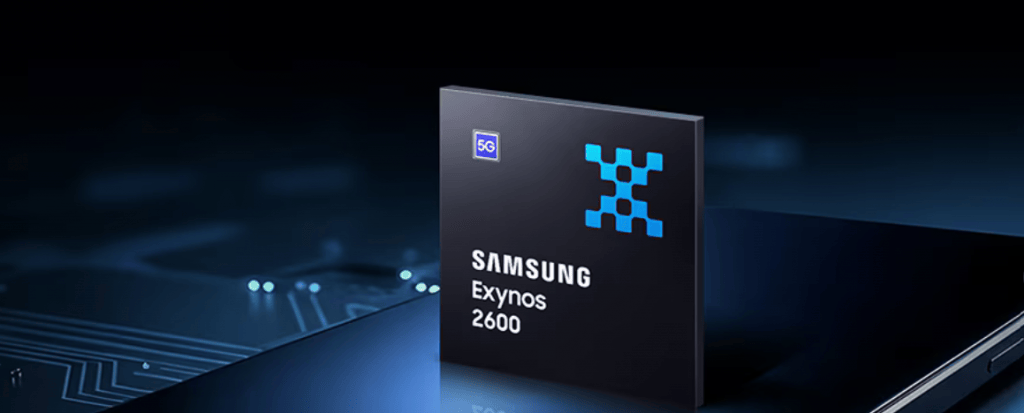
Group 1: Samsung's 2nm Chip Launch - Samsung has officially launched the world's first 2nm mobile application processor, the Exynos 2600, designed by its System LSI division and manufactured using its own foundry with GAA technology [4] - The Exynos 2600 features a new 10-core CPU design based on the Arm v9.3 architecture, with a high-performance core running at up to 3.8GHz, supported by three performance cores and six efficiency cores [4] - The chip introduces the Xclipse 960 GPU and an upgraded NPU that accelerates processing speed by 113%, along with AI algorithms for image processing, supporting cameras up to 320 million pixels [4] Group 2: ByteDance's Talent Investment - ByteDance has announced an increase in talent investment, enhancing salary competitiveness and stock option incentives for its global employees [5] - The measures include a 35% increase in the performance evaluation cycle for bonuses, a 1.5 times increase in salary adjustments compared to the previous cycle, and raising the salary package limits for all job levels [5] - The company aims to ensure that employee compensation remains competitive and leading in global markets [5] Group 3: Elon Musk's Wealth Milestone - Elon Musk has become the first individual in history to surpass a net worth of $700 billion, reaching $749 billion as of December 21, according to Forbes [6] - This surge in wealth is attributed to the restoration of a long-suspended compensation plan, which was valued at $56 billion when Musk received it from Tesla in 2018 [6] - The Delaware Supreme Court reinstated this compensation plan, which had previously been rejected by a lower court [6] Group 4: OpenAI's Funding Goals - OpenAI is seeking to raise up to $100 billion to fund its ambitious growth plans, with the current market interest in artificial intelligence cooling down [7] - If successful in raising the full amount, OpenAI's valuation could reach $830 billion [7] - The funding round is still in its early stages, and the completion is targeted for the end of the first quarter of next year [7] Group 5: SoftBank's Commitment to OpenAI - SoftBank is racing against time to fulfill its $22.5 billion funding commitment to OpenAI by the end of the year [8] - The company is exploring various cash-raising strategies, including selling parts of its investments, and has already sold its entire stake in Nvidia for $5.8 billion [8] - SoftBank's CEO Masayoshi Son is also slowing down other transactions related to the Vision Fund [8] Group 6: Meta's AI Development - Meta Platforms is developing a new AI model focused on images and videos, codenamed Mango, alongside a next-generation text-based language model [9] - These models are expected to be released in the first half of 2026 [9] - The AI models will debut soon, with another language model codenamed Avocado being launched simultaneously [9] Group 7: NVIDIA's Investment in Intel - The U.S. Federal Trade Commission has approved NVIDIA's $5 billion investment in Intel, aimed at supporting the domestic semiconductor industry [10] - The details of the transaction remain undisclosed, but it raises concerns about potential changes in the competitive landscape, particularly for competitors like TSMC and AMD [10] Group 8: Visa Processing Delays for Foreign Employees - Google and Apple have advised some foreign employees on work visas to avoid international travel due to delays in U.S. visa processing caused by new social media scrutiny requirements [11] - The delays have extended visa appointment wait times, with some face-to-face interviews pushed back by up to a year [11] Group 9: Google Privacy Lawsuit in Spain - A Spanish consumer rights organization has initiated preliminary legal proceedings against Google, accusing it of collecting sensitive personal data and violating privacy rights [12] - The organization claims that Google has gathered data on users' personal opinions, religious beliefs, and health status through its applications and Android operating system [12] - It estimates that up to 37 million users in Spain may be affected by this data collection [12] Group 10: Kakao's Negotiations with Upstage - Kakao is in talks with the South Korean AI startup Upstage regarding the potential sale of its portal site Daum [13] - Kakao holds full ownership of Daum's parent company, AXZ, and the transfer of operational control may occur through a share exchange with Upstage [13] - Upstage is preparing for an initial public offering (IPO) in early next year [13] Group 11: Japan's National AI Project - The Japanese government plans to collaborate with the private sector to launch a large-scale national AI project valued at approximately 3 trillion yen (about $190 billion) [14][15] - The new company, led by SoftBank and involving over ten Japanese firms, aims to develop the country's largest foundational AI model [14] - The project is expected to gather around 100 experts selected through a company competition, including engineers from SoftBank and developers from Preferred Networks [14]




又是华人CEO立功:intel要翻身了,拿下AMD、苹果、英伟达订单?
Sou Hu Cai Jing· 2025-12-22 04:16
Core Viewpoint - Many leading chip companies in the U.S. are currently led by Chinese CEOs, who have successfully turned around struggling firms [1][3]. Group 1: Company Performance and Leadership - AMD was on the verge of collapse with continuous losses until CEO Lisa Su implemented significant reforms, focusing on R&D and launching the Zen architecture, which led to a successful turnaround [3]. - Broadcom, under CEO Hock Tan, has seen substantial growth, with a market capitalization exceeding $1.6 trillion, ranking it seventh globally [3]. - Intel, after the appointment of Pat Gelsinger, has begun to recover from previous struggles, including significant losses in the CPU market and poor performance in the GPU sector [3][5]. Group 2: Technological Advancements - Under Pat Gelsinger's leadership, Intel has made strategic cuts to unprofitable segments and is focusing on its core business, leading to improved performance [5]. - Intel's 14A process technology has shown advancements, with performance per watt improving by 15-20%, power consumption decreasing by 25-35%, and transistor density increasing by 30% compared to the previous 18A generation [5][7]. Group 3: Market Dynamics - Intel has reportedly secured orders from AMD, Apple, and NVIDIA for its 14A process technology, indicating a shift away from reliance on TSMC for manufacturing [7]. - The potential success of Intel's 14A technology poses a significant threat to TSMC, as U.S. companies may prefer to support domestic manufacturers, which could lead to a loss of orders for TSMC [8].
英伟达入股英特尔获批,通信ETF(515880)涨超4%,光模块占比超50%
Mei Ri Jing Ji Xin Wen· 2025-12-22 02:29
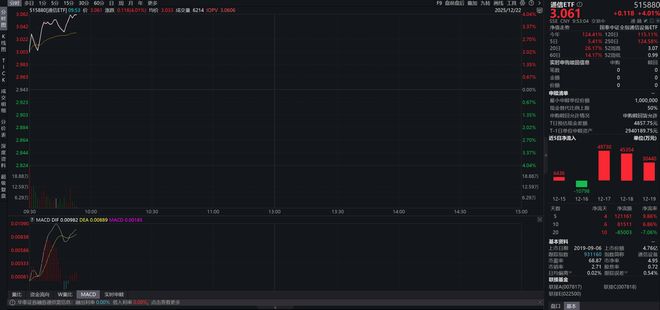
Group 1 - The U.S. Federal Trade Commission (FTC) has approved a $5 billion collaboration agreement between AI chip giants Nvidia and Intel [1][3] - Nvidia will purchase Intel shares at $23.28 per share to jointly develop AI and chip technologies for next-generation personal computing products and data centers [3] - This partnership aims to integrate Nvidia's GPU technology with Intel's CPU technology, enhancing their competitive position against rivals like TSMC and AMD [3] Group 2 - The communication ETF (515880) has seen significant inflows, with over 1.2 billion yuan net inflow in the past five days, and has risen over 120% year-to-date, making it the top-performing ETF in the market [1][10] - The ETF has a total scale exceeding 13 billion yuan, with nearly 50% of its holdings in optical modules, and over 20% in servers, indicating a strong focus on AI-related infrastructure [10][11] - The demand for AI applications is leading to cost savings of 9% to 11% across various industries, although it may also result in job reductions for certain workers [4]
12月22日你需要知道的隔夜全球要闻
Sou Hu Cai Jing· 2025-12-21 23:30
Market Performance - The three major U.S. stock indices closed higher, with the Dow Jones up 0.38%, the S&P 500 rising 0.88%, and the Nasdaq Composite increasing by 1.31% [1] - Chip stocks saw significant gains, with Nvidia rising nearly 4%, Broadcom up 3%, Intel increasing by 1.4%, and Micron Technology surging nearly 7% [1] - The Nasdaq Golden Dragon China Index rose by 0.86%, with Alibaba up 1.68% and Pinduoduo increasing by 3.5% [1] Federal Reserve Insights - Federal Reserve official Harker expressed concerns about persistent inflation and indicated a preference to keep interest rates stable until spring [2] - The CME "FedWatch" tool shows a 79% probability that the Federal Reserve will maintain interest rates unchanged in January 2024 [2] Oil and Energy Sector - The U.S. is reportedly set to seize a third Venezuelan oil tanker, as the Trump administration intensifies its oil blockade against the Maduro regime, which may risk halting Venezuelan oil production [3] IPO Developments - AI company MiniMax has passed the Hong Kong Stock Exchange hearing [4] - Wall Street technology firm Wallen Technology plans to issue over 247 million shares in its Hong Kong IPO, with a maximum pricing of 19.6 HKD, expected to start trading on January 2, 2024 [4] Geopolitical Developments - Israeli officials plan to inform Trump about potential new strikes against Iran, with Prime Minister Netanyahu expected to meet Trump later this month [5] - Ukrainian President Zelensky mentioned a U.S. proposal for a tripartite meeting involving Ukraine and Russia, although Russian officials stated that such talks are not on the agenda [7] Technology Sector - Nvidia has been approved to acquire a stake in Intel, aiming to reshape the global chip industry landscape [8] - Following a power outage that caused disruptions, Waymo has suspended its robotaxi service in San Francisco, while Tesla CEO Musk stated that Tesla's related services were unaffected [9] Commodity Prices - WTI and Brent crude oil opened higher by 0.6% on Monday [10] - Spot gold surpassed $4,350 per ounce, increasing by 0.42%, while spot silver reached a historic high, breaking $67 per ounce with a daily increase of 2.38% [11]


The 3 Deep Learning Stocks That Could Be Worth 50% More by 2027
The Motley Fool· 2025-12-21 15:50
Core Viewpoint - The artificial intelligence (AI) sector continues to show potential for growth despite concerns about a bubble and funding challenges, with three leading companies expected to have significant upside in 2026 [1][2]. Group 1: Microsoft - Microsoft has seen a 15% increase year-to-date in 2025 but has faced recent pullbacks due to investor concerns over OpenAI's competitive position and funding capabilities [3][4]. - Microsoft holds a 27% stake in OpenAI and has committed $250 billion in cloud computing, which could be beneficial if OpenAI maintains its market position [3][4]. - Analyst Keith Weiss from Morgan Stanley upgraded Microsoft's stock with a price target of $650, indicating a potential 35% upside, citing stronger-than-expected demand for Azure AI [7]. - The introduction of Microsoft's next-generation AI chip, Braga, is anticipated in 2026, which could further enhance its competitive edge [8]. Group 2: Alphabet - Alphabet has experienced a 62% increase in 2025 and remains one of the cheaper stocks among its peers, suggesting room for further appreciation [9]. - Concerns about AI chatbots disrupting Alphabet's Search business have not materialized, with paid clicks showing growth of 2%, 4%, and 7% in the first three quarters of 2025 [10]. - The release of the Gemini 3 model has positioned Alphabet as a leader in AI, with significant interest in its Tensor Processing Units (TPUs) from other companies [12][13]. - Google Cloud has reached a $60 billion revenue run-rate with a nearly $5 billion operating profit run-rate, growing 34% in Q3, indicating its potential as a major profit center [14]. Group 3: Intel - Intel has seen an 83.6% increase in 2025, recovering from a distressed price point, but its market cap remains lower than other AI leaders [16]. - The new CEO, Lip-Bu Tan, is expected to make a significant impact as Intel begins high-volume manufacturing of its 18A node, which is crucial for regaining technology leadership [17]. - Success with the 18A node could lead to external customer wins, with major companies showing interest in Intel's upcoming 14A node technology [18][19]. - If Intel can demonstrate advancements in process technology and secure significant customer commitments, there remains considerable upside potential for its stock [20].


Intel stock soared in 2025. But the chipmaker still has a long road ahead.
Yahoo Finance· 2025-12-21 14:00
Core Insights - Intel experienced a significant year in 2025 with a new CEO and substantial investments from the US government, Nvidia, and SoftBank, leading to an 86% stock increase, outperforming major tech rivals [2] - Despite these developments, Intel's manufacturing segment still lacks a major external customer, which is essential for its financial viability [2][4] - Analysts express cautious optimism about Intel's future relevance in the chip manufacturing sector, although no major deals have been established to solidify its manufacturing position [3] Company Developments - The appointment of Lip-Bu Tan as CEO in March 2025 has renewed investor confidence in Intel's turnaround potential, despite the company's strategy remaining largely unchanged [6] - Previous CEO Pat Gelsinger's aggressive turnaround efforts faced skepticism from investors due to high spending and uncertain outcomes [5] Industry Context - Intel has historically been a pioneer in the semiconductor industry, credited with inventing the first microprocessors and the x86 architecture, which has shaped the digital revolution [3] - The company has struggled to maintain its competitive edge against rivals like AMD and Arm, resulting in a loss of market share in key product segments [4]
【数智周报】MiniMax和智谱通过港交所聆讯;OpenAI据悉计划以8300亿美元估值筹资至多1000亿美元;寒武纪:拟使用27.78亿元资本公积金弥补亏损
Tai Mei Ti A P P· 2025-12-21 04:23
Group 1 - Elon Musk publicly criticized nuclear fusion power, stating that building small fusion reactors on Earth is economically foolish, as the sun itself is a massive, free fusion reactor capable of meeting all energy needs in the solar system [2] - Musk plans to deploy 100GW of solar-powered AI satellites annually, which is equivalent to about a quarter of the total electricity consumption of the United States [2] Group 2 - Zhongke Shuguang unveiled the scaleX Wanka supercluster at the HAIC2025 conference, marking the first appearance of a domestic 10,000-card AI cluster system in physical form [3] - Unisoc announced the establishment of a Central Research Institute to focus on new architectures and models for edge AI chips, particularly for applications in autonomous driving and robotics [3] Group 3 - Cambricon announced plans to use 2.778 billion yuan of its capital reserve to cover cumulative losses, with the aim of bringing its negative retained earnings to zero by the end of 2024 [4] Group 4 - MiniMax has passed the Hong Kong Stock Exchange hearing and plans to go public in January 2026, potentially becoming the fastest AI company to IPO globally within four years of its establishment [6] - Zhiyuan Technology has officially passed the Hong Kong Stock Exchange IPO hearing, with CICC as the sole sponsor [6] Group 5 - Tencent has established an AI Infra department to enhance its large model research framework, with Vincesyao appointed as the chief AI scientist [6][7] - The AI Infra department will focus on building technical capabilities for large model training and inference platforms [7] Group 6 - ByteDance is advancing a collaboration with Lenovo to develop AI smartphones, aiming to pre-install AIGC plugins to gain user access [8] - Doubao released version 1.8 of its large model, enhancing its capabilities for multi-modal agent scenarios [9] Group 7 - Qianwen APP has integrated with Alibaba's ecosystem, enabling it to access underlying services like Gaode Map for enhanced geographical understanding [10] - Alibaba launched the new generation of the Wanxiang 2.6 model, which supports role-playing functions for video production [11] Group 8 - Baidu launched the Wenxin Health Manager, positioning it as a 24/7 "all-in-one family doctor" service [14] - The application offers a comprehensive AI health service system covering light symptom consultations and complex disease planning [14] Group 9 - Aishi Technology signed a comprehensive cooperation agreement with Alibaba Cloud to enhance global deployment and compliance capabilities for its video generation model [15] - Xiaomi open-sourced its MiMo-V2-Flash model, which boasts competitive capabilities at a significantly lower inference cost compared to closed-source models [16] Group 10 - Muxi Technology officially listed on the Shanghai Stock Exchange's Sci-Tech Innovation Board, aiming to raise 4.197 billion yuan to accelerate the development of "Chinese chips" [17] - The company focuses on high-performance general-purpose GPU products for AI training and inference [17] Group 11 - Meituan released and open-sourced the LongCat-Video-Avatar model, which supports multiple video generation tasks [18] - The model has achieved significant breakthroughs in action realism and video stability [18] Group 12 - Chinese scientists achieved a breakthrough in optical computing chips, enabling large-scale semantic media generation [19][20] - The LightGen chip demonstrates significant improvements in performance and energy efficiency compared to traditional digital chips [20] Group 13 - Baidu's Kunlun chip business is reportedly nearing completion of its restructuring, aiming for a potential listing in Hong Kong [20] - SenseTime's Seko series models have successfully adapted to the domestic AI chip Cambricon [20] Group 14 - Nvidia's CEO revealed that the company has not yet made any payments to OpenAI as part of a planned $100 billion investment [22] - Nvidia launched the Nemotron 3 open-source model series, significantly improving throughput compared to its predecessor [23] Group 15 - OpenAI plans to raise up to $100 billion, potentially valuing the company at $830 billion [24] - The new image model GPT-image-1.5 was launched, enhancing image generation capabilities significantly [25] Group 16 - Intel is in talks to acquire AI chip startup SambaNova for approximately $1.6 billion [30] - Multiple AI companies have recently completed significant funding rounds to support their growth and technology development [31][32][33][34][35][36][37]



英伟达入股英特尔,美国核准
半导体行业观察· 2025-12-21 03:58
Group 1 - The core viewpoint of the article is that the FTC has approved a $5 billion partnership agreement between Nvidia and Intel, indicating that the transaction does not immediately raise antitrust concerns [1][2] - Nvidia will purchase Intel stock at a price of $23.28 per share to jointly develop AI and chip technologies for next-generation personal computing products and data centers [1] - The agreement aims to integrate Nvidia's GPU technology with Intel's CPU technology, competing against rivals like TSMC and AMD [1] Group 2 - Nvidia currently holds approximately 85-95% of the data center GPU market, and completing the deal with Intel would further solidify its market position [1] - The FTC's approval contrasts with its previous rejection of Nvidia's $40 billion acquisition of ARM in 2022, suggesting a shift in regulatory stance [1][2] - Analyst Stacy Rasgon noted that Nvidia's current trading price is about 13% discounted compared to the Philadelphia Semiconductor Index, making it an attractive investment opportunity [2]
打不过台积电,怎么办?
半导体行业观察· 2025-12-21 03:58
Core Viewpoint - TSMC has solidified its position as the core pillar of the global foundry market, capturing over 70% market share and achieving a revenue of $33.063 billion in Q3 2025, reflecting a 9.3% quarter-on-quarter growth [1][2]. Group 1: TSMC's Market Position - TSMC's revenue growth is significantly higher than its competitors, with a market share increase to 71% [1]. - The overall foundry market is growing, but TSMC is capturing the most substantial portion of this growth [1][2]. - Other foundry players, such as Samsung and SMIC, are struggling to close the gap in market share despite their revenue increases [2]. Group 2: Intel's Strategic Shift - Intel is aggressively transforming its strategy, focusing on advanced technology and ecosystem restructuring to regain competitiveness in the foundry market [3][4]. - The 14A process node is central to Intel's strategy, utilizing High-NA EUV technology to enhance power efficiency and chip density [4][5]. - Intel's EMIB technology is emerging as a viable alternative to TSMC's CoWoS packaging, addressing the demand for advanced packaging solutions [6][7]. Group 3: Customer Acquisition and ASIC Business - Intel has made significant strides in securing major clients, including Apple, which is expected to utilize Intel's 18A-P process for its M-series chips [8][9]. - Intel is establishing a dedicated ASIC department to provide customized chip solutions, leveraging its manufacturing capabilities to attract clients [10][11]. Group 4: Samsung's 2nm Strategy - Samsung is betting heavily on its 2nm process technology, aiming to turn its foundry business profitable by 2027 [12][13]. - The yield rate for Samsung's 2nm process has improved from 50% to a target of 70%, which is crucial for attracting major clients [13][21]. - Samsung has secured contracts with Tesla and Qualcomm, indicating a successful shift in its client base [14][15]. Group 5: UMC's Differentiation Strategy - UMC is focusing on mature processes and high-value applications, avoiding the high-risk advanced process competition [22][23]. - UMC has made significant progress in advanced packaging, securing a partnership with Qualcomm for high-performance chips [24]. - UMC is also entering the silicon photonics market through collaboration with IMEC, aiming to capture the next-generation high-speed connectivity applications [25][26]. Group 6: GlobalFoundries' Focus on Specialty Processes - GlobalFoundries is concentrating on mature and specialty processes, with a clear strategy to establish a unique position in specific markets [29][30]. - The acquisition of Advanced Micro Foundry enhances GlobalFoundries' capabilities in silicon photonics, positioning it as a leader in this field [31][32]. - GlobalFoundries is also acquiring MIPS to strengthen its computing capabilities, providing clients with ready-to-use IP modules [33][34]. Group 7: European Expansion and Local Manufacturing - GlobalFoundries plans to invest €1.1 billion to expand its Dresden facility, aiming to meet the growing demand for secure and differentiated technology in Europe [35][36]. - The company is also exploring partnerships for local manufacturing in the U.S. to address the increasing demand in key industries [27][37]. Conclusion - The foundry market is evolving, with TSMC maintaining a dominant position while competitors like Intel, Samsung, UMC, and GlobalFoundries are carving out their niches through strategic adjustments and technological advancements [38].