
JP MORGAN CHASE(JPM)

Search documents
摩根大通(JPMorgan)对民生银行的多头持仓比例降至6.79%
Xin Lang Cai Jing· 2026-01-26 09:21
据香港交易所披露,摩根大通(JPMorgan)对中国民生银行股份有限公司 - H股的多头持仓比例于2026 年1月21日从7.11%降至6.79%。 ...


摩根大通(JPMorgan)对中兴通讯的多头持仓比例增至9.27%
Xin Lang Cai Jing· 2026-01-26 09:19
据香港交易所披露,摩根大通(JPMorgan)对中兴通讯股份有限公司 - H股的多头持仓比例于2026年1 月20日从8.36%增至9.27%。 ...

小摩:在中兴通讯的持股比例升至9.27%
Jin Rong Jie· 2026-01-26 09:15
本文源自:金融界AI电报 香港交易所信息显示,摩根大通在中兴通讯H股的持股比例于01月20日从8.36%升至9.27%,购买的平均 股价为28.3771港元。 ...
小摩吹起美联储利率决议前哨:内部鹰声隐现 政策声明措辞或将微调
智通财经网· 2026-01-26 09:09
Core Viewpoint - The upcoming Federal Open Market Committee (FOMC) meeting is expected to be a straightforward decision with no changes to the policy interest rate, maintaining the federal funds rate target range at 3.5%-3.75% [1][2] Group 1: Meeting Expectations - The majority of market participants anticipate that the policy interest rate will remain unchanged during the FOMC meeting [1] - The meeting is not expected to release a new dot plot or economic forecasts, and any modifications to the post-meeting statement are unlikely to convey substantial policy signals [1][2] Group 2: Voting Dynamics - Committee member Miran may vote against the decision, advocating for a rate cut of 25 or 50 basis points, while Bowman and Waller's voting positions are also of interest [2] - Bowman has indicated a likelihood of supporting a rate cut but remains open to pausing if economic conditions change, while Waller has expressed concerns about the labor market despite a recent drop in unemployment to 4.4% [2] Group 3: Statement Adjustments - The statement is expected to adjust the description of economic growth from "moderate" to "robust," while employment growth may still be described as slow but with a more stable outlook on unemployment [2] - Inflation is likely to continue being described as "slightly elevated," and the committee may remove references to rising employment downside risks [3] Group 4: Forward Guidance - The statement may eliminate the term "additional" from the phrase regarding adjustments to the target interest rate range, indicating a potential shift in forward guidance [3] - References to reserve management purchases are also expected to be removed, with asset balance sheet strategies not being a primary topic of discussion in the upcoming meeting [3]
摩根大通暂时搁置看涨铜价:中美库存激增,春节前面临回调风险
Hua Er Jie Jian Wen· 2026-01-26 07:36
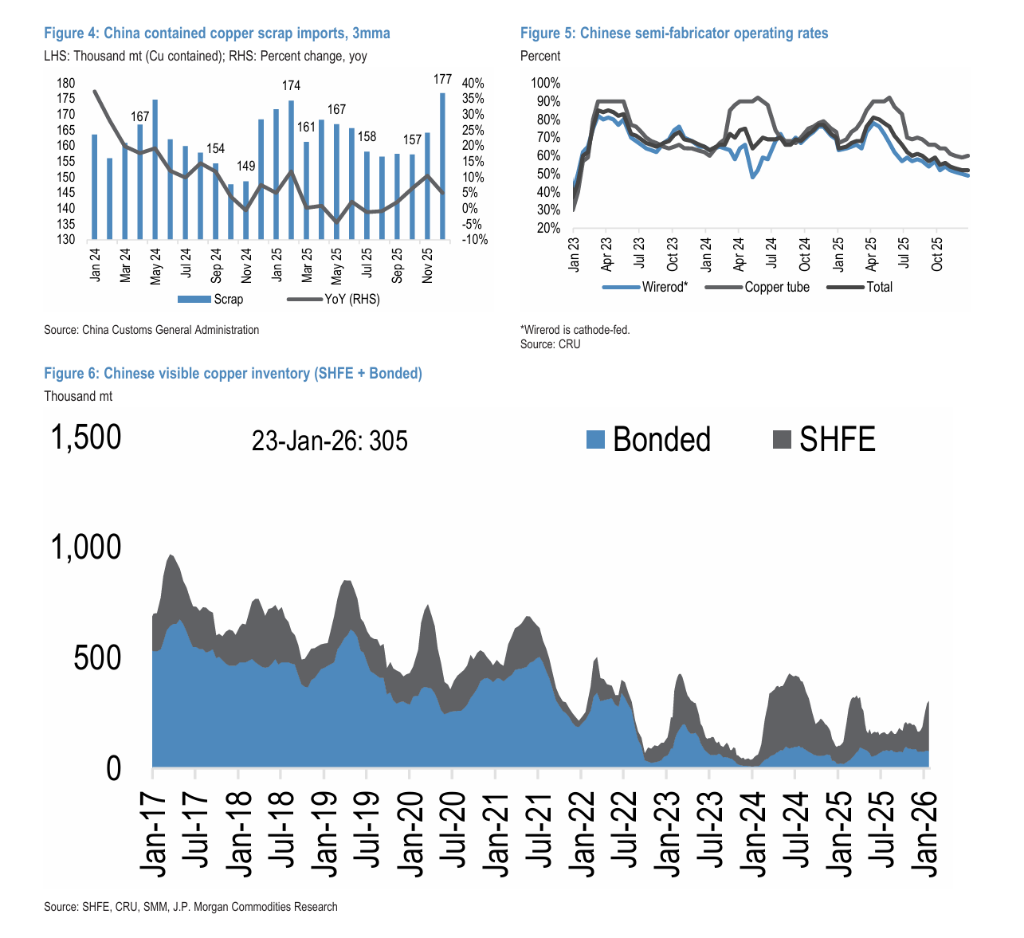
在1月23日发布的最新一期《Metals Weekly》中,摩根大通大宗商品研究团队——由Gregory Shearer牵头——给出的判断并不乐观:铜价仍然站在 高位,但支撑它的基本面正在明显走弱。 据追风交易台消息,研报开宗明义地指出,年初以来铜价之所以还能维持在约1.3万美元/吨附近,更多是靠宏观资金与情绪托举,而不是现货供 需的改善。随着中国和海外市场的库存同步回升,这种"价格跑在基本面前面"的状态正变得越来越难以维持。 中国精炼铜产量创新高,库存反季节激增 研报将最重的笔墨放在了中国。 从供给端看,情况并不紧张。2024年12月,中国精炼铜产量约118万吨,同比增7.5%,废铜进口的回升为冶炼厂提供了额外原料。但问题出在下 游。 下游订单偏弱 采购行为明显转向"按需为主" 阴极铜线杆开工率跌破50% 春节前后:数据会"失真",只能盯库存 研报对接下来一个多月的判断相当克制。 春节在2月17日,意味着中国宏观与产业数据将进入"半失明"状态。摩根大通明确提示,春节前后很难得到一个"干净"的需求读数,市场只能通过 库存变化来间接判断。 研报描述的不是"断崖式下滑",而是一种更微妙、也更麻烦的状态: 结果是一 ...

JPMorgan Chase Acquires UK-Based WealthOS to Strengthen Pensions Strategy
Crowdfund Insider· 2026-01-26 05:43
JPMorgan Chase (NYSE:JPM) has completed the acquisition of WealthOS, a technology platform specializing in pensions and wealth management solutions. This deal underscores the banking provider’s ongoing commitment to enhancing its digital offerings in an increasingly competitive financial landscape. WealthOS, known for its cloud-based tools that streamline middle- and back-office operations for wealth managers, represents a key addition to JPMorgan’s portfolio as it pushes deeper into pension-related service ...

当AI开始“带货”,摩根大通详解ChatGPT测试广告背后的变现逻辑
Hua Er Jie Jian Wen· 2026-01-26 04:25
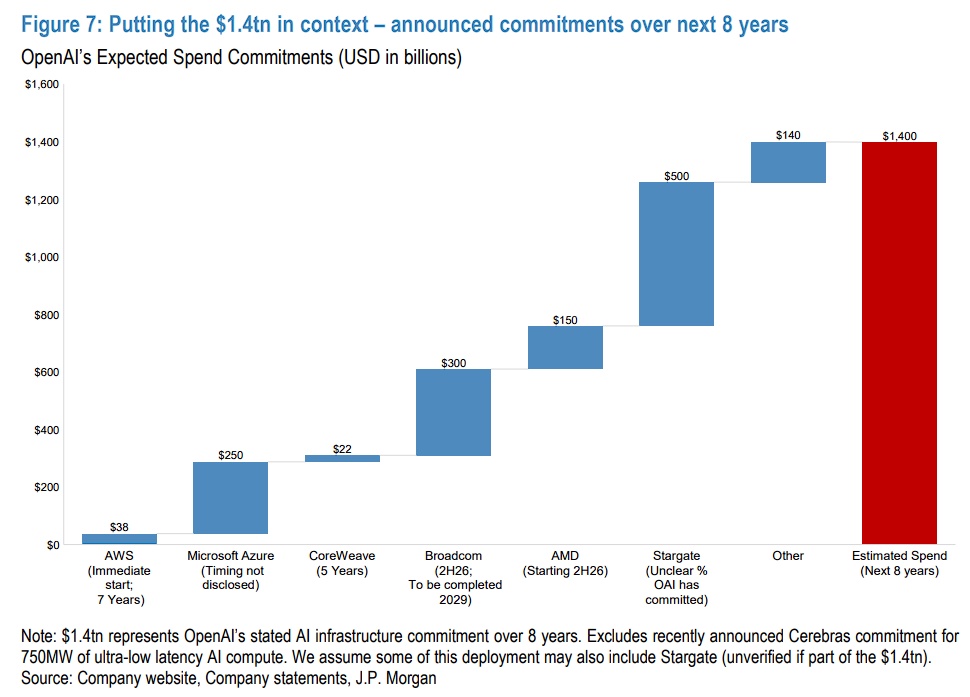
正式告别"免费午餐"时代,OpenAI终于按下了广告变现的按钮。摩根大通认为,随着ChatGPT宣布将在未来几周内开始测试广告,这家AI 巨头正式迈出了从单纯依赖订阅模式向多元化商业变现转型的关键一步。 1月24日,摩根大通在最新研报中称,1月16日,OpenAI宣布将在未来几周内开始在ChatGPT的免费版和Go版本(轻量级订阅版)中测试 广告,这标志着其变现策略发生了实质性转变。 研报称,这一转向并非偶然——面对接近10亿的周活跃用户中95%为免费用户的现状,以及未来八年高达1.4万亿美元的基础设施投入承 诺,广告收入已从可选项变为商业必需。 摩根大通分析指出,ChatGPT的广告模式将有别于传统社交平台的"注意力经济",转而通过捕捉用户的高商业意图来获取更高的千次展 示费用(eCPM)。目前ChatGPT约12%的查询具有搜索性质,且用户购买意向强烈。 该行认为,这一策略不仅旨在开辟新的收入流,更意在构建一个涵盖免费、Go(8美元/月)、Plus(20美元/月)及Pro(200美元/月)的 清晰价值阶梯,通过广告体验倒逼用户向付费层级转化。 同时,摩根大通认为,作为首个在消费级应用中测试广告的主流大语言 ...
异动盘点0126 | 石油股继续走高,老铺黄金涨超7%;美股锂矿概念股多数上涨,英特尔大跌17.03%
贝塔投资智库· 2026-01-26 04:01
Group 1 - China Aluminum International (02068) saw a mid-day increase of over 2.4% after announcing a joint venture to undertake a new electrolytic aluminum project with an annual capacity of 394,000 tons, with the first phase set at 294,000 tons [1] - CGN Mining (01164) rose over 8.3% following the submission of a preliminary prospectus for a trust that plans to issue up to $2 billion in transferable, non-redeemable trust shares over 25 months, with annual uranium procurement not exceeding 9 million pounds [1] - China Shengmu Organic Milk (01432) increased nearly 6% after a joint announcement regarding a potential conditional cash offer to acquire all issued shares of the company [1] Group 2 - Yijun Group Holdings (02442) surged over 18%, with a cumulative increase of nearly 500% since its resumption of trading in December, following the sale of shares by its controlling shareholder [2] - China Rare Earth Holdings (03788) rose over 10%, reaching a historical high of 5.49 HKD, after announcing the termination of its gold spin-off plan to focus on gold business [2] - Laopuqin Gold (06181) increased over 7.3% as consumer demand is expected to rise during the upcoming Spring Festival, driven by higher gold prices and anticipated price increases [2] Group 3 - Oil stocks continued to rise, with CNOOC (02883) up 4.19%, Sinopec (00386) up 2.54%, and PetroChina (00857) up 3.68%, amid escalating geopolitical tensions in Iran and Cuba [3] - Changfei Optical Fiber (06869) saw a rise of over 15.4% due to significant price increases and supply tightness in the G.652.D optical fiber market, with major manufacturers unable to meet their own orders [3] Group 4 - Nanshan Aluminum International (02610) increased over 2.6% after announcing plans to start construction on a 250,000-ton electrolytic aluminum project in 2026, with an investment of $437 million [4] - Xindong Company (02400) saw a slight increase of 0.43% as its mobile game "Xindong Town" surpassed 10 million downloads, indicating strong user growth [4] Group 5 - EquipmentShare.com (EQPT.US) debuted on the US stock market with an IPO price of $24.5, closing up 32.9% on its first day [5] - The solar energy sector saw initial gains, with JinkoSolar (JKS.US) up 9.03% and Canadian Solar (CSIQ.US) up 4.57%, following discussions at the Davos Forum [5] - Silver-related stocks experienced gains, with First Majestic Silver (AG.US) rising 5.04% as spot silver prices surpassed $100 [5] Group 6 - Lithium mining stocks mostly rose, with Sigma Lithium (SGML.US) up 17.54% after announcing additional sales of high-purity lithium powder [6] - Bank stocks declined, with Goldman Sachs (GS.US) down 3.75% amid legal issues involving President Trump and JPMorgan [6] - Redwire (RDW.US) increased by 4.51% following comments from Elon Musk about SpaceX's plans for reusable rocket technology [6] Group 7 - Semiconductor stocks showed strength, with AMD (AMD.US) up 2.35% and Nvidia (NVDA.US) up 1.53%, as Nvidia's CEO visited China to discuss future plans [7] - Ericsson (ERIC.US) rose 8.87% after reporting strong fourth-quarter earnings, with adjusted EBITA reaching 12.7 billion SEK, a 24% increase year-over-year [8] - Intel (INTC.US) fell 17.03% due to disappointing performance outlooks and manufacturing issues [8]



2026 年中国经济十大问题-Ten questions about China in 2026
2026-01-26 02:50
Summary of Key Points from the Conference Call on China's Economic Outlook for 2026 Industry Overview - The report focuses on China's economic outlook as it enters the 15th Five-Year Plan (FYP) in 2026, emphasizing growth targets, manufacturing advancements, export dynamics, fiscal policy, and geopolitical considerations. Core Insights and Arguments 1. Growth Targets - Policymakers are expected to target "around 5%" growth for 2026 and "at least 4.5%" for the remainder of the 15th FYP period, with an anticipated real growth of 4.7% in 2026 amid ongoing deflation [4][6][18]. 2. High-End Manufacturing - The 15th FYP emphasizes advanced manufacturing and AI development, with progress noted in green technology and heavy industry. However, technological gaps remain, particularly in high-tech sectors [4][29][30]. 3. Export Dynamics - Nominal export growth is projected to slow to approximately 3.4% in 2026, with net exports contributing about 1.0 percentage point to GDP growth. Rising trade barriers and stricter enforcement are significant challenges, although China's cost advantage supports exports [4][70][54]. 4. Fiscal Policy and Consumption Support - The central government's budget deficit is projected at around 4% of GDP, with total deficits (central plus local) at approximately 11%. Fiscal support for consumption is expected to increase modestly to about 0.5% of GDP, focusing on subsidies for various sectors [4][9][80]. 5. Deflation and Economic Adjustments - CPI is expected to average 0.7% in 2026, with persistent PPI deflation due to excess supply. A shift in policy support towards consumption and services is necessary for durable reflation [4][10][6]. 6. Housing Market Correction - The housing correction is likely to continue without decisive measures to stabilize prices or stimulate demand. A comprehensive approach is needed to address the ongoing downturn in housing activity [4][11][78]. 7. Currency Appreciation - Modest, managed appreciation of the CNY is expected, influenced by a high current account surplus and capital outflows. Claims of undervaluation are considered overstated, with competitiveness driven more by efficiency and deflation [4][12][69]. 8. AI Adoption and Technological Development - China's AI+ initiative aims for broad integration across industries, focusing on mature-node silicon and advanced packaging. However, productivity gains depend on effective workflow integration and governance to manage labor market disruptions [4][13][46]. 9. Geopolitical Landscape - Elevated geopolitical risks characterize the start of 2026, with potential shifts in regional relationships. The response from China has been muted, but changes in ties with neighboring economies are anticipated [4][14]. Additional Important Insights - The report highlights the challenges posed by Western tech export controls and the need for China to enhance its self-sufficiency in critical technologies. The ongoing geopolitical tensions may further complicate China's economic landscape [4][50][68]. - The report also notes the importance of balancing fiscal support between consumption and investment, as weak income gains and high savings rates hinder consumer spending [4][83][80]. This summary encapsulates the critical points discussed in the conference call regarding China's economic outlook for 2026, providing insights into growth targets, manufacturing advancements, export dynamics, fiscal policy, and geopolitical considerations.
日本股票策略:日本股市能在利率上升与日元贬值中扛住多大压力?-Japan Equity Strategy_ To what extent can Japanese equities withstand rising rates and JPY depreciation_
2026-01-26 02:49
J P M O R G A N Global Markets Strategy 22 January 2026 Japan Equity Strategy To what extent can Japanese equities withstand rising rates and JPY depreciation? With a snap general election on Feb 8 approaching, pledges by the ruling and opposition parties to cut consumption taxes on food, among other measures, have heightened concerns about further fiscal expansion and the possibility that higher long-term rates could trigger selling in Japanese equities. Since Takaichi's victory in the LDP presidential ele ...