Lilly(LLY)

Search documents
What Eli Lilly's move to cut prices on obesity drug Zepbound means for investors
CNBC· 2025-12-01 19:38
Market Update - The stock market started December slightly lower after a strong Thanksgiving week, with the S&P 500 rallying almost 4%, marking its seventh consecutive month of gains [1] - The Nasdaq increased over 4% last week but fell 1.5% in November, ending its seven-month winning streak [1] Eli Lilly Price Cuts - Eli Lilly announced a price reduction for its obesity medication Zepbound, with the starting dose now priced at $299 per month, down from $349, and the 5 mg dose at $399, down from $499 [1] - Analysts at Leerink noted that the price cuts may have come earlier than expected but are not a major surprise, emphasizing the potential for expanded patient access to Lilly's drugs [1] - The price reductions are part of a broader trend in the GLP-1 market, with Novo Nordisk also cutting prices to regain market share [1] - The expectation is that lost revenue from price cuts will be compensated by increased volume, supporting Eli Lilly's earnings-per-share growth in the coming years [1] Goldman Sachs Acquisition - Goldman Sachs announced plans to acquire Innovator Capital Management for $2 billion, a pioneer in defined outcome exchange-traded funds (ETFs) [1] - Innovator has created the first defined outcome ETF and has $28 billion in assets under supervision as of September 30 [1] - The acquisition aims to significantly expand Goldman Sachs Asset Management's ETF lineup and enhance offerings in a rapidly growing active ETF category [1] - This acquisition follows a previous deal with T. Rowe Price to create private market products for investors, indicating a strategic push in Goldman's asset and wealth management division [1] Upcoming Earnings Reports - MongoDB is set to report earnings after the market closes on Monday, while United Natural Foods and Signet Jewelers will release results before Tuesday's opening bell [1]


Eli Lilly cuts Zepbound prices in competitive weight loss drug market battle
Fox Business· 2025-12-01 18:43
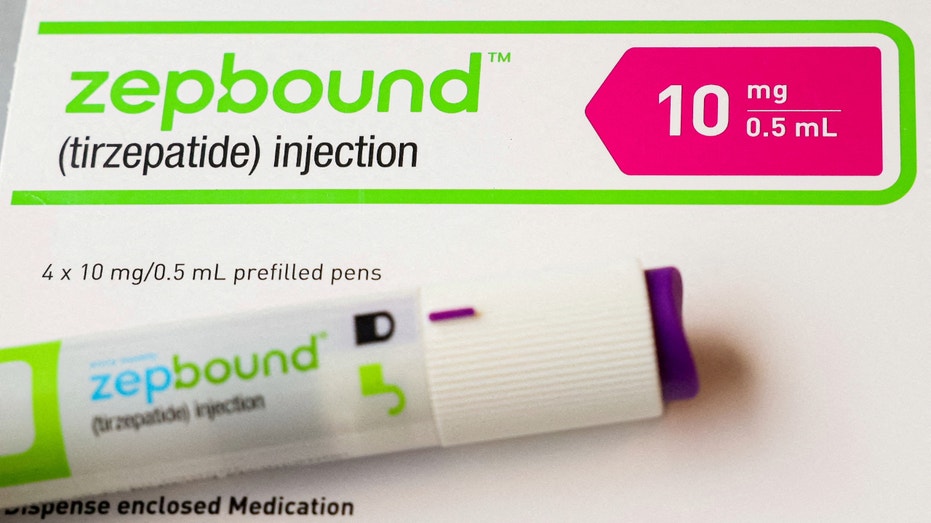
Core Insights - Eli Lilly has announced new price cuts for its weight loss drug Zepbound, reducing costs to enhance patient access and promote the use of its digital healthcare platform, LillyDirect [1][2] - The price for single-dose vials of Zepbound will now be $299 per month, down from $349, while the 5-milligram dose will be priced at $399, reduced from $499 [1][2] - The company aims to expand access for patients lacking insurance or adequate coverage through its Zepbound Self Pay Journey Program [2][9] Pricing Details - Regular monthly prices for Zepbound when not purchased through the Self-Pay Journey Program are significantly higher, ranging from $599 for 7.5 milligrams to $1,049 for 15 milligrams [5] - Multi-dose pens for Zepbound are expected to be priced at $299 for the lowest dose, with additional doses up to $449, pending FDA approval [6][8] Competitive Landscape - Eli Lilly and Novo Nordisk are both launching direct-to-consumer platforms to reduce barriers for new patients, enhancing their competitive positions in the weight loss drug market [9][11] - Novo Nordisk's platform, NovoCare Pharmacy, was launched in March to assist patients who cannot afford standard prices or lack insurance coverage for its weight loss drugs [11]

Eli Lilly cuts price of Zepbound in heightened weight-loss drug competition
Proactiveinvestors NA· 2025-12-01 16:23
About this content About Angela Harmantas Angela Harmantas is an Editor at Proactive. She has over 15 years of experience covering the equity markets in North America, with a particular focus on junior resource stocks. Angela has reported from numerous countries around the world, including Canada, the US, Australia, Brazil, Ghana, and South Africa for leading trade publications. Previously, she worked in investor relations and led the foreign direct investment program in Canada for the Swedish government ...

GLP-1 专题深度产品迭代驱动市场扩容,关注靶点、剂型及联合疗法研发进展
2025-12-01 16:03
Summary of GLP-1 Market Conference Call Industry Overview - The GLP-1 market is experiencing rapid expansion, with leading company Eli Lilly's market capitalization increasing nearly sixfold over the past five years, surpassing $1 trillion [1][2] - The market for GLP-1 drugs is projected to grow from $2.9 billion in 2015 to nearly $50 billion by 2024, with an annual growth rate of 47% [1][6] Key Points and Arguments - **Market Performance**: In 2024, global sales for semaglutide and tirzepatide are expected to approach $50 billion, continuing strong growth [2] - **Future Trends**: The GLP-1 sector is anticipated to be one of the most focused areas in pharmaceuticals, with each drug iteration potentially doubling market size within 3 to 5 years [3] - **Drug Competition**: Tirzepatide's prescription volume has recently surpassed that of semaglutide, with combined sales exceeding $10 billion in Q3 2025 [7] - **Growth Drivers**: The primary growth will come from expanding usage among individuals with mild obesity, as current prescription rates for GLP-1 drugs in diabetes are around 7% globally and 19% in the U.S., while weight loss indications have a penetration rate of less than 0.5% [8][10] Important but Overlooked Content - **Policy Changes**: Recent adjustments in U.S. Medicare policy will significantly reduce out-of-pocket costs for obesity medications, potentially increasing market volume for new drugs like Ofev and high-dose oral semaglutide [10][11] - **Market Dynamics**: The U.S. market has seen substantial consumer education regarding weight loss medications, which will facilitate the commercialization of new oral weight loss drugs [11] - **Differentiation Strategies**: Companies can achieve differentiation through target combination strategies or by developing oral formulations that improve patient compliance [13][15] - **Domestic Market Potential**: The Chinese weight loss drug market is expected to grow rapidly, driven by a large overweight population and a shift towards self-funded purchases due to limited insurance coverage [25][26] Conclusion - The GLP-1 market is poised for significant growth driven by new drug developments, policy changes, and increasing consumer awareness. Companies in this space, particularly those focusing on oral formulations and innovative treatment strategies, are likely to benefit from these trends.
Eli Lilly Stock in Focus After Slashing Cost of Popular Drug
Schaeffers Investment Research· 2025-12-01 15:56
Core Viewpoint - Eli Lilly and Co is experiencing a decline in share price following the announcement of price cuts for its weight loss drug Zepbound, which may impact investor sentiment and market performance [1][2]. Group 1: Price Changes - The prices for Zepbound's single-dose vials have been reduced to $299 for the 2.5 mg vial and $399 for the 5 mg vial, down from previous prices of $349 and $499 respectively [1]. - The new pricing will be available through the company's direct-to-consumer platform, LillyDirect [1]. Group 2: Stock Performance - Eli Lilly's shares are down 0.8%, trading at $1,066.96, marking the third consecutive daily loss and a pullback from last week's record high of $1,112 [1][2]. - Despite the recent decline, the stock has shown a 34% year-over-year increase, indicating strong long-term performance [2]. Group 3: Options Activity - There has been an increase in call options activity, with a call/put volume ratio of 2.23, ranking higher than 93% of readings from the past year [2]. - The Schaeffer's put/call open interest ratio (SOIR) stands at 0.70, indicating that short-term traders are placing bullish bets [3]. - Eli Lilly's Schaeffer's Volatility Index (SVI) is at 31%, suggesting that near-term option traders are anticipating relatively low volatility [3].


5 Healthcare Names to Watch as Sector Rotation Is in Full Swing
Yahoo Finance· 2025-12-01 15:51
Core Viewpoint - The healthcare sector, particularly the Health Care Select Sector SPDR Fund (XLV), is experiencing significant momentum and is poised for potential breakout, with a key resistance level near $160 that, if surpassed, could indicate a new phase of outperformance for the sector [1][4]. Sector Performance - The XLV ETF has outperformed the S&P 500 and the tech sector in Q3, indicating a potential sector rotation towards healthcare [2][6]. - Year-to-date, the XLV has gained over 14%, reflecting strong performance amid stabilizing interest rates and robust Q3 earnings across the sector [3][4]. Key Companies - **Eli Lilly (LLY)**: - Reported a 53.9% year-over-year revenue increase to $17.60 billion, with EPS of $7.02, exceeding estimates by 60 cents [8]. - The company raised its 2025 revenue guidance to between $63 billion and $63.5 billion, indicating strong demand for its products [8]. - The stock has crossed the $1 trillion market cap milestone, with a P/E ratio of 53 and a forward P/E of 33, suggesting high valuation [9][10]. - **Johnson & Johnson (JNJ)**: - Posted Q3 adjusted EPS of $2.80, surpassing estimates, with revenue climbing 6.8% year-over-year to $24.0 billion, driven by a nearly 20% increase in oncology sales [11][12]. - The stock has gained 43% year-to-date, reflecting a recovery and strong operational execution [13]. - **Gilead Sciences (GILD)**: - Reported Q3 EPS of $2.43, beating estimates by 31 cents, with revenue growing 3% year-over-year to $7.8 billion [14]. - The company raised its 2025 sales forecast to between $28.3 billion and $28.7 billion, indicating continued strength in its core areas [15]. - The stock is up 39% year-to-date and is trading above significant resistance levels, suggesting bullish momentum [16]. Investment Vehicles - The iShares Biotechnology ETF (IBB) has gained 31% year-to-date and 43% over the last six months, benefiting from renewed interest in the biotech sector [18]. - The IBB ETF is approaching a multi-year breakout level near $180, which could lead to a sustained rally if surpassed [18].


Lilly Cuts Prices for Cash Buyers of Weight-Loss Drug Zepbound
Bloomberg Television· 2025-12-01 15:12
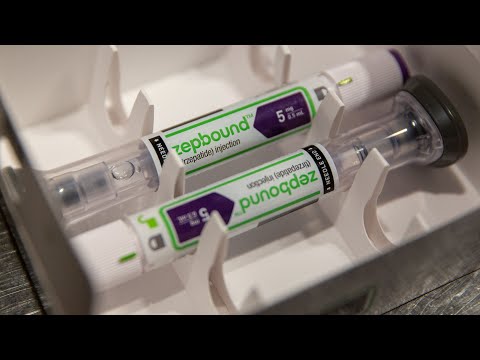
Eli Lilly announcing it will cut the prices for introductory doses of Zep found if you pay cash. This is just the latest move in the price war with Novo Nordisk that's getting more and more confusing in terms of pricing for these weight loss drugs. Joining us now to talk about it is someone who understands everything, at least in regards to this industry health.Bloomberg health reporter Madison Miller. So what do we know about Zep. LB Now it's what the five mg doses, the starter doses are going to be even c ...
Lilly Cuts Prices for Cash Buyers of Weight-Loss Drug Zepbound
Youtube· 2025-12-01 15:12
Eli Lilly announcing it will cut the prices for introductory doses of Zep found if you pay cash. This is just the latest move in the price war with Novo Nordisk that's getting more and more confusing in terms of pricing for these weight loss drugs. Joining us now to talk about it is someone who understands everything, at least in regards to this industry health.Bloomberg health reporter Madison Miller. So what do we know about Zep. LB Now it's what the five mg doses, the starter doses are going to be even c ...
Eli Lilly Lowers Weight-Loss Drug Zepbound Prices After Trump Deal
Forbes· 2025-12-01 14:50
Core Viewpoint - The pharmaceutical companies Eli Lilly and Novo Nordisk are reducing the prices of their weight loss drugs to enhance accessibility for consumers [1]. Pricing Changes - Eli Lilly has decreased the out-of-pocket monthly price for the lowest single-dose vial of Zepbound to $299 from $349, marking a 14% reduction. The 5-milligram dose is now priced at $399, down approximately 20% from $499. Prices for the 7.5 to 15 milligram doses have been reduced to $449 from $499 [2]. - Novo Nordisk has announced a reduction in the out-of-pocket monthly price for Ozempic and Wegovy to $349 from $499. Additionally, the two lowest doses of either drug will be available for $199 per month for the first two months [3]. Market Reaction - Following the announcement of price cuts, Eli Lilly's shares fell nearly 1% in premarket trading, while Novo Nordisk's stock experienced a decline of more than 1.7% [3].