
Medtronic(MDT)

Search documents
人工心脏掀起术语争议,“全磁悬浮”概念陷入技术迷雾
Hua Xia Shi Bao· 2025-12-18 07:30
Core Viewpoint - The article discusses the controversy surrounding the terminology and classification of artificial heart pump technologies, particularly the term "full magnetic suspension," which has implications for patient safety and scientific transparency [1][10]. Industry Overview - Heart failure is a terminal stage of cardiovascular disease, with approximately 5% of cases progressing to severe heart failure. The World Health Organization estimates around 64.3 million heart failure patients globally, with about 13 million in China [2]. - Artificial hearts serve as a "life pump" for end-stage heart failure patients, designed to replace the heart temporarily or permanently, facilitating blood circulation [2]. - There are two types of artificial hearts: partial replacement and total artificial hearts, with the latter being more advanced in terms of technology [2]. Technology Classification - Blood pump bearings are categorized into three main types: contact sliding bearings, fluid dynamic bearings, and magnetic bearings. The latter operates without contact, relying solely on magnetic forces [3]. - The term "full magnetic suspension" is considered the industry benchmark, associated with advanced and safe technologies. However, the precise definition of this term is under dispute [3][10]. - Kurt Dasse emphasizes that if a device requires fluid dynamic effects for stability, it cannot be classified as "full magnetic suspension" [3]. Clinical Implications - The ambiguity surrounding the definition of "full magnetic suspension" may affect the accurate assessment of device performance by clinicians and researchers [10]. - Abbott's HeartMate 3 is highlighted as a benchmark in the industry, demonstrating significant clinical advantages over other devices [11]. - A systematic review comparing three ventricular assist devices showed that HeartMate 3 had the best performance across all major clinical endpoints, reinforcing the link between technology choice and clinical outcomes [11]. Market Competition - Abbott leads the global market with its HeartMate 3 product, while Chinese companies are increasingly participating in the artificial heart sector, with several products approved since 2021 [12][13]. - Major domestic companies are adopting different technological routes, with notable products like the CH-VAD and CorHeart 6 entering the market [12][13]. - The potential market for artificial hearts in China is substantial, with projections indicating that by 2033, the number of implant surgeries could exceed 25,000, corresponding to a market size of over 5.5 billion yuan [14]. Future Outlook - The choice of technology route will significantly influence industry competition, with full magnetic suspension technology being a key focus area [14]. - The transparency and standardization of technology definitions are crucial for building trust among companies and ensuring accurate evaluations by researchers and clinicians [14][15]. - Ongoing discussions aim to standardize definitions and identify high-risk components in various designs, which is essential for independent assessments and patient safety [15].



Build a Stronger 2026 Portfolio With These 5 Dividend Aristocrats
ZACKS· 2025-12-15 14:25
Core Insights - Dividend aristocrat stocks are essential for investors aiming for stability and long-term wealth creation, as they have consistently increased dividends for at least 25 years, showcasing financial discipline and commitment to shareholders [1][2] Dividend Aristocrats Overview - Dividend aristocrats serve as a hedge against economic uncertainty, providing downside protection and consistent payout increases, making them suitable anchors in diversified portfolios [2] - Five highlighted dividend aristocrats for 2026 include Atmos Energy Corporation, Medtronic plc, PepsiCo, Inc., Caterpillar Inc., and S&P Global Inc., all of which exhibit robust dividend growth and steady returns [3][8] Atmos Energy Corporation (ATO) - ATO has raised its annual dividend for 42 consecutive years, with a current quarterly dividend of $1 per share and an annual dividend yield of 2.38% [3][4] - The new dividend for fiscal 2026 is $4 per share, reflecting a nearly 15% increase from fiscal 2025 [4] Medtronic plc (MDT) - MDT has increased its dividend for 48 consecutive years, with a current quarterly dividend of 71 cents and an annual dividend yield of 2.84% [5][6] - The company is expanding its global presence, particularly in the Cardiovascular business, despite facing near-term supply and tariff-related challenges [6] PepsiCo, Inc. (PEP) - PEP has raised its annualized dividend by 5% in 2025, reaching $5.69 per share, marking its 53rd consecutive annual dividend increase [7][9] - The company plans to return $8.6 billion to shareholders in 2025, including $7.6 billion in dividends and $1 billion in buybacks, with an annual dividend yield of 3.78% [9] Caterpillar Inc. (CAT) - CAT has a long history of dividend payments, having raised dividends for 32 consecutive years, with a recent quarterly dividend hike of 7% to $1.51 per share [10][11] - The company returned approximately $1.1 billion to shareholders in dividends and share repurchases in Q3 2025, with an annual dividend yield of 1.01% [11] S&P Global Inc. (SPGI) - SPGI has increased its dividend annually for over 50 years, with a current quarterly dividend of 96 cents and an annualized dividend of $3.84 per share [12][13] - The company reported a strong adjusted operating profit margin of 52.1% and generated free cash flow of $1.4 billion in the last quarter [14]



58起交易!一文看懂中国医疗器械BD的秋季节奏




思宇MedTech· 2025-12-15 08:59
Core Insights - The article highlights the acceleration of business development (BD) activities in the medical device sector from September to November 2025, with a total of 58 transactions identified across various subfields, including cardiovascular, nuclear medicine, and AI-enabled devices [2][3][4]. Group 1: Mergers and Acquisitions - Mergers and acquisitions have become a prominent form of BD, with companies leveraging capital control and product integration for rapid market positioning [7][8]. - Notable acquisitions include HeartLink's $680 million all-stock acquisition of Micro-Invasive Cardiology, enhancing its structural heart disease and rhythm management capabilities [7]. - Hua'an Zhonghui's acquisition of Bangni Medical marks its entry into the absorbable suture market, indicating a shift in surgical instrument competition towards material innovation [7]. Group 2: Strategic Collaborations - Strategic partnerships have been formed during the China International Import Expo, with companies like Shanghai Pharmaceuticals collaborating with international giants such as Boston Scientific and Medtronic to enhance their supply chain and academic promotion systems [7][8]. - The collaboration between GuoYao Medical and BDI Medical aims to deepen market penetration in the biomedicine and medical device sectors, focusing on compliance and distribution channel construction [13]. Group 3: Cross-Border Cooperation - Cross-border transactions have become more active, with foreign companies establishing local R&D and production systems in China, while domestic firms are exporting their solutions globally [9][10]. - The partnership between Trasis SA and Beijing Pait Biotechnology to establish a joint venture reflects a trend towards localized production and phased integration in the Chinese market [12]. Group 4: Ecosystem Building and Channel Expansion - The integration of supply chains and ecosystem building is a key theme, with companies focusing on collaborative agreements to enhance their market presence [11][15]. - The collaboration between Baxter and Neusoft Medical aims to create a comprehensive surgical solution by integrating their respective technologies [12]. Group 5: AI and Smart Healthcare - AI and data-driven approaches are becoming central to BD collaborations, with companies increasingly focusing on smart healthcare solutions [16][17]. - The partnership between Kefu Medical and Tencent Cloud to develop AI-powered hearing aids exemplifies the trend of integrating technology into healthcare products [21]. Group 6: Research and Diagnostic Synergy - The frequency of research-oriented collaborations is rising, indicating a shift from manufacturing-driven to research-driven industry dynamics [18][19]. - The collaboration between BGI and Infinera to enhance clinical applications of sequencing technology highlights the growing importance of research in driving innovation in the medical device sector [21].

This Dividend Stock Just Hit a Major Milestone. Time to Buy?
The Motley Fool· 2025-12-14 17:47
Core Viewpoint - Medtronic has had a strong year despite tariff challenges, with positive financial results and a bright outlook for the next year [1][2] Financial Performance - Medtronic's market capitalization stands at $128 billion, with a gross margin of 59.95% and a dividend yield of 2.82% [7] - The company reported trailing-12-month revenue of $34.76 billion, with potential revenue from urologic procedures estimated at $835 million if it captures a 10% market share of Intuitive Surgical's $8.35 billion revenue from that segment [7] Product Development - Medtronic's Hugo system, a robotic-assisted surgery device, has received U.S. regulatory clearance for urologic procedures, marking a significant milestone for the company [6] - The RAS market is underpenetrated, with fewer than 5% of eligible surgeries currently performed robotically, indicating substantial growth potential for Medtronic's Hugo system [5][8] Competitive Landscape - The Hugo system will compete with Intuitive Surgical's da Vinci system, which is well-established in the urology market, representing a significant challenge for Medtronic [6] - Convincing healthcare facilities to adopt the Hugo system over the da Vinci system will require time and effort [6] Long-term Growth Potential - Medtronic plans to seek additional indications for the Hugo system beyond urology, which could drive future procedure volume growth [8] - The aging global population is expected to fuel growth in the healthcare sector, benefiting Medtronic in the long run [9] Dividend Policy - Medtronic has increased its dividend for 48 consecutive years, positioning itself to become a Dividend King in the near future [11] - The company's strong dividend program is attractive to long-term income-seeking investors [10][11]
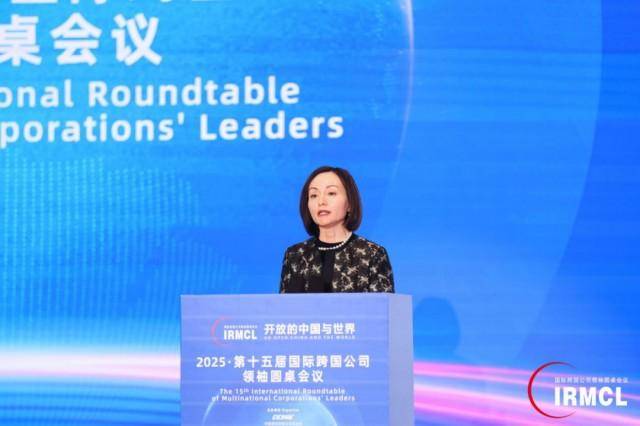
曹珊:从“技术输入”到“本土生态共建”
Sou Hu Cai Jing· 2025-12-13 06:45
Core Insights - Medtronic is transitioning from a "technology importer" to a "local ecosystem builder" in China, focusing on high-quality development in the healthcare sector [1][3] Group 1: Localization and Innovation - Medtronic embraces digitalization and artificial intelligence, establishing a global digital healthcare innovation base in Beijing focused on cardiovascular, minimally invasive surgery, and neuroscience [3] - The company promotes "local medical-engineering integration," exemplified by the development of a new "resin pacing cardiac catheter" therapy for arrhythmia in collaboration with Chinese clinical experts [3] Group 2: Talent Development and Investment - Medtronic has two innovation centers in China, the only market globally with this distinction, having trained 250,000 healthcare professionals [3] - The company utilizes a venture capital fund to discover, empower, and invest in innovative medical device companies in China, aiming to accelerate their products for both local and global markets [3] Group 3: Commitment to Healthcare - Medtronic emphasizes that the significance of medical technology lies not only in extending life but also in enhancing quality of life, committing to deepening its roots in China to drive innovation in healthcare [3]
AI 正在重塑医疗与制药业:领先者如何抢占未来优势
3 6 Ke· 2025-12-11 06:21
Core Insights - The healthcare and pharmaceutical industry is undergoing a profound transformation driven by artificial intelligence (AI), enhancing market competition and improving clinical outcomes [2] - The IMD AI Maturity Index highlights effective practices of industry leaders such as Bayer, Medtronic, and AstraZeneca, providing a reference path for organizations looking to enhance their AI capabilities [2] Leadership-Driven Transformation - Key to achieving AI maturity in healthcare is decisive action at the board level and commitment from executives, with successful companies positioning AI as a core strategic element [3] - Bayer announced a $1.4 billion investment in digital transformation in 2022, establishing AI and data science as foundational technologies [3] - Medtronic's CEO emphasizes AI as a strategic differentiator and has established an AI Center of Excellence to coordinate AI projects across the company [3] Advanced Technologies - AstraZeneca has developed an AI-driven knowledge graph to integrate complex biological relationships, enabling the identification of disease mechanisms and potential drug targets [6] - Medtronic's GI Genius™ module is an AI-assisted colonoscopy tool that enhances diagnostic accuracy, while their Live Stream technology provides real-time guidance during surgeries [7] - Bayer has created a computational platform for simulating biological systems to predict treatment outcomes, showcasing its strategic focus on innovative medical diagnostic technologies [7] Operational Integration - Leading companies have deeply embedded AI into their operational processes, focusing on efficiency, cost reduction, and business performance optimization [10] - AstraZeneca has reformed clinical trial design using machine learning to analyze historical data, improving trial efficiency and reducing patient exposure to placebos [10] - Medtronic has integrated AI across its operations, establishing a Center of Excellence to standardize data governance and model deployment [10] Talent Development - Medtronic is expanding its IT center in India with a $60 million investment, planning to hire 300 employees focused on advanced technologies including AI [13] - AstraZeneca is building multidisciplinary teams that combine medical expertise with data science capabilities to enhance collaboration in AI implementation [13] - Bayer's digital transformation investment includes resources to enhance employee AI capabilities across its pharmaceutical and agricultural sectors [13] Collaborative Innovation Ecosystem - Industry leaders are expanding capabilities through specialized partnerships to accelerate innovation while respecting the collaborative research traditions of the medical field [15] - Bayer collaborates with clinical research institutions and technology experts to develop AI platforms for cancer target identification [15] - AstraZeneca partners with academic and biotech firms to enhance its innovation ecosystem, investing in projects that combine clinical trial expertise with immune system modeling [15] Ethical Governance - The need for a dedicated governance framework for medical AI is emphasized, addressing unique issues such as patient safety and diagnostic accountability [17] - Medtronic's AI Compass guides ethical AI application, ensuring patient safety and transparency [17] - AstraZeneca's ethical framework focuses on sensitive issues related to early disease prediction and informed consent [17] AI Maturity Roadmap - The healthcare and pharmaceutical industry demonstrates how systematic development of AI capabilities can create sustainable competitive advantages, improving patient outcomes and accelerating innovation cycles [18] - Organizations excelling in the five dimensions of AI maturity consistently outperform peers in treatment innovation and regulatory compliance [18]



Medtronic: This Dividend Aristocrat Is Just Getting Started (NYSE:MDT)
Seeking Alpha· 2025-12-09 15:41
Core Insights - iREIT+HOYA Capital focuses on income-producing asset classes, aiming for sustainable portfolio income, diversification, and inflation hedging [1][2] - The investment group emphasizes high-yield, dividend growth investment ideas, targeting dividend yields up to 10% [2] Investment Strategy - The investment approach is defensive, with a medium- to long-term horizon, catering to investors seeking dependable monthly income [2] - The group provides research on various asset classes including REITs, ETFs, closed-end funds, preferreds, and dividend champions [2] Market Context - Value investing can be challenging as stocks may remain undervalued or overvalued for extended periods, similar to the current situation with many AI stocks [2]

Medtronic: This Dividend Aristocrat Is Just Getting Started
Seeking Alpha· 2025-12-09 15:41
Core Insights - iREIT+HOYA Capital focuses on income-producing asset classes, aiming for sustainable portfolio income, diversification, and inflation hedging [1][2] Group 1: Investment Strategy - The service targets high-yield, dividend growth investment ideas, particularly in defensive stocks with a medium- to long-term horizon [2] - Income-focused portfolios are designed to achieve dividend yields up to 10% [2] Group 2: Research and Analysis - The group provides investment research on various asset classes including REITs, ETFs, closed-end funds, preferreds, and dividend champions [2]

美敦力,手术机器人大动作
Xin Lang Cai Jing· 2025-12-09 13:41
Group 1 - Medtronic's Hugo™ robotic-assisted surgical system has received FDA approval for use in urological surgeries, marking a significant entry into the U.S. market [1][2][8] - The Hugo RAS system is approved for minimally invasive urological procedures, including prostatectomy, nephrectomy, and cystectomy, with approximately 230,000 such surgeries performed annually in the U.S. [2][9] - Medtronic plans to expand the application of the Hugo RAS system to other surgical specialties beyond urology, including general and gynecological surgeries [2][10] Group 2 - The U.S. is the largest surgical robotics market globally, with a market size of $4.6 billion in 2020, accounting for 55.1% of the global market [2][12] - Intuitive Surgical's da Vinci surgical system has dominated the market since its FDA approval in 2000, with Q3 2025 revenue of $2.51 billion, a 23% year-over-year increase [3][11] - Medtronic's Hugo system, which has been in development since 2019 and received CE certification in 2021, is now positioned to compete directly with the da Vinci system in the U.S. market [4][12] Group 3 - The Chinese surgical robotics market, while currently smaller than the U.S. market, shows significant growth potential, with a market size of $318.4 million in 2020 projected to reach $2.3153 billion by 2026, reflecting a compound annual growth rate of 39.2% [4][12] - Recent financing activities in the Chinese market indicate strong investor interest, with companies like Ruijian Surgical and Agile Medical securing substantial funding [5][13] - The competition in the surgical robotics market is intensifying, with multiple players vying for market share [6][14]

Medtronic changes investor relations leadership ahead of diabetes spinout
Yahoo Finance· 2025-12-09 10:31
Core Insights - Medtronic is planning to spin out its diabetes unit, MiniMed, into a standalone company by the end of 2026, with an initial public offering as the preferred method for separation [3][9] - The company has appointed Ryan Weispfenning to lead the investor relations function at MiniMed, leveraging his 17 years of experience in Medtronic's investor relations team [4][5][9] - Ingrid Goldberg has been hired as the new vice president and head of investor relations at Medtronic, previously holding a similar role at Novocure [6][9] Group 1 - Medtronic's separation of its diabetes unit is on track for completion by the end of 2026 [3] - The company aims for MiniMed to become an independent, publicly traded entity [5] - Weispfenning's strong relationships with analysts and investors are expected to be beneficial for MiniMed's transition [5] Group 2 - Goldberg's background includes significant experience in medtech investor relations, having worked at Abiomed and Bluebird Bio [7][9] - The leadership change in investor relations is part of Medtronic's strategy to prepare for the spin-off of its diabetes division [9]