Medtronic(MDT)

Search documents
Medtronic: A Defensive Gem For Uncertain Times
Seeking Alpha· 2025-12-20 06:07
Core Viewpoint - The article discusses the investment philosophy and approach of a seasoned investor, emphasizing value prioritization and contrarian strategies in stock selection [1]. Group 1: Investment Philosophy - The investor has over 35 years of experience and is influenced by renowned investors like Graham, Buffett, and Lynch [1]. - The approach focuses on identifying undervalued assets, income opportunities, and underpriced growth prospects [1]. - The investor avoids small-cap or speculative investments, indicating a preference for more stable and established companies [1]. Group 2: Motivation and Goals - The investor aims to share knowledge through articles on Seeking Alpha, hoping to enhance both personal and reader investment skills [1].


Medtronic's Diabetes Unit MiniMed Files For US IPO - Medline (NASDAQ:MDLN), Medtronic (NYSE:MDT)
Benzinga· 2025-12-20 02:26
Core Viewpoint - Medtronic's diabetes unit, MiniMed Group, has filed for an initial public offering (IPO) as part of its separation from Medtronic, with the aim to repay intercompany debt and fund corporate purposes [1][2]. Financial Performance - MiniMed reported a net loss of $21 million on net sales of $1.48 billion for the six months ending October 24, compared to a net loss of $23 million on net sales of $1.3 billion in the same period the previous year [1]. IPO Details - The IPO will be underwritten by Goldman Sachs, BofA Securities, Citigroup, and Morgan Stanley, and MiniMed plans to list on Nasdaq under the symbol "MMED" [4]. - Medtronic will retain at least 80.1% of the voting stock in MiniMed post-IPO, with plans to distribute its stake to shareholders through a spin-off or split-off [3]. Market Context - The IPO market is showing signs of recovery after a slow start to the year, with increased activity expected in 2026, particularly in January and the first quarter [4][5].
Medtronic Spin-Off MiniMed Files for IPO
WSJ· 2025-12-19 21:53
Core Viewpoint - Medtronic will retain a significant majority ownership of MiniMed, holding at least 80.1% of the voting stock post-IPO [1] Company Summary - Medtronic's ownership structure will ensure that it maintains control over MiniMed following the completion of the initial public offering [1]
Medtronic announces filing of IPO registration statement for Diabetes business, MiniMed
Prnewswire· 2025-12-19 21:20
Core Viewpoint - Medtronic plc has announced the filing of a registration statement for an initial public offering (IPO) of its Diabetes business, which will operate under the name MiniMed, indicating a strategic separation from the parent company [1][2]. Company Overview - Medtronic plc is a leading global healthcare technology company headquartered in Galway, Ireland, with over 95,000 employees across more than 150 countries, focusing on innovative solutions for various health conditions [6]. - The company's mission is to alleviate pain, restore health, and extend life, with a diverse portfolio that includes cardiac devices, surgical robotics, insulin pumps, and patient monitoring systems [6]. Diabetes Business - The Diabetes business at Medtronic aims to enhance diabetes management through advanced technology, including next-generation sensors and intelligent dosing systems, emphasizing customer experience [5]. - The separation of the Diabetes business is expected to be completed through capital markets transactions, with a preferred path being an IPO followed by a split-off [1][8]. IPO Details - MiniMed intends to list its common stock on the Nasdaq Global Select Market under the symbol MMED, although the number of shares and price range for the offering have not yet been determined [2]. - The IPO process will commence after the SEC review, subject to market conditions [2]. Underwriters - Goldman Sachs & Co. LLC, BofA Securities, Citigroup, and Morgan Stanley will serve as active bookrunners for the proposed offering, with additional support from several other financial institutions [4].

Medtronic's MiniMed files for US IPO
Reuters· 2025-12-19 21:16
Group 1 - MiniMed Group, the diabetes business of Medtronic, has filed for an initial public offering (IPO) in the United States [1]

首届“小进博”来了,企业携全球好物直达消费者
Guo Ji Jin Rong Bao· 2025-12-19 13:27
Core Viewpoint - The first Import Expo Quality Products Trade Fair in Shanghai showcased over 700 companies from more than 60 countries, emphasizing the importance of quality products and consumer engagement in the post-Expo period [3][10]. Group 1: Event Overview - The trade fair took place from December 19 to 21 at the National Exhibition and Convention Center in Shanghai, serving as a key extension of the Import Expo [3]. - The event featured a variety of products, including health foods from Oceania, home appliances from Europe, personal care items from the Americas, and beauty products from Asia, all popular among consumers [5]. Group 2: Innovative Sales Approach - New Zealand's New Zealand Dairy Company transformed its booth into an immersive 360-degree live streaming space, allowing for real-time interaction and purchases, effectively merging online and offline sales [9][10]. - The company's star product, colostrum milk powder, sold out its initial batch of 25,000 cans within a month of its global debut at the previous Import Expo, highlighting its popularity [9][10]. Group 3: Consumer Engagement and Education - The trade fair served as a platform for companies to educate consumers about their products, with Medtronic showcasing advanced medical technologies aimed at enhancing health consumer choices [14]. - The event included a special area for health education, where innovative medical products were displayed, emphasizing the importance of consumer awareness in health technology [16]. Group 4: Brand Participation and Market Impact - Companies like Sanofi and Boston Scientific presented products that had previously debuted at the Import Expo, demonstrating a successful transition from exhibition to market availability [15][16]. - Shiseido adopted a direct sales model at the trade fair, allowing consumers to experience products firsthand and make immediate purchases, reflecting a shift towards consumer-centric marketing strategies [17][18].

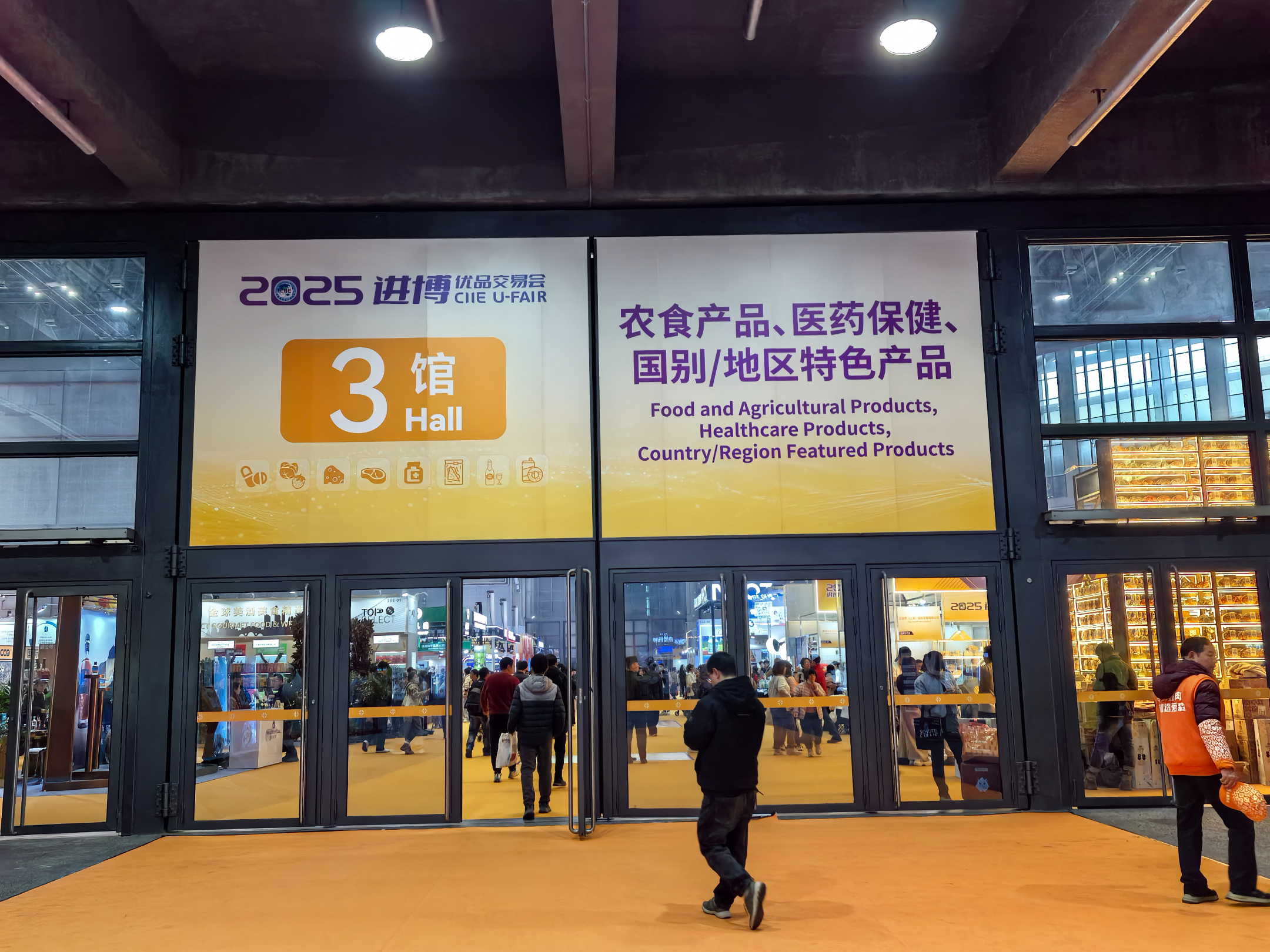
“小进博”来了,进博老友携首发和爆款返场
Di Yi Cai Jing· 2025-12-19 09:48
Group 1 - The first "Mini Import Expo" is held in Shanghai from December 19 to 21, showcasing over 700 global companies from more than 60 countries, with an exhibition area of approximately 60,000 square meters [1] - Unlike previous import expos that focused on B2B trade, the "Mini Import Expo" targets the consumer end, expecting to attract around 3,000 buyers and over 80,000 professional visitors and individual consumers [1] - The event aims to expand imports, enhance the spillover effects of the main import expo, and promote consumption upgrades, marking a transition to a comprehensive open platform integrating exhibition, trade, investment, consumption, culture, and finance [1] Group 2 - Established brands like L'Oréal, Amorepacific, and Medtronic return to the expo, showcasing their star products and reinforcing their connection with the import platform [2] - New Zealand's dairy company, New Zealand, sets up a 360-degree live streaming area and successfully sells out 25,000 cans of a popular colostrum milk powder during the event [2] - The "Mini Import Expo" features a dedicated area for new product launches, displaying nearly 180 items from around 100 companies, including Medtronic's first rechargeable closed-loop spinal cord stimulator [3] Group 3 - New Zealand ranks first in communication influence within the agricultural and food products sector, signing 19 cooperation agreements and achieving over 50 million total exposure through live broadcasts [3] - The ongoing "import opportunities" are transforming into strategic choices for companies to integrate into China's development and share growth dividends, with a commitment to increase investment and deepen market engagement [3]
Why Is Medtronic (MDT) Down 2% Since Last Earnings Report?
ZACKS· 2025-12-18 17:30
Core Viewpoint - Medtronic's recent earnings report shows positive growth in earnings and revenues, but the stock has underperformed the S&P 500, raising questions about future performance leading up to the next earnings release [1][2]. Financial Performance - Medtronic reported Q2 fiscal 2026 adjusted earnings per share of $1.36, a 7.9% increase from the previous year, exceeding the Zacks Consensus Estimate by 3.82% [3]. - Total worldwide revenues for the quarter reached $8.96 billion, reflecting a 6.6% year-over-year increase and surpassing the Zacks Consensus Estimate by 1.11% [4]. Segmental Analysis - Cardiovascular segment revenues grew 9.3% organically to $3.44 billion, with Cardiac Rhythm & Heart Failure sales increasing 14.3% to $1.83 billion [5]. - Medical Surgical revenues totaled $2.17 billion, up 1.3% year over year, while Neuroscience revenues reached $2.56 billion, a 3.9% increase [6][7]. - Diabetes segment revenues rose 7.1% organically to $757 million [7]. Margin Performance - Gross margin expanded by 90 basis points to 65.8%, despite a 3.9% increase in the cost of products sold [8]. - Adjusted operating margin improved by 50 basis points year over year to 24.3% [8]. Fiscal Outlook - For fiscal 2026, Medtronic projects organic revenue growth of 5.5%, up from a previous estimate of approximately 5% [9]. - Full-year adjusted earnings per share are expected to be in the range of $5.62-$5.66, slightly revised from $5.60-$5.66 [10]. Estimate Trends - There has been a downward trend in estimates revisions over the past month, indicating a potential shift in investor sentiment [11][13]. VGM Scores - Medtronic currently holds a poor Growth Score of F, a Momentum Score of C, and a Value Score of B, resulting in an aggregate VGM Score of D [12].

人工心脏掀起术语争议,“全磁悬浮”概念陷入技术迷雾
Hua Xia Shi Bao· 2025-12-18 07:30
Core Viewpoint - The article discusses the controversy surrounding the terminology and classification of artificial heart pump technologies, particularly the term "full magnetic suspension," which has implications for patient safety and scientific transparency [1][10]. Industry Overview - Heart failure is a terminal stage of cardiovascular disease, with approximately 5% of cases progressing to severe heart failure. The World Health Organization estimates around 64.3 million heart failure patients globally, with about 13 million in China [2]. - Artificial hearts serve as a "life pump" for end-stage heart failure patients, designed to replace the heart temporarily or permanently, facilitating blood circulation [2]. - There are two types of artificial hearts: partial replacement and total artificial hearts, with the latter being more advanced in terms of technology [2]. Technology Classification - Blood pump bearings are categorized into three main types: contact sliding bearings, fluid dynamic bearings, and magnetic bearings. The latter operates without contact, relying solely on magnetic forces [3]. - The term "full magnetic suspension" is considered the industry benchmark, associated with advanced and safe technologies. However, the precise definition of this term is under dispute [3][10]. - Kurt Dasse emphasizes that if a device requires fluid dynamic effects for stability, it cannot be classified as "full magnetic suspension" [3]. Clinical Implications - The ambiguity surrounding the definition of "full magnetic suspension" may affect the accurate assessment of device performance by clinicians and researchers [10]. - Abbott's HeartMate 3 is highlighted as a benchmark in the industry, demonstrating significant clinical advantages over other devices [11]. - A systematic review comparing three ventricular assist devices showed that HeartMate 3 had the best performance across all major clinical endpoints, reinforcing the link between technology choice and clinical outcomes [11]. Market Competition - Abbott leads the global market with its HeartMate 3 product, while Chinese companies are increasingly participating in the artificial heart sector, with several products approved since 2021 [12][13]. - Major domestic companies are adopting different technological routes, with notable products like the CH-VAD and CorHeart 6 entering the market [12][13]. - The potential market for artificial hearts in China is substantial, with projections indicating that by 2033, the number of implant surgeries could exceed 25,000, corresponding to a market size of over 5.5 billion yuan [14]. Future Outlook - The choice of technology route will significantly influence industry competition, with full magnetic suspension technology being a key focus area [14]. - The transparency and standardization of technology definitions are crucial for building trust among companies and ensuring accurate evaluations by researchers and clinicians [14][15]. - Ongoing discussions aim to standardize definitions and identify high-risk components in various designs, which is essential for independent assessments and patient safety [15].


Build a Stronger 2026 Portfolio With These 5 Dividend Aristocrats
ZACKS· 2025-12-15 14:25
Core Insights - Dividend aristocrat stocks are essential for investors aiming for stability and long-term wealth creation, as they have consistently increased dividends for at least 25 years, showcasing financial discipline and commitment to shareholders [1][2] Dividend Aristocrats Overview - Dividend aristocrats serve as a hedge against economic uncertainty, providing downside protection and consistent payout increases, making them suitable anchors in diversified portfolios [2] - Five highlighted dividend aristocrats for 2026 include Atmos Energy Corporation, Medtronic plc, PepsiCo, Inc., Caterpillar Inc., and S&P Global Inc., all of which exhibit robust dividend growth and steady returns [3][8] Atmos Energy Corporation (ATO) - ATO has raised its annual dividend for 42 consecutive years, with a current quarterly dividend of $1 per share and an annual dividend yield of 2.38% [3][4] - The new dividend for fiscal 2026 is $4 per share, reflecting a nearly 15% increase from fiscal 2025 [4] Medtronic plc (MDT) - MDT has increased its dividend for 48 consecutive years, with a current quarterly dividend of 71 cents and an annual dividend yield of 2.84% [5][6] - The company is expanding its global presence, particularly in the Cardiovascular business, despite facing near-term supply and tariff-related challenges [6] PepsiCo, Inc. (PEP) - PEP has raised its annualized dividend by 5% in 2025, reaching $5.69 per share, marking its 53rd consecutive annual dividend increase [7][9] - The company plans to return $8.6 billion to shareholders in 2025, including $7.6 billion in dividends and $1 billion in buybacks, with an annual dividend yield of 3.78% [9] Caterpillar Inc. (CAT) - CAT has a long history of dividend payments, having raised dividends for 32 consecutive years, with a recent quarterly dividend hike of 7% to $1.51 per share [10][11] - The company returned approximately $1.1 billion to shareholders in dividends and share repurchases in Q3 2025, with an annual dividend yield of 1.01% [11] S&P Global Inc. (SPGI) - SPGI has increased its dividend annually for over 50 years, with a current quarterly dividend of 96 cents and an annualized dividend of $3.84 per share [12][13] - The company reported a strong adjusted operating profit margin of 52.1% and generated free cash flow of $1.4 billion in the last quarter [14]