HVAD

Search documents
人工心脏“技术门”背后的安全之问
Tai Mei Ti A P P· 2025-12-22 09:23
Core Viewpoint - The ongoing debate in the academic community regarding the definition and standards of artificial heart technologies is crucial for patient safety and clinical outcomes [2][3][8]. Group 1: Technical Definitions and Standards - The definition of "full magnetic suspension" in contemporary durable rotary blood pumps is ambiguous, leading to potential misinterpretations of product safety [2][4]. - Experts emphasize that any blood pump relying on fluid dynamic bearings in its primary operating mode cannot be classified as "full magnetic suspension" [2][8]. - A recent paper by Dr. Kurt Dasse highlights the need for clear definitions and evaluation standards for different bearing technologies in artificial hearts [3][8]. Group 2: Key Characteristics of CorHeart 6 - The CorHeart 6 device is categorized as a "centrifugal pump with magnetic-assisted dual fluid dynamic bearings" in authoritative literature, yet its manufacturer describes it as a "full magnetic suspension device" [4][24]. - Key specifications of the CorHeart 6 include a rotor speed range of 2200-4300 RPM, a device height of 26 mm, a diameter of 34 mm, a weight of 90 g, and a power consumption of 2.6 W at 2.0 L/min [5][24]. Group 3: Consensus on Magnetic Suspension - Experts at the ISMCS conference reached a consensus that true magnetic suspension must rely solely on magnetic forces for rotor stability across multiple degrees of freedom [14][20]. - The safety threshold for suspension gaps is established at ≥200 microns for full magnetic suspension, contrasting with ≤100 microns for fluid dynamic bearings [20][24]. - Stability verification methods, such as air testing, are proposed to ensure that magnetic bearings can maintain rotor suspension without fluid assistance [23][24]. Group 4: Clinical Implications and Data Transparency - The distinction between bearing technologies is critical as it directly impacts blood compatibility and patient outcomes, with fluid dynamic bearings showing significantly higher mortality risks compared to full magnetic suspension devices [24][25]. - The lack of long-term clinical data and transparency in the CorHeart 6's public disclosures raises concerns about its safety and efficacy [24][25]. - The industry is urged to adopt standardized definitions and transparent data sharing to enhance patient safety and foster innovation [24][25].


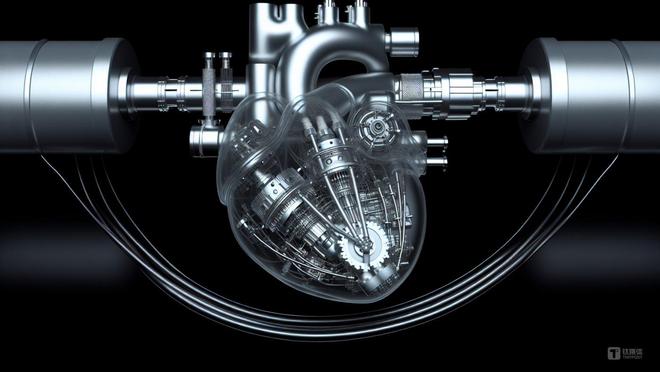
人工心脏掀起术语争议,“全磁悬浮”概念陷入技术迷雾
Hua Xia Shi Bao· 2025-12-18 07:30
Core Viewpoint - The article discusses the controversy surrounding the terminology and classification of artificial heart pump technologies, particularly the term "full magnetic suspension," which has implications for patient safety and scientific transparency [1][10]. Industry Overview - Heart failure is a terminal stage of cardiovascular disease, with approximately 5% of cases progressing to severe heart failure. The World Health Organization estimates around 64.3 million heart failure patients globally, with about 13 million in China [2]. - Artificial hearts serve as a "life pump" for end-stage heart failure patients, designed to replace the heart temporarily or permanently, facilitating blood circulation [2]. - There are two types of artificial hearts: partial replacement and total artificial hearts, with the latter being more advanced in terms of technology [2]. Technology Classification - Blood pump bearings are categorized into three main types: contact sliding bearings, fluid dynamic bearings, and magnetic bearings. The latter operates without contact, relying solely on magnetic forces [3]. - The term "full magnetic suspension" is considered the industry benchmark, associated with advanced and safe technologies. However, the precise definition of this term is under dispute [3][10]. - Kurt Dasse emphasizes that if a device requires fluid dynamic effects for stability, it cannot be classified as "full magnetic suspension" [3]. Clinical Implications - The ambiguity surrounding the definition of "full magnetic suspension" may affect the accurate assessment of device performance by clinicians and researchers [10]. - Abbott's HeartMate 3 is highlighted as a benchmark in the industry, demonstrating significant clinical advantages over other devices [11]. - A systematic review comparing three ventricular assist devices showed that HeartMate 3 had the best performance across all major clinical endpoints, reinforcing the link between technology choice and clinical outcomes [11]. Market Competition - Abbott leads the global market with its HeartMate 3 product, while Chinese companies are increasingly participating in the artificial heart sector, with several products approved since 2021 [12][13]. - Major domestic companies are adopting different technological routes, with notable products like the CH-VAD and CorHeart 6 entering the market [12][13]. - The potential market for artificial hearts in China is substantial, with projections indicating that by 2033, the number of implant surgeries could exceed 25,000, corresponding to a market size of over 5.5 billion yuan [14]. Future Outlook - The choice of technology route will significantly influence industry competition, with full magnetic suspension technology being a key focus area [14]. - The transparency and standardization of technology definitions are crucial for building trust among companies and ensuring accurate evaluations by researchers and clinicians [14][15]. - Ongoing discussions aim to standardize definitions and identify high-risk components in various designs, which is essential for independent assessments and patient safety [15].

同心医疗核心产品即将试水美国儿科临床,出海进程提速
Cai Jing Wang· 2025-11-19 11:26
Core Viewpoint - The announcement by Tongxin Medical regarding the Brio4Kids clinical trial marks a significant step towards international pediatric applications of their full magnetic levitation artificial heart, BrioVAD, indicating a shift from filling domestic gaps to competing globally in the left ventricular assist device (LVAD) market [1][6]. Group 1: Technology and Market Position - Heart failure, often referred to as the "cancer of cardiovascular diseases," affects approximately 64 million people globally, with about 8.9 million patients over 35 in China, and the incidence is on the rise [2]. - The global VAD market is currently dominated by Abbott's HeartMate 3, which has been implanted in over 40,000 cases since its launch in 2017, generating annual revenues of around $1 billion [2][3]. - Tongxin Medical has focused on full magnetic levitation technology since its establishment in 2008, achieving significant advancements with its self-developed artificial heart, the Cizhi VAD, which received approval from the National Medical Products Administration (NMPA) in November 2021 [3][4]. Group 2: Clinical Data and Performance - Clinical data from Tongxin Medical's products show a one-year and two-year survival rate of 91.3%, compared to Abbott's 86.6% and 79% respectively, highlighting the effectiveness of their technology [4]. - The company has the fewest global lead wires (4) and the thinnest diameter (3.3mm) for its percutaneous cables, resulting in a significantly lower long-term infection risk, with an infection event rate of only 0.07 per patient per year [5]. Group 3: International Expansion and Regulatory Milestones - Following the withdrawal of Medtronic's HVAD from the market, there has been a call for new competitors, leading to Tongxin Medical's FDA approval for clinical trials of BrioVAD, marking it as the first Chinese active implantable medical device to receive such approval [6][7]. - The Brio4Kids clinical trial aims to address pediatric heart failure, expanding Tongxin Medical's reach in the U.S. market and showcasing its leadership in high-end ventricular assist technology [7][8]. - The company has established a robust clinical trial framework, with 60 research centers and 800 participants enrolled, demonstrating its commitment to meeting stringent U.S. regulatory standards [7].
资本加持、技术突围 同心医疗或将加速上市进程
Sou Hu Cai Jing· 2025-07-15 08:21
Core Viewpoint - The recent financing progress of Suzhou Tongxin Medical Technology Co., Ltd., a subsidiary of Bluefan Medical, is expected to accelerate its IPO process, particularly with the recent reactivation of the fifth set of standards on the Sci-Tech Innovation Board, which could significantly enhance the company's market position in the artificial heart sector [2][6][7]. Group 1: Company Overview - Suzhou Tongxin Medical, established in July 2008, focuses on the research, production, and sales of innovative ventricular assist devices (VADs), aiming to commercialize VADs globally [3]. - The company's flagship product, the CH-VAD, is the first domestically approved full magnetic levitation VAD in China, receiving regulatory approval in November 2021 [3][4]. - The CH-VAD has shown superior clinical outcomes compared to Abbott's HeartMate 3, particularly in survival rates and compatibility with blood [4]. Group 2: Product Development and Innovation - Tongxin Medical is advancing its product line with the BrioVAD, a durable VAD designed for long-term support of heart failure patients, which has received FDA approval for clinical trials in the U.S. [5]. - The BrioVAD is undergoing a head-to-head clinical trial against Abbott's HeartMate 3, marking a significant milestone in the treatment of advanced heart failure [5]. Group 3: Market Potential and Financial Backing - The market for artificial hearts in China is substantial, with approximately 13.7 million heart failure patients aged 35 and above, highlighting a significant demand for VADs due to a severe imbalance between heart transplant supply and demand [6]. - Tongxin Medical has successfully completed eight rounds of financing, raising over 1 billion RMB, indicating strong market confidence and support from investors [6][8]. - The company has a diverse shareholder structure, including prominent investment firms and strategic investors, which positions it well for future growth and commercialization [8].