
Medtronic(MDT)

Search documents
第八届进博会|进博会医疗展区为 “健康中国”添“创新引擎”
Zhong Guo Xin Wen Wang· 2025-11-07 01:47
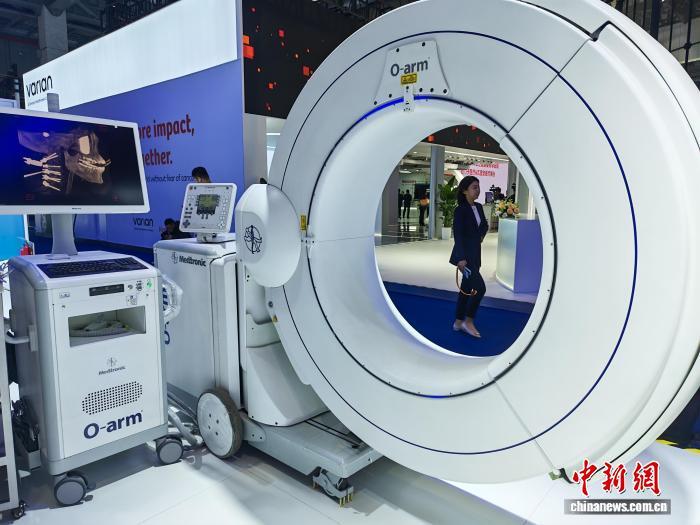
Core Insights - The 8th China International Import Expo (CIIE) showcases numerous leading companies in the medical device and pharmaceutical sectors, including 11 Fortune 500 pharmaceutical companies and the top 10 global medical device firms, contributing to the "Healthy China" initiative [1] Company Highlights - Medtronic presents over 100 innovative products and solutions at the expo, including the Asia-Pacific debut of the Inceptiv rechargeable closed-loop spinal cord stimulator, recognized by TIME magazine as one of the most groundbreaking innovations of 2024 [3] - Sanofi focuses on cardiovascular, metabolic, respiratory, and oncology fields, showcasing several "first-in-class" or "best-in-class" innovative drugs and vaccines, including the global debut of the cardiovascular drug Afikaitai and the injection of Pulasiran sodium [3][4] - Philips displays nearly 50 innovative products and solutions, including 10 new products making their debut in China and over 10 AI-powered health technology solutions, emphasizing the integration of technology in both professional medical and personal health sectors [6] - Boston Scientific showcases over 80 cutting-edge products in the minimally invasive intervention field, with 22 products transitioning from exhibition to commercial availability, including the world's first male stress urinary incontinence sling and a unique thrombectomy device for carotid artery revascularization [7]


Medtronic to announce financial results for its second quarter of fiscal year 2026
Prnewswire· 2025-11-05 22:43
Core Insights - Medtronic plc will report its financial results for the second quarter of fiscal year 2026 on November 18, 2025, following the end of the quarter on October 24, 2025 [1] - The company plans to announce its third and fourth quarter results for fiscal year 2026 on February 17, 2026, and May 20, 2026, respectively [2] Company Overview - Medtronic is a leading global healthcare technology company headquartered in Galway, Ireland, with a mission to alleviate pain, restore health, and extend life [3] - The company employs over 95,000 people across more than 150 countries and offers technologies that treat 70 health conditions, including cardiac devices, surgical robotics, and patient monitoring systems [3] - Medtronic's innovative technologies aim to transform the lives of two people every second, emphasizing insight-driven care and better outcomes [3]

聚焦进博会|AI赋能医疗器械,跨国厂商研发重心转向中国
Di Yi Cai Jing· 2025-11-05 12:32
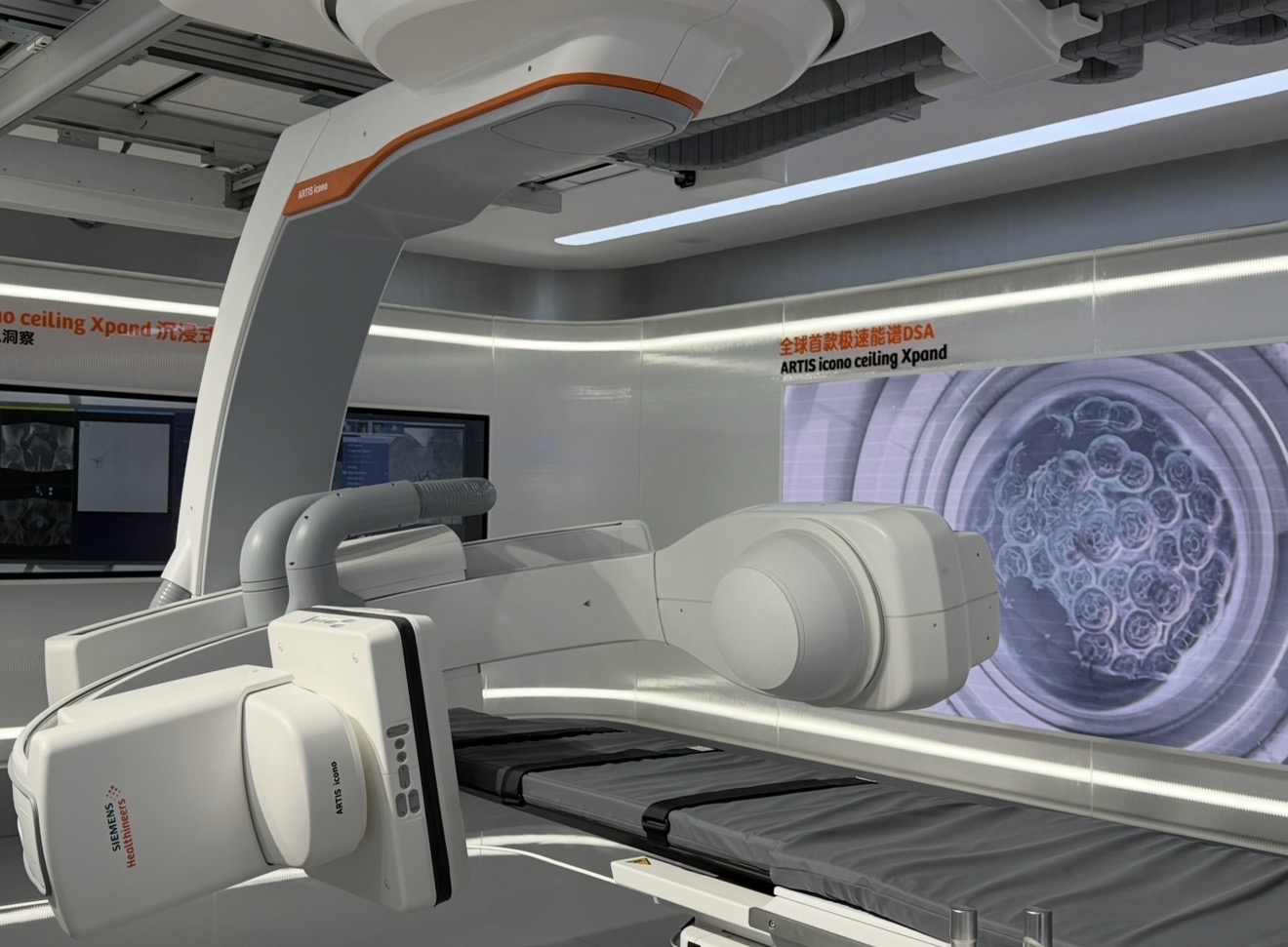
Core Insights - The article highlights the advancements in medical imaging technology, particularly in cancer diagnosis and treatment, showcasing the integration of AI in medical devices [1][3][5] Group 1: Medical Device Innovations - Current CT and MRI devices provide comprehensive cancer diagnosis and treatment solutions, enabling minimally invasive and non-invasive procedures [3] - Siemens Healthineers showcased a DSA angiography device with sub-millimeter spatial resolution, capable of capturing previously undetectable lesions in just 2.5 seconds, incorporating AI technologies developed by local teams [3] - Medtronic introduced a newly FDA-approved ultra-hard guidewire, enhancing the stability and predictability of transcatheter aortic valve replacement (TAVR) procedures, with plans to enter the Chinese market [3] Group 2: AI Integration in Healthcare - The Chinese government emphasizes the development of artificial intelligence, providing strong momentum for the digital transformation of the healthcare industry [5] - Many medical companies at the expo established AI zones, presenting AI surgical solutions, with Siemens demonstrating innovations in AI-driven medical transformations [5] - Medtronic plans to launch a localized AI solution for TAVR procedures, developed in collaboration with local doctors and AI firms, aiming to create a comprehensive treatment chain [5][6] Group 3: Localized Product Development - Karl Storz introduced a second batch of domestically produced products, including cold light sources and pneumoperitoneum machines, promoting day surgery through minimally invasive techniques [4] - The company set up simulation units for outpatient bladder endoscopy and gynecological procedures, demonstrating resource optimization in hospitals [4] Group 4: Future Directions - Siemens aims to integrate AI with diagnostic imaging and adaptive radiotherapy, enhancing treatment precision and efficiency while reducing complications [6] - Medtronic is increasing investment in local AI and healthcare R&D, establishing a digital medical innovation base focused on cardiovascular, minimally invasive surgery, and neuroscience [6]

多款“全球首秀”药械亮相进博会,聚焦老龄化、减重庞大需求
Di Yi Cai Jing· 2025-11-05 11:19
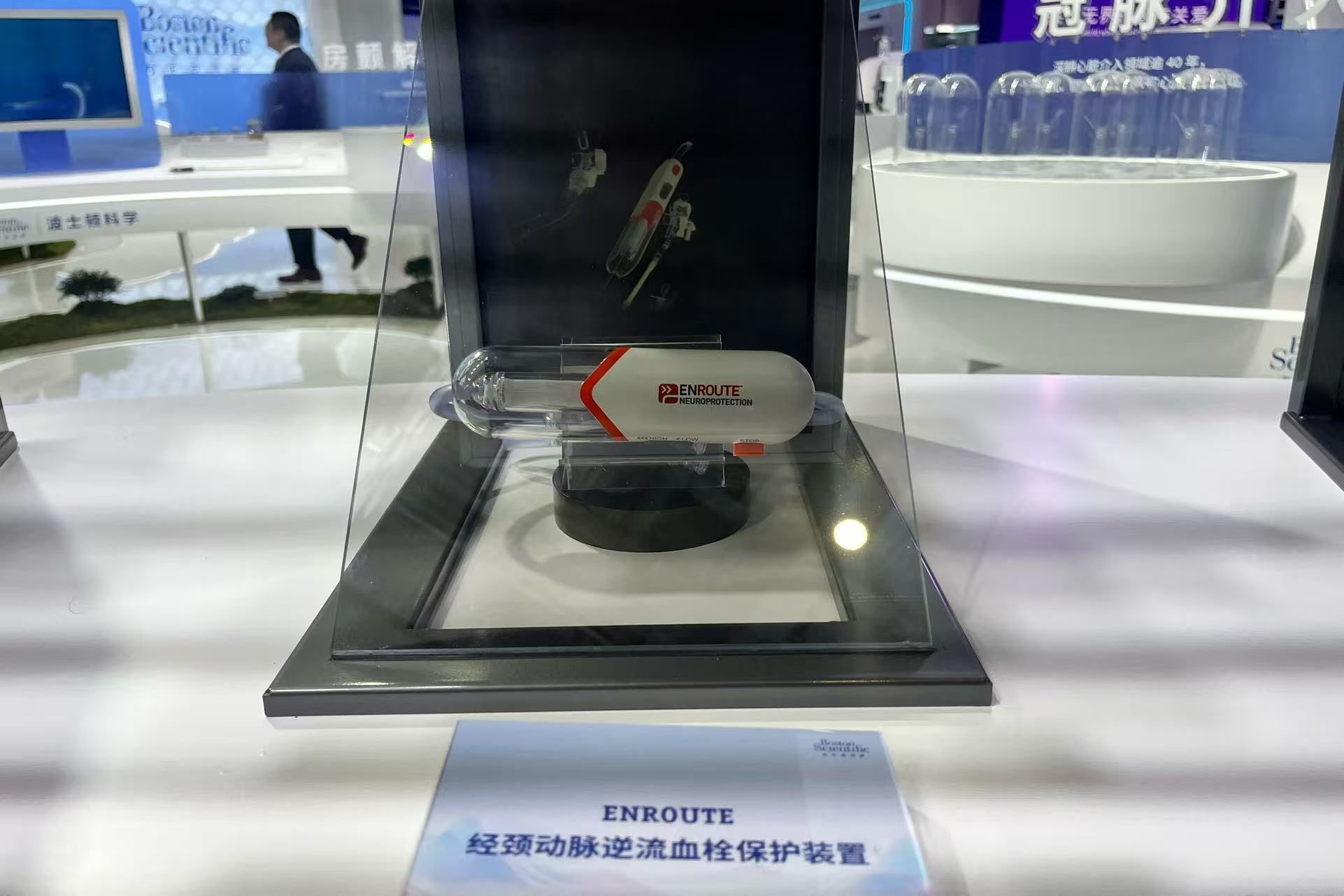
Core Insights - The eighth China International Import Expo (CIIE) showcased several innovative medical devices and healthcare products, attracting significant attention from global trade delegations [1][2] Group 1: Medical Devices - Boston Scientific presented the ENROUTE Transcarotid Artery Revascularization (TCAR) device, the first and only approved device for TCAR procedures, aimed at reducing intraoperative risks associated with carotid artery stenosis [1] - Another product from Boston Scientific, the FARAWAVE NAV catheter, utilizes non-thermal electric fields for cardiac tissue ablation and has treated approximately 500,000 patients globally [1] - Medtronic introduced the Inceptiv closed-loop rechargeable spinal nerve stimulation system, designed to improve the quality of life for patients with chronic pain through weak electrical stimulation [4] - BD Medical showcased the M.R.I™ 4F Slim Implantable Port, the thinnest catheter in its category, designed for the Chinese population, which significantly reduces thrombosis rates by 40% [4] - The Venclose™ catheter, designed for treating lower limb varicose veins, features a flexible setup that minimizes patient trauma [5] Group 2: Innovative Treatments - Fosun Pharma presented the Exablate Neuro system, a high-intensity focused ultrasound (HIFU) device combined with MRI for treating drug-resistant essential tremors and Parkinson's disease [6] - Eli Lilly introduced innovative drugs targeting aging and obesity, including donanemab for Alzheimer's disease, which has shown to delay disease progression by approximately 30% in clinical trials [6]


最新!美敦力又一高管变动
思宇MedTech· 2025-11-05 03:58
Core Viewpoint - Medtronic's EVP of Enterprise Operations, Gregory L. Smith, will retire on December 2, 2025, after leading significant restructuring in the company's global manufacturing and supply chain over the past four years [2] Group 1: Leadership Transition - Smith's retirement marks a pivotal point in Medtronic's supply chain centralization reform, transitioning from crisis response to structural optimization [8] - Smith informed the company of his retirement decision on November 1, 2023, and will join a private equity firm post-retirement [2] Group 2: Background and Experience - Prior to joining Medtronic, Smith had over 30 years of supply chain management experience across various industries, including serving as EVP of Supply Chain at Walmart [3] - His experience in retail logistics and cost optimization was expected to enhance Medtronic's operational efficiency in the medical device sector [5] Group 3: Supply Chain Strategy - Under Smith's leadership, Medtronic aimed to create a more centralized and streamlined supply chain, focusing on long-term partnerships with innovative strategic suppliers [6] - Smith emphasized the need to optimize inventory levels and improve supply forecasting accuracy to enhance global operational efficiency [7] - The company established a unified supply chain data platform to strengthen visibility and risk management capabilities during global supply chain fluctuations [7] Group 4: Future Outlook - Following Smith's departure, Medtronic is likely to continue pursuing its global operational strategy with a long-term perspective on system management [9] - The medical device industry's supply chain landscape is evolving, with companies needing to balance resilience and efficiency amid geopolitical risks and cost pressures [8]

Is Wall Street Bullish or Bearish on Medtronic Stock?
Yahoo Finance· 2025-11-04 11:45
Company Overview - Medtronic plc (MDT) is one of the largest medical-technology companies globally, headquartered in Ireland with significant operations in the U.S. The company has a market cap of $116.3 billion and specializes in developing and manufacturing devices and therapies for cardiac care, diabetes management, surgical technologies, and neurological disorders [1] Stock Performance - MDT stock has seen a marginal increase over the past year, underperforming compared to the S&P 500 Index, which rose by 19.6%. Year-to-date, MDT has increased by 12.9%, compared to the index's 16.5% gain [2] - Relative to its sector, MDT has outperformed, as the S&P Healthcare Equipment SPDR (XHE) declined by 9.4% over the past year and 9.2% year-to-date [3] Recent Financial Activity - On September 29, Medtronic completed a €1.5 billion ($1.7 billion) debt offering through its subsidiary, issuing €750 million ($864.2 million) of 2.95% senior notes due 2030 and €750 million ($864.2 million) of 4.20% senior notes due 2045. The proceeds will be used to repay existing Medtronic Luxco notes maturing in 2025. Following this announcement, MDT shares rose by 1.4% in the next trading session [4] Earnings Projections - For the fiscal year ending in April 2026, analysts project MDT to achieve EPS growth of 2.4%, reaching $5.62 on a diluted basis. Medtronic has consistently exceeded consensus estimates over the past four quarters [5] Analyst Ratings - Among 31 analysts covering MDT stock, the consensus rating is a "Moderate Buy," which includes 14 "Strong Buy" ratings, one "Moderate Buy," 15 "Holds," and one "Strong Sell" [5] - On October 17, Leerink Partners analyst Mike Kratky reiterated a "Buy" rating on Medtronic with a price target of $114. The mean price target of $101.54 indicates a 12.6% premium to MDT's current price levels, while the highest price target of $115 suggests a potential upside of 27.5% [6]
2 Healthcare Stocks for Individual Investors With a 10-Year Time Horizon
The Motley Fool· 2025-11-04 10:15
Core Viewpoint - The healthcare industry is characterized by its resilience and defensive nature, making it less sensitive to economic cycles, which provides stability during market volatility and economic slowdowns [1][2]. Group 1: AbbVie - AbbVie has successfully transitioned from the loss of exclusivity of its key drug Humira by focusing on newer products, including immunology drugs Skyrizi and Rinvoq, which have shown strong sales growth [3][4]. - The company has secured a patent settlement for Rinvoq, extending its exclusivity in the U.S. until 2037, with projected annual revenues of $11 billion by 2027 for Rinvoq and $20 billion for Skyrizi [4]. - AbbVie reported a worldwide net revenue of $15.4 billion in Q2 2025, a 6.6% increase year over year, with immunology net revenue rising 9.5% and neuroscience revenue increasing by 24.2% [7]. - AbbVie has a strong dividend history, being a Dividend King with over 50 consecutive years of dividend increases, currently yielding about 2.8% [8]. Group 2: Medtronic - Medtronic has a diversified portfolio of medical devices across four segments: Cardiovascular, medical surgical, neuroscience, and diabetes, with the cardiovascular segment generating approximately $12.5 billion in revenue in fiscal 2025 [9][10]. - The neuroscience segment produced over $9.8 billion in revenue in fiscal 2025, with both cardiovascular and neuroscience segments accounting for nearly 70% of total revenue [11]. - The FDA approved Medtronic's BrainSense adaptive deep brain stimulation system for Parkinson's disease, marking a significant advancement in managing symptoms [12]. - Medtronic plans to separate its lower-margin diabetes business into a standalone company to focus on higher-margin growth areas [14]. - Following engagement with Elliott Investment Management, Medtronic appointed new board members and established committees to enhance growth and operational efficiency [15]. - Medtronic has a nearly 50-year history of increasing dividends, with a current yield of about 3% [17].


进博会扩大开放新图景:让中国大市场成为世界大机遇
Di Yi Cai Jing· 2025-11-03 13:43
Core Insights - The eighth China International Import Expo (CIIE) will take place from November 5 to 10 in Shanghai, aiming to expand China's market opportunities for global businesses [2][3] - The exhibition area has reached a record high of over 367,000 square meters, with participation from over 4,000 companies from 138 countries and regions, including 290 Fortune 500 companies [3][12] - The event serves as a platform for innovation and collaboration, with companies like Honeywell and Medtronic showcasing numerous new products and technologies [4][11] Group 1: Event Overview - The CIIE is designed to enhance China's openness and create opportunities for global businesses, with a focus on innovative display areas and new consumer themes [2][3] - The event has seen a continuous increase in participation, with a notable presence from U.S. companies for seven consecutive years [3][12] - The expo is viewed as a significant signal of China's commitment to global trade and economic stability amid geopolitical uncertainties [5][9] Group 2: Company Participation and Innovations - Honeywell has showcased approximately 170 innovative technologies and solutions at the CIIE, emphasizing its commitment to local innovation in China [4][9] - AstraZeneca plans to unveil two innovative cancer treatment drugs at this year's expo, continuing its trend of rapid product development and market introduction [8][9] - Zeiss is focusing on local manufacturing and innovation, having launched high-end microscopes in China and establishing a comprehensive operational hub [10][11] Group 3: Market Dynamics and Trends - The CIIE is increasingly recognized as a launchpad for global products and technologies, with over 3,000 new products and services showcased in previous editions [7][8] - The event has attracted a growing number of companies from developing countries, with participation from 123 Belt and Road Initiative countries and an 80% increase in African enterprises [12] - The ongoing trend of foreign companies investing in local innovation and production in China highlights the country's role as a key market for global business growth [9][11]


Orchestra BioMed to Host Business Update Call on November 12, 2025
Globenewswire· 2025-11-03 13:00
Core Insights - Orchestra BioMed Holdings, Inc. is set to host a business update call on November 12, 2025, focusing on significant clinical, strategic, and financing developments [1][2] Company Developments - The update will cover a strategic investment and collaboration expansion with Medtronic, a new capital relationship with Ligand, and a right of first refusal agreement with Terumo [2] - Enrollment in the BACKBEAT pivotal study of AVIM Therapy is accelerating, and patient enrollment has begun in the Virtue SAB US pivotal IDE coronary trial [2] Product Information - Orchestra BioMed's flagship products include Atrioventricular Interval Modulation (AVIM) Therapy and Virtue® Sirolimus AngioInfusion™ Balloon (Virtue SAB), both undergoing pivotal clinical trials [3] - AVIM Therapy targets uncontrolled hypertension and has FDA Breakthrough Device Designation, with an estimated 7.7 million patients in the U.S. affected [3] - Virtue SAB is a drug delivery angioplasty balloon system designed for treating atherosclerotic artery disease and has also received FDA Breakthrough Device Designation [3]


跨国企业高管谈进博会:为世界带来巨大机遇
Sou Hu Cai Jing· 2025-11-02 06:56
Group 1 - The China International Import Expo (CIIE) is seen as a significant opportunity for global trade and cooperation, especially amid rising trade protectionism [1] - Standard Chartered has participated in CIIE for eight consecutive years, benefiting from the platform to showcase business strategies and foster partnerships [1] - Medtronic views CIIE as a crucial event for engaging with stakeholders in the vibrant healthcare sector, emphasizing China's role as a key market and innovation driver [1] Group 2 - Sanofi highlights CIIE as a window for China's ongoing openness and a platform for global exchange and cooperation [2] - The upcoming eighth CIIE will take place from November 5 to 10 in Shanghai, featuring participation from 155 countries and regions, with over 4,108 foreign enterprises exhibiting [2] - The exhibition area for this year's CIIE exceeds 430,000 square meters, marking a new record in scale [2]