NIKE(NKE)

Search documents
Stock Of The Day: Did Nike Refill The Gap?
Benzinga· 2026-01-02 18:29
Group 1 - Nike, Inc. shares are consolidating after significant insider buying was made public, indicating strong investor interest [1] - The shares are currently refilling a gap created when the stock price dropped from around $65.50 to around $59.20, which is a key factor in their performance [2][7] - The lack of trading between these price levels means that buyers are forced to pay premiums, potentially driving the stock price higher as the gap continues to refill [7][8] Group 2 - Resistance in financial markets often arises from investor psychology, particularly due to buyers' remorse when stock prices drop [2][3] - When stocks return to previous peak prices, remorseful buyers may place sell orders, creating resistance at those levels [4] - A similar dynamic occurs when stocks break support levels, where remorseful buyers may sell when prices return to those levels, converting support into resistance [6]


4 of our stocks are helping Nasdaq's rise Friday — why Apple isn't one of them
CNBC· 2026-01-02 17:44
Market Overview - Stocks are trading higher on the first trading day of the new year, with the S&P 500 attempting to end a four-session losing streak. The Dow is weaker while the tech-heavy Nasdaq is performing well, largely due to gains in semiconductor stocks Nvidia and Broadcom, which are up 1.7% and 1.2% respectively [1][1][1] - Other strong performers include AI infrastructure stocks GE Vernova and Eaton, which are up 3% and 2.5% respectively. Vertiv shares surged 8% after Barclays upgraded the stock to a buy and raised its price target from $181 to $200 [1][1][1] Company-Specific Insights - Nike shares fell more than 1% on Friday, reversing a 4% gain from Wednesday, which was driven by insider buying from board members including Apple CEO Tim Cook and former Intel CEO Bob Swan. Nike CEO Elliott Hill also purchased approximately $1 million in shares, indicating confidence in the company's turnaround and belief that the stock is undervalued [1][1][1] - Apple shares decreased by 0.9% after being initiated with a hold rating at Raymond James. Analysts expressed concerns that the current valuation is becoming too expensive, limiting upside potential. Despite solid growth in the iPhone 17 lineup, investors are seeking innovation in AI initiatives to enhance consumer interest in future iPhone sales [1][1][1]

标普和道指转跌 Salesforce跌超4% 迪士尼、微软、亚马逊等跌超1%





Xin Lang Cai Jing· 2026-01-02 15:53
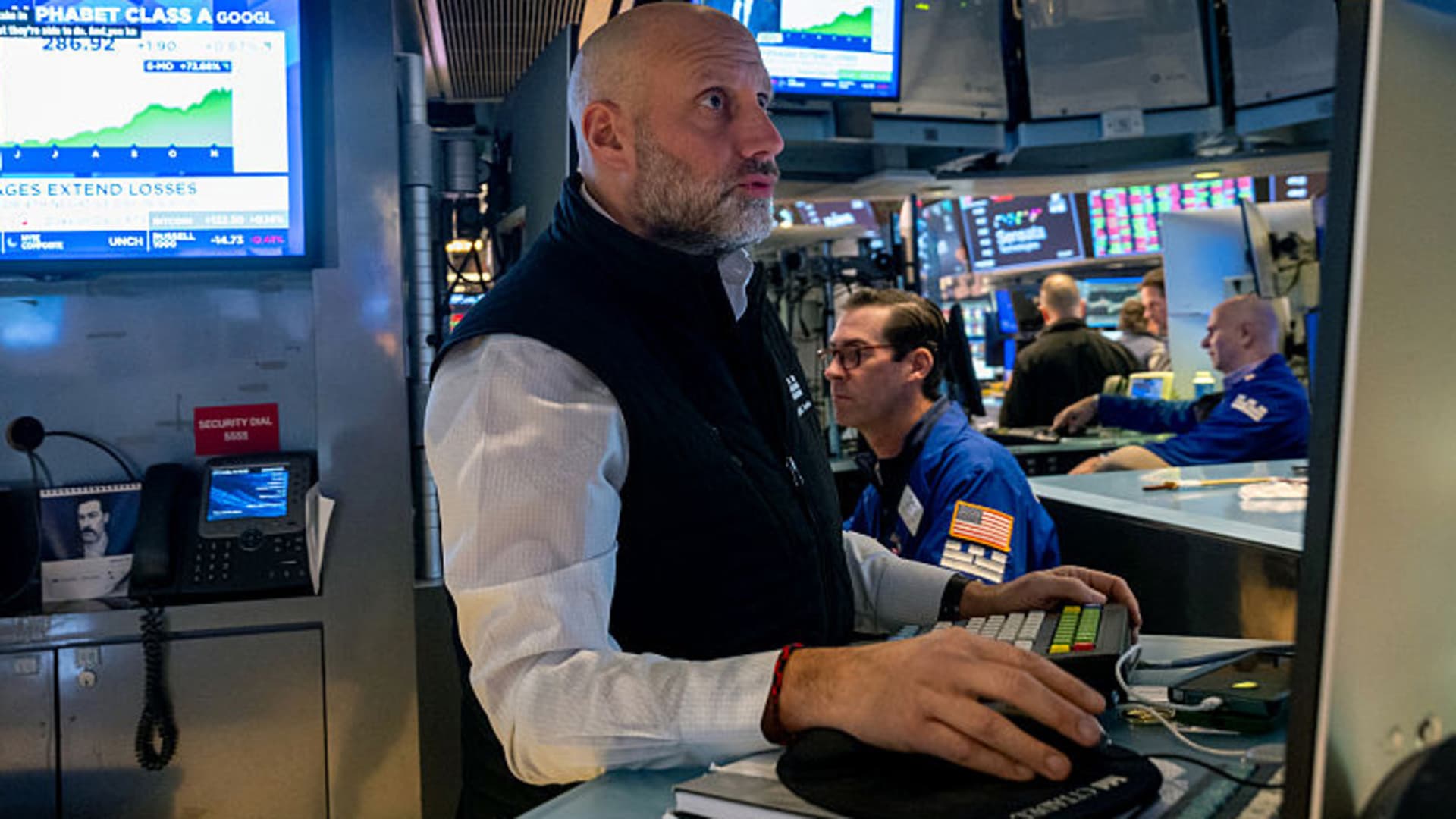
Group 1 - The S&P 500 and Dow Jones indices turned negative, while the Nasdaq maintained a gain of over 0.1% [1] - The biotechnology index declined by 0.1%, and the semiconductor index's gain narrowed to less than 3.5% [1] - Within the Dow Jones components, Salesforce dropped over 4.1%, and Travelers Companies Inc. and Disney fell by more than 1.7% [1] Group 2 - Microsoft, Amazon, Nike, Visa, IBM, and McDonald's each experienced declines of up to 1.6% [1]
NKE Jumps 4.1% on Dec. 31 After CEO's $1 Million Insider Buy
ZACKS· 2026-01-02 13:05
Core Insights - Nike's CEO Elliott Hill purchased approximately $1 million worth of company shares, leading to a 4.1% increase in stock price on the last working day of 2025, which helped the company outperform parts of the consumer discretionary sector [1][7] - Insider purchases by executives are often seen as a sign of confidence in the company's long-term prospects, especially during challenging times, which in Nike's case reassured investors amid shifting consumer demand and competitive pressures [2] Company Performance - In 2025, Nike's stock experienced volatility due to slower growth in key markets, inventory normalization, and changing consumer spending patterns, resulting in a 13.5% decline in stock price, currently around $64 [3][5] - Despite the decline, Nike benefited from easing supply chain pressures and a renewed focus on cost discipline, which helped stabilize investor sentiment [4][7] Strategic Initiatives - The company is working on rebalancing its product portfolio, refining its direct-to-consumer approach, and enhancing innovation in footwear and apparel while facing competition from established and newer brands [3] - Management's efforts to streamline operations and improve brand storytelling contributed to a gradual improvement in investor confidence throughout the year [4] Market Context - Nike's stock performance was relatively better compared to peers like Adidas AG and Birkenstock Holding plc, which saw declines of 18.4% and 28.6% respectively, while the overall industry declined by 15.2% [5]
Factors Behind SGA U.S. Large Cap Growth Strategy’s New Addition: Nike (NKE)
Yahoo Finance· 2026-01-02 12:24
Core Insights - SGA's U.S. Large Cap Growth Strategy reported a portfolio return of -1.3% (Gross) and -1.4% (Net) in Q3, underperforming the Russell 1000 Growth Index which returned 10.5% and the S&P 500 Index which returned 8.1% [1] - The investment strategy focuses on high-quality growth businesses expected to achieve consistent mid-teens earnings growth, but faced challenges as lower-quality stocks and cyclical industries outperformed in the market [1] Company Analysis: NIKE, Inc. (NYSE:NKE) - NIKE, Inc. is recognized as an iconic sportswear brand that promotes a healthier lifestyle through its innovative products, which include athletic and casual footwear, apparel, and accessories [3] - The stock of NIKE, Inc. experienced a one-month return of -3.01% and a 52-week decline of 13.52%, closing at $63.71 per share with a market capitalization of $94.176 billion on December 31, 2025 [2] - NIKE's pricing power is supported by its strong brand and technology, with a robust supply chain that gives it an advantage over competitors, who have lower margins and would be more adversely affected by price wars [3] - The company benefits from repeatable revenues, with 65% of sales coming from shoes, a category known for customer loyalty, and is experiencing mid-single-digit revenue growth in developed markets, while growth in emerging markets is even faster due to increased sports participation and e-commerce sales [3]
Jim Cramer Points To Bob Swan Bet On Nike Amid Elliott Hill, Tim Cook's Purchases: Set To 'Win Now' - Nike (NYSE:NKE)
Benzinga· 2026-01-02 07:14
Core Insights - CNBC's Jim Cramer highlights a significant insider purchase at Nike Inc. by former Intel CEO Bob Swan, suggesting it as a bullish signal for investors [1][2] - Cramer emphasizes the importance of insider buying, noting that the convergence of purchases from Swan, Apple CEO Tim Cook, and Nike CEO Elliott Hill indicates a strong outlook for the company [3] Insider Activity - Bob Swan acquired approximately 8,700 shares of Nike at an average price of $57.54, which Cramer interprets as a calculated vote of confidence in the company [2][3] - Tim Cook made a notable purchase of 50,000 shares, marking his first open-market transaction in two decades on the board [3] Company Performance and Strategy - Nike is currently navigating a challenging period, with its stock down 13.52% in 2025 due to tariff concerns and slowing momentum [4] - CEO Elliott Hill stated that the company is in the "middle innings" of its turnaround, suggesting optimism for future performance [5] - The stock closed at $63.71, reflecting a 4.12% increase on the last trading day of 2025, although it has seen a decline of 16.60% over the past six months [5]
The FIFA World Cup is Nike’s to lose versus Adidas
The Economic Times· 2026-01-02 06:11
Core Insights - The upcoming FIFA World Cup presents a significant opportunity for Nike and Adidas to compete for market share and brand visibility, particularly in North America where Nike has a strong presence [1][16] - Nike's CEO Elliott Hill aims to leverage new product launches and a robust marketing strategy to capitalize on this opportunity, while Adidas, led by Bjoern Gulden, seeks to maintain its heritage in football and expand its brand appeal [1][7][10] Company Strategies - Nike plans to introduce new products, including the Aero-Fit cooling fabric and the latest Tiempo football boots, to enhance athlete performance and comfort during the World Cup [5][7] - The company is also focusing on off-pitch football gear, exemplified by the Hollywood Keepers streetwear collection, to attract a broader audience [6][8] - Adidas is expanding its Originals line into performance wear and aims to make sports apparel more stylish, appealing to both fans and athletes [10][11] Market Dynamics - Nike sponsors more teams in the FIFA Top 10 than Adidas, which positions it favorably in terms of brand visibility during the tournament [2][16] - Retailers are reportedly committing to 40% more football products for the World Cup compared to the previous tournament, indicating strong market demand [7] - Analysts estimate that the World Cup could generate $1.3 billion in additional revenue for Nike, while Adidas anticipates €1 billion ($1.2 billion) in sales from the event [7][12] Competitive Landscape - Adidas has a strong heritage in football and is providing the official ball for the tournament, which could enhance its brand recognition [9][16] - Other brands like Puma, Skechers, New Balance, and Reebok are also entering the football market, increasing competition for both Nike and Adidas [13][17] - The "Kardashianization" of sports, where individual athlete endorsements can significantly impact brand perception, poses both opportunities and risks for these companies [2][15]

Down 57%, Is Nike Stock a Buy in 2026?
The Motley Fool· 2026-01-02 06:00
Core Viewpoint - Nike has experienced a significant decline in its market position and brand value, raising questions about its future growth potential and investment attractiveness [1][2]. Company Performance - Nike's market capitalization stands at $94 billion, with a current stock price of $63.75, reflecting a 4.18% increase recently [3]. - The company's gross margin is reported at 40.72%, and it offers a dividend yield of 2.53% [3]. Strategic Missteps - The company's direct-to-customer (DTC) strategy, aimed at improving margins by cutting out middlemen, has led to a loss of shelf space to competitors and a decline in customer loyalty [4][5]. - Post-COVID-19, Nike overinvested in DTC channels while neglecting its brick-and-mortar presence, which has contributed to its current challenges [3][4]. Market Challenges - Nike's footwear sales in North America have shown some recovery, increasing by approximately 9% year-over-year to $3.54 billion in the fiscal second quarter [5]. - However, the company faces severe challenges in China, where footwear sales have plummeted by 20% in the fiscal second quarter, marking six consecutive quarters of decline [12]. Brand Erosion - Nike's reliance on China for manufacturing has led to brand erosion and increased competition from local brands, particularly among younger consumers who prefer domestic products [7][11]. - The trend of "guochao," or patriotism, among Chinese Gen Z consumers is shifting their preferences towards local brands like Anta and Li-Ning, further impacting Nike's market share [11]. Valuation Concerns - Despite a declining stock price over the past four years, Nike's forward price-to-earnings (P/E) ratio is 38, significantly higher than the S&P 500 average of 22, indicating that the stock may be overvalued given its current challenges [13]. - Analysts suggest that a turnaround for Nike appears unlikely, making the stock less attractive for potential investors [13].

Bullish flow in Nike with shares up 4.34%
Yahoo Finance· 2026-01-01 19:20
Core Viewpoint - Nike (NKE) shares experienced a bullish trend, increasing by $2.65, or 4.34%, reaching approximately $63.84 [1] Options Activity - Options volume for Nike surpassed the daily average, with 272,000 contracts traded, indicating strong market interest [1] - Calls outnumbered puts, resulting in a put/call ratio of 0.51, significantly lower than the typical level of around 0.8, suggesting bullish sentiment [1] Implied Volatility - The implied volatility (IV30) rose by 2.4 points to approximately 29.5, which is below the 52-week median, indicating a potential daily price movement of $1.19 [1] Market Sentiment - The put-call skew has flattened, reflecting a modestly bullish tone in the market for Nike [1]
U.S. Markets Pause for New Year’s Day, Eyeing 2026 Kickoff After Strong 2025 Gains
Stock Market News· 2026-01-01 19:07
Core Viewpoint - U.S. financial markets are experiencing a pause for the New Year's Day holiday, with trading set to resume on January 2nd, 2026. Despite a recent pullback, 2025 was a strong year for major stock indexes, which posted significant gains. Market Performance - On December 31st, 2025, major U.S. stock indexes closed lower, continuing a four-session losing streak. The Dow Jones Industrial Average fell 0.6% to 48,063.29, the S&P 500 declined 0.7% to 6,845.50, and the Nasdaq Composite dropped 0.8% to 23,241.99. Trading volume was light as many institutional investors had closed their books for the year [2][3]. - Sector performance was predominantly negative, with technology stocks being a major drag. The Energy Select Sector SPDR rose 0.8%, while the Information Technology Select Sector SPDR, Financials Select Sector SPDR, and Industrials Select Sector SPDR all declined by 0.3% [4]. Notable Stock Movements - Ares Management Corporation saw a share decline of 3.4%. Micron Technology and Western Digital experienced drops of 2.5% and 2.2%, respectively. Corcept Therapeutics shares plunged significantly after the FDA did not approve its treatment. Conversely, Nike shares rose 4.1% following the CEO's purchase of approximately $1 million in company stock [5]. Year-End Market Drivers - The strong performance in 2025 was largely driven by optimism surrounding artificial intelligence, with companies like Micron Technology, Palantir, Advanced Micro Devices, Alphabet, and Nvidia being significant contributors. The S&P 500 finished 2025 up approximately 16.4%, the Nasdaq Composite surged around 20.4%, and the Dow Jones Industrial Average added roughly 13% [6]. Upcoming Economic Data - Key economic data releases are scheduled for early January, including Initial Claims data and Construction PDF on January 2nd, ISM Manufacturing index on January 5th, and various employment reports on January 7th. Important inflation indicators like the Consumer Price Index and Producer Price Index will be released on January 13th and 14th, respectively [8]. Federal Reserve Meeting - The U.S. Federal Reserve's Federal Open Market Committee meeting is set for January 28th, where market participants will seek guidance on monetary policy for 2026, particularly regarding inflation and potential interest rate adjustments [9]. Upcoming Earnings Releases - The earnings season for Q4 2025 will begin to gain momentum later in January, with notable companies like BHP Group, JPMorgan Chase, and Bank of America expected to report. These earnings will provide critical insights into corporate performance and outlooks for the new year [10].