
Novo Nordisk(NVO)

Search documents
New Targets at the Wyloo Gold – Silver – Antimony Project for Maiden Drill Program
Globenewswire· 2026-02-09 22:28
Core Insights - Novo Resources Corp. has provided an update on the Wyloo Project, highlighting recent exploration results and a forward work program, including a maiden RC drilling program planned for Q2 2026 to test the Wyloo SE polymetallic vein system [2][3][19]. Exploration Results - Recent soil sampling at Wyloo SE has defined a strong, open-ended multielement anomaly over a known polymetallic vein system, with peak soil values of 57.2 ppm Ag, 142 ppm Sb, 1,440 ppm As, 2,180 ppm Zn, and 1,530 ppm Pb [5][11]. - Follow-up stream sediment sampling at Wyloo SW has expanded the original anomaly, defining a target area of 2.5 km x 800 m with peak stream sediment results of 19.9 ppm Sb and a multielement association of Sb-As-Cu-Pb-Zn [4][15]. Geological Context - The Wyloo project area is located in the southern Pilbara, with the Wyloo SE and SW prospects situated within the core of the Wyloo anticline, forming a basement high within the Ashburton Basin [6][28]. - The geological setting includes a dynamic tectonic environment with the Nanjilgardy Fault located just 5 km south of the prospect [6]. Planned Activities - A heritage survey is scheduled for March 2026 to facilitate access for the planned RC drilling at Wyloo SE [5][19]. - The maiden drilling program will target the ENE trending vein array, the Tasha Fault Zone, and soil anomalies parallel to stratigraphy, aiming to assess the vertical metal zonation and potential plunge of the target [19][20]. Historical Context - Significant antimony anomalies were identified in 2023 during routine stream sediment sampling, leading to further exploration that revealed a zone of quartz-sulphide veining with anomalous antimony, silver, gold, and base metals at Wyloo SE [7][9]. - Previous rock chip sampling yielded peak assay results of 387 g/t Ag, 0.38% Sb, 5.0% Pb, 1.6% Zn, 2.4% Cu, and 0.52 g/t Au, enhancing the target's potential [7].


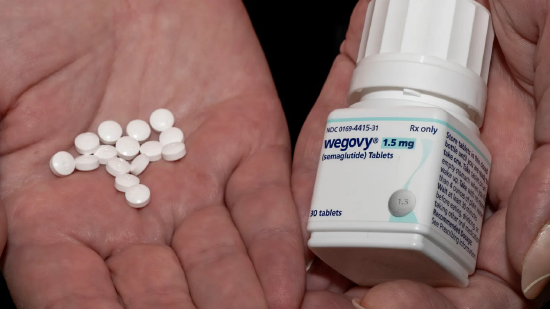
FDA:诺和诺德减肥药Wegovy电视广告存在“虚假或误导性”宣传
Xin Lang Cai Jing· 2026-02-09 21:06
Core Viewpoint - The FDA has accused Novo Nordisk of making "false or misleading" claims in television advertisements for its weight loss drug Wegovy, requiring immediate corrective action [2][7]. Group 1: FDA's Concerns - The FDA's letter dated February 5 highlighted that the advertisement misrepresented the oral drug, violating federal law, and demanded the cessation of all misleading advertisements [2][7]. - The FDA pointed out that the advertisement misleadingly suggested that Wegovy's effects were superior to other approved GLP-1 weight loss drugs, using phrases like "live lighter" and "a new way out" without supporting evidence [8]. - The FDA criticized the advertisement for implying that the drug could provide benefits beyond weight loss, such as emotional relief and life direction, which were not substantiated [8]. Group 2: Novo Nordisk's Response and Market Context - Novo Nordisk confirmed receipt of the FDA's letter and stated that the advertisement had been airing since the launch of the tablet, clarifying it was not part of their Super Bowl ad campaign [2][7]. - The company is actively trying to regain market share in the competitive GLP-1 market, facing challenges from major competitors and cheaper generic alternatives [3]. - Wegovy, the company's core product, became the first approved oral GLP-1 weight loss drug globally in January, with over 170,000 patients in the U.S. currently using it [3][7]. Group 3: Legal Actions - On the same day, Novo Nordisk filed a lawsuit against telehealth company Hims & Hers, seeking to prohibit the large-scale sale of a compounded version of Wegovy tablets and injections [4][8].
Novo Nordisk, Hims & Hers Health Shares React to Lawsuit
Schaeffers Investment Research· 2026-02-09 20:44
Pharmaceutical giant Novo Nordisk A/S (NYSE:NVO) revealed today it is pursuing legal action against Hims & Hers Health Inc (NYSE:HIMS) for alleged patent infringement, after the telehealth giant introduced a weight-loss pill with the same active ingredient as its Wegovy drug -- priced at $149 -- at a much lower starting price of $49. Hims & Hers Health stopped offering the medication on Saturday, following threats of legal action from the U.S. Food and Drug Administration (FDA) and Novo Nordisk. The FDA als ...


Novo Nordisk's latest salvo against Hims & Hers—a patent-infringement lawsuit—shows the fierce maneuvering over the booming obesity-drug market
WSJ· 2026-02-09 19:19
The Danish drugmaker's patent lawsuit is the company's latest effort to shore up its place in the booming weight-loss drug market. ...

Hims & Hers Stock Plunges While Novo Nordisk Gains as Weight-Loss Drug Wars Take New Turn
Investopedia· 2026-02-09 17:21
Core Insights - Hims & Hers Health's stock dropped 25% after the company announced it would cease selling its compounded semaglutide weight-loss pill, just days after its launch, due to legal action from Novo Nordisk [1][1][1] - Novo Nordisk has filed a lawsuit against Hims & Hers, seeking to permanently ban the sale of unapproved compounded drugs that infringe on its patents and is pursuing damages [1][1][1] - Hims & Hers has faced significant stock depreciation, losing over 60% of its value in the past 12 months, while Novo Nordisk's shares have decreased by approximately 40% during the same period [1][1][1] Company Developments - Hims & Hers announced the discontinuation of its compounded weight-loss pill, which was marketed as having the same active ingredient as Novo Nordisk's Wegovy, following legal threats from Novo Nordisk [1][1][1] - The lawsuit from Novo Nordisk is described by Hims & Hers as a "blatant attack" on Americans who rely on compounded medications, indicating the company's intent to continue advocating for access to these treatments [1][1][1] Industry Context - The FDA has indicated plans to restrict the use of GLP-1 active ingredients in compounded weight-loss medications, specifically mentioning Hims & Hers in its statement [1][1][1] - Eli Lilly is anticipated to receive FDA approval for its own weight-loss pill later this year, which could further impact competition in the weight-loss drug market [1][1][1]

FDA says Novo Nordisk's TV ad for obesity pill includes 'false or misleading' claims
CNBC· 2026-02-09 17:04
Core Viewpoint - The FDA has identified misleading claims in Novo Nordisk's advertisement for its Wegovy obesity pill, which could lead to regulatory actions against the company [2][5][6]. Group 1: FDA's Concerns - The FDA's letter dated February 5 indicates that the advertisement misbrands the Wegovy pill, violating federal law [2]. - The advertisement suggests that Wegovy offers superior benefits compared to other GLP-1 weight loss drugs, which the FDA claims is unsupported by evidence [5]. - The FDA criticized the ad for implying benefits beyond weight loss, such as emotional relief and hope, which are not demonstrated [6]. Group 2: Company Response and Market Context - Novo Nordisk acknowledged receipt of the FDA's letter and is working to address the concerns raised regarding the advertisement [3]. - The Wegovy pill is crucial for Novo Nordisk as it aims to regain market share from competitors like Eli Lilly and cheaper alternatives in the growing GLP-1 market [3][4]. - As of now, over 170,000 American patients are using the Wegovy pill since its launch in January [4]. Group 3: Legal Actions - In addition to addressing the FDA's concerns, Novo Nordisk has initiated legal action against Hims & Hers to prevent the marketing of compounded versions of Wegovy [7].

Why Hims & Hers Stock Just Got Destroyed
Yahoo Finance· 2026-02-09 17:02
Core Insights - Hims & Hers Health's stock plummeted 25% following the announcement of its plan to sell a compounded version of Wegovy for $49 per month, significantly undercutting Novo Nordisk's pricing [1][4] - Novo Nordisk responded with a lawsuit against Hims & Hers, seeking a permanent ban on the sale of its Ozempic lookalike pill and any compounded versions of its drugs [5][6] - The FDA indicated it would take action against Hims & Hers, potentially restricting access to necessary ingredients for manufacturing similar products [2][4] Company Actions - Hims & Hers initially planned to sell a pill version of Ozempic but reversed its decision by Saturday, indicating a retreat in the face of legal and regulatory pressure [3][4] - The company gambled on the FDA's leniency regarding the copying of Novo Nordisk's GLP-1 weight loss drug but ultimately faced significant legal challenges [4][5] Legal Implications - Novo's lawsuit targets Hims & Hers' ability to compound GLP-1 weight loss drugs using semaglutide, which could result in the loss of Hims & Hers' GLP-1 business if Novo wins [6] - The lawsuit emphasizes Novo's enforcement of its patent rights, which could have broader implications for the telehealth company's product offerings [6]
Hims & Hers is scrapping its plan for a knockoff Wegovy weight-loss pill. Here's why
Fastcompany· 2026-02-09 17:01
Core Viewpoint - Hims & Hers has abandoned its plan to offer a compounded version of the weight-loss drug Wegovy, following threats from the FDA and legal action from Novo Nordisk, the original manufacturer of Wegovy [1][1][1] Company Actions - Hims & Hers announced the decision to drop the compounded semaglutide pill just two days after its introduction, citing constructive conversations with industry stakeholders [1][1] - The company had initially planned to sell its version of Wegovy at a significantly lower price of $49 for the first month and $99 thereafter, compared to Novo's price of $149 per month [1][1][1] Regulatory Environment - The FDA indicated plans to restrict access to the active ingredients necessary for compounding popular GLP-1 drugs, which include Wegovy, Ozempic, and Zepbound [1][1] - The FDA has stated that GLP-1 drugs are no longer in shortage as of 2024, which is expected to end the practice of compounding these medications [1][1] Market Context - Hims & Hers, along with other companies, entered the multibillion-dollar market for obesity medications, driven by the high demand for GLP-1 drugs [1][1] - The compounded version of the semaglutide pill that Hims planned to sell was not FDA-approved and had not undergone trials to prove its effectiveness [1][1]

Hims & Hers Stock Plunges 24%. Its Weight-Loss Drug Strategy Backfired.
Barrons· 2026-02-09 16:25
Core Viewpoint - Hims & Hers Health's stock dropped 24% following a lawsuit from Novo Nordisk aimed at banning the company from selling knockoff versions of its weight-loss drugs Ozempic and Wegovy [1]. Company Summary - Hims & Hers Health's stock experienced a significant decline due to legal challenges regarding its weight-loss drug offerings [1]. - The company launched a product that was perceived as a knockoff of Novo Nordisk's established weight-loss medications, which has led to increased scrutiny and legal action [1]. Industry Summary - The weight-loss drug market is facing heightened competition and regulatory scrutiny, particularly for companies attempting to introduce generic or knockoff versions of established products [1]. - Novo Nordisk's legal actions indicate a protective stance over its intellectual property and market share in the weight-loss drug sector [1].