NXP(NXPI)

Search documents
恩智浦“退场”,射频PA市场格局重构
3 6 Ke· 2026-01-12 05:48
Core Insights - NXP's decision to exit the RF power amplifier (PA) business marks a significant shift in the market landscape and global supply chain, creating historic opportunities for domestic manufacturers with technical capabilities [1][5][21] Industry Dynamics - The RF PA industry has been a focal point of competition during the transition from 3G to 5G, with NXP's strategic moves reflecting the challenges posed by rapid technological advancements and market demands [2][3] - The shift from LDMOS to GaN-on-SiC technology has become essential for meeting the higher performance requirements of 5G applications [2][3] NXP's Strategic Shift - NXP's acquisition of Freescale in 2015 laid the foundation for its dominance in the 4G market, but the company struggled to adapt to the rapid changes in the 5G landscape, leading to its decision to close the ECHO GaN wafer fab by Q1 2027 [2][4][3] - The company faced declining revenues in its RF business due to mismatches between product offerings and market demands, compounded by internal resource allocation pressures from its automotive and industrial segments [4][5] Market Impact - NXP's exit is expected to create a market space of approximately $150-300 million annually, benefiting competitors like Sumitomo Electric and opening opportunities for domestic firms such as Huatai Electronics [5][7][19] - The withdrawal of NXP has triggered supply chain concerns among dependent manufacturers, leading to increased costs and potential supply interruptions [5][7] Domestic Opportunities - Huatai Electronics is positioned to capitalize on the market gap left by NXP, having developed a comprehensive range of alternative products that meet the needs of key applications in base stations and ISM devices [9][14] - The company emphasizes its vertical integration strategy, which enhances supply chain security and allows for rapid response to market demands [13][19] Future Outlook - The RF PA market is expected to stabilize as new growth drivers emerge, including the commercialization of new frequency bands and advancements in 5G-A technology [17][20] - Huatai Electronics aims to capture market share from NXP's exit while competing with leading global PA manufacturers, focusing on high-value, high-reliability products [20][21]


恩智浦“退场”,射频PA市场格局重构
半导体行业观察· 2026-01-12 01:31
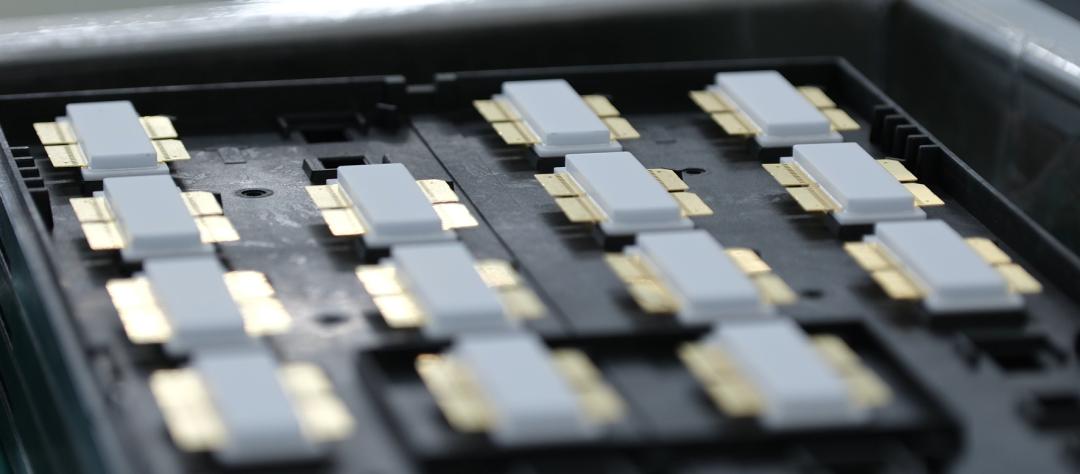
Core Viewpoint - The exit of NXP from the RF power amplifier (PA) business marks a significant shift in the market landscape, providing a historic opportunity for domestic manufacturers with technological capabilities [1][5][21]. Group 1: NXP's Strategic Shift - NXP's decision to close its ECHO GaN wafer fab and exit the 5G RF PA business reflects a broader restructuring of the global supply chain and market dynamics [1][5]. - The company initially gained a strong position in the PA market by acquiring Freescale in 2015, capitalizing on the 4G boom with LDMOS technology [3][4]. - However, the transition to 5G brought challenges, including a significant drop in expected market demand and a lag in technological response, leading to a decline in NXP's RF business revenue [4][5]. Group 2: Market Impact and Supply Chain Reactions - NXP's exit is expected to create a market gap of approximately $150-300 million annually, benefiting competitors like Sumitomo Electric and opening opportunities for domestic firms [10][21]. - The "last time buy" mechanism initiated by NXP has led to increased costs and supply chain pressures for dependent manufacturers, particularly affecting smaller clients [7][9]. - The exit has prompted immediate evaluations for alternative suppliers among manufacturers using NXP chips, with a focus on finding reliable replacements [9][10]. Group 3: Opportunities for Domestic Manufacturers - Domestic firms, particularly Huatai Electronics, are positioned to capitalize on the market vacuum left by NXP, having established themselves as key players in the RF PA supply chain [10][12]. - Huatai Electronics has developed a comprehensive range of replacement products for critical models previously supplied by NXP, ensuring minimal disruption for clients [12][15]. - The company emphasizes vertical integration in its supply chain, enhancing its ability to respond to market fluctuations and ensuring supply chain security [15][16]. Group 4: Future Market Dynamics - The exit of NXP signals a new competitive landscape in the global RF PA market, with a focus on high integration, reliability, and value-added products [21][24]. - Huatai Electronics aims to capture market share from NXP's exit while competing with leading global PA manufacturers, targeting high-frequency and high-power applications [24][23]. - The ongoing technological advancements and emerging applications in 5G and beyond present new growth opportunities for the RF PA market, despite the current slowdown in market growth [21][24].
XR硬件拆解及BOM成本报告:META DISPLAY AR眼镜
维深信息· 2026-01-11 05:49
Investment Rating - The report does not explicitly provide an investment rating for the industry or the specific product analyzed. Core Insights - The Meta Display AR glasses represent a significant advancement in the AI+AR eyewear market, featuring a dual-chip architecture with Qualcomm AR1 Gen1 and NXP RT700 series MCU, and a monocular display solution. This product serves as a benchmark for the consumer market and offers practical and forward-looking solutions for the evolving AI+AR eyewear industry [5][6]. Summary by Sections 1. Product Configuration - The Meta Display AR glasses are equipped with Qualcomm AR1 Gen1 SOC, 2+32 GB storage, WiFi 6, Bluetooth 5.3, and various sensors including a six-axis IMU and capacitive proximity sensor. The optical components include a 2D expansion array waveguide and photochromic lenses, supporting custom prescription lenses [12][13]. 2. Hardware Analysis - The report provides a detailed disassembly of the core components, including the mainboard, sensors, optical modules, and power systems. It highlights the technical characteristics and assembly logic of each part, emphasizing the innovative design choices made in the hardware architecture [5][6]. 3. Supply Chain Overview - The report outlines the key suppliers for the Meta Display AR glasses, including Schott, Lumus, Goer, OmniVision, Qualcomm, and NXP. It analyzes the global collaboration and domestic supplier penetration within the AI eyewear industry ecosystem [6]. 4. Cost Structure - The Bill of Materials (BOM) cost for the Meta Display AR glasses is approximately $553.79, with a comprehensive hardware cost of $480.79. After accounting for the exchange rate of 7.1 and a VAT of 13%, the after-tax cost is approximately 4443.06 CNY, excluding additional costs such as MR1 fees and mold fees [6]. 5. Testing and Performance Data - The report includes extensive testing data on the optical performance of the waveguide lenses, including stress tests and reflectivity tests, providing insights into the optical quality and durability of the components used in the Meta Display AR glasses [6][8]. 6. Membership and Access - The complete report consists of 91 pages and is available for purchase or through membership, providing in-depth analysis and data for industry professionals and enthusiasts [6][8].


NXP Semiconductors N.V. (NXPI) Presents at CES 2026 Prepared Remarks Transcript
Seeking Alpha· 2026-01-10 03:24
Group 1 - The Verge motorcycle features a complete in-wheel motor, eliminating the need for a traditional powertrain, and is powered by a solid-state battery and NXP-enabled electronics [1] - The motorcycle boasts a performance of 0 to 60 miles per hour in just 2.5 seconds, highlighting its high-speed capabilities [1] - NXP Electronics is enhancing the motorcycle experience with smart technology, including an i.MX RT-enabled helmet that features automated safety features [2] Group 2 - The helmet includes an automated brake light that activates during deceleration, providing additional safety for riders [2] - In the event of an accident, the helmet can automatically call for emergency assistance, ensuring rider safety even if they are incapacitated [2] - The solid-state battery allows for a quick recharge time of approximately 10 minutes, providing a driving range of around 600 kilometers [2]

汽车芯片巨头,全力反击
3 6 Ke· 2026-01-09 03:48
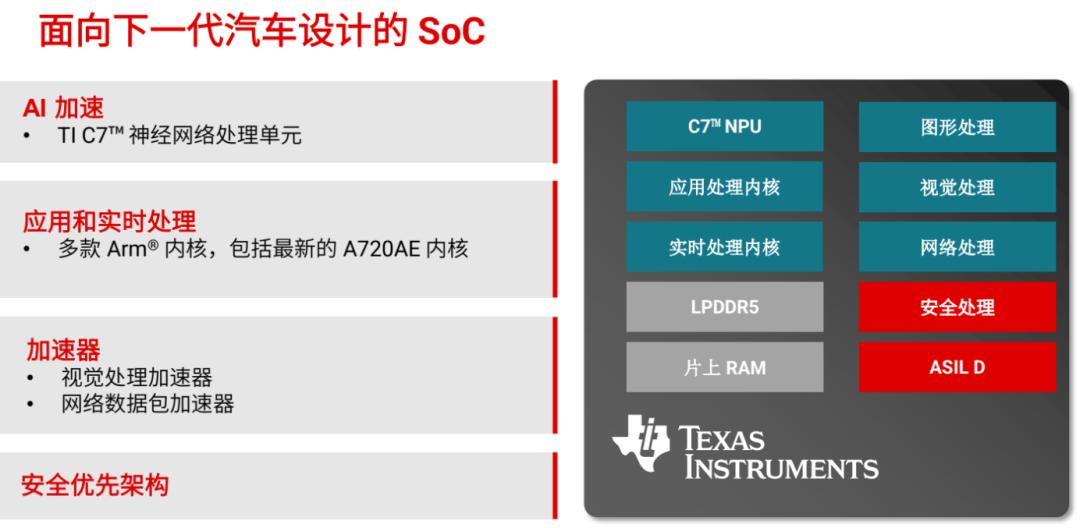
Core Insights - The automotive chip discussion is shifting towards centralized and domain-controlled architectures as software-defined vehicles (SDVs) enter the engineering phase [1] - Traditional MCU manufacturers are adapting by introducing advanced processes and higher system integration to compete in the core architecture of software-defined vehicles [1][7] - The competition is intensifying as established chipmakers like NXP, Renesas, and TI aim to reclaim control over vehicle core functions against high-performance computing firms like Qualcomm and NVIDIA [8][19] Industry Transition - The traditional automotive electronic architecture was highly distributed, with vehicles using numerous ECUs for specific functions, which worked well in a mechanical-dominated industry [2] - The automotive MCU market was valued at $6 billion in 2020, accounting for 40% of the global MCU market, dominated by traditional automotive electronics manufacturers [3] - The rise of intelligent vehicles has disrupted this balance, with companies like Qualcomm and NVIDIA entering the market with superior computing power and software ecosystems [3][4] Competitive Landscape - Qualcomm has established a stronghold in the cockpit chip market, with a 67% share in the Chinese passenger vehicle cockpit chip market as of 2024 [4] - NVIDIA has dominated the autonomous driving sector, with its Orin chip achieving 254 TOPS of computing power and the upcoming Thor chip expected to reach 2000 TFLOPS [5] - Traditional MCU manufacturers face challenges as they adapt to the new architecture, with their products still important but no longer sufficient [6] Strategic Responses - As SDVs become the industry consensus, traditional MCU giants are launching new products to regain control over vehicle core functions [7][19] - NXP's S32N7 processor focuses on vehicle core functions, while Renesas' R-Car Gen 5 X5H is the first multi-domain automotive SoC built on a 3nm process [9][13] - TI's TDA5 series emphasizes energy efficiency with a maximum of 1200 TOPS computing power while maintaining a competitive power consumption ratio [16][18] Future Outlook - The collective efforts of MCU giants signify a redefinition of the automotive value chain, transitioning from background roles to central players in vehicle core functions [19] - The competition will evolve to encompass full-stack capabilities, from cloud to edge, and from perception to execution, with MCU manufacturers leveraging their expertise in real-time performance and reliability [21]


汽车芯片巨头,全力反击!
半导体行业观察· 2026-01-09 01:53
Core Viewpoint - The automotive chip discussion is shifting towards software-defined vehicles (SDV), with a focus on centralized and domain-controlled architectures, leading traditional chip manufacturers to adapt their strategies and technologies to remain competitive in the evolving market [1][9]. Group 1: Traditional Automotive Electronics - The traditional automotive electronic architecture is highly distributed, with high-end models using dozens to hundreds of ECUs, each serving specific functions like engine control and safety systems [3][4]. - Major players like TI, NXP, and Infineon have dominated the MCU market, which reached $6 billion in 2020, accounting for 40% of the global MCU market share [4][3]. - The rise of intelligent vehicles has disrupted this balance, as companies like Qualcomm and NVIDIA have entered the market with high-performance computing solutions, challenging traditional chip manufacturers [4][5]. Group 2: Emergence of High-Performance Computing - Qualcomm has established a strong presence in the cockpit chip market, with a 67% share in the Chinese passenger vehicle cockpit chip market as of 2024, driven by its advanced Snapdragon series [5][6]. - NVIDIA has dominated the autonomous driving sector, with its Orin chip achieving 508 TOPS of computing power, and its latest Thor chip reaching 2000 TFLOPS [6][7]. - The complexity of software and the need for high computing power in both cockpit and autonomous driving systems have made traditional MCUs less competitive [6][7]. Group 3: Strategic Response from Traditional MCU Manufacturers - Traditional MCU manufacturers are launching new products to regain control in the SDV landscape, focusing on high integration, advanced processes, and software architecture [9][10]. - NXP's S32N7 processor, based on 5nm technology, aims to be a system-level coordinator for core vehicle functions, emphasizing hardware isolation and software-defined partitioning [12][11]. - Renesas introduced the R-Car Gen 5 X5H, the first multi-domain automotive SoC built on 3nm technology, supporting ADAS and infotainment systems [15][16]. Group 4: Competitive Landscape and Value Reassessment - The shift from distributed to centralized architectures is redefining the roles of MCU manufacturers, transforming them from background players to key players in vehicle core functions [21][20]. - The strategic significance of this transition includes differentiated competition focusing on real-time reliability and safety, leveraging decades of experience and established relationships in the automotive industry [21][22]. - Cost control through high integration and efficiency is a common goal among MCU giants, with estimates suggesting potential cost reductions of up to 20% for NXP's S32N7 [22][21].

What Makes NXP Semiconductors NV (NXPI) an Attractive Investment?
Yahoo Finance· 2026-01-08 14:36
Group 1: Parnassus Investments Overview - Parnassus Investments released the third-quarter 2025 investor letter for the Parnassus Mid Cap Fund, which reported a return of 5.49% (net of fees) for the quarter, outperforming the Russell Midcap Index's return of 5.33% [1] - The Russell Mid Cap Index continued to rise following a strong second quarter, indicating a positive market trend [1] Group 2: NXP Semiconductors N.V. Performance - NXP Semiconductors N.V. (NASDAQ:NXPI) stock closed at $239.34 per share on January 7, 2026, with a one-month return of 3.24% and a 52-week gain of 14.12% [2] - The company reported revenue of $3.17 billion in Q3 2025, reflecting a 2% year-over-year decline but an 8% sequential increase [4] Group 3: Investment Thesis on NXP Semiconductors N.V. - Parnassus Core Equity Fund added NXP Semiconductors N.V. to its portfolio, citing its leadership in analog and embedded semiconductors, with over half of its revenue linked to the automotive sector [3] - The company is positioned to benefit from increasing semiconductor content in vehicles and the growth of industrial automation, supported by a strong design pipeline and customer relationships [3] - NXP's competitive advantage is bolstered by high switching costs due to long design cycles and deep customer integration, along with a high level of customization that has allowed margin expansion [3]
云汉芯城:存储芯片业务需求活跃度和客户数量有所增加,成为恩智浦大中华区独家线上授权代理商
Jin Rong Jie· 2026-01-08 08:52
Core Viewpoint - The company has experienced an increase in demand and customer numbers in the storage chip business due to cyclical changes in the market, and it aims to enhance its market position by becoming the exclusive online authorized distributor for NXP in Greater China in the second half of 2024 [1]. Group 1 - The company reported an increase in demand and customer numbers in the storage chip sector amid cyclical market changes [1]. - The company's performance growth is not reliant on a single product category, as it offers a comprehensive range of services across various chip categories [1]. - The company will continue to expand partnerships with suppliers to enhance its supply chain capabilities and improve industry efficiency [1].
NXP Semiconductors (NXPI) Recently Broke Out Above the 20-Day Moving Average
ZACKS· 2026-01-07 15:56
Core Viewpoint - NXP Semiconductors (NXPI) has reached a significant support level and shows potential for investors from a technical perspective, indicating a short-term bullish trend after breaking through the 20-day moving average [1]. Technical Analysis - NXPI has moved 7.9% higher over the last four weeks, suggesting it could be on the verge of another rally [2]. - The 20-day simple moving average indicates a positive trend when the stock price is above it, while a drop below signals a downward trend [2]. Earnings Estimates - NXPI has experienced two positive earnings estimate revisions for the current fiscal year, with no downward revisions, leading to an upward movement in the consensus estimate [3]. - The combination of positive earnings revisions and hitting a key technical level strengthens the bullish case for NXPI, making it a stock to watch for potential gains [3].
今年CES,芯片厂商又开始“神仙打架”
3 6 Ke· 2026-01-07 00:42
Group 1: TI's Automotive Innovations - TI launched three powerful automotive products at CES: the TDA5 series SoC, AWR2188 radar transmitter, and DP83TD555J-Q1 Ethernet PHY [1][4][7] - The TDA5 SoC features a maximum performance of 1200 TOPS and an energy efficiency of over 24 TOPS/W, with a 12-fold increase in AI computing power compared to previous generations [1] - AWR2188 is the industry's first single-chip 8x8 radar solution, enhancing performance by 30% and achieving high-precision detection for targets over 350m [4] - The DP83TD555J-Q1 Ethernet PHY supports nanosecond-level time synchronization and can transmit power and data over the same line, reducing cable design complexity and costs [7] Group 2: ADI's Diverse Solutions - ADI showcased various solutions in automotive, consumer, and robotics sectors, highlighting the A²B 2.0 solution with four times the bandwidth of its predecessor [10] - The automotive solutions include advanced lighting control and ADAS systems utilizing machine vision inputs [10][11] Group 3: NXP's High-Integration Processor - NXP introduced the S32N7 processor series, which integrates multiple vehicle functions on a single chip, potentially reducing total cost of ownership (TCO) by up to 20% [12][15] Group 4: Microchip's Demonstrations - Microchip presented demos including the ASA Motion Link for Qualcomm's Ride platform and a software-free intelligent headlight system using 10BASE-T1S technology [17][18] Group 5: Silicon Labs' New SDK - Silicon Labs launched a new Simplicity SDK for Zephyr, enhancing support for embedded systems and showcasing advancements in Bluetooth wireless technology [19] Group 6: Infineon's Development Kit - Infineon and Flex unveiled a modular development kit for regional control units, aimed at accelerating the development of software-defined vehicle architectures [20] Group 7: ST's Automotive Gateway - ST displayed the Osdyne Automotive Gateway, which enhances vehicle communication and security while reducing wiring complexity [22] Group 8: Ambarella's AI Vision Chip - Ambarella released the CV7 AI vision SoC, built on a 4nm process, achieving over 20% power reduction and more than 2.5 times the AI performance of its predecessor [25] Group 9: NVIDIA's Revolutionary Products - NVIDIA introduced the Rubin platform with six new chips and launched the Alpamayo series for AI-assisted driving development [26][28] Group 10: AMD's AI Innovations - AMD announced several new products, including the MI455X GPU and Ryzen AI 400 series processors, emphasizing its comprehensive AI capabilities [29][30] Group 11: Arm's Technology Trends - Arm focused on five key technology trends at CES, including advancements in autonomous driving, robotics, and smart home devices [31][32] Group 12: Industry Trends - The CES highlighted three major trends: the penetration of AI across all technology layers, the shift towards centralized and software-defined automotive electronics, and the importance of ecosystem collaboration over isolated technology competition [33]