
Pfizer(PFE)

Search documents
Why Apple, Microsoft, Pfizer and other U.S. multinational corporations set up shop in Ireland
CNBC· 2025-06-12 16:10
Core Insights - There are 973 U.S. firms operating in Ireland, with significant implications for corporate tax strategies [1] - The Trump administration has indicated a desire for some of these operations to return to the U.S., citing concerns over intellectual property [1] - Major companies like Apple, Microsoft, and Pfizer have utilized Ireland's favorable tax environment to lower their effective corporate income tax rates [1][2] Group 1: Tax Strategies and Corporate Behavior - Companies such as Apple and Pfizer have reportedly taken steps to minimize their taxable income through strategic placement of intellectual property in Ireland [2] - The "double Irish" tax strategy has been employed by many multinationals, allowing them to transfer intellectual property between subsidiaries in low-tax jurisdictions [4] - This strategy has been described as an "escape valve" from high-tax countries, leading to a significant outflow of corporate headquarters and investments from the U.S. [4] Group 2: Economic Context of Ireland - The Irish government opened its doors to multinational corporations in response to an economic crisis in the 1980s, which included high unemployment and migration [3] - The tax strategy adopted in the 1990s was influenced by Ireland's membership in the EU, making it more attractive for foreign investment [3] - As a result of these strategies, Ireland experienced GDP per capita growth that outpaced other developed nations [4]





PFE's New & Acquired Drugs Hold Key to Revenue Growth Amid Headwinds
ZACKS· 2025-06-12 15:26
Core Insights - Pfizer's COVID product sales have declined post-pandemic, but non-COVID operational revenues have improved in 2024 and early 2025, driven by key products and acquisitions [1][4][8] Group 1: Product Performance - Pfizer had a record year in 2023 with nine new drug approvals contributing to revenue growth [2] - The acquisition of Seagen in December 2023 added four antibody-drug conjugates (ADCs) to Pfizer's oncology portfolio, significantly boosting revenues in 2024 and early 2025 [3][8] Group 2: Competitive Landscape - Major competitors in the oncology space include AstraZeneca, Merck, and Bristol-Myers, with AstraZeneca's oncology sales comprising about 41% of total revenues and growing by 13% in Q1 2025 [5] - Merck's Keytruda accounts for approximately 50% of its pharmaceutical sales, while Bristol-Myers' Opdivo represents around 20% of its total revenues [6] Group 3: Financial Performance and Valuation - Pfizer's stock has declined by 4.4% in 2023, contrasting with a 3.1% increase in the industry [7] - The company's shares are trading at a forward P/E of 7.97, below the industry average of 15.54 and its 5-year historical mean of 10.91 [8][9] - Zacks Consensus Estimate for 2025 earnings has increased from $2.98 to $3.06 per share over the past 60 days [11]

Create a Portfolio of Passive Income: 3 High-Yielding Dividend Stocks That Pay More Than 5%
The Motley Fool· 2025-06-12 09:00
Core Viewpoint - Dividend income is a valuable strategy for enhancing financial stability and potentially reducing dependence on employment income, which can lead to a more fulfilling life [1] Group 1: High-Yielding Dividend Stocks - Pfizer is highlighted as a long-term investment option with a current yield of 7.4%, significantly higher than the S&P 500 average of 1.3% [4] - Despite a decline of over 10% in stock price this year, Pfizer's valuation remains modest at 17 times trailing earnings, with revenue guidance between $61 billion and $64 billion for the year [5][6] - Realty Income is a recommended REIT with a high yield of 5.8% and monthly dividend payments, providing a consistent cash flow for investors [8] - Realty Income reported funds from operations (FFO) per share of $1.05, up from $0.94 a year ago, supporting its dividend payout [9][10] - Bank of Nova Scotia offers a high dividend yield of around 6%, with a strong historical track record of regular payments since 1833 [11] - The bank's net income was over 2 billion Canadian dollars for the quarter ending April 30, showing stability despite macroeconomic concerns [12] - Scotiabank has increased its dividend by more than 22% over the past four years, making it a solid long-term investment option [13]



Pivotal bioVenture柳丹:创新药爆发的种子十年前就已埋下
2 1 Shi Ji Jing Ji Bao Dao· 2025-06-11 03:30
Group 1: Industry Overview - In 2025, from January to May, the total amount of license-out transactions by Chinese innovative pharmaceutical companies reached $45.5 billion, compared to $51.9 billion for the entire year of 2024 [1] - A milestone event occurred on May 20, when 3SBio signed a global exclusive development agreement with Pfizer worth over $6 billion, setting a record for upfront payments in China's innovative drug license-out transactions at $1.25 billion [1] - The rapid growth of China's innovative drug sector is attributed to long-term accumulation, with significant reforms in drug review systems starting in 2015, leading to increased innovation and investment in the healthcare sector [1] Group 2: Market Dynamics - The introduction of the 18A chapter listing rules in Hong Kong in 2018 allowed unprofitable biotech companies to go public, which, along with similar rules in the STAR Market, opened up new capital market channels for the biotech sector [2] - Despite a downturn in the secondary market for biotech stocks, the fundamentals of the industry have improved, leading to a resurgence in investment in innovative drug companies [2] Group 3: Factors Driving Growth - Chinese innovative drug companies have developed strong capabilities due to a decade of talent and technology accumulation, along with increased collaboration with multinational pharmaceutical companies [3] - Multinational companies face a "patent cliff," creating a demand for new product pipelines, which has shifted their focus to Chinese biotech firms as viable partners for business development [4] Group 4: Transaction Trends - The skepticism from multinational companies regarding the reliability of Chinese clinical data has decreased over the past few years, leading to increased interest in Chinese assets due to their lower transaction costs [5] - The efficiency and speed of Chinese teams in drug development, along with the emergence of experienced management teams, have contributed to the rising volume of license-out transactions [5] Group 5: Investment and Exit Strategies - Pivotal bioVenture has established a new fund to invest in innovative drug companies, focusing on strong innovation and solid management teams [7] - The IPO remains a significant exit strategy for investors, with an increasing number of biotech companies successfully listing on the Hong Kong Stock Exchange [8] - Mergers and acquisitions in the biotech sector are becoming a trend, providing diverse exit pathways for venture capital firms [9] - Cash flow from business development transactions is also becoming a source of dividends for investors, enhancing fund performance [10]

Top Cancer Stocks to Supercharge Your 2025 Portfolio
ZACKS· 2025-06-10 15:26
Industry Overview - The global cancer treatment market is rapidly transforming due to increasing demand for more effective and less toxic therapies, with the U.S. expected to see 2,041,910 new cancer cases and 618,120 cancer-related deaths in 2025 [2] - Advances in early detection and treatment have led to a decline in mortality rates for certain cancers, but the overall rise in cancer incidence is driving higher spending on oncology care globally [2][4] - Innovative treatment approaches such as immunotherapy, targeted therapies, and personalized cancer vaccines are reshaping the oncology landscape [3] Market Dynamics - The rise in cancer prevalence is attributed to aging populations, lifestyle factors, and improved diagnostics, positioning the market for novel oncology drugs and diagnostics for robust growth [4] - Major pharmaceutical companies like Novartis, AstraZeneca, Pfizer, AbbVie, Bristol Myers, and Eli Lilly are actively developing next-generation cancer therapies, including antibody-drug conjugates and immuno-oncology agents [5] - Smaller biotech firms are also making significant advancements in cancer research, leading to increased interest from larger drugmakers in acquiring these companies for their innovative therapies [5] Company Highlights - Pfizer's oncology revenues grew 7% on an operational basis in Q1 2025, driven by drugs like Xtandi, Lorbrena, and Padcev, and it has advanced its oncology clinical pipeline with several candidates entering late-stage development [8][9] - Novartis reported a 24% increase in oncology sales to $3.9 billion in Q1 2025, with significant contributions from drugs like Kisqali and Pluvicto, and is investing in research for both common and rare cancers [11] - Fate Therapeutics is focused on developing universal, off-the-shelf cell products using its proprietary induced pluripotent stem cell platform, with ongoing clinical studies for its CAR T-cell product candidate [12][13][14]



太能涨了,港股创新药指数指数年内狂飙60%,17只ETF涨超40%!本轮“吃药”行情强势上涨逻辑是什么?
Jin Rong Jie· 2025-06-10 13:03
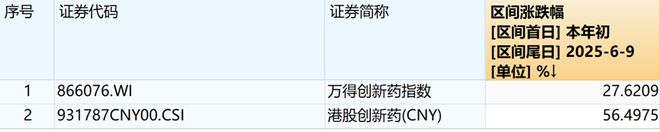
总体来看,港股年内涨幅超过40%的生物医药类ETF有17只,汇添富、银华、华泰柏瑞、万家、广发、 富国基金旗下相关产品年内涨幅均超55%。 今年以来,国产创新药行情火爆远超市场预期。 数据显示,截至6月9日,万得创新药指数年内涨近30%,而港股创新药指数更是飙升近60%,创下近年 新高。 | 陸号 | 证券代码 | 证券简称 | 区间涨跌幅 | | | --- | --- | --- | --- | --- | | | | | [区间首日] 本年初 [区间롭日] 2025-6-9 | | | | | | [車位] %] | | | | 866076.WI | 万得创新药指数 | | 27.6209 | | 2 | 931787CNY00.CSI | 港股创新药(CNY) | | 56.4975 | 值得一提的是,本轮"吃药"行情与过往医药牛市存在显著差异: 涨幅龙头集中于创新药企业,且港股表现尤为强劲。南下资金持续涌入带来的估值抬升,使得重仓港股 的医药主题QDII基金表现亮眼。 截至6月9日,跨境ETF涨幅榜中,年内涨超40%的基金均为与生物医药主题相关基金: | | | | 售股生物医药类ETF年内核心情 ...

Pfizer: Dividend Investor's Dream And Patent Cliff Nightmare
Seeking Alpha· 2025-06-10 08:56
While I not only covered different pharmaceutical companies for a long time but also invested in several pharmaceutical businesses – like Novo Nordisk or Gilead Sciences – I only recently started to also look at Pfizer Inc. ( Analyst's Disclosure:I/we have a beneficial long position in the shares of GILD either through stock ownership, options, or other derivatives. I wrote this article myself, and it expresses my own opinions. I am not receiving compensation for it (other than from Seeking Alpha). I have n ...

Pfizer Stock Down Almost 11% YTD: Should You Buy the Dip?
ZACKS· 2025-06-09 15:20
Core Viewpoint - Pfizer's stock has declined 10.7% year-to-date, underperforming its industry, sector, and the S&P 500, and is trading below its 50-day and 200-day moving averages [1][2][9] Group 1: Sales and Revenue Trends - Sales of Pfizer's COVID-19 products, Comirnaty and Paxlovid, are projected to drop to approximately $11 billion in 2024 from $56.7 billion in 2022, with similar revenues expected in 2025 [7] - Despite declining COVID revenues, non-COVID operational revenues improved in 2024, driven by key products like Vyndaqel, Padcev, and Eliquis, as well as newly acquired products [10][24] - Oncology revenues grew 7% on an operational basis in Q1 2025, supported by drugs such as Xtandi, Lorbrena, and Padcev [13] Group 2: Challenges and Headwinds - Pfizer faces challenges from declining sales of COVID-19 products, headwinds from U.S. Medicare Part D redesign in 2025, and significant impacts from patent expirations expected between 2026-2030 [3][15][16] - The company anticipates an unfavorable impact of approximately $1 billion from the Medicare Part D redesign, particularly affecting higher-priced drugs [16] - The stock has been under pressure due to uncertainties around tariffs and the macroeconomic environment, despite pharmaceuticals being exempted from initial tariffs [4][5] Group 3: Strategic Developments - Pfizer's acquisition of Seagen has strengthened its position in oncology, with ongoing advancements in its oncology clinical pipeline [12][14] - The company is focusing on cost cuts and internal restructuring, aiming for savings of $7.7 billion by the end of 2027 [25] - Pfizer's valuation appears attractive, trading at a price/earnings ratio of 7.60, significantly lower than the industry average of 15.12 [19] Group 4: Future Outlook - The Zacks Consensus Estimate for 2025 earnings has increased from $2.98 to $3.06 per share, indicating positive earnings momentum [22] - Pfizer's diversified portfolio, particularly in oncology, is expected to support top-line growth in 2025 and beyond [11][24] - The company offers a dividend yield of around 7.4%, appealing to income investors [25][26]

Pfizer Inc. (PFE) Presents at Goldman Sachs 46th Annual Global Healthcare Conference Transcript
Seeking Alpha· 2025-06-09 14:49
Core Insights - The conference features Albert Bourla, CEO of Pfizer, discussing the current external environment affecting the pharmaceutical industry, particularly in relation to drug pricing policies [3][4]. Group 1: Industry Environment - There is significant anxiety among investors regarding the impact of the drug pricing MFN (Most Favored Nation) executive order, which has led to depressed multiples across the pharmaceutical sector [4]. - The industry is anticipating a range of outcomes from the recent executive order, with implications for both the near term and the long term [4]. Group 2: Company Position - Albert Bourla's unique perspective as the Chair of the Pharma lobbying group provides insights into the ongoing discussions with the administration and the potential effects on the pharmaceutical sector [3]. - The conference serves as a platform for Pfizer to address investor concerns and outline the company's position amidst regulatory changes [3].

Pfizer (PFE) FY Conference Transcript
2025-06-09 13:00
Summary of Pfizer (PFE) FY Conference - June 09, 2025 Industry Overview - The pharmaceutical industry is currently facing significant uncertainty due to potential policy changes in drug pricing, particularly related to the Most Favored Nation (MFN) executive order and tariffs [5][4][6] - There is a notable anxiety among investors, reflected in depressed stock multiples across the sector [5] Key Points from the Conference Drug Pricing and Policy - The MFN executive order is a major concern, with potential outcomes ranging from no changes to significant price adjustments in the U.S. and internationally [8][9] - The U.S. government has historically not pressured European countries to raise drug prices, but the current administration is showing a willingness to address this issue [12][14] - The U.S. spends approximately 0.8% of GDP per capita on innovative medicines, compared to 0.4% in Germany and 0.5% in Italy and Spain, indicating a disparity in drug pricing [16] - Pfizer may reconsider its launch strategies in Europe if significant price disparities between the U.S. and Europe persist, potentially opting to remove products from reimbursement rather than withdrawing them entirely [17][18] Financial Performance and Guidance - Pfizer's financial outlook for 2025 is optimistic, with strong revenue and cost control measures in place, leading to expected margin expansion [31][32] - The company reported higher-than-expected revenues in Q1, but COVID-19 remains a wildcard, with potential revenue impacts depending on the pandemic's trajectory [33][34] Cost Management and Operational Efficiency - Pfizer plans to achieve $1.7 billion in operational expense reductions over the next two years, with $1.2 billion targeted for selling, general, and administrative expenses (SG&A) and $500 million for R&D [40][41] - The company is leveraging technology, automation, and simplification to enhance productivity without compromising top-line performance [41][42] Mergers and Acquisitions (M&A) - Pfizer's recent acquisition of a PD-1 VEGF bispecific asset from 3S Bio for an initial $1.2 billion, with potential total costs reaching $6 billion based on milestones, reflects a strategic focus on promising oncology assets [46][48] - The company is cautious about overpaying for assets, particularly in the context of pricing pressures and competition in the obesity and cardiometabolic sectors [56][59] Dividend and Capital Allocation - Pfizer is committed to maintaining and growing its dividend, viewing it as a high priority alongside deleveraging and strategic investments [60][61] - The company has the capacity for M&A within a $10 billion to $15 billion range, preferring smaller, strategic deals over larger acquisitions [59] Product Pipeline and Competitive Landscape - Pfizer is optimistic about its pipeline, particularly in obesity and multiple myeloma, with upcoming readouts expected to enhance commercial opportunities [63][65] - The company is confident in its competitive positioning against emerging therapies, particularly in the context of its established products and market presence [67][70] Additional Insights - The administration's focus on tariffs and manufacturing investments in the U.S. could impact Pfizer's future capital allocation decisions [26][28] - The company is actively working to ensure that any regulatory changes do not undermine the pharmaceutical industry's sustainability [24][30]