Beqvez

Search documents
辉瑞血友病药物出现患者死亡,公司回应
第一财经· 2025-12-24 09:30
Core Viewpoint - Pfizer's stock dropped over 1% following the death of a patient involved in a long-term study of its hemophilia drug, Hympavzi, which was approved in the U.S. last year for treating hemophilia A or B patients aged 12 and older [3][4]. Group 1: Patient Incident - A patient participating in the study died from a stroke and intracranial hemorrhage on December 14 [4]. - Pfizer is actively gathering information in collaboration with trial researchers and an independent external data monitoring committee to understand the complexities surrounding the incident [4]. - The company stated that, based on current understanding and overall clinical data collected so far, the death is not expected to impact the safety of patients receiving the treatment [4]. Group 2: Drug Background - Hympavzi is a long-acting coagulation factor therapy administered weekly, aimed at preventing or reducing bleeding in hemophilia patients [4]. - In addition to Hympavzi, gene therapies have emerged as another treatment option for hemophilia in recent years [4]. Group 3: Previous Developments - Pfizer previously developed a one-time gene therapy, Beqvez, for treating adults with moderate to severe hemophilia B, which was approved in the U.S. [5]. - However, due to high costs and weak demand, Pfizer announced earlier this year that it would cease global development and commercialization of its hemophilia gene therapy [5].



辉瑞血友病药物出现患者死亡,公司回应
Di Yi Cai Jing· 2025-12-24 09:01
Core Insights - Pfizer reported a patient death during a long-term study of its hemophilia drug, Hympavzi, which led to a stock price drop of over 1% on December 23 [1] - The patient died from a stroke and intracerebral hemorrhage on December 14, as confirmed by the European Hemophilia Consortium [1] - Pfizer stated that it does not expect this incident to impact the safety of patients receiving the drug, based on current clinical data [1] Group 1 - The patient involved was part of a long-term study for Hympavzi, a long-acting clotting factor therapy approved in the U.S. for patients aged 12 and older with hemophilia A or B [1] - Hympavzi is administered weekly and aims to prevent or reduce bleeding by targeting clotting proteins [1] - Pfizer is actively gathering information in collaboration with trial researchers and an independent external data monitoring committee to understand the complexities surrounding the incident [1] Group 2 - Pfizer previously developed a one-time gene therapy, Beqvez, for treating moderate to severe hemophilia B in adults, which was approved in the U.S. [2] - However, due to high costs and weak demand, Pfizer announced the cessation of global development and commercialization of its hemophilia gene therapy earlier this year [2]
Patient Dies In Pfizer's Long -term Extension Trial Of Hemophilia Drug
RTTNews· 2025-12-23 16:42
Core Viewpoint - Pfizer Inc. is facing scrutiny following the death of a participant in a long-term trial for Marstacimab, a treatment for hemophilia A and B, which raises concerns about the safety of the drug and its ongoing studies [1][3]. Group 1: Trial and Drug Information - The long-term extension trial for Marstacimab involved participants with severe hemophilia A or B, with or without inhibitors, who had previously completed a phase 3 trial (B7841005) [2]. - Marstacimab, marketed as Hympavzi, was approved in the U.S. in October 2022 for treating hemophilia A or B without inhibitors and received European approval in November 2024 [2]. Group 2: Safety and Monitoring - Pfizer, in collaboration with the trial investigator and an independent Data Monitoring Committee, is investigating the circumstances surrounding the participant's death, including pre-existing medical conditions and potential links to the study drug [3]. Group 3: Market Context - Earlier in 2023, Pfizer discontinued its hemophilia B gene therapy product Beqvez due to limited interest, contrasting with Hympavzi, which is a rebalancing agent rather than a gene therapy [4]. - As of the latest trading data, Pfizer's stock is priced at $25.06, reflecting a slight decrease of 0.15% [4].

千万基因疗法,如何跨越“高价”与“落地”的鸿沟?
3 6 Ke· 2025-12-05 02:08
Core Insights - The high pricing of gene therapies, such as Novartis' Itvisma at $2.59 million, reflects the substantial R&D and production costs associated with these treatments [1][2][3] - The gene therapy market is projected to grow significantly, with an estimated market size of $9.03 billion in 2024, expected to reach $64.64 billion by 2033, representing a compound annual growth rate of 27.6% [7] Pricing and Market Dynamics - Gene therapies are characterized by high costs due to complex R&D processes, with an average clinical trial cost of $1.943 billion [3] - The pricing of gene therapies in the global market typically exceeds $2 million, with some therapies like Lenmeldy priced at $4.25 million [2] - In contrast, the Chinese market offers lower-priced gene therapies, such as the domestically approved 波哌达可基注射液 at approximately ¥93,000 per bottle, but still results in high treatment costs for patients [2] R&D Challenges and Innovations - The lengthy R&D cycle, often exceeding 10 years, and stringent quality control standards contribute to the high costs of gene therapies [3][4] - Innovations in delivery systems and gene editing tools are essential for reducing costs and improving the efficacy and safety of gene therapies [6][8] Commercialization and Accessibility - The high costs of gene therapies create significant barriers to patient accessibility, despite their potential for long-term efficacy [4] - Strategies such as commercial insurance coverage, pay-for-performance models, and installment payment options are critical for improving patient access to these therapies [6] Investment Trends and Market Opportunities - The gene therapy sector continues to attract investment, with approximately 41 financing events in 2024, totaling over ¥2.5 billion [8][9] - There is a growing interest in companies with foundational technology platforms, particularly in new delivery systems and precision editing tools, as investors seek differentiation in the market [9]

一针抵一套豪宅!揭秘全球最贵药物→
第一财经· 2025-12-02 12:57
Core Viewpoint - The article discusses the rising trend of high-priced gene therapies, particularly focusing on Novartis's newly approved gene therapy Itvisma for spinal muscular atrophy, priced at $2.59 million, which highlights the challenges of commercialization and reimbursement in the gene therapy market [3][6]. Pricing and Market Dynamics - Novartis's Itvisma is priced at $2.59 million, surpassing its earlier product Zolgensma, which was priced at $2.125 million [3][4]. - The global list of the most expensive drugs includes several gene therapies, with the top position held by Kyowa Kirin's Lenmeldy at $4.25 million, followed by CSL's Hemgenix at $3.5 million [4][5]. - The article notes that despite the high prices, many gene therapies face commercialization challenges, as seen with Bluebird Bio's products, which have not achieved significant sales despite their high price tags [5][6]. Sales Performance and Market Challenges - Zolgensma generated $1.2 billion in sales in 2024, maintaining its performance from the previous year, while Bluebird Bio's Lyfgenia only achieved $10 million in sales in Q3 2024 [6][7]. - The article emphasizes the disparity between the high prices of gene therapies and their actual market performance, indicating a potential "value without market" scenario [5][6]. Future Outlook and Market Growth - The global gene therapy market is projected to grow from $9 billion in 2024 to $11.5 billion in 2025, with an expected compound annual growth rate of 27.6% [7]. - The article suggests that a balance between innovation and accessibility is crucial for the future of gene therapies, with a collaborative approach needed from payers, regulators, and pharmaceutical companies [7][8].




一针抵一套豪宅!动辄百万美元的“天价药”如何打破“有价无市”魔咒
Di Yi Cai Jing· 2025-12-02 12:17
Core Viewpoint - A rare disease gene therapy, Itvisma, developed by Novartis, has gained attention for its high price of $2.59 million, aimed at treating spinal muscular atrophy (SMA) in patients aged two and above with a specific genetic mutation [1][4]. Pricing and Market Position - Itvisma's price of $2.59 million exceeds that of Novartis's earlier product, Zolgensma, which was priced at $2.125 million and is now only available for children under two [1]. - Despite its high price, Itvisma barely ranks among the top ten most expensive drugs globally, as reported by Fierce Pharma [1]. - The most expensive drug as of 2025 is Lenmeldy, priced at $4.25 million, followed by Hemgenix at $3.5 million, and other gene therapies priced above $3 million [2][3]. Market Dynamics and Challenges - The gene therapy market is transitioning from concept validation to large-scale commercialization, facing challenges such as high prices, market promotion difficulties, and insurance reimbursement issues [3][4]. - Companies like Bluebird Bio, despite having multiple gene therapies approved, struggle with commercialization, as evidenced by low sales figures for their high-priced therapies [3][4]. Sales Performance - Zolgensma has shown relatively successful commercialization, with sales of $1.2 billion in 2024, maintaining the same level as the previous year [4]. - In contrast, Bluebird Bio's therapies, despite their high prices, reported only $10 million in sales for one product in Q3 2024 [3]. Future Outlook - The global gene therapy market is projected to grow from $9 billion in 2024 to $11.5 billion in 2025, with an expected compound annual growth rate of 27.6% [5]. - Novartis claims that Itvisma's one-time treatment is 35% to 46% cheaper over a ten-year span compared to existing long-term therapies [5].
被嫌弃的AAV病毒递送系统
3 6 Ke· 2025-10-09 23:18
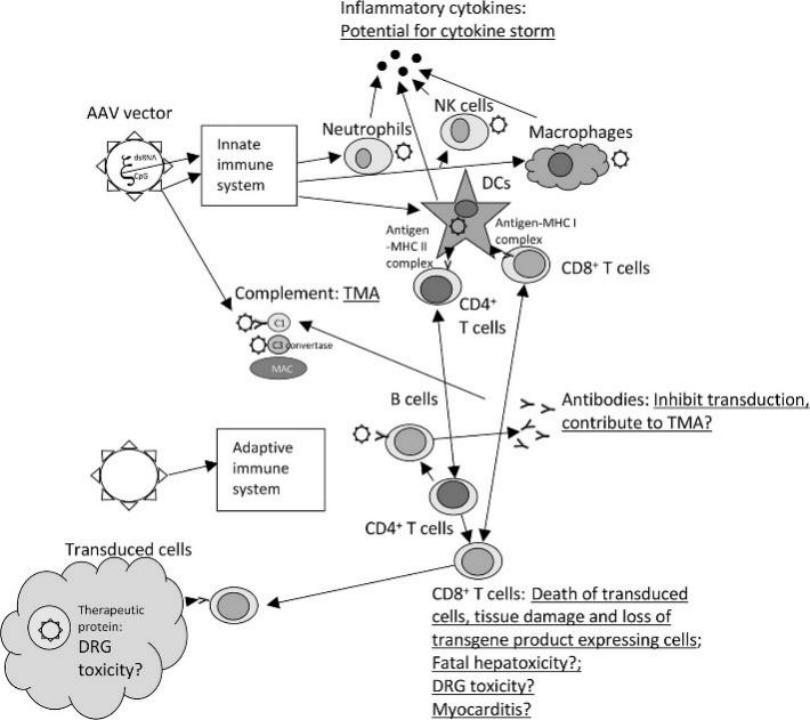
Core Viewpoint - The AAV (Adeno-Associated Virus) gene therapy sector is facing unprecedented challenges, including safety issues, high costs, and a significant withdrawal of major pharmaceutical companies from AAV projects [1][2][3][4]. Industry Challenges - AAV has transitioned from a highly sought-after delivery system to one facing skepticism and abandonment by major pharmaceutical companies [2][3]. - The industry is experiencing a crisis of confidence due to multiple safety incidents, including patient deaths linked to AAV therapies [13][14]. - High costs associated with AAV therapies, often exceeding $1 million, limit accessibility and create financial burdens for companies [10][12]. Technical Limitations - AAV's small capacity (approximately 4.7 kb) restricts its ability to deliver larger genes, necessitating complex strategies that may compromise efficacy [6]. - Immune responses triggered by AAV can lead to severe complications, including inflammation and organ damage, complicating treatment outcomes [7][8][9]. - The presence of neutralizing antibodies in the population poses significant barriers to the effectiveness of AAV therapies, limiting patient eligibility and treatment options [9]. Market Dynamics - Major companies like Pfizer, Roche, and Takeda have withdrawn from AAV research, reallocating resources to more promising areas [14][15]. - The capital market's enthusiasm for AAV has shifted to a more cautious approach, leading to financing difficulties for biotech firms focused on AAV therapies [15][16]. Future Directions - Despite the challenges, some companies are exploring new delivery systems, such as lipid nanoparticles (LNPs) and polymer nanoparticles, which may offer advantages over AAV [18]. - Companies like uniQure are focusing on optimizing AAV vectors and targeting specific diseases, indicating that AAV may still have a role in certain niches [19][21]. - The industry consensus suggests that while gene therapy remains promising, AAV is no longer the sole solution, and innovation in delivery methods is essential for future success [21].
Create a Portfolio of Passive Income: 3 High-Yielding Dividend Stocks That Pay More Than 5%
The Motley Fool· 2025-06-12 09:00
Core Viewpoint - Dividend income is a valuable strategy for enhancing financial stability and potentially reducing dependence on employment income, which can lead to a more fulfilling life [1] Group 1: High-Yielding Dividend Stocks - Pfizer is highlighted as a long-term investment option with a current yield of 7.4%, significantly higher than the S&P 500 average of 1.3% [4] - Despite a decline of over 10% in stock price this year, Pfizer's valuation remains modest at 17 times trailing earnings, with revenue guidance between $61 billion and $64 billion for the year [5][6] - Realty Income is a recommended REIT with a high yield of 5.8% and monthly dividend payments, providing a consistent cash flow for investors [8] - Realty Income reported funds from operations (FFO) per share of $1.05, up from $0.94 a year ago, supporting its dividend payout [9][10] - Bank of Nova Scotia offers a high dividend yield of around 6%, with a strong historical track record of regular payments since 1833 [11] - The bank's net income was over 2 billion Canadian dollars for the quarter ending April 30, showing stability despite macroeconomic concerns [12] - Scotiabank has increased its dividend by more than 22% over the past four years, making it a solid long-term investment option [13]



Capricor Therapeutics Appoints Michael Binks, M.D. as Chief Medical Officer
Globenewswire· 2025-05-13 13:00
Core Insights - Capricor Therapeutics has appointed Dr. Michael Binks as Chief Medical Officer, effective immediately, to lead the advancement of deramiocel for Duchenne muscular dystrophy (DMD) and future pipeline opportunities [1][2] - Dr. Binks has 25 years of experience in clinical development and has held senior roles at Pfizer and GlaxoSmithKline, contributing to the advancement of several first-in-class therapies [2] - Capricor's lead product candidate, deramiocel, is in late-stage development and has shown potent immunomodulatory and anti-fibrotic actions in preserving cardiac and skeletal muscle function in dystrophiopathies [3] Company Overview - Capricor Therapeutics is focused on developing cell and exosome-based therapeutics for rare diseases, with a commitment to innovative treatments [3] - The company has entered into an agreement with Nippon Shinyaku Co., Ltd. for the exclusive commercialization and distribution of deramiocel for DMD in the United States and Japan, pending regulatory approval [6]

Stock Market Crash: 3 Absurdly Cheap Stocks to Load Up on for the Long Haul
The Motley Fool· 2025-04-30 11:05
Market Overview - The S&P 500 has declined approximately 6% since the beginning of the year, with a more significant drop earlier in April when global tariffs were announced [1] - Despite a recent recovery, the risk of further market sell-offs remains [1] Investment Opportunities - Long-term investors may find buying opportunities in stocks that are down over 10% this year and trading at low earnings multiples, specifically Pfizer, PayPal, and Builders FirstSource [2] Pfizer - Pfizer's stock has decreased by 13% in 2025, with expectations of nearly unchanged or declining revenue for the year [3][4] - The company trades at a forward P/E multiple of less than 8 and aims to add $25 billion in revenue through in-house development and acquisitions despite potential losses of $18 billion from generics by the end of the decade [4] - Recent acquisitions, including oncology company Seagen, are expected to contribute up to $10 billion in revenue by the end of the decade [5] - Pfizer's mRNA pipeline is projected to generate between $10 billion and $15 billion by 2030, and the company has over 100 drug candidates in clinical trials [6] - The stock offers a dividend yield of over 7%, making it an attractive long-term investment [7] PayPal - PayPal's stock is down more than 20% this year and trades at only 13 times its future earnings, with concerns about a global economic slowdown affecting its growth prospects [8] - The company holds a significant position in the global payments market, accounting for nearly 45% of it, and is well-positioned for long-term recovery [9] - PayPal is expanding into the crypto market with the launch of PayPal USD, offering a 3.7% yield to attract investors, which could drive more transactions and revenue growth [10] - The company's payment volume rose by 10% last year, indicating potential for long-term investment despite short-term concerns [11] Builders FirstSource - Builders FirstSource trades at a forward P/E of less than 13 and plays a vital role in the homebuilding industry [12] - The company experienced a 4% decline in sales in 2024, totaling $16.4 billion, but is expected to benefit from long-term housing market growth [13] - Builders FirstSource has grown significantly from $8.6 billion in sales in 2020, aided by acquisitions and a strong housing market [14] - The company invested $352 million in 13 acquisitions last year and projects a net sales growth of 4% to 4.5% from these acquisitions [15] - Despite a 15% decline in stock price this year, Builders FirstSource remains a strong long-term investment [16]