Pfizer(PFE)

Search documents
NewLake Capital Partners: Severely Undervalued REIT Paying A Double-Digit Dividend
Seeking Alpha· 2025-09-30 14:07
Company Overview - NewLake Capital Partners (OTCQX: NLCP) is an industrial REIT focused on cannabis cultivation and dispensary, founded in 2019 and went public in a 2021 IPO [1] Analyst Insights - The analyst has over 10 years of experience researching companies across various sectors, including commodities and technology, and has researched over 1000 companies [1] - The analyst has transitioned from writing a blog to a value investing-focused YouTube channel, covering hundreds of different companies, with a particular interest in metals and mining stocks, as well as comfort in other industries like consumer discretionary/staples, REITs, and utilities [1]


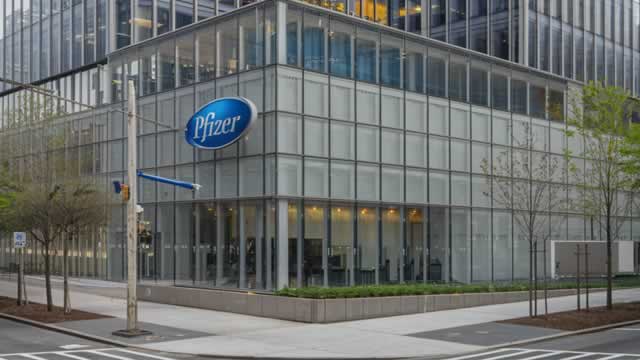
Trump to announce deal with Pfizer to sell drugs at lower prices, Washington Post reports
Reuters· 2025-09-30 14:06
Core Points - U.S. President Donald Trump is set to announce an agreement with Pfizer to sell the company's medications through Medicaid at lower prices [1] Group 1 - The agreement aims to provide medications at reduced costs, potentially impacting the pharmaceutical pricing landscape [1] - This initiative is part of a broader effort to make healthcare more affordable for Medicaid recipients [1]
辉瑞(PFE.US)超长效GLP-1两项减重II期研究取得积极结果
Zhi Tong Cai Jing· 2025-09-30 13:28
Core Insights - Metsera (MTSR.US), recently acquired by Pfizer (PFE.US), announced positive results from two Phase IIb weight loss studies (VESPER-1 and VESPER-13) for MET-097i [1] - MET-097i is a first-in-class, fully biased, ultra-long-acting GLP-1 receptor agonist (GLP-1-RA) with the potential for once-monthly injection [1] - Metsera believes that MET-097i can match or exceed the performance of 15mg tirzepatide at steady state and plans to initiate Phase III clinical trials by the end of the year [1]

Pfizer Just Reminded Investors Why You Should Never Count Its Stock Out
The Motley Fool· 2025-09-30 08:00
Core Viewpoint - Pfizer is making strategic acquisitions to enhance its growth prospects, particularly in the GLP-1 obesity market, despite facing challenges in its stock performance and growth outlook [1][2]. Acquisition Details - On September 22, Pfizer announced the acquisition of Metsera, a clinical-stage pharmaceutical company focused on obesity and cardiometabolic diseases [3]. - Metsera's lead candidate, MET-097i, is a potential monthly injectable GLP-1 drug currently in phase 2 trials, showing a 7.5% body weight reduction after 36 days [4]. - The acquisition could cost Pfizer up to $7.3 billion, contingent on the success of Metsera's drug candidates [4]. Financial Strength and Pipeline Expansion - Pfizer has a robust financial position, generating $12.4 billion in free cash flow over the past 12 months, which supports its dividend payments and acquisition strategy [7]. - The company has 108 drug candidates in its portfolio, with a notable gap in GLP-1 obesity drugs, a market projected to reach $120 billion by 2035 [6]. Market Potential and Investor Sentiment - Analysts suggest that Pfizer's focus on the GLP-1 market could significantly strengthen its pipeline and future growth potential [6]. - Despite current challenges, Pfizer's stock is considered undervalued with a price-to-earnings ratio of less than 13, indicating potential upside for long-term investors [10].
「一页纸」吃透产业链之:创新药,License-out BD进军全球市场
3 6 Ke· 2025-09-30 00:58
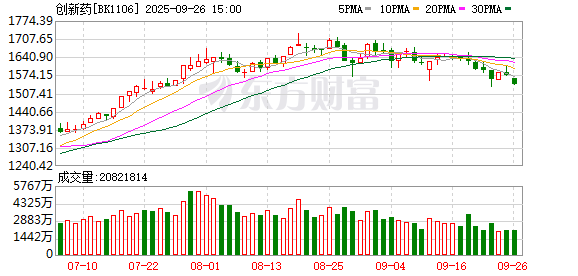
Core Conclusion - The investment logic for innovative drugs indicates that 2025 will mark a new recovery starting point for China's innovative drug industry after a deep adjustment, driven by a "triple resonance" of policy, industry, and capital [3][5][7]. Policy Insights - The Chinese government has explicitly supported innovative drugs in the 2025 Government Work Report, with subsequent policies aimed at high-quality development and commercial insurance for innovative drugs, clearing development obstacles across the entire chain [3][5]. Industry Dynamics - The internationalization process is accelerating, with the License-out model becoming a key path for value realization. In the first three quarters of 2025, upfront payments for licensing transactions reached $5.7 billion, surpassing the total for 2024 and accounting for 23.4% of the global total, indicating a significant enhancement in the global value chain position of Chinese innovative drug assets [5][7]. Capital Market Trends - After a deep adjustment from 2022 to 2024, industry valuations are returning to rational levels, with continuous improvement in the fundamentals of companies. In the first half of 2025, sales revenue from 17 commercialized innovative drug companies grew by 30% year-on-year, with leading companies like Innovent Biologics achieving profitability, marking a phase of value reassessment in the industry [7]. Market Size and Growth - The global innovative drug market is expected to reach $782.6 billion in 2024, accounting for 51.3% of the global pharmaceutical market, and is projected to grow to $1,119 billion by 2029, with a compound annual growth rate (CAGR) of 7.4%, outpacing the overall pharmaceutical market growth of 6.4% [14]. Industry Structure - The innovative drug industry chain is divided into three main segments: upstream (raw materials and support), midstream (R&D and production), and downstream (distribution and payment), forming a complete value chain from scientific discovery to market application [19][21][24]. Business Model Transformation - Chinese innovative drug companies are transitioning from a single reliance on domestic market sales to a dual-driven international strategy of "domestic sales + License-out," marking a new phase where product strength and business model innovation are equally emphasized [28][29]. Revenue Sources - The revenue sources for innovative drug companies are diversifying, including domestic insurance sales, License-out income, and overseas market sales. In 2023, insurance spending on innovative drugs reached 90 billion yuan, maintaining rapid growth since 2019 [28][29][34]. BD Model Growth - The BD (Business Development) model has become a core engine for commercialization, with the total amount of BD transactions involving Chinese innovative drug companies skyrocketing from $5.06 billion in 2020 to $41.76 billion by August 2025, indicating a fundamental shift in the industry's business model [37][38]. Key Segments to Watch - The innovative drug industry includes six key segments: small molecule drugs, large molecule drugs, cell therapy, gene therapy, mRNA vaccines, and precision medicine, each deserving in-depth research [43].


美国制药行业游说组织PhRMA将推处方药直销平台 以应对特朗普降药价压力
智通财经网· 2025-09-29 22:24
Core Insights - The pharmaceutical industry lobbying group PhRMA plans to launch a new website, AmericasMedicines.com, in January 2025 to enable patients to purchase prescription drugs directly from manufacturers, bypassing pharmacy benefit managers (PBMs) to reduce drug prices and simplify the purchasing process [1] - This initiative is a response to pressure from the Trump administration to lower U.S. drug prices, with President Trump having previously urged major pharmaceutical companies to align U.S. prescription drug prices with those of other developed countries [1] - The direct-to-consumer (DTC) sales model is gaining traction, with companies like Eli Lilly, Pfizer, and AstraZeneca launching their own platforms, and Novartis announcing a direct sales platform set to launch on November 1, offering significant discounts on certain medications [1] Industry Developments - PhRMA announced a total investment of $500 billion in domestic production and infrastructure, which is expected to generate $1.2 trillion in economic output and create over 100,000 jobs [2]


Pfizer Is Likely To Pass The Drug Import Tariff Stress Test (NYSE:PFE)
Seeking Alpha· 2025-09-29 19:16
Pfizer, Inc. (NYSE: PFE ) has been a difficult stock to own in the past 20 months. When I initially turned bullish on Pfizer in January 2024, I was expecting Mr. Market to re-rate the company after identifying the massive potential ofDilantha De Silva is an experienced equity analyst and investment researcher with over 10 years in the investment industry. He writes insightful articles for Seeking Alpha, GuruFocus, TipRanks, and ValueWalk, with a significant following on Seeking Alpha. Dilantha’s expertise s ...
Pfizer Is Likely To Pass The Drug Import Tariff Stress Test
Seeking Alpha· 2025-09-29 19:16
Core Viewpoint - Pfizer, Inc. has faced challenges in its stock performance over the past 20 months, but there is an expectation for a re-rating of the company due to its significant potential [1]. Company Analysis - The company has been difficult to own, indicating volatility or underperformance in its stock price [1]. - There is a belief that the market will eventually recognize the massive potential of Pfizer, suggesting optimism for future growth [1]. Analyst Background - Dilantha De Silva, the analyst, has over 10 years of experience in the investment industry and focuses on small-cap stocks often overlooked by Wall Street [1]. - The analyst is a CFA Level III candidate and has been featured on major financial platforms, indicating a strong credibility in the investment community [1].
3 Of My Favorite Biotech Stocks Under $10
Seeking Alpha· 2025-09-29 17:15
Group 1 - The article highlights three biotech stocks trading under $10.00 per share as potential investment opportunities [1] - The investing group, The Biotech Forum, offers a model portfolio consisting of 12-20 high upside biotech stocks along with live chat discussions and weekly research updates [1] - The group provides market commentary and portfolio updates every weekend, indicating a commitment to ongoing investor engagement [1]




辉瑞73亿美元收购Metsera 当创新药BD预期降温 板块估值逻辑变了吗?
Mei Ri Jing Ji Xin Wen· 2025-09-28 23:20
Core Viewpoint - The surge in A-share and Hong Kong stock prices of innovative drug companies is driven by potential business development (BD) expectations, particularly for those seen as acquisition targets by multinational pharmaceutical companies [2][3] Group 1: Business Development Trends - Pfizer's recent $7.3 billion acquisition of Metsera signals a significant return to the weight-loss drug market, impacting domestic stock prices of related companies [2] - Global pharmaceutical transactions have increased from 358 in 2015 to 743 in 2024, with a compound annual growth rate of 8%, while China's transactions surged from 55 to 213, with total values rising from $3.1 billion to $57.1 billion [3] - Major Chinese companies like 3SBio, CSPC, and Hengrui have secured BD deals exceeding $5 billion this year, with Hengrui's $12.5 billion agreement with GSK setting a record for Chinese innovative drug exports [3] Group 2: Market Sentiment and Investor Behavior - Investors are becoming more discerning, focusing on the specifics of BD deals, such as upfront payment ratios and the long-term capabilities of partners, rather than merely the announcement of negotiations [4] - There is a growing concern that many top buyers have already completed their acquisitions, leading to potential valuation declines and tougher negotiations for remaining assets [4][5] - Past instances show that underwhelming BD deals can lead to significant stock price declines, as seen with Rongchang Bio and Hengrui [5] Group 3: Future Opportunities and Market Dynamics - Despite concerns about a potential slowdown in BD activity, industry leaders assert that opportunities continue to emerge, particularly as multinational companies adjust their R&D strategies every 5 to 10 years [7] - The demand for innovative assets remains strong, with a shift towards ADCs and bispecific antibodies, indicating a recognition of Chinese companies' R&D capabilities [8][9] - The trend of multinational companies seeking earlier-stage projects reflects a strategic shift towards building comprehensive product portfolios, as seen in Pfizer's acquisition of Metsera, which enhances its offerings in the GLP-1 space [9]