
P&G(PG)

Search documents
Abercrombie & Fitch Says Tariffs Will Cut Profits By $50 Million—Joining These Companies Warning Of Tariff Impacts
Forbes· 2025-05-28 15:10
Summary of Key Points Core Viewpoint - Numerous companies are lowering their profit forecasts for 2025 due to the impact of tariffs and economic uncertainty, indicating a broader trend of caution across various industries. Group 1: Retail Sector - Abercrombie & Fitch lowered its full-year profit forecast for 2025, citing a $50 million hit from tariffs, including a 30% tariff on imports from China and a 10% tariff on other imports [1][2] - Macy's also reduced its earnings per share outlook for the year, attributing it to tariffs, moderation in consumer spending, and increased competition [3] - Target expects sales to decline throughout 2025, previously projecting a 1% growth, due to weaker spending linked to tariff uncertainties [3] Group 2: Consumer Goods and Food & Beverage - Diageo warned of a $150 million hit to annual profits in 2025 but plans to offset half of this impact through unspecified actions [4] - PepsiCo lowered its earnings forecast for 2025, facing higher supply chain costs due to tariffs and a volatile consumer environment [15] - Kraft Heinz also lowered its outlook, citing a volatile operating environment influenced by tariffs and inflation [13] Group 3: Automotive Industry - Ford expects tariffs to reduce its earnings before interest and taxes by about $1.5 billion in 2025 and has suspended its full-year guidance [8] - General Motors lowered its earnings forecast to between $10 billion and $12.5 billion, down from $13.7 billion to $15.7 billion, due to the impact of tariffs [12] - Toyota estimated a $1.25 billion profit loss in April and March due to U.S. tariffs, forecasting a nearly 21% dip in operating income through 2025 [5] Group 4: Technology and Electronics - AMD anticipates a $1.5 billion revenue loss in 2025 due to restrictions on chip shipments to China [7] - Apple expects a $900 million hit to its bottom line in the second quarter due to tariffs, complicating future predictions [10] - Logitech withdrew its outlook for the 2026 fiscal year due to ongoing tariff uncertainties [17] Group 5: Airlines and Transportation - JetBlue and Alaska Airlines both pulled their full-year guidance for 2025 due to macroeconomic uncertainty [13][17] - Delta Airlines withdrew its full-year guidance, citing broad macro uncertainty [18] - United Airlines issued a second guidance featuring significantly lower earnings for 2025, reflecting the unpredictable economic environment [17] Group 6: Miscellaneous - Steve Madden withdrew its financial guidance for 2025, facing heightened uncertainty from new tariffs [6] - Rivian lowered its targets for vehicle deliveries and capital spending for 2025 due to significant uncertainty in the global economic landscape [6] - Snap declined to issue guidance for its second quarter, citing uncertainty in macroeconomic conditions affecting advertising demand [14]






美国多种日用品面临涨价
news flash· 2025-05-27 13:48
Group 1 - Several U.S. retailers have warned that they will not absorb the additional costs from tariffs as requested by President Trump, but will instead raise prices [1] - The increase in prices will affect a wide range of products, including food, daily necessities, clothing, toys, and automobiles [1] - Mattel, a major toy manufacturer, announced that it will raise toy prices due to the additional costs from tariffs [1] Group 2 - Ford's CFO expects an increase of 1.5% in car prices in the U.S. as a result of the tariffs [1] - Procter & Gamble indicated that it is considering raising prices on certain product categories due to increased costs [1] - Adidas' CEO stated that the cost increases from higher tariffs will ultimately lead to higher prices for its products [1]


国际品牌怎么才能守住中国市场?
虎嗅APP· 2025-05-23 11:47
Core Viewpoint - The article discusses the competitive landscape between international and domestic brands in China, highlighting that international brands still hold significant market share despite the rise of domestic brands. The CBI500 list shows that international brands remain popular among Chinese consumers, indicating their strong market presence and consumer loyalty [1][3][18]. Group 1: International Brands' Market Position - The CBI500 list includes 156 international brands, with Apple ranking first, demonstrating the continued strength of international brands in the Chinese market [1][3]. - In sectors like beauty and sportswear, international brands dominate, with 8 out of the top 10 beauty brands being international and 70% of outdoor sports brands also being international [1][5]. - International brands maintain a competitive edge due to their technological advancements and established supply chains, which are difficult for domestic brands to replicate [5][9]. Group 2: Consumer Behavior and E-commerce Impact - The CBI500 list is based on real consumer behavior data from platforms like Taobao and Tmall, reflecting genuine consumer preferences and the ongoing enthusiasm for international brands [3][10]. - E-commerce has transformed the retail landscape in China, with international brands increasingly relying on platforms like Tmall to reach consumers, highlighting the importance of digital channels for market penetration [10][12]. - The rise of e-commerce has allowed domestic brands to compete more effectively, as they can quickly adapt to consumer needs and preferences without the constraints of traditional retail [11][22]. Group 3: Challenges and Adaptation of International Brands - International brands face challenges in adapting to the rapidly changing consumer landscape in China, necessitating a shift towards localization and understanding of local consumer demands [12][25]. - Brands like Adidas and Uniqlo have successfully implemented localization strategies, leveraging e-commerce data to enhance their product offerings and marketing approaches [15][16][14]. - Despite their technological advantages, international brands must improve their responsiveness to local consumer needs to maintain their market positions [25][26]. Group 4: Domestic Brands' Rise and Innovation - Domestic brands are increasingly moving from being mere followers to innovators, leveraging their understanding of local markets to create competitive products [20][21]. - Brands like Xiaomi and ICICLE have successfully introduced innovative concepts that challenge established international brands, indicating a shift in the competitive dynamics [20][21]. - The success of domestic brands in niche markets, such as small appliances, showcases their ability to quickly respond to emerging consumer trends and preferences [23][24]. Group 5: Future Outlook - The article suggests that the future of competition in the Chinese market will revolve around product innovation and understanding consumer emotions, with a focus on niche markets [22][26]. - International brands must enhance their local market insights and adapt their strategies to align with evolving consumer expectations to sustain their growth in China [26].





2 Ultra-Safe Dividend Growth Stocks to Buy and Hold Forever
The Motley Fool· 2025-05-22 08:45
Core Insights - Dividend stocks have significantly contributed to long-term market returns through the power of compounding, especially when dividends are reinvested over time [1] - In the current economic climate of inflation and uncertainty, dividend growth stocks provide resilience and stability, often exhibiting stronger balance sheets and pricing power compared to non-dividend payers [2] Company Analysis: Procter & Gamble (PG) - Procter & Gamble has a 69-year history of raising dividends, supported by a diverse portfolio of household brands, and currently offers a dividend yield of approximately 2.55%, nearly double the S&P 500 average of 1.27% [4][5] - The company's dividend payout ratio is around 64%, indicating a balanced approach to shareholder returns and reinvestment in growth [5] - P&G's forward price-to-earnings (P/E) ratio is approximately 23.6, reflecting its strong brand equity despite recent challenges in sales growth and market pressures [6] - Anticipated costs due to tariffs in fiscal 2026 range from $1 billion to $1.5 billion, representing about 3% of its cost of goods sold, prompting the company to streamline its operations for efficiency [7] - P&G's strategic investments in innovation and disciplined capital allocation make it a reliable choice for income-focused investors [8] Company Analysis: Parker-Hannifin (PH) - Parker-Hannifin has maintained a 69-year streak of annual dividend increases, with a current yield of 1.06% and a conservative payout ratio of 25.3%, allowing for continued dividend growth [9] - The company has achieved a remarkable 10.9% annualized dividend growth rate over the past decade, significantly outpacing many blue-chip dividend payers [9] - Parker-Hannifin's aerospace segment has shown strong performance with 11.7% organic growth and record operating margins of 28.7% in fiscal Q3 2025, despite challenges in other industrial segments [10] - The company is well-positioned to benefit from growth in commercial aerospace, focusing on high-margin fluid power and motion control systems, aligning with trends in automation and electrification [11] - For income-focused investors, Parker-Hannifin offers a combination of defensive characteristics, growth exposure, and proven capital allocation expertise, making it a strong candidate for long-term wealth building [12]


美股市场速览:资金大量回流,科技板块领先
Guoxin Securities· 2025-05-18 08:39
Investment Rating - The report maintains a neutral investment rating for the U.S. stock market [1] Core Insights - The U.S. stock market is experiencing a steady recovery, led by the technology sector, with the S&P 500 rising by 5.3% and the Nasdaq increasing by 7.2% [3] - Significant capital inflows have been observed, particularly in the semiconductor and automotive sectors, indicating strong investor interest [4] - Earnings expectations for the S&P 500 constituents have been slightly adjusted upwards, with traditional industries showing the most significant upward revisions [5] Summary by Sections Price Trends - The S&P 500 increased by 5.3% and the Nasdaq by 7.2% this week, with the automotive and semiconductor sectors leading the gains at +16.2% and +13.3% respectively [3] Capital Flows - Estimated capital inflows for the S&P 500 constituents reached +$25.71 billion this week, a significant increase from the previous week's +$2.99 billion [4] - The semiconductor sector saw the highest inflow at +$9.17 billion, followed by automotive at +$6.59 billion [18] Earnings Forecasts - The dynamic F12M EPS expectations for the S&P 500 were adjusted up by 0.1%, with 19 sectors seeing upward revisions, particularly real estate (+0.7%) and materials (+0.5%) [5]




Procter & Gamble Stock Slips 5% in a Month: Buy the Dip or Stay Wary?
ZACKS· 2025-05-16 11:55
Core Viewpoint - Procter & Gamble (P&G) has experienced a decline in share price, falling 4.8% in the past month, attributed to soft sales performance in Q3 fiscal 2025 and a cautious near-term outlook due to market volatility and geopolitical uncertainties [1][11]. Company Performance - P&G's stock has underperformed compared to the broader sector and the S&P 500 index, while slightly outperforming the Consumer Products - Staples industry [2]. - The company's share price reached a 52-week low of $156.58, currently trading at $162.41, reflecting a 3.7% premium to this low and a 10% discount from its 52-week high of $180.43 [7]. - P&G's performance is weaker than competitors like Clorox and Unilever, which saw declines of 3.4% and 3.1%, respectively, while Albertsons Companies experienced a growth of 0.9% [3]. Sales and Earnings Outlook - P&G reported a 2% decline in sales and a modest 1% growth in earnings per share (EPS) for Q3 fiscal 2025, with weak performance in key segments [10]. - The company has revised its fiscal 2025 outlook downward, expecting flat all-in sales year-over-year and a 2% growth in organic sales, down from previous forecasts of 2-4% and 3-5% respectively [12]. - EPS is projected to rise 6-8% from the fiscal 2024 level of $6.02, with core EPS expected between $6.72 and $6.82, indicating a 2-4% increase, which is lower than earlier projections of 10-12% GAAP EPS growth [13]. Cost Pressures - P&G faces significant cost pressures, including an estimated $200 million after-tax headwind from commodity costs and another $200 million from unfavorable foreign exchange rates, impacting earnings by 16 cents per share [14]. Analyst Sentiment - The Zacks Consensus Estimate for P&G's fiscal 2025 and 2026 EPS has decreased by 1.6% and 4.2% respectively in the past 30 days, indicating negative sentiment among analysts [15]. - The consensus estimates imply a 0.2% growth in sales and a 2.9% growth in EPS for fiscal 2025, with fiscal 2026 estimates showing growth of 2.6% and 3.2% respectively [15]. Valuation - P&G trades at a forward 12-month price-to-earnings (P/E) multiple of 23.32X, which is significantly higher than industry peers like Clorox (19.85X), Unilever (18.32X), and Albertsons Companies (10.1X) [18][19]. - The current valuation is below its five-year high of 26.67X but raises questions about sustainability in a competitive and uncertain economic environment [18][22].
March of Dimes and Pampers® Award Scholarships to Nursing Students
Prnewswire· 2025-05-14 14:50
Core Points - March of Dimes is awarding six nursing scholarships to students dedicated to improving maternal and infant health, with each scholarship valued at $10,000 [1][3] - The partnership with Pampers, which has lasted over 25 years, supports the initiative to strengthen the maternal and infant health workforce in the U.S. [1][4] - The U.S. has the highest maternal mortality rate among high-income countries, with over 80% of pregnancy-related deaths deemed preventable according to the CDC [3] Scholarship Details - The 2025 March of Dimes Nursing Scholarships include Graduate Nursing Scholarships for registered nurses in graduate programs focused on maternal and infant health [5] - Nurse Midwifery Scholarships are aimed at students in accredited nurse-midwifery programs, promoting access to midwifery care and postpartum support [6] - Undergraduate Nursing Scholarships support students pursuing careers in maternal and infant health [8] Recipient Highlights - Recipients include students from various universities, each committed to addressing maternal and infant health disparities through their respective programs [2][7][8] - Notable recipients include Hana Hamdi, who focuses on midwifery-led primary care, and Katie Page, who aims to influence healthcare systems through research and policy [6][7] - Other recipients, like Michael Lopez and Bethany Cooper, emphasize their dedication to improving maternal health and addressing healthcare disparities [8]

未来十年,中国零售渠道会有哪些变化?
Hu Xiu· 2025-05-12 03:31
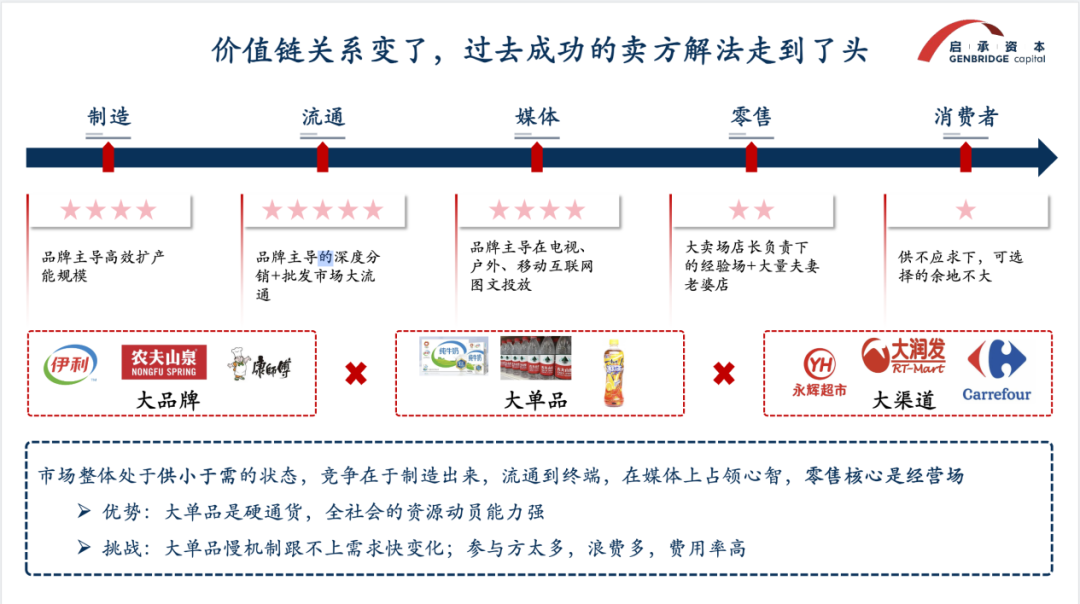
Group 1 - The core viewpoint of the article emphasizes the transition of the Chinese retail market from an incremental growth phase to a stock-based market, leading to significant changes in consumer behavior and retail strategies [5][6][10] - The company, Qicheng Capital, has focused on investing in the consumer sector since its establishment in 2016, targeting "new generation national brands" and "new generation national chains" [1][3] - The investments made by Qicheng Capital have collectively served 100 million families in China, indicating a substantial market impact [2] Group 2 - The article discusses the emergence of a "buyer solution" in the retail landscape, where the power dynamics shift from brands to retailers and consumers, reflecting a change in the value chain [11][12][14] - The current market features approximately 6 million stores in China, with a significant number being non-chain enterprises, suggesting a long way to go for the consolidation of retail chains [13] - Predictions indicate that in ten years, the market may evolve to include over 2000 large stores and 300,000 small stores centered around buyer solutions [15] Group 3 - The article highlights the importance of category management and the need for retailers to adapt to consumer demands, moving away from brand-centric strategies to a focus on category performance [17][24] - It notes that the consumer decision-making process is becoming increasingly complex, with various factors influencing purchasing behavior across different channels [30][32] - The blending of food and retail sectors is creating new opportunities for innovation, as seen in the emergence of hybrid business models [36][38] Group 4 - The article emphasizes the significance of understanding consumer segmentation and the need for retailers to tailor their offerings to specific consumer profiles [42][44] - It discusses the evolving relationships between brands and retailers, advocating for long-term partnerships based on mutual understanding and shared goals [43][45] - The future of the market is expected to be characterized by continuous innovation and the reconfiguration of product categories to meet diverse consumer needs [39][41]



汇丰:美国股票策略_为不确定、波动环境挑选的十只股票
汇丰· 2025-05-12 01:48
Investment Rating - The report highlights ten stock picks rated as "Buy" that are expected to be resilient in the current uncertain economic environment [11][23]. Core Insights - The initial sell-off in the market was broad-based, with 99% of S&P 500 stocks declining, but the recovery has been uneven, primarily driven by technology stocks [3][11]. - A bottom-up approach is recommended to understand how policies impact individual companies, especially in light of ongoing macroeconomic and policy uncertainties [4][11]. - The report anticipates continued volatility in equity markets as macro and micro data worsen, with a focus on defensive sectors [4][11]. Summary by Relevant Sections Market Overview - The S&P 500 has outperformed the equal-weighted index, with a significant contribution from technology stocks, while many sectors, particularly recession-resilient ones like healthcare, remain below pre-sell-off levels [3][22][19]. - Only 35% of S&P 500 stocks have recovered to pre-Liberation Day levels, indicating a challenging recovery landscape [3][11]. Stock Picks - **AIG (AIG US)**: Rated "Buy" with a target price of USD 93.00, expected to benefit from its solid risk management and low leverage [6][23]. - **American Tower (AMT US)**: Rated "Buy" with a target price of USD 245.00, noted for its geographical diversification and resilience in a high-tariff environment [6][24]. - **Coca-Cola (KO US)**: Rated "Buy" with a target price of USD 82.00, positioned to leverage its brand strength and local sourcing to mitigate tariff impacts [6][29]. - **Johnson & Johnson (JNJ US)**: Rated "Buy" with a target price of USD 184.00, recognized for its diversified portfolio and strong R&D pipeline [6][30]. - **McDonald's (MCD US)**: Rated "Buy" with a target price of USD 343.00, expected to benefit from its franchise model and focus on affordability [6][34]. - **Oracle (ORCL US)**: Rated "Buy" with a target price of USD 246.00, anticipated to capitalize on AI demand and improve revenue growth [6][37]. - **Procter & Gamble (PG US)**: Rated "Buy" with a target price of USD 185.00, noted for its strong brand equity and global supply chain [6][40]. - **TechnipFMC (FTI US)**: Rated "Buy" with a target price of USD 36.00, positioned to benefit from its operational efficiencies [6][43]. - **Walmart (WMT US)**: Rated "Buy" with a target price of USD 108.00, expected to maintain its market position amid economic challenges [6]. - **Waste Management (WM US)**: Rated "Buy" with a target price of USD 265.00, recognized for its stable revenue model [6].




渠道品牌的边界
Jing Ji Guan Cha Bao· 2025-05-09 14:00
Core Insights - The rise of private label brands, referred to as "channel brands," is reshaping the retail landscape in China, with retailers increasingly developing their own products to compete with traditional brands [2][4][9] - The average number of new private label products developed by retailers is projected to increase significantly from 83 in 2022 to 142 by 2024, indicating a strong trend towards self-branding in retail [2] - The emergence of channel brands is expected to lead to a transformation in retail operations and ecosystems, as retailers seek to differentiate themselves and improve profit margins [4][6] Retail Dynamics - Retail giants like Costco and Walmart have successfully leveraged their private label brands, with Costco's Kirkland accounting for one-third of its sales and Walmart deriving over 30% of its sales and more than 50% of its profits from private labels [4] - The competitive pressure from channel brands is forcing traditional brand manufacturers to lower their prices, creating a challenging environment for them [5] - The relationship between channel brands and traditional brands is complex, as retailers must balance their own products with third-party brands to maintain market viability [6][8] Market Trends - The trend of channel brands is not just a local phenomenon but reflects a broader shift in retail strategies globally, with significant implications for brand positioning and consumer perception [9][10] - The need for regulatory measures, such as a "shelf space fairness ratio," is being discussed to ensure a balanced representation of private labels and third-party brands on retail shelves [6][7] - Ultimately, the ability to capture consumer attention and loyalty will remain a critical challenge for both channel brands and traditional brands in the evolving retail landscape [8]