Qualcomm(QCOM)

Search documents
【招商电子】CES 2026跟踪报告:AI赋能依旧是主旋律,聚焦穿戴/IoT、智能车、机器人等新品创新
招商电子· 2026-01-12 12:03
Core Viewpoint - CES 2026 showcased significant advancements in AI-driven consumer electronics, with a focus on wearable devices, automotive technology, robotics, and IoT innovations, highlighting the integration of AI across various sectors [2][5][6]. Group 1: Wearable/IOT - AI glasses and camera headphones remain focal points in wearable technology, with over 50 companies participating, primarily from mainland China, emphasizing design improvements and multi-modal interactions [2][10]. - Headphone innovations shifted from audio performance to a combination of sound quality, AI integration, and multi-modal capabilities, with products featuring cameras and environmental awareness [2][13]. - New IoT categories, including smart imaging devices and AI home products, are gaining traction, with many startups entering the market [2][16]. Group 2: Automotive - AI is driving a comprehensive upgrade in automotive technology, with high-level autonomous driving expected to scale commercially [3][19]. - NVIDIA introduced the Alpamayo series of open-source AI models, enhancing the development of autonomous driving capabilities [3][19]. - Major automotive companies like Geely and Great Wall showcased their AI systems, while international brands are partnering with AI giants to enhance their offerings [3][24][26]. Group 3: Robotics - The robotics sector is evolving from household and service robots to humanoid collaboration, with significant participation from electronic companies [4][34]. - Innovations in household robots include advanced cleaning capabilities and a broader range of applications, while humanoid robots are becoming more sophisticated in interaction and movement [4][34]. - Chinese electronic companies are increasingly showcasing key components and technologies in robotics at CES 2026 [4][34]. Group 4: PC/Smartphone - Lenovo launched its first personal super intelligent system, Lenovo Qira, and announced a partnership with NVIDIA for AI infrastructure [4][36]. - Chip manufacturers like Intel, Qualcomm, and AMD are upgrading their products to enhance AI performance and user experience in PCs [4][39]. - The focus on AI integration in smartphones and PCs is expected to drive innovation and market growth in the coming years [4][39].








2027 年起高通将为大众供应车载信息娱乐系统芯片
Zhong Guo Qi Che Bao Wang· 2026-01-12 10:04
此次供应的芯片将聚焦车载信息娱乐及互联核心需求,依托高通骁龙座舱平台的技术优势,实现更流畅的多屏交互、 更精准的语音控制以及更丰富的车载娱乐生态整合,契合大众加速推进软件定义汽车战略的核心诉求。对于大众而言,与 高通的深度绑定能够强化其核心零部件采购整合能力,提升半导体技术集成专业度,为旗下车型的智能化升级提供稳定的 核心硬件支撑;而高通则可借助大众的全球市场影响力,进一步扩大汽车芯片的装机规模,巩固其在智能座舱芯片领域的 领先地位 —— 数据显示,2025 年高通汽车芯片全球市场份额已达55%,其中智能座舱芯片装机率更是高达77%,稳居行业 第一。 随着汽车行业向智能化、网联化加速转型,车载信息娱乐系统已成为车企差异化竞争的关键赛道,此次高通与大众的 长期合作,不仅是双方战略布局的重要落子,更将为全球软件定义汽车领域的技术协作提供参考范本。未来,双方有望基 于此次合作进一步拓展协作边界,在智能座舱与辅助驾驶融合等更广泛的领域深化技术联动,共同推动汽车智能化体验的 升级迭代。 高通技术公司与大众汽车集团正式签署长期供应意向书,明确自2027年起,高通将成为大众区域化软件定义汽车 (SDV)架构落地的核心技术供 ...
CES 2026 —— 万众期待
Counterpoint Research· 2026-01-12 02:45
Core Insights - CES 2026 will showcase the rise of high-performance computing, the automotive industry's shift towards a "software-first" development model, and the continued integration of embedded AI in various devices [4][5][9] Group 1: Major Players and Their Focus - NVIDIA, AMD, and Qualcomm are leading the charge towards AI-first computing, with a focus on upgrading existing chip architectures rather than launching entirely new ones [5][6][8] - NVIDIA's CEO Jensen Huang will emphasize AI's core value, showcasing advancements in data centers, AI PCs, and automotive platforms during his keynote [6][9] - AMD aims to position itself as a leader in AI solutions across cloud, edge, and personal computing, focusing on gradual enhancements rather than single blockbuster products [7][8] - Qualcomm will highlight its advancements in AI-intensive mobile platforms and its growing influence in the automotive sector, showcasing the Snapdragon 8 Elite Gen 5 chip [8][9] Group 2: Automotive Technology Trends - CES 2026 will focus on three key battles in automotive technology: the shift from hardware to software, the competitive pressure from Chinese automakers, and the acceleration of fully autonomous vehicles [10][11][12] - The event will showcase how traditional automakers and suppliers are navigating a costly and complex transition to software-defined vehicles (SDVs) [11][13] - Chinese automakers like BYD and Geely are rapidly expanding, posing significant competition to Western manufacturers, who must demonstrate their ability to bridge the software gap [11][13] Group 3: AI and Robotics - AI-driven advancements in client computing will be a recurring theme, with a focus on the integration of high-performance computing in various applications [9][14] - Robotics technology is becoming a rapidly growing vertical for semiconductor and AI platform companies, with applications spanning consumer electronics and industrial scenarios [14] - The development of lightweight, task-specific AI solutions will continue to dominate, particularly in the context of memory constraints and security considerations [14] Group 4: Consumer Technology Innovations - The CES 2026 will see the rise of AI PCs transitioning from early adoption to mainstream applications, with a focus on productivity and workflow enhancements [15][20] - OLED technology is expected to expand significantly in laptops, monitors, and high-end tablets, particularly in gaming and creative fields [23][26] - New health tech innovations, such as in-ear brainwave sensors and hormone detection devices, will be showcased, highlighting the integration of AI in health monitoring [19][22]

CES高通见闻:「小鸟到大象」,差了4个数量级的AI终端都能跑通?
Xin Lang Cai Jing· 2026-01-11 05:54
炒股就看金麒麟分析师研报,权威,专业,及时,全面,助您挖掘潜力主题机会! (来源:科技行者) 作者:高飞 来CES,高通必然是一个不能错过的站点。 我给一个三段论的解释:CES的本质是消费电子展,消费电子的主要形态是终端,而要说有什么企业能 和各种类型的终端都发生关系,这家企业就是高通。 实际上,我在CES上看到的第一个有高通印记的设备,还不是在高通展台,而是在联想展台:一款叫 Project Maxwell的AI吊坠,用的就是高通的技术。 真正到了高通展台,人潮从一面墙绕到另一面,目光所及之处更是各种「终端」。所以一个自然的问题 是:这些终端有什么共通因素?来CES之前,高通组织了一场展前沟通会,高通技术公司市场高级总监 Catherine Baker用两个词概括今年的主题:个人AI和物理AI。高通技术公司产品市场副总裁Ignacio Contreras则介绍了汽车、机器人等具体业务的进展。 所谓「个人AI」,就是「以用户为中心的AI」,在你身边能看、能听、能说、能执行任务,比如智能 手机、PC、可穿戴、XR、智能家居等;所谓「物理AI」,就是「提升各行业水平的AI」,在物理世界 里能感知、能处理、能行动、 ...
XR硬件拆解及BOM成本报告:META DISPLAY AR眼镜
维深信息· 2026-01-11 05:49
Investment Rating - The report does not explicitly provide an investment rating for the industry or the specific product analyzed. Core Insights - The Meta Display AR glasses represent a significant advancement in the AI+AR eyewear market, featuring a dual-chip architecture with Qualcomm AR1 Gen1 and NXP RT700 series MCU, and a monocular display solution. This product serves as a benchmark for the consumer market and offers practical and forward-looking solutions for the evolving AI+AR eyewear industry [5][6]. Summary by Sections 1. Product Configuration - The Meta Display AR glasses are equipped with Qualcomm AR1 Gen1 SOC, 2+32 GB storage, WiFi 6, Bluetooth 5.3, and various sensors including a six-axis IMU and capacitive proximity sensor. The optical components include a 2D expansion array waveguide and photochromic lenses, supporting custom prescription lenses [12][13]. 2. Hardware Analysis - The report provides a detailed disassembly of the core components, including the mainboard, sensors, optical modules, and power systems. It highlights the technical characteristics and assembly logic of each part, emphasizing the innovative design choices made in the hardware architecture [5][6]. 3. Supply Chain Overview - The report outlines the key suppliers for the Meta Display AR glasses, including Schott, Lumus, Goer, OmniVision, Qualcomm, and NXP. It analyzes the global collaboration and domestic supplier penetration within the AI eyewear industry ecosystem [6]. 4. Cost Structure - The Bill of Materials (BOM) cost for the Meta Display AR glasses is approximately $553.79, with a comprehensive hardware cost of $480.79. After accounting for the exchange rate of 7.1 and a VAT of 13%, the after-tax cost is approximately 4443.06 CNY, excluding additional costs such as MR1 fees and mold fees [6]. 5. Testing and Performance Data - The report includes extensive testing data on the optical performance of the waveguide lenses, including stress tests and reflectivity tests, providing insights into the optical quality and durability of the components used in the Meta Display AR glasses [6][8]. 6. Membership and Access - The complete report consists of 91 pages and is available for purchase or through membership, providing in-depth analysis and data for industry professionals and enthusiasts [6][8].


三大客户,抢爆台积电2nm
半导体行业观察· 2026-01-11 04:23
公众号记得加星标⭐️,第一时间看推送不会错过。 科技新闻网站《wccftech》报导,台积电2纳米投片(tape-out)量已达3纳米制程的1.5倍,苹果、 高通与联发科是主要客户。分析师指出,台积电2纳米制程的空前需求,使台积电在人工智能(AI) 加速器市场上维持95%市占率。 报导说,今年下半年,台积电2纳米制程的量产芯片将上市。联发科宣布,已于去年完成其首款2纳米 制程系统单芯片(SoC)的投片。如同这家台湾IC设计公司,一些其他客户也排队下单台积电新一代 制程,最新消息指出,台积电2纳米制程的投片量已是3纳米制程的1.5倍,显示其需求十分强劲。 知名半导体爆料人士@jukan05分享摩根大通的报告指出,台积电2纳米制程需求动能强劲,投片量是 3纳米制程的1.5倍。拜2纳米时代来临之赐,台积电预料在AI加速器市场,仍维持逾95%的市占率。 即使是英特尔,也在其自家产品中增加采用台积电2纳米制程。英特尔近期才在拉斯维加斯举行的消 费性电子展(CES)上,首度展示采用其18A技术的Panther Lake Core Ultra系列3芯片。 报导说,由于AI狂潮,预定今年底,台积电2纳米制程晶圆的月产量将达1 ...


Assessing Qualcomm Stock Amid Its AI Ambitions
247Wallst· 2026-01-10 21:48
Core Viewpoint - Qualcomm is expanding into AI data centers and robotics, which may enhance its stock performance despite its shares only increasing by 15% over the past five years [1] Business Performance - Qualcomm reported a 10% year-over-year revenue growth in Q4 FY25 and a 14% increase in earnings before taxes, indicating positive momentum for the company [3] - The company's Q1 FY26 guidance suggests a revenue midpoint of $12.2 billion, reflecting a 5% year-over-year increase, indicating potential for continued growth [4] AI Investments and Market Potential - Qualcomm's success in AI will depend on the performance of its AI chips against competitors, with the potential for businesses to invest in Qualcomm's products to reduce costs [6] - HUMAIN has become the first customer for Qualcomm's AI inference-optimized chips, and Qualcomm anticipates its IoT segment will grow from $6.6 billion to $14 billion by fiscal 2025, representing a 21% annualized growth rate [7] Competitive Landscape - Qualcomm faces intense competition from major tech companies that have developed effective AI chips generating substantial sales [9] - Despite the competition, the demand for AI chips remains high, with tech giants planning to increase their spending on AI technology in 2026 [10] Investment Considerations - The AI industry is expected to have multiple winners as spending increases, and investors should monitor Qualcomm's progress in AI chips [11] - Qualcomm's stock is characterized as a relatively slow mover, providing investors with an opportunity to enter the market early once momentum builds [11]

抢攻Wi-Fi 8
3 6 Ke· 2026-01-10 09:03
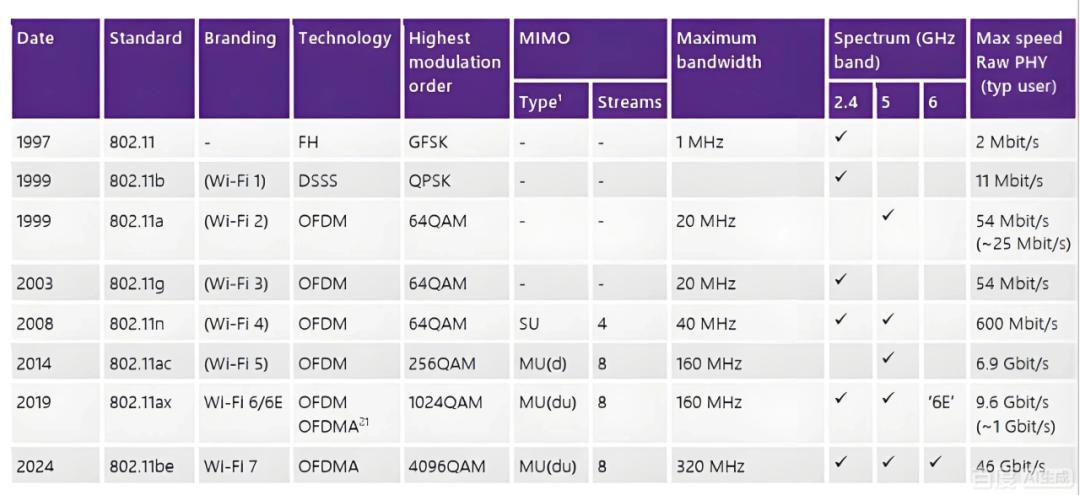
Group 1 - The CES 2026 showcased products labeled "Wi-Fi 8" from major industry players like MediaTek, Broadcom, and ASUS, indicating a strong interest in this emerging technology despite the standard not being finalized yet [1] - The Wi-Fi technology has evolved significantly since its inception in 1991, with various standards being introduced over the years, each improving speed and reliability [2][3][4] - The introduction of Wi-Fi 7 (802.11be) is expected to revolutionize wireless communication with features like 320MHz channels and a theoretical peak speed of 46Gbps, catering to high-bandwidth applications [5][10] Group 2 - Wi-Fi 8 is being developed to focus on "Ultra High Reliability" (UHR), addressing the need for stable connections in complex environments, which is crucial for applications like remote surgery and industrial automation [13][15] - Major companies are already preparing for Wi-Fi 8, with MediaTek launching its Filogic 8000 series solutions, which enhance signal coverage and reduce latency for various devices [23][25][26] - Broadcom is adopting a dual-track strategy by offering complete Wi-Fi 8 chip solutions and licensing its IP to accelerate the adoption of edge AI technologies [27][30] Group 3 - Qualcomm is leading the standardization efforts for Wi-Fi 8, focusing on enhancing reliability and low latency in complex environments, with plans to release a full suite of Wi-Fi 8 products by 2026 [32][33] - Intel is in the prototype validation stage for its Wi-Fi 8 chips, emphasizing AI integration to improve network performance in high-density scenarios [34] - The successful adoption of Wi-Fi 8 will depend on a robust ecosystem involving chip manufacturers, device makers, and standard organizations, with various companies already showcasing Wi-Fi 8 compatible products [35][36]

环球直击美国CES展:更少和更强大的中国企业正在重新定义AI竞争的规则
Huan Qiu Wang Zi Xun· 2026-01-10 05:33
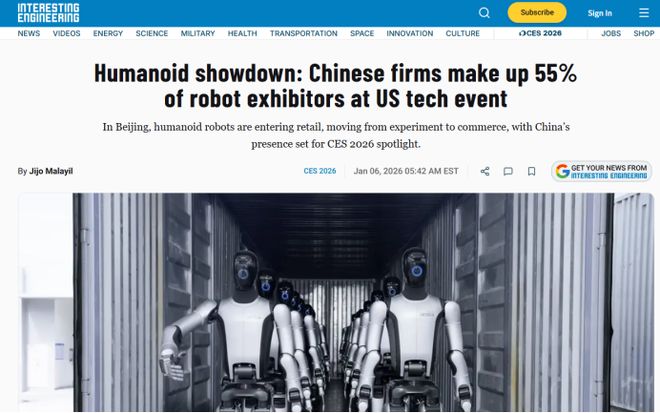
Core Insights - The CES 2026 showcased AI as the central theme, emphasizing human-centric applications and the integration of AI into various sectors [1][3][6] - The competition in the chip industry was highlighted, with major players like NVIDIA, AMD, Intel, and Qualcomm presenting their advancements in AI infrastructure [3][9] - The exhibition marked a shift from hardware-centric displays to a focus on ecosystem definition and strategic collaboration among companies [4][16] AI and Robotics - CES 2026 introduced a dedicated area for AI and quantum innovation, showcasing practical applications of embodied intelligence and advancements in autonomous driving [3][4] - The event demonstrated a transition from conceptual robot designs to practical solutions addressing real-world challenges in home services and industrial logistics [3][11] - Chinese companies showcased significant advancements in robotics, with a focus on self-developed core components and solutions for logistics and manufacturing [11][13] Chinese Companies' Participation - The number of Chinese exhibitors in the core professional pavilion decreased to 207 from 1,475 in 2025, indicating a structural adjustment in participation [4][5] - The remaining Chinese companies at CES were required to demonstrate AI-related functionalities, reflecting a shift towards more innovative and integrated product offerings [5][6] - Major Chinese firms like Lenovo showcased their global influence by hosting large-scale events, indicating a strategic focus on ecosystem development [6][16] Competitive Landscape - The competition is evolving from hardware specifications to a comprehensive narrative that includes both foundational technology and application capabilities [7][16] - The contrasting approaches of Chinese and American tech companies in building AI ecosystems highlight differences in strategic thinking and resource allocation [8][15] - Chinese automotive companies emphasize full-stack self-research and vertical integration, while Western firms focus on open software ecosystems and long-term evolution [15][16] Future Implications - The CES 2026 signals a shift in global tech competition towards defining future technology ecosystems and industry standards [16][17] - Companies that can navigate the complexities of AI and contribute to ecosystem building are likely to remain at the forefront of technological advancement [17]
抢攻 Wi-Fi 8
半导体行业观察· 2026-01-10 03:37
Core Viewpoint - The article highlights the evolution of Wi-Fi technology, focusing on the upcoming Wi-Fi 8 standard, which aims to enhance reliability and performance in wireless communication, addressing the growing demand for stable connections in various applications such as IoT, AR/VR, and industrial automation [11][14][40]. Group 1: Wi-Fi Technology Evolution - Wi-Fi technology originated in 1991 with the creation of "WaveLAN" by NCR, leading to the establishment of the 802.11 standard by IEEE in 1997, which initially offered a maximum speed of 2 Mbps [2]. - The introduction of 802.11b and 802.11g standards in the early 2000s increased speeds to 11 Mbps and 54 Mbps respectively, facilitating the initial adoption of Wi-Fi in home environments [2]. - The 802.11n standard (Wi-Fi 4) released in 2009 significantly improved speeds to 600 Mbps and introduced MIMO technology, paving the way for multi-device connectivity [3]. - The 802.11ac standard (Wi-Fi 5) launched in 2013 further enhanced speeds to 6.9 Gbps, catering to high-definition content needs [4]. - Wi-Fi 6 (802.11ax) introduced in 2019 improved network efficiency by supporting multiple devices simultaneously, achieving speeds of 9.6 Gbps [5]. Group 2: Wi-Fi 7 and Market Adoption - Wi-Fi 7 (802.11be) was officially commercialized in December 2023, supporting theoretical peak speeds of 46 Gbps and low latency for applications like cloud gaming and XR [5][8]. - The adoption of Wi-Fi 7 is expected to accelerate, with shipments projected to rise from 26.3 million units in 2024 to 66.5 million in 2025, and reaching 117.9 million by 2026 [8][9]. - By 2026, total shipments of Wi-Fi 7 devices are anticipated to reach 1.1 billion units, including significant contributions from IoT and healthcare devices [9]. Group 3: Wi-Fi 8 Development and Features - Wi-Fi 8, defined by the IEEE 802.11bn task group, aims to provide ultra-high reliability (UHR) and is expected to address the limitations of previous standards in complex environments [11][14]. - Key features of Wi-Fi 8 include enhanced coordination between access points, congestion avoidance mechanisms, and improved modulation schemes, which collectively aim to ensure stable connections even under high-density conditions [17][18]. - The standard is projected to be finalized by March 2028, with industry players already beginning to develop products based on its draft specifications [19][20]. Group 4: Industry Players and Strategies - MediaTek has launched its Filogic 8000 series for Wi-Fi 8, focusing on applications in gateways and various devices, with plans for mass production by the end of 2027 [21][25]. - Broadcom is employing a dual-track strategy by offering complete Wi-Fi 8 chip solutions while also licensing its IP to accelerate adoption across various sectors [26][31]. - Qualcomm is leading the standardization efforts and plans to unveil a comprehensive Wi-Fi 8 product lineup at the 2026 Mobile World Congress, emphasizing reliability and low latency [33][34]. - Intel is focusing on AI integration within Wi-Fi 8, enhancing network performance in high-density environments through intelligent resource management [35].