Sanofi(SNY)

Search documents
赛诺菲降脂药波立达退市 百亿PCSK9抑制剂市场格局重塑
2 1 Shi Ji Jing Ji Bao Dao· 2025-08-05 23:11
Core Viewpoint - Sanofi's new lipid-lowering drug, Praluent (alirocumab injection), will cease promotion and gradually exit the Chinese market by July 2025 due to global supply issues and strategic adjustments in its cardiovascular market approach [2][4]. Summary by Sections Product Withdrawal - Praluent was approved in China in December 2019 and included in the national medical insurance list in 2021, with its price reduced from 1982 yuan to 306 yuan per injection, a drop of over 80% [4]. - The withdrawal is attributed to increased competition from domestic PCSK9 inhibitors and supply challenges exacerbated by global raw material shortages [4][10]. Market Competition - The PCSK9 inhibitor market in China is becoming increasingly competitive, with several domestic products entering the market [8][10]. - By 2030, the domestic PCSK9 market is expected to exceed 10 billion yuan [9]. Financial Performance - Sanofi reported a second-quarter product sales revenue of 99.94 billion euros (approximately 110 billion USD), a 10.1% increase, and a half-year revenue of 198.89 billion euros (approximately 219 billion USD), a 9.9% increase [5]. - The cardiovascular segment's performance has been underwhelming, indicating challenges in this area [7]. Future Opportunities - The exit of Praluent opens up opportunities for domestic pharmaceutical companies to capture market share, leveraging price advantages and localized marketing strategies [10][11]. - Competitors like Amgen's Repatha and Novartis's Leqvio are also gaining traction, with Leqvio achieving sales of 333 million USD in the first half of 2024 [10][11]. Market Dynamics - The competition is expected to drive innovation, leading to the development of more effective and affordable lipid-lowering products [11]. - The stock market has reacted positively to the news of Praluent's exit, indicating investor confidence in the prospects of domestic alternatives [11].


国产竞品围攻+原料供应紧张 赛诺菲一款降脂药上市仅5年就宣布退出中国市场
Mei Ri Jing Ji Xin Wen· 2025-08-05 14:14
Core Viewpoint - Sanofi has decided to cease the promotion of its cholesterol-lowering drug, Polatad (Alirocumab injection), in the Chinese market due to global supply issues and a shift in its cardiovascular market strategy [1][6]. Market Dynamics - The PCSK9 market is becoming increasingly competitive, with more domestic alternatives being included in the National Medical Insurance Drug List, leading to a more diversified market [6][7]. - Polatad's market share has been significantly eroded by competitors, with sales figures showing a rise in sales for rival products like Repatha (from 130 million yuan to 1.323 billion yuan) while Polatad's sales increased from 17 million yuan to 629 million yuan during the same period [7]. Patient Impact - Patients using Polatad have expressed minimal concern regarding its withdrawal, indicating that they can easily switch to alternative medications without significant issues [2][5]. - Clinical experts have noted that the mechanism of action for PCSK9 inhibitors is similar across different products, suggesting that patients can transition between these medications without adverse effects [4][8]. Clinical Alternatives - Multiple alternatives to Polatad are available, including Repatha and domestic products like Xinbile (Torlipressin) and other PCSK9 monoclonal antibodies, which have been approved and are effective in lowering LDL-C levels [6][8]. - The introduction of new therapies, such as Novartis's siRNA drug inclisiran, which offers a more convenient dosing schedule, further enhances the options available for patients [8].
阿利西尤单抗为何在中国停供?赛诺菲:原料药供应紧张及管线优化
Bei Ke Cai Jing· 2025-08-05 11:51
Core Viewpoint - Sanofi has confirmed the cessation of the supply of Alirocumab injection (brand name: Praluent) in the Chinese market due to global raw material supply issues and a strategic shift in its cardiovascular market approach [1][3][5] Group 1: Product Information - Alirocumab is the first PCSK9 inhibitor approved globally, entering the Chinese market in December 2019, with indications for cardiovascular event prevention and lowering LDL cholesterol levels [2][3] - The drug was included in the national medical insurance directory in 2021, with its price reduced from 1982 yuan to 306 yuan per injection [2] Group 2: Market Dynamics - The competitive landscape for PCSK9 inhibitors is intensifying, with more domestic products being included in the 2025 National Medical Insurance Drug List, leading to a more diversified market [5][6] - The PCSK9 drug market in China is projected to reach 8.9 billion yuan by 2030, with a compound annual growth rate of 43.5% from 2022 to 2030 [6] Group 3: Company Strategy - Sanofi is optimizing its cardiovascular product pipeline and has acquired rights to develop and commercialize new drugs in the region, including aficamten and the investigational drug Plerixafor [3][7] - The company aims to align its product and pipeline decisions with China's health policy directives, focusing on chronic disease prevention and treatment [8]
赛诺菲停止降脂药“波立达”的中国供应;天坛生物宣布拟放弃收购派林生物的商业机会
Mei Ri Jing Ji Xin Wen· 2025-08-04 23:59
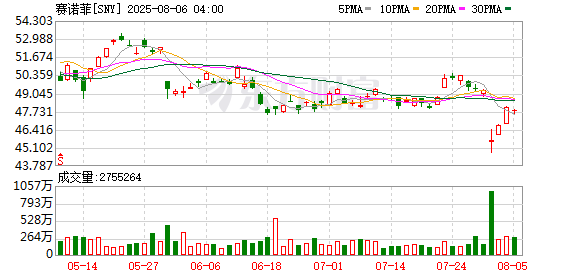
Group 1 - Sanofi has confirmed the cessation of its cholesterol-lowering drug "Polaida" (generic name: Alirocumab injection) supply in the Chinese market due to global supply issues and strategic optimization in the cardiovascular market [1] - This decision may lead investors to reassess Sanofi's positioning in the competitive Chinese cholesterol drug market, potentially impacting its market share and revenue expectations, which could affect stock performance and investor confidence [1] Group 2 - China Resources Medical has issued a profit warning, expecting a year-on-year profit decline of approximately 20% to 25% for the first half of the year, primarily due to a decrease in average medical insurance expenses affecting the profitability of member medical institutions [2] - Excluding one-time gains, the profit decline is more pronounced, indicating pressure on the company's core business, which may impact investor confidence and put short-term pressure on stock prices [2] Group 3 - AI pharmaceutical company Jitai Technology has announced the completion of a 400 million RMB Series D financing round, led by Beijing Medical Health Industry Investment Fund and Daxing District Industrial Investment Fund [3] - The funding will accelerate the advancement of Jitai Technology's strategic priorities, indicating recognition of the company's technology and market potential, which may enhance competitiveness and attract more attention [3] Group 4 - Tiantan Biological has announced its intention to abandon the acquisition opportunity of Pailin Biological, aligning with its prudent management approach to protect investor interests [4] - This decision is not expected to adversely affect the company's operations, and investors are encouraged to monitor further commitments from China Biological regarding the acquisition [4] Group 5 - The National Healthcare Security Administration has held five symposiums to discuss support for innovative drugs and medical devices, outlining five key directions for policy support [5] - These discussions are expected to enhance market confidence in innovative pharmaceutical companies, attract more investment into drug development, and boost valuations in the sector, contributing to the long-term growth of the innovative drug market [5]


赛诺菲停止降脂药“波立达”的中国供应;天坛生物宣布拟放弃收购派林生物的商业机会 | 医药早参
Mei Ri Jing Ji Xin Wen· 2025-08-04 23:57
Group 1 - Sanofi has confirmed the cessation of its cholesterol-lowering drug "Polaida" (generic name: Alirocumab injection) supply in the Chinese market due to global supply issues and strategic optimization in the cardiovascular market [1] - The decision may lead investors to reassess Sanofi's positioning in the competitive Chinese cholesterol drug market, potentially impacting its market share and revenue expectations, which could affect stock performance and investor confidence [1] Group 2 - China Resources Medical has issued a profit warning, expecting a year-on-year decline of approximately 20% to 25% in its net profit for the first half of the year, primarily due to a decrease in average medical expenses under the insurance scheme [2] - The significant drop in profit, excluding one-time gains, indicates pressure on the company's core business, which may affect investor confidence and put short-term pressure on the stock price [2] Group 3 - AI pharmaceutical company Jitai Technology has announced the completion of a 400 million RMB Series D financing round, led by Beijing Pharmaceutical Health Industry Investment Fund and Daxing District Industrial Investment Fund [3] - The funding will accelerate the advancement of Jitai Technology's strategic priorities, indicating recognition of its technological and market potential, which may enhance competitiveness and attract more attention, driving up valuation and market confidence [3] Group 4 - Tiantan Biological has announced its intention to abandon the acquisition opportunity of Pailin Biological, with China National Biological planning to proceed with the acquisition based on overall strategic development [4] - This decision aligns with Tiantan Biological's focus on stable operations and is seen as beneficial for protecting investor interests, with no adverse impact on the company's production and operations [4] Group 5 - The National Healthcare Security Administration has held five symposiums to discuss support for innovative drugs and medical devices, covering various topics including comprehensive value assessment and real-world research [5] - These meetings signal positive policy support for innovative drug development, which may enhance market confidence in innovative pharmaceutical companies, attract more investment into drug research, and boost valuations in the sector [5]
知名降脂药将撤离中国市场
2 1 Shi Ji Jing Ji Bao Dao· 2025-08-04 14:27
Core Viewpoint - The withdrawal of the once-prominent cholesterol-lowering drug, Praluent (alirocumab), from the Chinese market highlights the intense competition and challenges faced by pharmaceutical companies in this sector [1][2][3]. Company Summary - Sanofi confirmed the cessation of Praluent's supply in China due to global supply issues and a strategic shift in its cardiovascular market approach, including the acquisition of rights for new drugs [1][3]. - The price of Praluent dropped significantly from 1982 yuan to 306 yuan per injection after being included in the national medical insurance list, marking an 84.56% decrease [1][3]. - Sanofi's second-quarter product sales reached approximately 99.94 billion euros (about 110 billion USD), with a year-on-year growth of 10.1% [4]. Industry Summary - The PCSK9 inhibitor market in China is becoming increasingly competitive, with several domestic companies entering the space, which is expected to exceed 10 billion yuan by 2030 [6][7]. - Currently, there are seven approved PCSK9-targeting products in China, with four being domestic drugs, indicating a shift in market dynamics following Praluent's exit [7][8]. - Analysts suggest that domestic pharmaceutical companies can capitalize on Praluent's withdrawal to expand their market share and enhance product promotion strategies [8][9].
知名降脂药将撤离中国市场
21世纪经济报道· 2025-08-04 14:25
Core Viewpoint - The withdrawal of the once-prominent cholesterol-lowering drug, Poylid, from the Chinese market highlights the intense competition in the pharmaceutical industry, particularly in the PCSK9 inhibitor segment [2][3]. Summary by Sections Market Dynamics - Poylid, a PCSK9 inhibitor, was approved for the Chinese market in December 2019 and was included in the national medical insurance list in 2021, leading to a significant price drop from 1982 yuan to 306 yuan per injection, a decrease of 84.56% [1][4]. - The drug will cease promotion in China starting July 2025 due to global supply issues and a strategic shift in Sanofi's cardiovascular market approach [1][4]. Competitive Landscape - The market for PCSK9 inhibitors is becoming increasingly competitive, with more domestic products being included in the insurance reimbursement list, making the market more diversified [4][9]. - Currently, there are seven approved PCSK9 products in China, with Poylid's exit leaving six competitors, four of which are domestic products [9][10]. Financial Performance - Sanofi reported a product sales revenue of 99.94 billion euros (approximately 110 billion USD) in Q2, with a year-on-year growth of 10.1% [5]. - The cardiovascular segment's performance has been underwhelming, indicating challenges in this area for Sanofi [6]. Future Opportunities - The exit of Poylid presents a significant opportunity for domestic PCSK9 inhibitor manufacturers to capture market share and accelerate product promotion [10][11]. - Analysts predict that the competition will drive innovation, leading to the development of more effective and affordable cholesterol-lowering products [10]. Market Reaction - Following the announcement of Poylid's withdrawal, stocks of domestic pharmaceutical companies, such as Jingxin Pharmaceutical, saw an increase, reflecting investor optimism regarding the prospects for domestic alternatives [11].

赛诺菲降脂药波立达撤离中国,百亿PCSK9抑制剂市场格局重塑
2 1 Shi Ji Jing Ji Bao Dao· 2025-08-04 12:29
Core Viewpoint - Sanofi's new lipid-lowering drug, Praluent (alirocumab injection), will cease promotion and gradually exit the Chinese market due to global supply issues and strategic adjustments in the cardiovascular market [1][2]. Group 1: Product and Market Dynamics - Praluent was approved in China in December 2019 for the prevention of cardiovascular events in adults with atherosclerotic cardiovascular disease (ASCVD) and for lowering LDL cholesterol in patients with primary hypercholesterolemia [2]. - The drug was included in the National Medical Insurance catalog in 2021, with its price reduced from 1982 yuan to 306 yuan per injection, a decrease of over 80% [2]. - Despite its initial success, Praluent faced intense competition from domestic PCSK9 inhibitors, leading to its decision to exit the market [2][4]. Group 2: Competitive Landscape - The Chinese PCSK9 market is expected to exceed 10 billion yuan by 2030, with multiple domestic competitors entering the space [5]. - Currently, there are seven approved PCSK9 products in China, with four being domestic drugs. Following Praluent's exit, the remaining six products will compete for market share [5][6]. - Competitors like Amgen's Repatha and Novartis' Leqvio have shown strong market performance, with Leqvio achieving sales of $333 million in the first half of 2024 [6]. Group 3: Future Opportunities - The exit of Praluent presents an opportunity for domestic pharmaceutical companies to expand their market share and accelerate product promotion [7]. - Analysts suggest that the competition will drive innovation, leading to the development of more effective and affordable lipid-lowering products [7]. - The stock prices of domestic companies, such as Jingxin Pharmaceutical, have risen in response to Praluent's withdrawal, indicating investor confidence in the potential for domestic alternatives [7].
赛诺菲降脂药波立达退出中国市场
Guo Ji Jin Rong Bao· 2025-08-04 12:20
Core Viewpoint - Sanofi has ceased the supply of its new lipid-lowering drug, Praluent (alirocumab injection), in the Chinese market due to global supply issues and a strategic shift in its cardiovascular market approach [1][4]. Company Summary - Sanofi has officially notified multiple hospitals about the discontinuation of Praluent in China [2]. - Praluent is a PCSK9 inhibitor used for the prevention of cardiovascular events and treatment of primary hypercholesterolemia and mixed dyslipidemia. It was one of the first PCSK9 monoclonal antibodies approved globally, receiving approval in the U.S. in 2015 and entering the Chinese market in 2020 [4]. - The price of Praluent in China was significantly reduced from 1982 RMB to 306 RMB per injection after being included in the national medical insurance [4]. - Despite the withdrawal of Praluent, Sanofi plans to fill the gap in its cardiovascular pipeline by acquiring exclusive rights to Aficamten, a new cardiac myosin inhibitor, in Greater China, and has also secured rights to another investigational drug, Plerixafor [4][5]. Industry Summary - There are currently seven approved PCSK9-targeted products in China, including three from multinational companies and four from domestic firms. The other products include those from Amgen, Novartis, and Innovent Biologics [7]. - Amgen's Repatha (evolocumab) and Innovent's Xinbile (torcetrapib) are among the alternatives available to patients following Praluent's exit [7]. - Sanofi's recent financial report indicated a revenue of 10 billion euros (approximately 11.4 billion USD) for Q2, with a 10.1% growth, and a total revenue of 19.889 billion euros (approximately 22.8 billion USD) for the first half of the year, reflecting a 9.9% increase [8].
专访赛诺菲大中华区总裁施旺:专注创新,是跨国企业在中国成功的唯一路径
Di Yi Cai Jing· 2025-08-04 10:24
Core Insights - The appointment of a local president for Sanofi China marks a significant shift in the company's strategy, reflecting the importance of the Chinese market as the second largest after the US [1] - Since the appointment, Sanofi has seen a dramatic increase in innovation metrics in China, including a sixfold increase in new drug applications and a tenfold increase in the global share of new drug pipelines [1] - The Chinese healthcare reform, particularly since the establishment of the National Healthcare Security Administration in 2018, has focused on cost-saving measures to support innovative drug payments [1] Market Dynamics - Sanofi has actively pursued acquisitions to enhance its product offerings, including recent agreements to acquire rights for innovative drugs in the cardiovascular and metabolic fields [2] - The aging population in China presents significant challenges, with chronic diseases becoming more prevalent, necessitating a strategic focus on meeting patient needs [2][3] - The company has gained the authority to independently purchase drug pipelines, a first for any country market within Sanofi, indicating the growing importance of China in the global pharmaceutical landscape [6] Innovation Strategy - Innovation is a central theme in Sanofi's strategy, with a focus on aligning product development with China's healthcare policies and disease challenges outlined in the "Healthy China 2030" plan [7][12] - The company is shifting its approach to pipeline acquisitions, now willing to invest in early to mid-stage assets, reflecting increased confidence in China's innovation capabilities [8] - Sanofi's participation in both national negotiations and centralized procurement demonstrates a unique strategy that balances immediate market needs with long-term innovation goals [9][11] Future Outlook - The potential for commercial health insurance in China is significant, with expectations that its share of total medical expenses could double in the next five years [14] - The Chinese pharmaceutical market is expected to see a substantial increase in innovative drug pipelines, with predictions that over 30% of global innovations may originate from China in the next five years [16][17] - The integration of AI in drug development and decision-making processes is anticipated to enhance efficiency and innovation in the pharmaceutical sector [19]