[Register now] Enterprise Data & Tech Summit — tune in live
彭博Bloomberg· 2026-03-06 06:16
Core Insights - The article discusses the evolving challenges and opportunities organizations face in managing and utilizing data as markets, technologies, and regulatory landscapes change across Asia [1] Group 1: Event Overview - The inaugural Asia edition of Bloomberg's Enterprise Data & Tech Summit will be held virtually, focusing on how industry leaders are addressing challenges and leveraging opportunities in data and technology [2] - Key topics include the application of advanced data science, machine learning, and AI by hedge funds and asset managers to generate new performance sources [2] - The summit will also cover front office automation, exploring how real-time feeds and pricing data enable sophisticated trading strategies [3] Group 2: Speaker Lineup - Notable speakers include the Global Head of Non-Financial Risk Analytics at HSBC, the Co-Head of Quantitative Equities Strategies at HSBC Asset Management, and the Principal Data Engineer at Polynomial Partners [5][6] - Other speakers include the Head of Global Markets Asia at BBVA and the Chief Technologist at Amazon Web Services (AWS) [7]


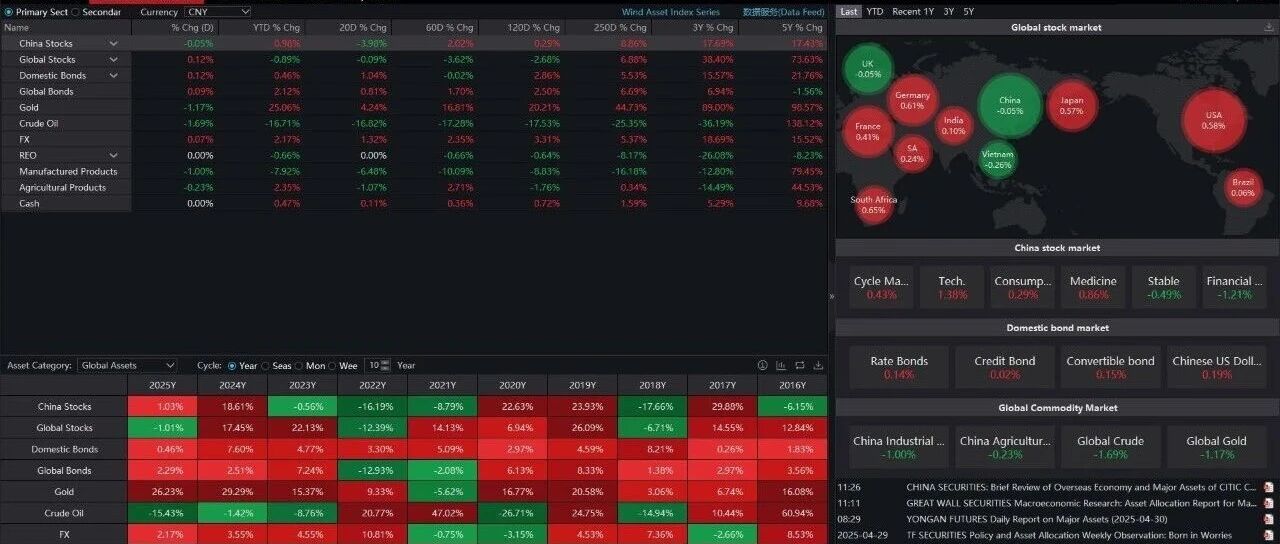
March Preview | Top-Notch Courses + Wind Alice
Wind万得· 2026-03-04 02:00
Course Offerings - Wind continues to provide high-quality online courses globally, with a focus on various themes including AI, investment research, corporate strategies, and ESG [2][3][5] - Upcoming courses in March 2026 include topics such as AI agents in product decision-making, streamlining investment research, and aligning ESG ratings with new disclosure rules [2][3] Course Schedule - The March course schedule features weekly live broadcasts on Thursdays, with specific topics scheduled for March 5, 12, 19, and 26 [2][3][4] - Notable courses include "The Rise and Fall of the Real Estate Industry" on March 11 and "Fund Factor Analysis: Optimizing Investment Portfolios" [3][5] Highlights from February - The article mentions a recap of February highlights, indicating a focus on earnings preview and establishing benchmark analysis frameworks for public funds [5][6]
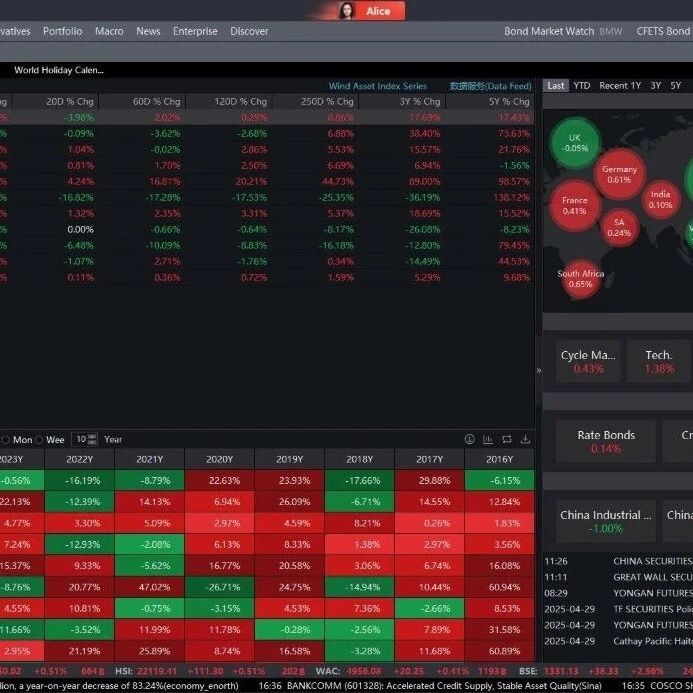
February Preview | Top-Notch Courses + Wind Alice
Wind万得· 2026-02-03 01:31
Group 1 - The article highlights the upcoming online courses offered by Wind, focusing on themes such as AI efficiency gains and public fund analysis [2][3]. - Courses scheduled for February 2026 include topics like "Earnings Preview Season: AI Efficiency Gains Capture Industry Inflection Points" on February 5 and "Establishing a Benchmark Analysis Framework for Public Funds" on February 26 [2][3]. - January's highlights recap includes courses on AI-driven derivatives, gold price logic, and empowering money market and interest rate bond traders [6]. Group 2 - Wind emphasizes the importance of establishing a global foothold and winning in the future through its training series [7].
qwen -max-thinking
小熊跑的快· 2026-01-27 00:22
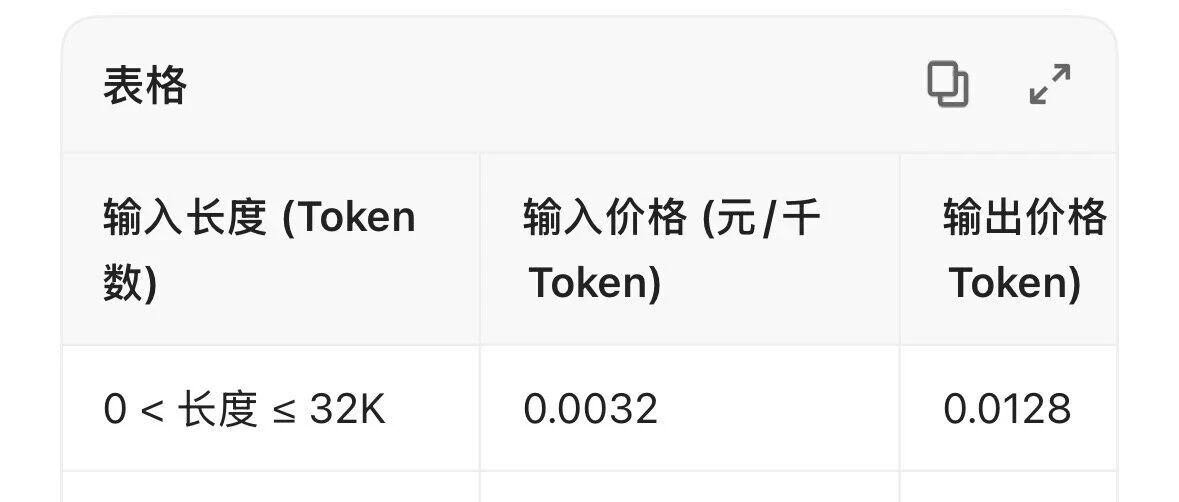
Core Insights - The article discusses the Qwen3-Max-Thinking reasoning model, highlighting its significant performance improvements through technological innovations. Group 1: Core Innovations - The model features an adaptive tool invocation capability, allowing it to autonomously judge and utilize built-in functions like search engines and code interpreters, reducing the likelihood of generating false information [1] - Test-Time Scaling is introduced as an efficient reasoning strategy, enabling the model to extract key insights from past reasoning processes, thus enhancing performance without increasing computational costs [1] Group 2: Performance Metrics - Qwen3-Max-Thinking achieved a score of 58.3 in the "Human Last Exam" (HLE) assessment, surpassing competitors like GPT-5.2-Thinking (45.5) and Gemini 3 Pro (45.8), although it still has room for improvement in specific areas [1] Group 3: Application Benefits - The model has over one trillion parameters and has undergone extensive reinforcement learning, establishing a strong foundation for reasoning and knowledge integration capabilities [2] - It possesses robust agent capabilities, enabling it to autonomously complete complex task processes beyond mere text generation [2] Group 4: Pricing Structure - The pricing for input and output tokens varies based on length, with specific rates outlined for different token ranges, indicating a structured cost model for usage [3] - Comparatively, Qwen's pricing for one million tokens is 3.2 yuan for input and 12.8 yuan for output, positioning it within a competitive pricing landscape [5]
Cowork
小熊跑的快· 2026-01-19 12:12
Core Viewpoint - Cowork, the latest product from Anthropic, is an AI coding tool designed for non-developers, integrating AI into the development process itself [1] Group 1 - Cowork is aimed at ordinary users who do not need programming knowledge, as it automates coding tasks within the workflow [2] - Users can grant Cowork access to specific folders on their computers, allowing it to perform tasks such as organizing files, writing reports, and creating spreadsheets based on screenshots [2] - The tool operates more autonomously than typical chat applications, planning and executing tasks while providing progress updates [2] Group 2 - Currently, Cowork is only compatible with macOS, utilizing a local virtual machine to read documents with fine-grained permission control [2] - This integration of cloud AI with local documents enhances both intelligence and security, creating significant potential for future applications [3] - The overseas reception of Cowork has been very positive, suggesting that domestic AI models could learn from this approach to combine cloud and terminal AI for personalized experiences [3]

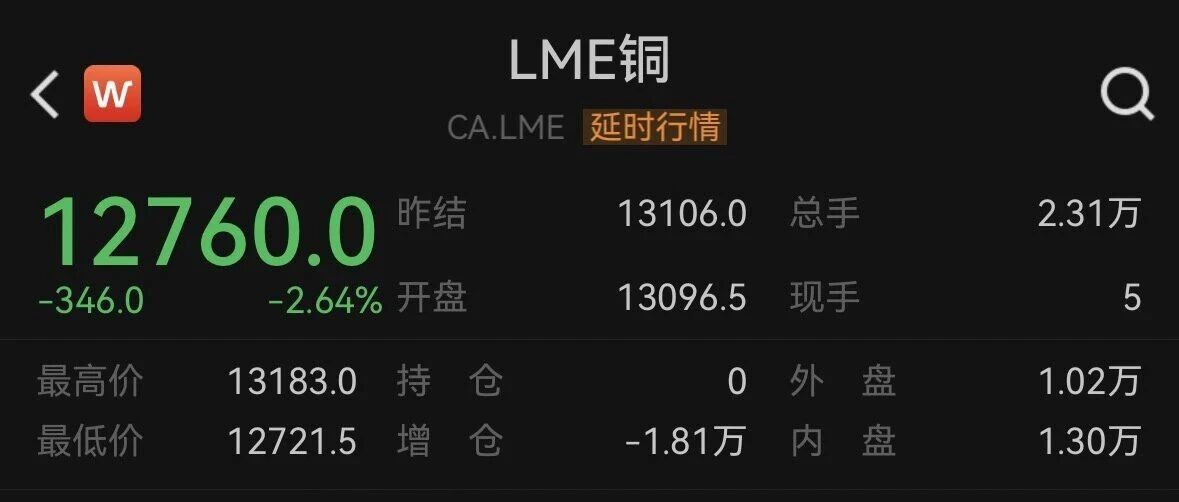
copper
小熊跑的快· 2026-01-16 14:56
Group 1 - Nvidia has quietly revised its previous forecast for copper usage in data centers, reducing the amount of copper busbars per gigawatt from 500,000 tons to 200 tons [1] - This revision may indicate that prior expectations for copper consumption in data centers were significantly overstated [1] - Copper prices have retreated from historical highs, with a decline of up to 2% [1]
AI for Scicence
小熊跑的快· 2026-01-11 01:38
Core Viewpoint - The article emphasizes that AI in healthcare is just a part of a broader trend known as "AI for Science," which is driving scientific innovation across various fields, particularly in molecular materials and drug discovery [1][2]. Group 1: AI in Healthcare - OpenAI's new ChatGPT feature is positioned as a "trusted medical advisor," capable of analyzing medical records to enhance patient care and influence retail healthcare products [1]. - The introduction of ChatGPT Health is seen as a watershed moment that could reshape how patients access medical information and the products they choose for treatment [1]. Group 2: Data as the Foundation - The article argues that the most critical foundation for AI is data, with coding and medicine being the two fields that possess the most comprehensive datasets [2]. - Major AI companies are developing vertical models specifically for the medical sector, indicating the industry's potential for innovation driven by data [2]. Group 3: AI for Science - The term "AI for Science" is highlighted as a fitting description for AI's role in driving scientific advancements, particularly in natural sciences like chemistry and physics [2][3]. - AI projects in molecular materials, such as those for electrolyte solutions, are demonstrating rapid advancements and precision in finding optimal configurations for different environments [2]. Group 4: Drug Discovery Innovations - Tsinghua University's AI-driven platform, DrugCLIP, has significantly accelerated drug virtual screening, achieving a speed increase of one million times and covering the human genome scale [3][4]. - The AuroBind system, developed by Shanghai Jiao Tong University, acts as a sophisticated tool for drug discovery, efficiently identifying promising drug candidates among millions of compounds [4][5]. - Traditional drug discovery methods are inefficient and costly, while AuroBind enhances the process by predicting protein-ligand interactions and their therapeutic effects, akin to using GPS for navigation [5].

South Korea Semiconductor Parts Industry Overview : High Growth Companies 21
QYResearch· 2026-01-04 08:52
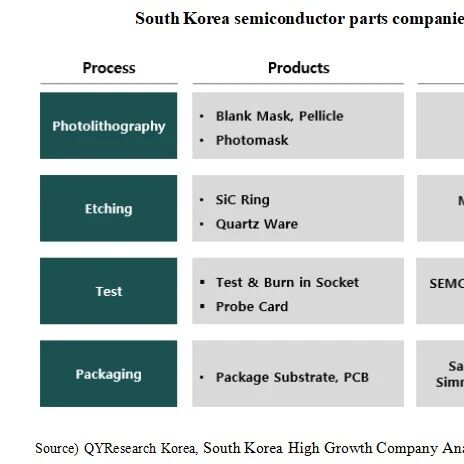
Industry Overview - The South Korea semiconductor parts industry is experiencing significant growth, driven by an AI-led "Super Cycle" in the overall semiconductor sector, with revenue projected to reach KRW 9.754 trillion in 2024, reflecting a 12.5% year-on-year increase [1][2]. Growth Drivers - The growth is attributed to a base effect following the downturn in 2023 and the rapid expansion of the AI semiconductor sector, with double-digit growth expected to continue into 2025 [2]. - A common factor behind the strong growth of leading domestic semiconductor parts companies is the increase in semiconductor production in Korea, China, and Taiwan, alongside qualitative improvements driven by AI-led trends toward process miniaturization and higher complexity [6]. Semiconductor Manufacturing Processes Photolithography Process - Demand for blank masks and pellicles is increasing as Chinese semiconductor manufacturers invest in advanced processes, benefiting Korean suppliers like FST and S&S Tech [7]. Etching Process - The transition from conventional silicon materials to silicon carbide (SiC) for ring components is enabling companies such as KNJ and TCK to expand their market presence, while Mecaro has increased exports amid rising investments in memory semiconductor equipment in China [8]. Testing Process - Components used in testing, including probe cards and sockets, are benefiting from favorable market conditions, with strong performance from South Korean companies like SEMCNS, TSE, and Tiger Electronics [9]. Packaging Process - Package substrates are emerging as a core growth driver, with companies like Samsung Electro-Mechanics and LG Innotek expanding their supply of BGA substrates for PCs and smartphones, as well as high-value segments like AI/server and automotive FC-BGA substrates [10]. High-Growth Companies - QYResearch Korea identified 21 companies achieving over 8% year-on-year revenue growth in 2024, including KC Parts Tech, SEMCNS, and Mecaro, with notable products spanning various semiconductor manufacturing processes [5][11]. Revenue Performance - Key companies and their projected revenues for 2024 include: - KC Parts Tech: KRW 37.439 billion, 100.87% YoY growth - SEMCNS: KRW 53.315 billion, 72.35% YoY growth - Mecaro: KRW 62.858 billion, 62.91% YoY growth - TSE: KRW 220.995 billion, 62.05% YoY growth - Samsung Electro-Mechanics: KRW 2,034.657 billion, 18.47% YoY growth [11].
January Preview | Top-Notch Courses + Wind Alice
Wind万得· 2026-01-04 00:30
Course Offerings - Wind continues to provide high-quality online courses globally, with a focus on various financial topics including AI-driven derivatives, gold price logic, and professional financial asset allocation plans [2][3]. - The January 2026 course schedule includes sessions on derivatives, economic database analysis, bank financing, and cross-border investment research, all scheduled for Thursdays at 16:00 [2][3]. Essential Training Series - The Wind Insights Essential Training Series features courses on IR bond trading instruments, with two sessions planned in January 2026, focusing on empowering money market and interest rate bond traders [3][4]. - Additional topics in the Essential Training Series include equity research empowerment and AI-driven asset allocation strategies, with sessions available in both English and Chinese [5][6]. Course Registration - Participants are encouraged to scan the QR code provided at the end of the article to register for courses of interest and access live broadcasts and replays [2][5].
</2025><2026> Hello New Year
程序员的那些事· 2026-01-01 02:57
Group 1 - The article expresses well-wishes for the new year, emphasizing the importance of overcoming challenges and celebrating achievements in coding and life [1][2][4] - It highlights the significance of maintaining connections with family and friends, suggesting that they are the most valuable dependencies in life [5] - The message encourages a positive outlook for 2026, with aspirations for success in both personal and professional endeavors, using coding metaphors to illustrate resilience and creativity [6]