创想三维

Search documents
快造科技获高瓴、美团领投数亿元B轮融资,曾创下3D打印行业最高众筹记录|36氪独家
3 6 Ke· 2025-12-10 02:00
Financing Information - Snapmaker has completed a Series B financing round, raising several hundred million RMB, led by Hillhouse Capital and Meituan, with participation from Shunwei Capital, Meituan Longzhu, and Nanshan Zhanxin Investment [1] - The funds will primarily be used for core technology research and development, high-end talent recruitment, and content ecosystem construction [1] - The company has cumulatively received over 100 million RMB in capital injections [1] Company Overview - Snapmaker, founded in 2016 and headquartered in Shenzhen, aims to enable everyone to create freely in the physical world and is a pioneer in consumer-grade multifunctional 3D printers [1] - The product line includes a three-in-one multifunction printer, independent dual-head printer, and efficient multi-color printer [1] - The company has established a nearly 10,000 square meter factory and production line, investing in dozens of large CNC machines and grinders to ensure high-quality products [1] Product Highlights - The flagship product, U1 3D printer, addresses user pain points in multi-color printing, such as low efficiency and material waste, by introducing the SnapSwap™ independent four-head system for rapid material switching [2] - The U1 printer offers five times the speed and material savings, enhancing user experience with smooth and colorful creations [2] - All crowdfunding orders for the U1 have been shipped, with plans for a global launch in Q1 2026, and the company anticipates several-fold revenue growth next year [3] Market Potential - The global consumer-grade 3D printing market is projected to grow from $1.5 billion in 2020 to $4.1 billion by 2024, with a compound annual growth rate (CAGR) of approximately 28% [4] - From 2020 to 2023, the annual shipment of global consumer-grade printers has remained around 3 million units, expected to exceed 4 million units in 2024, with a CAGR of about 10.2% [4] - By 2029, the shipment is anticipated to reach 13.4 million units, with a CAGR of approximately 26.6% from 2024 to 2029 [4] Company Performance - Snapmaker has set multiple industry records through various crowdfunding activities, demonstrating strong market appeal and product innovation capabilities [5] Founder's Background - The founder, Chen Xuedong, has over 20 years of experience as a maker and has a background in engineering and robotics, having previously worked at a leading aerospace engine research institute [8] Industry Insights - Chen Xuedong believes that healthy and high-level competition will benefit the development of the 3D printing industry, similar to top global sports leagues [9] - The company emphasizes the importance of talent in driving innovation and aims to attract more individuals to the 3D printing sector to accelerate industry transformation [9]

3D打印开始线下拼刺刀
Shen Zhen Shang Bao· 2025-12-06 17:47
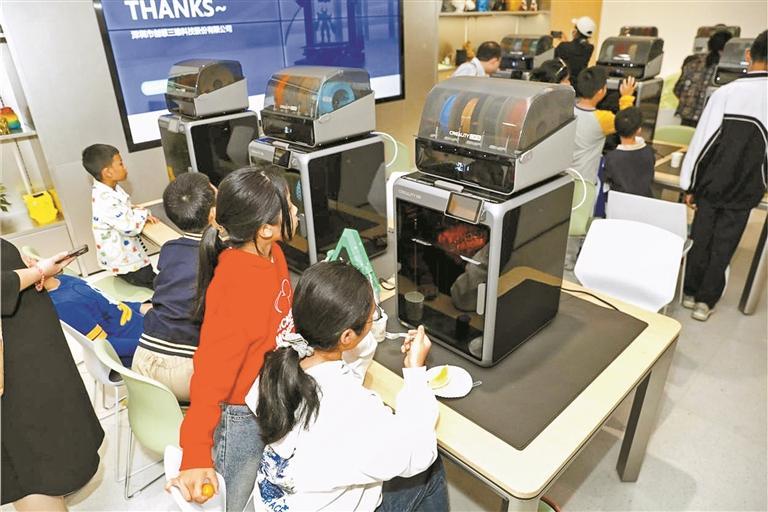
市民在创想三维3D打印店体验3D打印技术。(受访企业供图) 深圳商报首席记者 袁静娴 线下开店潮 从小众精品到大众玩具 12月6日,深圳宝安地标"湾区之眼"迎来科技新"住客"——创想三维3D打印全球超级旗舰店正式开业。 600平方米的开放空间里,熔融沉积、光固化、激光雕刻等不同工艺的设备同时运转,模型陈列区里从鞋帽到 玩具再到复杂结构件都有展示,三维3D打印这一仍算"小众"的技术第一次被以日常化的方式呈现。 这是今年下半年深圳开出的第二家3D打印线下门店。9月30日,拓竹科技在深圳湾万象城开设了全球首家直 营旗舰店。从拓竹到创想三维,这两家业内消费级3D打印机出货量最多的企业纷纷从线上拓展至线下,其意 义并不仅限于零售,也透露出趋势:消费级3D打印正在实现从技术爱好者走向大众消费者的跨越。 跨越临界点 从专业工具变普通家电 走进创想三维3D打印全球超级旗舰店,最直观的感受是,3D打印开始变得更好"理解"了。装饰品、玩具、 鞋、帽等由3D打印作品分区陈列,消费者能亲眼见证FFF(熔融沉积)技术如何将耗材层层堆叠成形,可以 观察光固化如何让液态树脂在光照下定型,也可以直观了解激光如何在不同材质上精密切割与雕刻的全 ...

创想三维在深又落一子,3D打印线下开“打”
2 1 Shi Ji Jing Ji Bao Dao· 2025-12-06 11:33
Core Insights - The opening of the global flagship store by Chuangxiang Sanwei in Shenzhen marks a significant shift towards offline consumer experiences in the 3D printing industry, showcasing a wide range of applications from entertainment to industrial parts [1] - The consumer-grade 3D printing market is experiencing rapid growth, with a projected compound annual growth rate (CAGR) of approximately 28%, increasing from $1.5 billion in 2020 to $4.1 billion by 2024 [1] - Shenzhen is emerging as a key hub for consumer-grade 3D printing, with multiple flagship stores opening, indicating a transition from niche professional tools to accessible consumer products [2][3] Industry Trends - The competition in the 3D printing hardware market is shifting from "parameter comparison" to "experience comparison," emphasizing the importance of consumer engagement and understanding of the printing process [2] - The trend towards offline experiences is seen as essential for market education and consumer understanding, with companies planning to expand their physical presence [2] - The establishment of multiple 3D printing experience stores in Shenzhen is driving the movement towards a "全民3D打印" (全民3D printing) era, making 3D printing accessible to the general public [2] Market Dynamics - Major players in the consumer-grade 3D printing sector, including Chuangxiang Sanwei and Tuo Zhu Technology, are collectively dominating the entry-level 3D printer market, accounting for over 90% of global shipments [3] - Shenzhen's 3D printing equipment production saw a significant increase of 33.6% in the first three quarters of 2025, reflecting the growing demand and production capabilities in the region [4]
3D打印的“iPhone时刻”悄然逼近 深圳每两分钟组装一台3D打印机
Shen Zhen Shang Bao· 2025-12-01 07:28
Core Insights - The 3D printing industry is experiencing unprecedented activity, with major players like拓竹科技 and创想三维 making significant moves in the market [1] - Shenzhen is emerging as the world's most competitive hub for consumer-grade 3D printing, accounting for 90% of the global entry-level 3D printer market [2] - The entry of large companies and capital into the 3D printing sector marks a new phase, transitioning from a niche market to a strategic focus for major corporations [4] Group 1: Industry Dynamics - The recent surge in 3D printing activity is characterized by the opening of flagship stores by major companies, indicating a shift towards offline retail [1] - The global market for consumer-grade 3D printing and services is projected to reach $4.1 billion in 2024, with拓竹科技 contributing approximately $500 million to this growth [2] - The competitive landscape is evolving, with companies like创想三维 focusing on higher-end products while拓竹科技 leads in volume, having shipped 1.2 million units in 2024 [3] Group 2: Capital Involvement - The investment by大疆 in智能派 signifies a strategic bet on the future potential of consumer-grade 3D printing [4] - Major investors, including腾讯 and高瓴, are increasingly backing Shenzhen-based 3D printing companies, indicating a shift in industry dynamics [6] - The trend of rapid investment in 3D printing is transforming the sector from hardware manufacturing to a complex ecosystem involving content, hardware, and AI [6]
深圳每两分钟组装一台3D打印机
Shen Zhen Shang Bao· 2025-11-30 17:05
Core Insights - The 3D printing industry is experiencing unprecedented activity, with major players like拓竹科技 and创想三维 making significant moves in the market [2][3][4] - Shenzhen is emerging as a global hub for consumer-grade 3D printing, accounting for 90% of the entry-level 3D printer market [3][4] - The entry of large companies and capital into the 3D printing sector marks a shift from a niche market to a competitive landscape dominated by major players [5][6][7] Industry Dynamics - The global consumer-grade 3D printing market is projected to reach $4.1 billion in 2024, with拓竹科技 contributing approximately $1 billion to this growth [3][4] -拓竹科技's shipment volume is expected to reach 1.2 million units in 2024, capturing nearly 30% of the global market share [4] - The competitive landscape is evolving, with companies like创想三维 focusing on high-end products while拓竹科技 leads in volume [4][5] Capital Influx - Major investments from companies like DJI and Tencent indicate a strong belief in the future potential of consumer-grade 3D printing [5][6] - The influx of capital from firms such as Hillhouse Capital and Meituan is reshaping the industry dynamics, making Shenzhen a focal point for investment [6] - The trend is shifting from hardware manufacturing to a composite ecosystem involving content, hardware, and AI [7] Future Outlook - The industry is on the brink of a significant transformation, with the potential for a major breakthrough akin to the "iPhone moment" in consumer electronics [7] - The competitive environment is maturing, with a focus on performance, supply chain optimization, and user ecosystem development [4][5] - Shenzhen is positioned to play a crucial role in the future of consumer-grade 3D printing, whether in home applications, light industrial scenarios, or educational contexts [4][5]
人均 “第一”,深圳 3D 打印 “四大天王” 有多卷?
Nan Fang Du Shi Bao· 2025-11-29 12:02
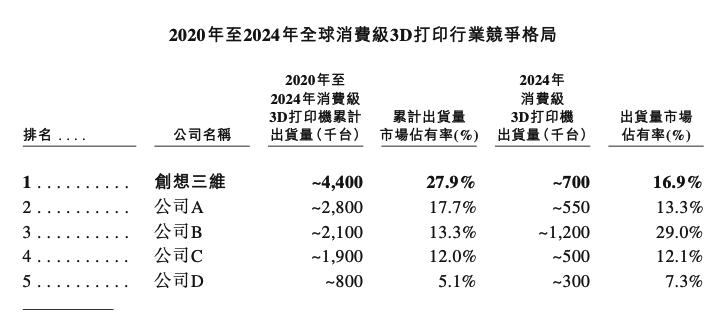
Core Insights - Shenzhen 3D printing companies are intensifying competition, with Chuangxiang Sanwei and Tuozhu Technology leading the charge as they aim for market dominance and public listing [2][5][10] Company Developments - Chuangxiang Sanwei submitted its main board listing application to the Hong Kong Stock Exchange in August 2025, aiming to become the first consumer-grade 3D printing stock in Hong Kong [2] - Tuozhu Technology opened its first flagship store in Shenzhen, featuring a wall made of 28 3D printers, attracting significant industry attention [2] - DJI invested several hundred million yuan in another competitor, Smart派, which holds the title for the highest shipment volume in the global consumer-grade light-curing 3D printer market [5][10] Investment Landscape - Tencent has invested in both Chuangxiang Sanwei and Tuozhu Technology, indicating a strong interest in the sector [5] - Tuozhu Technology's valuation may reach 10 billion USD, although its founder denied any ongoing financing [5] - Snapmaker, another Shenzhen 3D printing company, completed a B round of financing in 2025, attracting new investors like Meituan and Hillhouse Capital [6] Market Positioning - Each of the "Four Kings" in Shenzhen's 3D printing market claims a leading position in specific segments, creating a differentiated competitive landscape [7] - Tuozhu Technology achieved sales of 5.5 to 6 billion CNY in 2024, maintaining its status as the global leader in desktop 3D printer sales [7][8] - Chuangxiang Sanwei, established in 2014, is recognized for its cumulative shipment volume, although its annual shipments decreased to 700,000 units in 2024, capturing 16.9% of the market [8] Competitive Dynamics - The competition is characterized by a struggle for technological talent and market resources, with Tuozhu's team originating from DJI's core development group [10][11] - The rivalry has intensified with DJI's investment in Smart派, which is seen as a strategic move to bolster its ecosystem [5][10] - The ongoing competition is not just about product offerings but also involves talent retention and the establishment of technological barriers [11]


大疆卷入新战场,这个“印钞机”行业热钱涌动
3 6 Ke· 2025-11-27 23:40
Core Insights - The consumer-grade 3D printing market is experiencing rapid growth, driven by advancements in technology and decreasing costs, making it more accessible to ordinary consumers [1][4][5] Group 1: Market Trends - The term "3D printing" has gained immense popularity on social media platforms, with over 1.3 billion views on Xiaohongshu and 10.11 billion views on Douyin, indicating a cultural trend towards showcasing 3D printed creations [2] - The consumer-grade 3D printer market is projected to grow from 4.1 million units in 2024 to 13.4 million units by 2029, with a compound annual growth rate (CAGR) of 26.6% [5] - The market size is expected to increase from $4.1 billion in 2024 to $16.9 billion by 2029, with a CAGR of 33.0% [5] Group 2: Drivers of Growth - Technological advancements, particularly in generative AI, have lowered the barriers to 3D modeling, allowing users to create models using text, images, or voice [5][6] - The price of consumer-grade 3D printers has decreased significantly, with many models now available for under 10,000 yuan, making them accessible to a broader audience [5] - Improvements in printing efficiency and material usage have enhanced the user experience, with multi-color printing times reduced from over 20 hours to approximately 5 hours [6] Group 3: Competitive Landscape - The consumer-grade 3D printing sector is characterized by intense competition, with companies like Tuozhu, Chuangxiang Sanwei, and others vying for market share [7] - Tuozhu is currently leading the market, with projected revenues of 5.5 to 6 billion yuan in 2024 and a net profit nearing 2 billion yuan [7] - The investment landscape is robust, with over 40 financing events in the 3D printing sector since 2025, indicating strong interest from venture capital [7][8] Group 4: Company Performance - Chuangxiang Sanwei is the largest provider in the consumer-grade 3D printing market, holding a 27.9% market share, with revenues increasing from 1.346 billion yuan in 2022 to 2.288 billion yuan in 2024 [12][13] - The revenue from 3D printing consumables is on the rise, with its share of total revenue increasing from 3.0% in 2022 to 11.4% in 2024 for Chuangxiang Sanwei [19][20] - The performance of consumer-grade 3D printing companies contrasts sharply with industrial-grade firms, which have not seen similar growth in revenue [14][15]
科力尔:公司在3D打印领域与拓竹科技等多家企业建立了长期稳定的合作关系
Zheng Quan Ri Bao Wang· 2025-11-27 11:12
证券日报网讯11月27日,科力尔(002892)在互动平台回答投资者提问时表示,公司凭借优异的产品品 质和优质的服务,在3D打印领域与拓竹科技、创想三维等多家国内外知名企业建立了长期稳定的合作 关系。 ...

科力尔(002892.SZ):在3D打印领域与拓竹科技、创想三维等企业建立了长期稳定的合作关系
Ge Long Hui· 2025-11-27 07:25
Core Viewpoint - The company, Keli'er (002892.SZ), has established long-term and stable partnerships in the 3D printing sector with several well-known domestic and international enterprises, including Tuo Zhu Technology and Chuangxiang Sanwei, due to its excellent product quality and service [1]. Group 1 - The company has a strong presence in the 3D printing industry [1]. - Keli'er collaborates with notable companies such as Tuo Zhu Technology and Chuangxiang Sanwei [1]. - The partnerships are characterized by their long-term stability [1].
当“老东家”和“新黑马”摸向对方的“逆鳞”
3 6 Ke· 2025-11-26 11:31
Core Viewpoint - The industry is still in an upward phase, and the competition is characterized as a "zero-sum game" in a saturated market, indicating that the consumer-grade 3D printing sector may not yet be under significant stress [1]. Group 1: Investment and Competition - DJI has announced an investment in a consumer-grade 3D printing company, indicating confidence in the growth potential of the sector [3]. - The investment is perceived by the founder of TuoZhu Technology, Tao Ye, as a strategic move against his company rather than a genuine value investment, suggesting competitive tensions in the market [5][6]. - Talent migration from DJI to startups like TuoZhu is a significant factor, with many former employees choosing to join or establish competing firms [4][6]. Group 2: Market Dynamics and Growth - The global consumer-grade 3D printing market is projected to reach $4.1 billion by 2024, with a compound annual growth rate (CAGR) of 28% expected until 2029 [19]. - The number of consumer-grade 3D printers shipped is anticipated to grow from 4.1 million units in 2024 to 13.4 million units by 2029, reflecting a CAGR of 26.6% [21]. - The market is currently dominated by a few key players, often referred to as the "Four Little Dragons" of consumer-grade 3D printing, which includes TuoZhu Technology, indicating a concentrated competitive landscape [10]. Group 3: Company Performance and Strategy - TuoZhu Technology achieved revenues of approximately 5.5 to 6 billion yuan in 2024, with a net profit nearing 2 billion yuan, showcasing strong financial performance [10]. - The company has successfully positioned itself in the market by focusing on product quality and user experience, similar to DJI's approach in the drone industry [18]. - TuoZhu's community platform, MakerWorld, has become the largest 3D model community globally, enhancing user engagement and product accessibility [18]. Group 4: Technological Trends and User Engagement - The consumer-grade 3D printing market is characterized by a blend of hardware, software, and content, with a focus on lowering user barriers to entry [22]. - Advances in generative AI technology are expected to simplify 3D modeling, further broadening the user base and application scenarios [23]. - The target demographic for consumer-grade 3D printing remains tech-savvy young enthusiasts, whose engagement and feedback are crucial for product development [22].