混元3D

Search documents
结构分化,重点关注AI及盈利兑现度:2026年港股互联网&科技策略前瞻
Guohai Securities· 2026-02-06 01:43
Core Insights - The report emphasizes a structural differentiation in the Hong Kong internet and technology sector, highlighting a focus on AI and profitability realization as key investment themes for 2026 [4][5][6]. Valuation Perspective - Since early 2025, the valuation of the Hang Seng Technology sector has been on the rise, with the Hang Seng Technology PE-TTM at 20.05 times as of December 31, 2025, which is 0.77 standard deviations below the historical average [4][9]. - The Hang Seng AH premium index stood at 123.46 as of December 31, 2025, below the historical average of 193.92, indicating a low valuation environment [9]. Funding Perspective - There has been a significant acceleration in southbound capital inflows since 2025, with notable increases in allocations to consumer, technology, and pharmaceutical sectors [5][13]. - The proportion of Hong Kong Stock Connect holdings in internet companies has increased, with Tencent's share rising from 10.1% to 11%, Kuaishou from 11.61% to 16.64%, Meituan from 10.4% to 20.76%, and Kingdee from 24.22% to 28.22% by December 31, 2025 [5][18]. - The anticipated interest rate cuts by the Federal Reserve are expected to provide a liquidity floor for Hong Kong stocks, leading to a market characterized by strong indices, structural differentiation, and increased concentration among leading firms [5][19][21]. Internet Sector Dynamics - User traffic in the internet sector is stabilizing, with a strategic shift towards high-quality growth, driven by generative AI technologies that are penetrating high-frequency demand scenarios [22][28]. - The user base for AI applications is growing robustly, with significant increases in monthly active users (MAU) for various AI apps and platforms [28][30]. - Major internet companies are focusing on AI as a strategic direction, with substantial capital expenditures planned for AI development, including Alibaba's projected capex of 1,252 billion RMB, ByteDance's 1,600 billion RMB, and Tencent's 863 billion RMB for FY2026 [6][35]. AI and Advertising Integration - AI is becoming a critical driver for revenue generation, with domestic companies like Tencent and Alibaba leveraging AI in advertising to enhance efficiency and effectiveness [41][43]. - The report highlights the positive feedback loop between capital expenditure on AI and revenue generation, as seen in global leaders like Google, which is expected to invest between 910 to 930 billion USD in AI-related capital expenditures in 2025 [37][38]. Recommendations - The report maintains a "recommended" rating for the technology sector, focusing on companies such as Tencent, Alibaba, Bilibili, NetEase, Kuaishou, JD Health, and XPeng Motors as key investment targets [7].
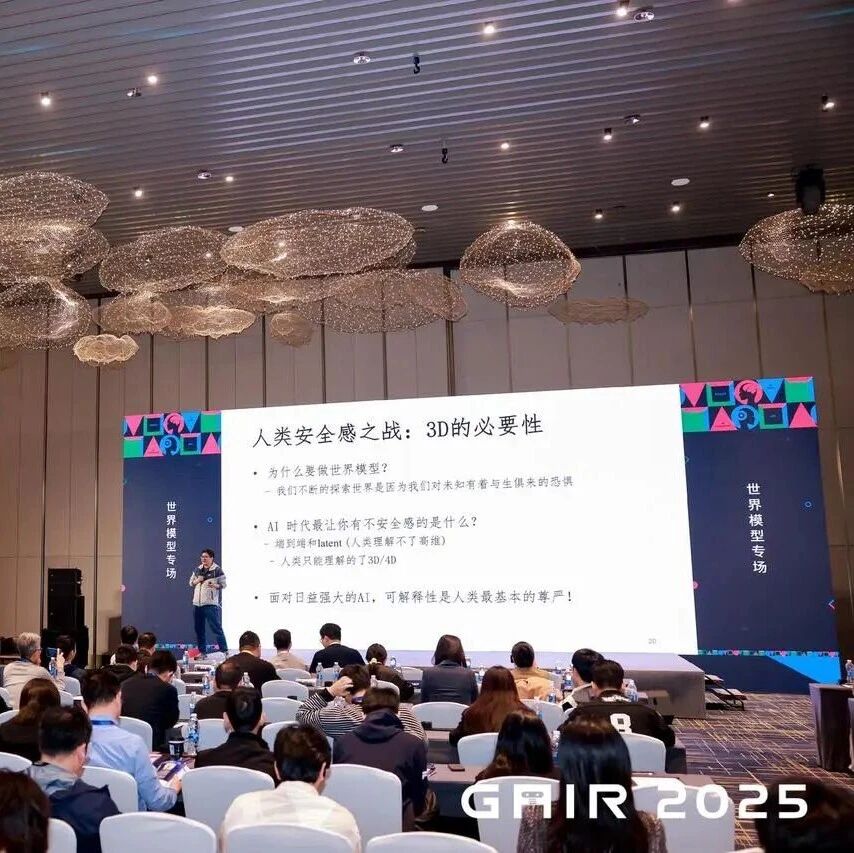
港中深韩晓光:3DGen,人类安全感之战丨GAIR 2025
雷峰网· 2025-12-13 09:13
Core Viewpoint - The article discusses the importance of understanding the underlying principles of world models, emphasizing that relying solely on data-driven approaches ("炼丹") is insufficient for creating effective AI systems. It advocates for the integration of human-understandable structures and logic into AI models to enhance their interpretability and reliability [2][63]. Group 1: Development of 3D Generation - The evolution of 3D generation has transitioned from early attempts at creating 3D models from single images to the current era of large models capable of generating high-quality 3D content from textual descriptions [7][16]. - The emergence of "open world" 3D generation began around 2023 with the Dreamfusion project, which allowed for the generation of 3D models without category restrictions, marking a significant shift in the field [11][12]. - Current trends in 3D generation focus on achieving finer details, structured outputs for easier editing, and better alignment between generated models and input images [19][20]. Group 2: Challenges and Opportunities in 3D Generation - The article highlights a dilemma faced by the 3D generation field, particularly in light of advancements in video generation technologies that can produce content without the complex 3D modeling processes [24][28]. - Despite the rise of video generation, 3D content creation retains its value due to its ability to provide physical realism, spatial consistency, and detailed control over content [29][34]. - The potential crisis for 3D generation lies in the increasing capabilities of video generation models, which are beginning to exhibit controllable features, raising questions about the necessity of 3D in future content creation [34][38]. Group 3: The Role of 3D in World Models - The article categorizes world models into three types: macro models for societal understanding, personal experience models for exploration, and embodied models for machine intelligence, with 3D being essential for interactive virtual environments [43][44][45]. - For embodied intelligence, understanding human interaction with the physical world necessitates 3D modeling to accurately capture and simulate these interactions [48][50]. - The transition from digital to physical manufacturing processes, such as 3D printing, underscores the foundational role of 3D data in creating tangible products [52]. Group 4: Technical Approaches in AI - The article contrasts explicit and implicit approaches in AI development, with explicit methods relying on clear geometric and physical modeling, while implicit methods depend on data-driven neural networks [56][57]. - The need for explainability in AI systems is emphasized, suggesting that a balance between performance and interpretability is crucial for user trust and safety [58][63]. - The discussion concludes that 3D and 4D modeling are vital for providing a comprehensible framework for understanding complex AI systems, thereby enhancing user confidence [59][63].

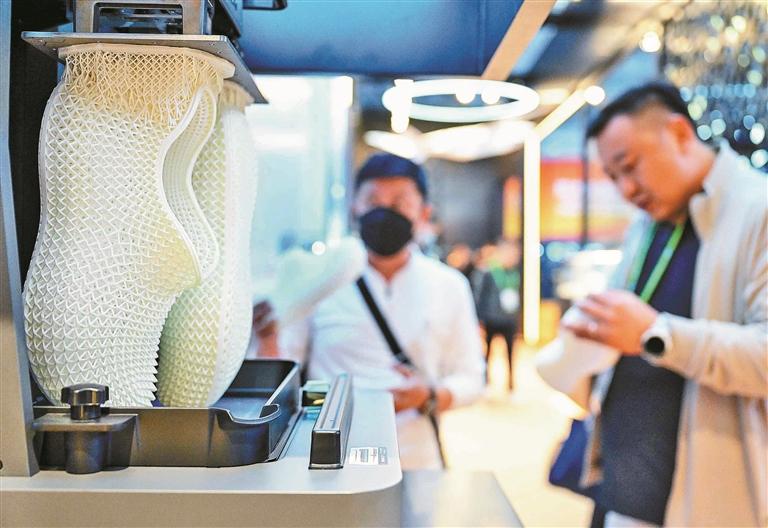
深圳每两分钟组装一台3D打印机
Shen Zhen Shang Bao· 2025-11-30 17:05
Core Insights - The 3D printing industry is experiencing unprecedented activity, with major players like拓竹科技 and创想三维 making significant moves in the market [2][3][4] - Shenzhen is emerging as a global hub for consumer-grade 3D printing, accounting for 90% of the entry-level 3D printer market [3][4] - The entry of large companies and capital into the 3D printing sector marks a shift from a niche market to a competitive landscape dominated by major players [5][6][7] Industry Dynamics - The global consumer-grade 3D printing market is projected to reach $4.1 billion in 2024, with拓竹科技 contributing approximately $1 billion to this growth [3][4] -拓竹科技's shipment volume is expected to reach 1.2 million units in 2024, capturing nearly 30% of the global market share [4] - The competitive landscape is evolving, with companies like创想三维 focusing on high-end products while拓竹科技 leads in volume [4][5] Capital Influx - Major investments from companies like DJI and Tencent indicate a strong belief in the future potential of consumer-grade 3D printing [5][6] - The influx of capital from firms such as Hillhouse Capital and Meituan is reshaping the industry dynamics, making Shenzhen a focal point for investment [6] - The trend is shifting from hardware manufacturing to a composite ecosystem involving content, hardware, and AI [7] Future Outlook - The industry is on the brink of a significant transformation, with the potential for a major breakthrough akin to the "iPhone moment" in consumer electronics [7] - The competitive environment is maturing, with a focus on performance, supply chain optimization, and user ecosystem development [4][5] - Shenzhen is positioned to play a crucial role in the future of consumer-grade 3D printing, whether in home applications, light industrial scenarios, or educational contexts [4][5]
从游戏工厂到空间智能仿真:混元 3D 为何是腾讯 AI 的“侧翼突围”
AI前线· 2025-11-27 04:02
Core Insights - Tencent's "Hunyuan 3D" has accelerated its global outreach by launching an international version of its creative engine and achieving over 3 million downloads of its open-source model, marking a significant step in its AI strategy [2][3][21] - Tencent's unique position as a technology company lies in its combination of massive 3D demand from various sectors, mature multi-modal capabilities of its Hunyuan model, and a comprehensive distribution network through WeChat, QQ, and Tencent Cloud [3][4] Group 1: Business and Technology Integration - The traditional 3D industry faces challenges of high costs and long production times, with art costs in game development often accounting for 50%-80% of total expenses, and 3D asset creation being the most resource-intensive [6][7] - Hunyuan 3D aims to address these issues by enhancing the efficiency of 3D asset production and solving scene-level construction problems through two main technical lines [8][9] - The integration of Hunyuan 3D into Tencent's internal game projects has shown promising results, significantly reducing the time required to create 3D assets from days to mere hours [12][14] Group 2: Market Applications and Expansion - Hunyuan 3D's applications extend beyond gaming, with over 150 companies across various industries, including e-commerce, film, advertising, and 3D printing, utilizing its models to enhance production efficiency [25][27] - The technology has enabled a shift in consumer 3D printing, allowing users to generate personalized models with minimal expertise, thus expanding the market [26] - In advertising and content creation, Hunyuan 3D is poised to transform how brands engage with consumers by moving from static displays to interactive experiences [27][29] Group 3: Strategic Vision and Competitive Edge - Tencent's AI strategy focuses on building ecological barriers rather than merely scaling operations, emphasizing quality, controllability, and cost-effectiveness as foundational capabilities [31][32] - The company has achieved recognition for its Hunyuan image model, which topped global rankings, indicating its leadership in multi-modal technology [31] - Tencent's approach to 3D generation is characterized by a commitment to understanding industry pain points and fostering an ecosystem that supports sustainable growth [39][40]


暴走东京电玩展,Game Show也AI上了
量子位· 2025-09-27 07:00
Core Viewpoint - The article highlights the significant presence and influence of Chinese companies at the Tokyo Game Show (TGS), showcasing advancements in AI technology and its integration into the gaming industry [1][36]. Group 1: Chinese Companies at TGS - Major Chinese gaming companies such as NetEase, Tencent, and others have established impressive exhibition spaces, attracting numerous players [2][8]. - AI companies are also making their mark at TGS, demonstrating their capabilities and innovations in the gaming sector [8][10]. Group 2: AI Technology Showcase - Alibaba's booth prominently featured its open-source models, including Tongyi Qianwen and Tongyi Wanxiang, offering a range of commercial solutions from IaaS to SaaS [11][12]. - The Model Studio platform and AI development platform PAI were highlighted as part of Alibaba's offerings, indicating a strong push for AI integration in gaming [13][15]. Group 3: 3D Generation Technology - Tencent Cloud emphasized its cloud computing capabilities for game security and operations, while also discussing the potential of mixed reality 3D technology [21][22]. - VAST's Tripo, a leading open-source 3D generation project, is gaining attention from game developers both domestically and internationally [26][27]. Group 4: AI Applications in Gaming - HakkoAI, an AI gaming companion, showcased its ability to understand and interact with various games, outperforming several top general models in specific gaming scenarios [34]. - The integration of AI in gaming is creating new possibilities and enhancing player experiences, indicating a growing trend in the industry [36].



腾讯披露元宝已是TOP3应用
量子位· 2025-09-17 11:06
Core Viewpoint - Tencent is making significant strides in both consumer and business sectors with its AI products, showcasing impressive user engagement and technological advancements while also expanding its global infrastructure with a substantial investment in Saudi Arabia [1][19][24]. Group 1: Consumer Product Developments - Tencent Yuanbao has become one of the top three AI-native applications in China, achieving daily active user metrics that match the total question volume from the entire previous month [5][4]. - The AI meeting summary feature in Tencent Meeting has seen a user growth of over 150% in one year [8]. - The Mixyuan Lab has launched over 30 models in a year, with the Mixyuan 3D model achieving a download count exceeding 2.6 million [10][12]. Group 2: Business Integration and Applications - Tencent is successfully transitioning its consumer products to the business sector, with examples like Tencent Cloud CodeBuddy, which generates 50% of new code internally [18]. - Companies like Midea and AstraZeneca are leveraging Tencent's AI capabilities to enhance operational efficiency and service delivery [18]. Group 3: Global Expansion and Investment - Tencent Cloud is not merely exporting products but is taking a validated ecosystem abroad, including audio-video technology and mini-program platforms [20][21]. - The company announced a $150 million investment to build a new data center in Saudi Arabia, aiming to enhance its global digital infrastructure [24][19]. - Tencent's strategy emphasizes increasing industrial efficiency through smart solutions and expanding revenue through global outreach [27].

免费!鹅厂最新3D生成模型火爆外网,CG导演都已经用上了
量子位· 2025-05-07 07:11
Core Viewpoint - The article highlights the capabilities and popularity of Hunyuan 3D, a new 3D generation model that allows users to create detailed 3D models and animations from text descriptions and images, gaining significant traction both domestically and internationally [1][4][6]. Group 1: 3D Generation Capabilities - Hunyuan 3D can generate 3D models from text descriptions, supporting various styles such as cartoon and Chinese aesthetics [25][27]. - The model can also create 3D representations from a single image, with the ability to upload multiple views for more accurate modeling [30][34]. - Users can generate complex models, including characters and imaginative objects, showcasing the tool's versatility in artistic creation [18][22][43]. Group 2: Advanced Features - Hunyuan 3D includes features for character generation and animation, allowing users to upload a photo and select templates to create personalized 3D models [45]. - The platform supports automatic skeletal recognition for adding animations to generated models, enhancing the creative process [47][49]. - Additional functionalities include intelligent mesh reduction and texture generation, as well as the ability to design custom workflows for specific needs [53][57]. Group 3: User Engagement and Accessibility - The platform is currently free to use, allowing users to generate up to 20 models per day, which encourages widespread experimentation and creativity [59]. - A user guide has been created and shared, further facilitating user engagement and understanding of the platform's capabilities [58].

腾讯研究院AI每周关键词Top50
腾讯研究院· 2025-04-25 07:54
扫码加入ima知识库 | 类别 | Top关键词 | 主体 | | --- | --- | --- | | 芯片 | 昇腾910C | 华为 | | 模型 | o3智商测试纪录 | OpenAI | | 模型 | 高尔顿板测试 | 谷歌 | | 模型 | Gemma 3 QAT版 | 谷歌 | | 模型 | 稀疏自编码器 | Goodfire | | 模型 | o3高幻觉率 | OpenAI | | 模型 | BitNet三进制模型 | 微软 | | 模型 | AETHER开源 | 上海AI Lab | | 模型 | Skywork-R1V 2.0开源 | 昆仑万维 | | 模型 | Claude人格 | Anthropic | | 应用 | Chrome收购意向 | OpenAI | | 应用 | gpt-image-1 API | OpenAI | | --- | --- | --- | | 应用 | 使用限额翻倍 | OpenAI | | 应用 | Agent SDK开发指南 | OpenAI | | 应用 | FramePack视频生成 | 张吕敏 | | 应用 | Vidu Q1视频生成 | 生数科 ...
谁会是AI时代的下一个任天堂?
新财富· 2025-04-03 06:04
Core Viewpoint - The article discusses the transformative impact of AI on the gaming industry, highlighting the evolution of NPCs and the emergence of AI-native games, while questioning the current state and future direction of AI in gaming [1]. Group 1: AI in NPC Development - The initial demand for AI in gaming is to mimic human behavior, particularly in NPCs, which are crucial for player interaction [3][4]. - Traditional NPC design relied on behavior trees and finite state machines, but these methods are limited in creating truly human-like interactions [5]. - The integration of large language models into NPC behavior aims to enhance their expressiveness and interaction capabilities [6][7]. - Major gaming companies in China, such as NetEase and Tencent, are rapidly adopting AI for NPCs, enhancing their conversational and behavioral realism [9][11]. Group 2: Rise of Text-Based AI Native Games - Character.ai has emerged as a leading platform for AI-driven text-based games, achieving significant user growth, with MAU increasing from 30 million to 63 million within a year [13][16]. - The platform appeals particularly to younger audiences, with 66% of users aged 18-24, indicating a strong demand for emotional companionship through AI [16]. - Text-based adventure games are well-suited for AI integration, allowing for deep interaction with NPCs, which aligns with current AI capabilities [17][21]. Group 3: Challenges in Game AI Development - The gaming industry lacks high-quality, stable, and quantifiable datasets necessary for training specialized AI models, which hampers the development of vertical AI tools for gaming [25][30]. - The dynamic and interactive nature of games complicates the quantification of gameplay experiences, making it difficult to create effective AI models [29][30]. Group 4: AI as a Development Tool - AI is increasingly being used as a production tool in game development, with 52% of companies reportedly utilizing generative AI tools [33]. - Companies like Roblox and Tencent are leading in the development of AI-generated 3D assets, enhancing the efficiency of game development processes [34][38]. Group 5: Future of AI in Gaming - The article suggests that the next generation of gamers, who are growing up with AI technologies, will shape the future of AI-native games and potentially become developers and investors in this space [42].