AI生成技术

Search documents
抖音再推“10项举措”聚焦安全信任,持续加强算法透明、平台治理、用户服务
Zhong Guo Qi Che Bao Wang· 2026-01-22 09:00
Group 1: Core Initiatives - Douyin has announced 10 new measures to enhance algorithm transparency, platform governance, and user service, aiming to create a safe and trustworthy platform environment [2] - The platform will focus on improving algorithm transparency by publicly disclosing algorithm principles and operational mechanisms, as well as showcasing cutting-edge applications and innovations in large model technology [2] - Douyin aims to combat online violence by optimizing recommendation algorithms and enhancing the identification of potential online violence behaviors, while also expanding partnerships with social organizations to provide legal and psychological support to affected users [2] Group 2: Misinformation Management - Douyin plans to intensify efforts against rumors, impersonation, and forgery, guiding users to properly label information sources and iterating on the "AI Douyin Truth-Seeking" product capabilities [3] - In 2025, Douyin applied large model technology in rumor management, achieving a 90% reduction in rumor exposure on the platform [3] - The platform has introduced community governance rules to regulate the dissemination of hot information and protect the rights of involved parties, while promoting a rational community atmosphere [3] Group 3: Content Quality and Creator Support - Douyin has promoted quality content through various incentive programs, resulting in a 118% increase in daily submissions of quality content and a 160% increase in total views of quality content over the past year [4] - The platform will continue to invest in segmented incentive plans to support content creators and will enhance revenue sharing for quality content creators to foster a positive content ecosystem [4] - Douyin is committed to maintaining an original content ecosystem and will take action against malicious marketing accounts, collaborating with relevant authorities for accountability [4] Group 4: User Service Enhancements - Douyin aims to improve user service satisfaction by enhancing service capabilities, including optimizing the customer service hotline and increasing efficiency in handling infringement disputes [5] - In 2025, Douyin established a Safety and Trust Center to promote platform transparency and will publish content operation and governance reports through this channel [5] - The new 10 measures are a response to previous commitments made in January 2025 to enhance algorithm and platform governance transparency [5]


不能让“AI照骗”在电商平台大行其道
Xin Lang Cai Jing· 2026-01-14 19:42
Core Viewpoint - The rapid penetration of AI-generated content in the e-commerce sector has led to significant consumer issues, particularly concerning misleading product representations and a lack of transparency in advertising practices [1][2]. Group 1: Issues with AI-Generated Content - Many merchants are using AI-generated images and videos to promote products, which often leads to discrepancies between the advertised and actual products, raising concerns about consumer rights [1][2]. - The prevalence of "AI deception" in various platforms, including short video and food delivery services, indicates a growing problem that affects consumer trust and satisfaction [1]. - Merchants often deny using AI technology despite evident discrepancies, reflecting a careless attitude towards ethical marketing practices [1]. Group 2: Legal and Regulatory Framework - Merchants must adhere to legal standards that require truthful, comprehensive, and accurate representations of products, as outlined in the Consumer Rights Protection Law [2]. - The use of AI-generated content that significantly differs from actual products without proper disclosure constitutes false advertising and infringes on consumer rights [2]. - There is a need for regulatory bodies to enhance governance by establishing clear guidelines for the use of AI in e-commerce, including a negative list of prohibited practices [2][3]. Group 3: Recommendations for E-commerce Platforms - E-commerce platforms should improve their technical capabilities to automatically identify AI-generated content and ensure compliance with advertising standards [3]. - Measures such as mandatory labeling, traffic restrictions, product delisting, and account suspension should be implemented for non-compliant merchants [3]. - Regulatory authorities should actively collect evidence of deceptive practices and impose significant legal penalties on violators to promote adherence to ethical standards [3].
当心!有商家用AI生成商品宣传图,致实物与图不符
Zhong Guo Xin Wen Wang· 2026-01-14 01:08
Core Viewpoint - The article highlights the increasing use of AI-generated images by merchants in e-commerce, which often leads to significant discrepancies between the advertised products and the actual items received by consumers, resulting in rising consumer complaints and disputes [2][4]. Group 1: Consumer Experiences - A consumer named Wei purchased a "soft cute rabbit pendant" online, only to receive a poorly made version that did not match the AI-generated promotional image, leading to frustration and a request for a return [1]. - Another consumer, Yu, experienced a similar situation with a "Siamese cat plush pendant," where the product received was of inferior quality compared to the AI-generated image that had initially attracted her [3][4]. - A third consumer, Long, ordered a floral short-sleeve shirt that also did not match the promotional image, raising suspicions that the images were AI-generated due to unnatural details [5]. Group 2: Industry Practices - The article notes that many merchants, particularly in the plush toy sector, are resorting to AI-generated images to attract customers, as creating original products is often too complex and costly [6]. - Investigations revealed that merchants frequently lack detailed descriptions of their products, and customer service representatives are often unable to provide clear information about the actual items [7]. - Some platforms are selling AI tools that allow merchants to generate various promotional images, facilitating the creation of misleading product representations [8][9].
金瓶银簪雕花窗棂……美吧,都是3D打出来的!
Xin Lang Cai Jing· 2026-01-10 14:21
Core Viewpoint - The exhibition "Parametric Porcelain Painting: Digital Creative Intangible Cultural Heritage Handicraft Works Exhibition" showcases the integration of digital technology and traditional craftsmanship, emphasizing the innovative use of 3D printing and AI in creating unique art pieces that respect and reinterpret traditional aesthetics [1][4][7]. Group 1: Exhibition Overview - The exhibition is held at the Nanjing University of the Arts, featuring works like "Golden Bottle," "Silver Hairpin," and "Carved Window Lattice," which are created using 3D printing technology combined with traditional handcraft techniques [1][4]. - Each piece is designed through parametric design and 3D modeling, with a focus on simulating the texture of traditional crafts such as wood carving, ceramics, and cloisonné [4][5]. Group 2: Creative Process - The creative process involves generating a white base through 3D printing, followed by manual polishing, painting, and adjustments to achieve a final product that embodies a "handmade warmth" [5]. - The integration of AI-generated technology introduces randomness and imagination into the creative process, leading to a "digital kiln change" effect that expands the understanding of artistic creation [7]. Group 3: Educational Impact - The exhibition serves as a culmination of the "Digital Creative Intangible Cultural Heritage Handicraft" curriculum, highlighting the close relationship between digital technology and creative teaching [10]. - Over the past decade, the team has explored more than 12 different traditional crafts, emphasizing the rich cultural heritage embedded in these art forms [10].

从“想得到”到“做得到”——纳米AI让创意零门槛落地
Huan Qiu Wang Zi Xun· 2025-12-17 05:03
Core Insights - The core idea of the article is that the domestic AI tool "Nano AI" is revolutionizing creative expression by allowing users to generate high-quality images, short videos, and even cinematic content with simple natural language commands, thus breaking down barriers to professional creation and promoting AI accessibility to the general public [1][3]. Group 1: Product Features and User Experience - "Nano AI" enables users to create content by simply inputting natural language instructions, such as "cyberpunk café, rainy night neon, cat sitting by the window," resulting in high-definition images generated within one minute [3][4]. - The tool's operation is designed to be extremely user-friendly, allowing anyone to produce high-quality content without the need for professional software or teams, thus transforming the traditional creative process [3][4]. Group 2: Market Impact and User Demographics - Since its launch in April 2025, "Nano AI" has served over 120 million users, including students, small business owners, and content creators, showcasing its widespread adoption and the democratization of creative tools [1][4]. - The application has proven beneficial in various scenarios, such as designers creating posters, parents generating videos of their children, and small business owners producing promotional materials, significantly enhancing their operational efficiency [4][5]. Group 3: Business Model and Accessibility - "Nano AI" employs a business model that combines free basic features with lightweight paid options, allowing users to access essential functions without high membership fees, thus lowering the barrier to entry for users [8]. - As of November 2025, "Nano AI" has achieved an average of over 500,000 content generations per day, indicating its potential for widespread use across more than 300 cities in China [8]. Group 4: Strategic Insights and Future Plans - The success of "Nano AI" is attributed to its understanding of local user needs and cultural nuances, effectively integrating elements like "national trend" and "cultural aesthetics" into its technology [5][6]. - The company plans to further expand by opening API interfaces to integrate with industries such as e-commerce, education, and tourism, exploring new paradigms of "AI + industry" [8][9].

创想三维在深又落一子,3D打印线下开“打”
2 1 Shi Ji Jing Ji Bao Dao· 2025-12-06 11:33
Core Insights - The opening of the global flagship store by Chuangxiang Sanwei in Shenzhen marks a significant shift towards offline consumer experiences in the 3D printing industry, showcasing a wide range of applications from entertainment to industrial parts [1] - The consumer-grade 3D printing market is experiencing rapid growth, with a projected compound annual growth rate (CAGR) of approximately 28%, increasing from $1.5 billion in 2020 to $4.1 billion by 2024 [1] - Shenzhen is emerging as a key hub for consumer-grade 3D printing, with multiple flagship stores opening, indicating a transition from niche professional tools to accessible consumer products [2][3] Industry Trends - The competition in the 3D printing hardware market is shifting from "parameter comparison" to "experience comparison," emphasizing the importance of consumer engagement and understanding of the printing process [2] - The trend towards offline experiences is seen as essential for market education and consumer understanding, with companies planning to expand their physical presence [2] - The establishment of multiple 3D printing experience stores in Shenzhen is driving the movement towards a "全民3D打印" (全民3D printing) era, making 3D printing accessible to the general public [2] Market Dynamics - Major players in the consumer-grade 3D printing sector, including Chuangxiang Sanwei and Tuo Zhu Technology, are collectively dominating the entry-level 3D printer market, accounting for over 90% of global shipments [3] - Shenzhen's 3D printing equipment production saw a significant increase of 33.6% in the first three quarters of 2025, reflecting the growing demand and production capabilities in the region [4]
薛凯琪发声:绝对不能饶!
券商中国· 2025-09-13 12:23
Core Viewpoint - The article discusses the rising issue of AI-generated fake videos and the legal actions taken by celebrities like Fiona Sit to protect their rights against such misuse of technology [1][2][3]. Group 1: Legal Actions and Responses - Fiona Sit has publicly stated her intention to use legal means to protect her rights against the unauthorized use of her likeness in AI-generated fake videos, emphasizing that such actions are disrespectful and harmful [1][2]. - Sit's studio issued a formal statement condemning the malicious spread of fake information and videos, asserting that they will pursue legal action against infringers [2]. Group 2: AI Misuse and Its Implications - The rapid evolution of AI technology has made it easier to create indistinguishable fake images and videos, leading to an increase in infringement cases over the past year [3]. - Experts highlight that the misuse of AI for creating fake content poses significant risks, including violations of personal rights and potential fraud, which undermines the integrity of AI development [6]. Group 3: Broader Impact on Society - The proliferation of AI-generated misinformation poses a serious challenge to social trust, as it can distort public perception and damage the credibility of media [7]. - The Chinese government has introduced regulations to promote the healthy development of AI, requiring explicit labeling of AI-generated content to protect individuals' rights [8].

被网友逼着改名的谷歌Nano Banana,正在抢99%时尚博主的饭碗
机器之心· 2025-09-05 07:12
Core Viewpoint - Google has renamed its AI model from Gemini 2.5 Flash Image back to Nano Banana, responding to user feedback about the original name being unmemorable and cumbersome [2]. Group 1: AI Model Features and Applications - Nano Banana offers various functionalities, with the most popular being the generation of OOTD (Outfit of the Day) images, which simplifies the process for fashion bloggers and enthusiasts [6][17]. - The model can accurately replicate clothing details, such as asymmetrical cuts and specific colors, although it may have minor bugs in some outputs [21][22]. - Users can enhance the output quality by providing multiple reference images and detailed prompts, leading to better results in generating OOTD images [24][26]. Group 2: Workflow Improvements - The traditional process of gathering celebrity outfit information is labor-intensive, requiring the identification of clothing items from various images and timely publication to maintain relevance [15][16]. - With Nano Banana, the workflow is streamlined, allowing users to quickly generate outfit checklists and visual designs, although the current version may still require multiple steps for accurate brand identification [25][30][41]. Group 3: Future Potential and User Engagement - The AI tool has the potential to revolutionize the fashion industry by enabling designers to experiment with ideas more rapidly and allowing everyday users to explore different styles easily [58]. - Users are encouraged to share their experiences and creative uses of Nano Banana, fostering community engagement and innovation [59].


良品铺子“花生上树”翻车,系误用AI生成图片
2 1 Shi Ji Jing Ji Bao Dao· 2025-08-30 03:21
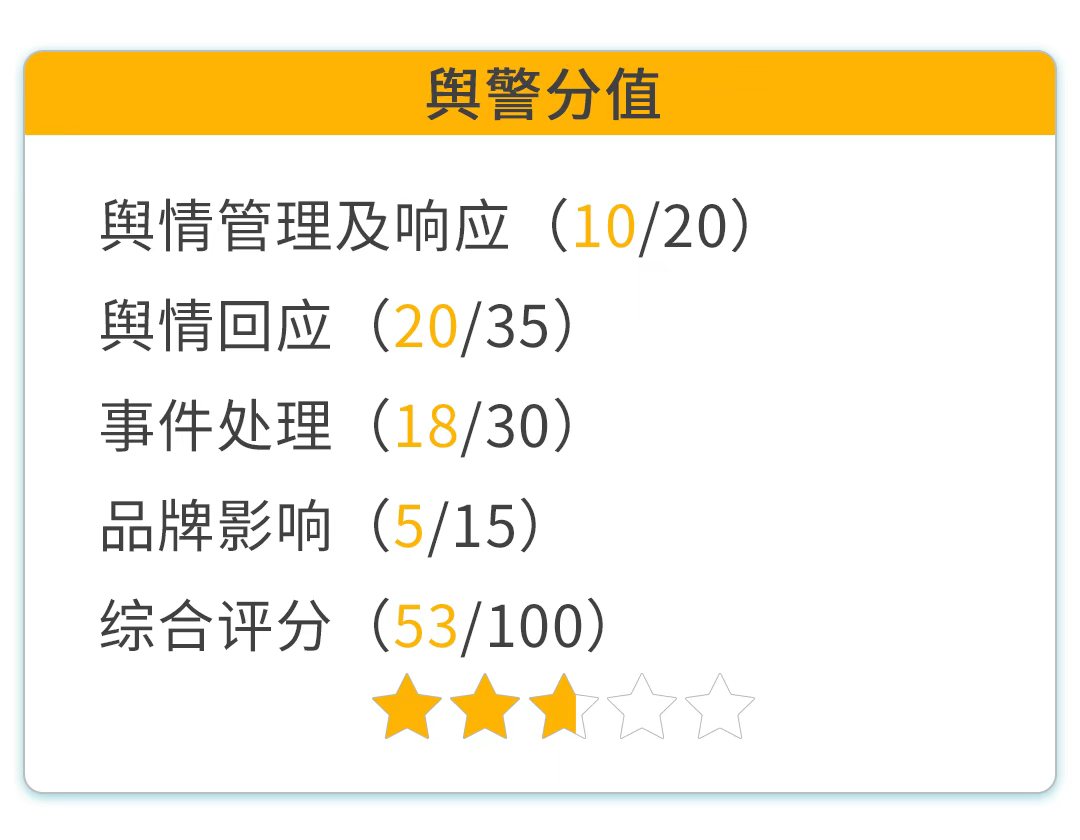
Group 1 - The core viewpoint emphasizes the importance of consumer trust and brand management in the face of public opinion events, highlighting the need for effective response strategies from companies [1] - The article discusses the establishment of a quantitative scoring mechanism for companies' public opinion management, which includes four primary indicators and 14 secondary indicators, aimed at evaluating corporate responses to public events [1] Group 2 - The incident involving the snack brand Liangpinpuzi, where an advertisement incorrectly depicted peanuts growing on trees, illustrates the pitfalls of using AI-generated content without proper oversight, leading to public backlash [2][3] - Liangpinpuzi's prompt apology and corrective actions reflect a commitment to brand integrity, but the incident raises concerns about the accuracy of content produced through AI technology [3] Group 3 - The launch of the mini Labubu product by Pop Mart has generated consumer excitement, but initial feedback indicates dissatisfaction with the product's size and quality, raising questions about the company's quality control [4][5] - The ongoing quality issues reported by consumers, including defects in previous products, suggest that Pop Mart must balance rapid expansion with stringent quality management to maintain brand reputation and consumer trust [6]

良品铺子“花生上树”翻车,系误用AI生成图片|消费舆警指数
2 1 Shi Ji Jing Ji Bao Dao· 2025-08-30 01:43
Core Insights - Consumer trust and preference are vital market resources for consumer-facing companies, and the integration of brand and operational processes has intensified in recent years, making the management of public sentiment crucial for brand reputation [1] Group 1: Incident Analysis - The "Peanut on Tree" incident involving the brand Liangpinpuzi highlighted a significant error in advertising, where peanuts were incorrectly depicted as growing on trees, leading to public backlash [2] - Liangpinpuzi issued a formal apology on August 28, acknowledging the mistake was due to the use of AI-generated images and committed to updating the product pages and verifying all promotional materials for accuracy [2] - The incident underscores the risks associated with AI technology in commercial applications, emphasizing the need for strict review processes to avoid damaging brand image and misleading consumers [5] Group 2: Product Quality Concerns - The launch of the mini Labubu blind box by Pop Mart faced criticism for poor workmanship and small size, with consumers expressing dissatisfaction regarding the product's quality relative to its price [6] - Pop Mart's rapid expansion has led to quality control issues, with previous complaints about product defects such as misalignment and paint issues, indicating a need for better balance between growth and quality management [6][7] - As the trend in the toy industry shifts from "hunger marketing" to "quality-driven" strategies, brands must enhance supply chain upgrades and transparency in quality inspection processes to maintain consumer trust and brand value [7]