
Tokyo Electron

Search documents
摩根士丹利:半导体生产设备_2025 年 6 月技术月刊
摩根· 2025-07-01 00:40
Investment Rating - The industry investment rating for Semiconductor Production Equipment is Attractive [2]. Core Insights - The semiconductor production equipment market is expected to experience strong growth driven by demand for advanced packaging materials and AI-related technologies [12][34]. - Major companies like Microsoft and NVIDIA are significantly increasing their capital expenditures, which will positively impact the semiconductor equipment sector [8][21]. - The demand for high-bandwidth memory (HBM) and advanced packaging technologies is projected to rise, creating opportunities for companies like Advantest and Disco [34][12]. Summary by Sections Market Overview - The semiconductor production equipment market is anticipated to grow despite a slow recovery in the overall semiconductor market, with advanced packaging applications expected to outpace other segments [12][34]. - The WFE (Wafer Fabrication Equipment) market is projected to see low-single digit negative growth in 2025 [16]. Company Ratings - Advantest (6857.T) is rated Overweight with a target price based on a P/E of 14.0x [49]. - Disco (6146.T) is rated Overweight with a target P/E of 25.1x [46]. - SCREEN Holdings (7735.T) is rated Overweight with a target P/E of 11.9x [54]. - Tokyo Electron (8035.T) is rated Equal-weight [113]. Demand Drivers - The increasing need for AI servers and advanced packaging materials is driving demand for semiconductor production equipment [8][12]. - Companies are expected to ramp up capital expenditures directed at HBM4 and advanced packaging technologies starting from the second half of 2025 [8][12]. Geopolitical Factors - The US-China trade tensions and export restrictions are influencing the semiconductor equipment market, particularly affecting sales to China [20][22]. - Domestic production of AI chips in China is expected to increase capital intensity, benefiting companies like Advantest and Tokyo Seimitsu [21].
Decoding China's AI Advances | Bloomberg Tech: Asia 06/27/2025
Bloomberg Technology· 2025-06-28 02:00
AI 发展与竞争 - 中国的 AI 技术正在快速发展,某些领域已能与西方竞争对手匹敌,甚至在成本上更具优势 [4][5][6] - 美国和中国在 AI 领域的竞争已扩展到标准、治理和基础设施等多个层面 [5] - 中国的 AI 公司正通过开源模式加速发展,与美国形成差异化竞争 [9][23][24] - 行业观察者认为,美国在芯片和半导体领域仍保持领先地位,而中国在应用、基础设施和能源方面具有优势 [22][23] 投资与创新 - 风险投资对中国 AI 领域的投资仍然活跃,关注 AI 在各垂直领域的应用,例如生物技术中的新药发现 [9][27] - 能源效率和可持续能源是 AI 发展的关键瓶颈,模块化数据中心解决方案成为关注焦点 [16][17] - 中国的创业公司正在探索双重应用和全球化战略,以实现盈利和增长 [18][19][20] 地缘政治与行业影响 - 美国正试图建立以其为主导的科技生态系统,但中国也在积极塑造全球 AI 使用规范,特别是在全球南方 [7][9] - 中美之间的科技竞争可能不会形成非此即彼的局面,各国政府可能会继续在两者之间寻求平衡 [10] - 东京电子预计,即使中国加大对本土芯片设备制造商的支持,公司仍将扩大其技术领先优势 [4][41] - 东京电子来自中国的收入比例预计将下降,但仍将保持在 30% 左右 [39][40] 公司案例分析 - Manticore,一家中国的空间设计软件供应商,计划在香港进行 IPO,希望成为中国科技企业家的榜样 [30][36] - Deep Sea 的出现给市场带来了冲击,展示了中国在 AI 领域的创新能力 [4][12][13]


X @Bloomberg
Bloomberg· 2025-06-27 06:35
Tokyo Electron is on course to widen its lead against Chinese chip tool makers despite the billions of dollars Beijing is mobilizing to catch up, according to the CEO of the Japanese company https://t.co/trcAZJs7QD ...
Nike Needs US-China Trade Truce; Xiaomi's SUV Worries Tesla? | Insight with Haslinda Amin 6/27/2025
Bloomberg Television· 2025-06-27 05:33
Market Trends & Trade - Asian stocks experienced gains driven by optimism surrounding potential US-China trade agreements [1] - The US and China are showing hopes for a trade deal [1] - Lutnick indicates that a US-China trade truce has been signed [1] - India trade deal is nearing completion [1] Company Performance & Deals - Morningstar considers Nike to be undervalued [1] - Xiaomi's YU7 preorders exceeded expectations, leading to a jump in stock price [1] - JSW has agreed to acquire Akzo Nobel's India unit for $16 billion [1] China Market Insights - Goldman Sachs indicates a high bar for investments flowing into China [1] - Tokyo Electron is reportedly shrugging off competition from China [1]

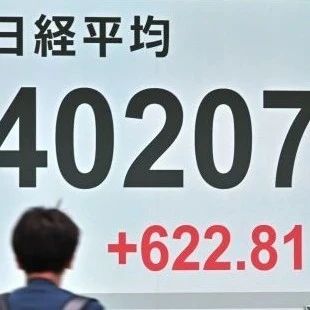
日经平均股指盘中重返4万点
日经中文网· 2025-06-27 03:17
Group 1 - The core viewpoint of the article highlights the continuous inflow of overseas investment into the Japanese stock market, with investors showing increased optimism due to easing concerns over U.S. tariff policies and geopolitical tensions [1][2][3] - The Nikkei average index has risen for four consecutive trading days, closing at 40,215.36 points, marking a 1.6% increase and surpassing the psychological threshold of 40,000 points for the first time since January 27 [1][2] - The positive sentiment in the market is attributed to the signing of a trade agreement related to China by U.S. President Trump, which has alleviated market concerns regarding tariffs [2][3] Group 2 - Overseas investors have net bought Japanese stocks for 12 consecutive weeks, indicating a significant return of foreign capital to the market [3] - The recovery in the market is linked to a reduction in fears regarding global economic prospects and a temporary easing of tensions in the Middle East [3] - Semiconductor stocks have gained traction in the U.S. market, which has positively influenced the Tokyo market, with leading semiconductor companies like Tokyo Electron and Shin-Etsu Chemical seeing significant gains [2]
Lutnick Says US-China Trade Truce Signed | Bloomberg: The Asia Trade, 6/27/25
Bloomberg Television· 2025-06-27 02:55
"Bloomberg: The Asia Trade" brings you everything you need to know to get ahead as the trading day begins in Asia. Bloomberg TV is live from Tokyo and Sydney with Shery Ahn and Haidi Stroud-Watts, getting insight and analysis from newsmakers and industry leaders on the biggest stories shaping global markets. Chapters: 00:00:00 - Bloomberg: The Asia Trade begins 00:02:24 - Lutnick: US-China trade truce signed, 10 deals imminent 00:07:40 - Trump on Powell: We have to fight this guy 00:14:16 - Tokyo Electron C ...

BERNSTEIN:美国考虑取消对在华设有实验室的跨国企业的中国半导体设备许可证豁免
2025-06-27 02:04
Summary of Key Points from the Conference Call on Global Semiconductors and Semiconductor Capital Equipment Industry Overview - The focus is on the **Global Semiconductor Capital Equipment** industry, particularly the implications of potential changes in U.S. export controls affecting shipments to China [1][2][3]. Core Insights and Arguments - **Export Control Waivers**: Since October 2022, U.S. semiconductor capital equipment (semicap) companies have faced increasing restrictions on shipments to China. Non-Chinese customers with fabs in China have been receiving waivers, but the U.S. Commerce Department is considering canceling these waivers, which would require licenses for shipments [2][3]. - **Impact on Multinational Companies**: Major multinationals with significant capacity in China include **Samsung**, **SK hynix**, **TSMC**, and **UMC**. For instance, SK hynix has 35% of its DRAM capacity in China, while Samsung has 30% of its NAND capacity there [4][5]. - **WFE Spending**: The total WFE (Wafer Fabrication Equipment) spending by non-Chinese companies in China is projected to be around **$2 billion** in 2024, which is only about **4%** of the total WFE deployed in China and less than **2%** of the global WFE market estimated at **$108 billion** [5][6][33][37]. - **Memory Chip Exposure**: Memory chips are seen as the most exposed segment, with China-based fabs accounting for **10%** of global DRAM and **15%** of NAND capacity. However, case-by-case approvals for licenses may mitigate immediate impacts [6][39]. Additional Important Insights - **Deglobalization Trends**: Japanese semiconductor capital equipment companies are expected to benefit from deglobalization trends, as they can serve both U.S. and Chinese markets. Companies like **Tokyo Electron** and **Kokusai** may gain from increased demand for etching and deposition equipment [7]. - **Investment Implications**: - **AMAT (Applied Materials)**: Rated as Outperform with a target price of **$210.00**, driven by secular WFE growth and capital return strategies [10]. - **LRCX (Lam Research)**: Also rated Outperform with a target of **$95.00**, supported by a potential NAND upgrade cycle [10]. - **Tokyo Electron**: Rated Outperform with a target of **¥33,800**, expected to gain market share due to competitive pricing [11]. - **ASML**: Rated Market-Perform with a target of **€700.00**, reflecting a cautious outlook on growth relative to consensus estimates [14]. - **Domestic Chinese Companies**: Companies like **NAURA**, **AMEC**, and **Piotech** are rated Outperform, benefiting from domestic WFE substitution trends in China [15][16][17]. Conclusion - The semiconductor capital equipment industry is facing significant regulatory changes that could impact multinational companies operating in China. While immediate effects may be limited, the long-term implications of export controls and deglobalization trends will shape the competitive landscape. Investment opportunities exist in both established players and emerging domestic companies in China.


Asian chip stocks rise after Nvidia reclaims title of the world's most valuable company
CNBC· 2025-06-26 02:25
Group 1 - Chip stocks in Asia experienced a rise following Nvidia's record share close, reclaiming its title as the world's most valuable company with a market value of $3.77 trillion, surpassing Microsoft [1][4] - South Korea's SK Hynix saw a 3.53% increase in shares, while TSMC's shares rose by 0.47%. Foxconn also reported a 0.77% increase due to its strategic partnership with Nvidia [2] - Several Japanese chip stocks not directly linked to Nvidia also saw significant gains, with Advantest rising 3.93% to a record high and Softbank increasing by 4.38% [3] Group 2 - Nvidia's shares climbed over 4% to close at $154.31, marking a new all-time high since January, reflecting strong investor confidence in its dominance in artificial intelligence [3][4] - Despite facing export restrictions to China, Nvidia's growth trajectory remains strong, although it anticipates an $8 billion hit to sales and a $4.5 billion inventory write-down due to new regulations blocking sales of its H20 AI chip [5]

BERNSTEIN:中国半导体设备进口追踪(2025 年 5 月)_进口韧性显现,年初至今同比 - 2%,全年预测存在上行风险
2025-06-25 13:03
Summary of the Global Semiconductor Capital Equipment Conference Call Industry Overview - The focus is on the **Wafer Fabrication Equipment (WFE)** market in China, with a specific update on **May 2025** import data indicating resilience despite a year-to-date (YTD) year-over-year (YoY) decline of **2%** [2][22]. Key Insights - **May 2025 WFE Imports**: Total imports reached **USD 2,829 million**, reflecting a month-over-month (MoM) decline of **16%** and a YoY decline of **1%**. The YTD average import is **USD 2,773 million**, slightly lower than the previous year's average of **USD 3,159 million** [2][22]. - **Import Segmentation**: The largest segments for imports are **Deposition (26%)**, **Dry Etch (21%)**, and **Lithography (12%)**. Japan remains the largest trading partner, accounting for **25%** of imports, while Guangdong and Shanghai are the biggest domestic buyers, with shares of **37%** and **22%**, respectively [3][22]. Company-Specific Insights - **Tokyo Electron (TEL)**: Expected to see a **12% QoQ** increase in China revenue, with a projected **-10% YoY** decline for FY26/3. China is anticipated to contribute **42%** of total revenues [4][62][63]. - **Kokusai**: Forecasted to experience a **-32% QoQ** decline in China revenue, with an expected contribution of **37%** to total revenues [4][66][70]. - **Screen**: Anticipated to decline by **-27% QoQ** in China revenue, with a contribution of **30%** to total revenues, below the company's guidance of **45%** [5][73][79]. - **Advantest**: Expected to see a significant decline of **-60% QoQ** in China revenue, with exposure dropping to **8%** from **19%** in the previous quarter [5][82]. Market Dynamics - The **lithography segment** is experiencing a sharp decline, with imports expected to drop to **EUR 0.79 billion** in Q2, down **66% YoY** and **49%** sequentially. This is attributed to record low import levels in April and May [9]. - The overall WFE market in China is becoming increasingly important, with global vendors capturing approximately **84%** of the market share in 2024 [18]. Investment Implications - **NAURA**: Rated as **Outperform** with a target price of **CNY 550.00**, benefiting from a broad product portfolio and diverse client base [11]. - **AMEC**: Also rated **Outperform** with a target price of **CNY 300.00**, recognized for its technology and market position [12]. - **Piotech**: Rated **Outperform** with a target price of **CNY 280.00**, noted for its innovation in advanced packaging [13]. - **AMAT**: Positive outlook with a target price of **$210.00**, driven by secular WFE growth and capital return [16]. - **ASML**: Rated **Market-Perform** with a target price of **EUR 700.00**, reflecting a cautious stance on growth relative to consensus [17]. Additional Observations - The **import data** indicates a shift in sourcing, with increased imports from **Singapore and Malaysia** as U.S. direct imports decline [34][40]. - The **market for cleaning equipment** remains competitive, with potential upside from panel-level packaging [15]. This summary encapsulates the key points from the conference call, highlighting the current state of the WFE market in China, company-specific forecasts, and broader market dynamics.
摩根士丹利:中美脱钩与半导体设备选股策略
摩根· 2025-06-23 02:09
Investment Rating - The industry view for Semiconductor Production Equipment is rated as Attractive [6] Core Insights - Texas Instruments announced a historic investment of US$60 billion in semiconductor production in the US, specifically targeting fabs in Texas and Utah, in response to the US government's manufacturing repatriation policy [3][9] - NVIDIA will no longer include sales to China in its guidance due to US export restrictions, estimating a significant impact of US$2.5 billion from January to April and US$8 billion from May to July [4][9] - The ongoing US-China decoupling is expected to benefit certain Semiconductor Production Equipment stocks, particularly those with close ties to Texas Instruments, such as Disco and Screen HD [9][10] Summary by Sections Investment Announcements - Texas Instruments' investment is the largest in domestic legacy semiconductor production in history, emphasizing the shift towards US-based manufacturing [3][9] - NVIDIA's exclusion of China from sales forecasts reflects the impact of US regulations on semiconductor exports [4][9] Market Dynamics - The domestic production of AI chips in China is anticipated to increase capital intensity, particularly benefiting companies like Advantest and Tokyo Seimitsu due to rising demand for testing equipment [13] - Japanese equipment makers such as Disco and Tokyo Seimitsu are expected to gain from the increased semiconductor fab construction momentum in the US [10] Competitive Landscape - Some Japanese equipment manufacturers face no significant US competition, particularly in areas like cleaning equipment and thermal processing systems, which may insulate them from market share losses despite the US fab expansions [12] - The introduction of new semiconductor processes in the US could favor US-made equipment over Japanese counterparts due to local support advantages [11] Stock Ratings - The report includes specific stock ratings for companies in the Semiconductor Production Equipment sector, with Advantest, DISCO, and SCREEN Holdings rated as Overweight, while others like Nikon are rated Underweight [60]