
众安在线

Search documents
存款代币:平衡“天才法案”与银行利益
GOLDEN SUN SECURITIES· 2025-12-22 07:20
Investment Rating - Maintain "Overweight" rating for the industry [5] Core Insights - The "Genius Act" poses significant challenges and opportunities for the banking sector, potentially leading to deposit outflows and liquidity issues, termed "financial disintermediation" [8][10] - JPMorgan's launch of the deposit token, JPMD, aims to balance traditional banking interests with the innovative aspects of cryptocurrency, providing a solution for liquidity management while retaining key features of traditional deposits [3][17] Summary by Sections 1. Core Insights - The "Genius Act" requires that token issuers maintain sufficient assets, which could lead to substantial deposit outflows from banks, estimated at $1.9 trillion if the token market reaches $2 trillion [10][11] - JPMorgan's strategy involves leveraging its position to introduce deposit tokens that mitigate the risks posed by the "Genius Act" while enhancing its service offerings [8][10] 2. JPMorgan's Token Strategy - JPMorgan has been actively developing blockchain payment technologies and has previously launched JPM Coin, which has processed over $1.5 trillion in institutional payments since its introduction in 2019 [10][14] - The new deposit token, JPMD, is designed to represent real bank deposits, offering interest potential and deposit insurance, while integrating with traditional banking systems [3][17] 3. Typical Applications of Deposit Tokens - Payment applications: Deposit tokens facilitate peer-to-peer transactions, reducing reliance on traditional intermediaries [20] - Programmable currency: The programmable nature of deposit tokens allows for innovative solutions in existing deposit services, such as automated loan disbursements [21] - Protocol interaction: Deposit tokens are well-suited for interaction with smart contract protocols, enhancing automation and interoperability in multi-party transactions [23] 4. Investment Recommendations - The report suggests focusing on the rapid development of the RWA (Real World Assets) and asset tokenization markets, particularly in the context of regulatory advancements in the US and Hong Kong [24]

港股异动 稳定币概念股上扬 国泰君安国际(01788)涨近5% 云锋金融(00376)涨超4%
Jin Rong Jie· 2025-12-22 07:12
Group 1 - The core viewpoint of the article highlights the rise in stablecoin-related stocks, with notable increases in share prices for companies such as Guotai Junan International (up 4.82% to HKD 2.61), Yunfeng Financial (up 4.5% to HKD 3.48), ZhongAn Online (up 4.42% to HKD 16.07), and Yaocai Securities (up 3.35% to HKD 8.33) [1] - Hong Kong's Financial Secretary, Xu Zhengyu, announced that as of the end of September this year, 36 applications for stablecoin licenses have been received from various sectors, with some licenses expected to be issued early next year, prioritizing robust reserve management, price stability, and anti-money laundering measures [1] - Xu emphasized that these measures not only protect investors but also establish a clear compliance path to reduce ambiguities that could lead to trading conflicts, thereby helping to resolve potential disputes [1] - Regarding the licensing system for virtual asset trading and custody service providers, Xu stated that discussions are ongoing with the Hong Kong Securities and Futures Commission to develop detailed licensing regulations, which are planned to be submitted to the Legislative Council for review next year, aiming to balance risk management and innovation within the virtual asset industry [1]

港股异动 | 稳定币概念股上扬 国泰君安国际(01788)涨近5% 云锋金融(00376)涨超4%
智通财经网· 2025-12-22 06:33
Group 1 - The core viewpoint of the article highlights the rise in stablecoin-related stocks following the announcement of stablecoin license applications in Hong Kong [1] - As of the end of September this year, Hong Kong's Financial Secretary has received 36 stablecoin license applications from various sectors, with some licenses expected to be issued early next year [1] - The Financial Secretary emphasized that the measures aim to protect investors and establish a clear compliance path to reduce potential trading conflicts and disputes [1] Group 2 - The licensing system for virtual asset trading and custody service providers is being developed in collaboration with the Hong Kong Securities and Futures Commission, with plans to submit the regulatory framework for legislative review next year [1] - The regulatory framework will cover key aspects of the virtual asset industry, aiming to balance risk management and innovation [1]
稳定币概念股上扬 国泰君安国际涨近5% 云锋金融涨超4%
Zhi Tong Cai Jing· 2025-12-22 06:32
Core Viewpoint - The stock prices of stablecoin-related companies have risen significantly following the announcement of stablecoin license applications in Hong Kong, indicating positive market sentiment towards the regulatory developments in the sector [1] Group 1: Stock Performance - Guotai Junan International (01788) increased by 4.82%, reaching HKD 2.61 [1] - Yunfeng Financial (00376) rose by 4.5%, reaching HKD 3.48 [1] - ZhongAn Online (06060) saw a rise of 4.42%, reaching HKD 16.07 [1] - Yaocai Securities (01428) increased by 3.35%, reaching HKD 8.33 [1] Group 2: Regulatory Developments - As of September 30, Hong Kong's Financial Secretary, Xu Zhengyu, announced that 36 stablecoin license applications have been received from various sectors [1] - Licenses are expected to be issued early next year, with a focus on sound reserve management, price stability, and anti-money laundering measures [1] - The regulatory framework aims to protect investors and establish a clear compliance path to reduce potential trading conflicts and resolve disputes [1] Group 3: Virtual Asset Regulation - Xu Zhengyu mentioned ongoing collaboration with the Hong Kong Securities and Futures Commission to develop a licensing system for virtual asset trading and custody service providers [1] - The legislative proposal is planned for submission to the Legislative Council next year, aiming to cover key aspects of the virtual asset industry [1] - The regulatory framework seeks to balance risk management and innovation within the sector [1]
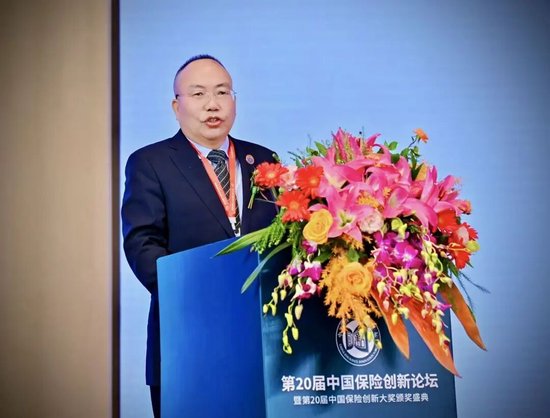
唐玉明:新航海时代——浅谈未来寿险的红利、暗礁与挑战
Xin Lang Cai Jing· 2025-12-22 02:42
Core Viewpoint - The insurance industry is entering a new historical development stage, driven by various new engines such as policy and institutional dividends, demographic changes, technological advancements, and market ecology deepening, while facing significant challenges and traps [1][41]. Group 1: Historical Development and Current Trends - The insurance industry in China has undergone over 40 years of development, characterized by significant events that outline its trajectory [4][44]. - The industry is transitioning into a new development cycle, with the previous cycle marked by the pandemic lasting until 2025, and the current cycle presenting new opportunities [5][44]. - The capital market's resurgence is providing new opportunities for the life insurance sector, helping to resolve many existing contradictions [5][44]. Group 2: Four Major Dividends - **Policy and Institutional Dividends**: The "Healthy China" initiative and the deepening of the third pillar of pension policy are expected to stimulate demand for commercial health and pension insurance [17][57]. - **Demographic and Demand Changes**: The aging population is creating a pressing need for pension financial products, while the growing middle class is increasing demand for wealth transfer and tax planning solutions [19][58]. - **Technological and Digital Dividends**: The adoption of AI and big data is enhancing operational efficiency and customer experience, while new sales channels are emerging through digital platforms [19][59]. - **Market and Ecological Deepening**: The competition is shifting from single product offerings to comprehensive ecosystems that integrate insurance with health and pension services [21][61]. Group 3: Major Challenges - The industry faces fundamental challenges in profitability models, particularly with the risk of interest rate differentials re-emerging in a declining interest rate environment [31][34]. - There is a shortage of new talent who understand both insurance and healthcare, alongside resistance to organizational change as companies transition to more agile structures [32][34]. - Data security and privacy protection are critical challenges, especially as companies leverage customer data for pricing and services [33][34]. - The regulatory landscape is becoming increasingly complex, necessitating close communication with regulators to ensure compliance amid innovative business models [34][34]. Group 4: Strategic Responses - **Strategic Level**: Shift from "selling products" to "building ecosystems" by integrating health management and wealth management services into insurance offerings [35][36]. - **Product and Service Level**: Move towards modular and customizable insurance products that cater to specific customer needs, enhancing service value [37][38]. - **Channel and Marketing Level**: Transition from a "people-intensive" approach to "precision outreach" by leveraging digital tools and enhancing the quality of the sales force [38][39]. - **Technology and Data Level**: Develop centralized data and business platforms to streamline operations and enhance customer interactions through full digitalization [39][40].

WEMONEY研究室·数字金融周报|险资布局硬科技版图浮出水面;银行出清存量贵金属杠杆类业务
Sou Hu Cai Jing· 2025-12-19 10:46
Group 1: Corporate Governance Changes - The six major state-owned banks in China have all abolished their supervisory boards, with Postal Savings Bank being the latest to announce this change, allowing the audit committee of the board to assume the supervisory functions [1] - Other commercial banks, including Huaxia Bank and Beijing Bank, are also in the process of removing their supervisory boards [1] Group 2: Regulatory Investigations - Postal Savings Bank is under self-regulatory investigation for alleged violations during the underwriting of debt financing instruments, which may involve issues like abnormal underwriting fees and price competition [2] Group 3: Deposit Trends - A significant wave of high-interest deposits is set to mature, with an estimated 72 trillion yuan in high-interest deposits maturing by the end of 2025, leading to a potential structural improvement in banks' liability costs [3] - In October, household deposits decreased by 1.34 trillion yuan, while non-bank financial institutions saw an increase of 1.85 trillion yuan in deposits [3] Group 4: Credit Card Issuance Decline - The number of credit cards in China has decreased by 10 million over the past three years, with a total of 7.07 billion credit cards and loan cards issued as of the end of Q3 2023 [4] Group 5: Preferred Stock Redemption - Nine banks have redeemed preferred shares this year, a significant increase compared to only two banks in the previous year, with the largest redemption being 560 billion yuan by Industrial Bank [5] Group 6: Precious Metals Business Adjustments - Banks are increasingly managing risks associated with leveraged precious metals accounts, with recent actions including the termination of agency relationships for long-standing accounts [6] Group 7: Regulatory Penalties - Citic Bank's Chengdu branch was fined 2.3 million yuan for various non-compliant financial practices, while four other branches faced a total fine of 2.5 million yuan [7] Group 8: Insurance Sector Developments - The CEO of Taikang Life, Cheng Kangping, has stepped down after nine years, with Xue Jihua taking over, marking a significant leadership change in the company [8] - Fuzhou Life Insurance has been approved to acquire all insurance business from Jun Kang Life Insurance, indicating consolidation in the insurance sector [8] Group 9: Consumer Finance Updates - Nanyin Fabao Consumer Finance has increased its registered capital to 6 billion yuan, ranking fourth among consumer finance companies in China [9] - Changsha Bank plans to invest up to 1.55 billion yuan in its subsidiary, Hunan Changyin 58 Consumer Finance, to increase its ownership stake [9] Group 10: Financial Technology Changes - Kuaqian Payment's actual controller has changed to Ke Liming, marking a significant shift in ownership away from the Wanda Group [10] - Deyunsheng Microfinance was ordered to rectify issues found during a regulatory inspection, indicating ongoing scrutiny in the microfinance sector [10]
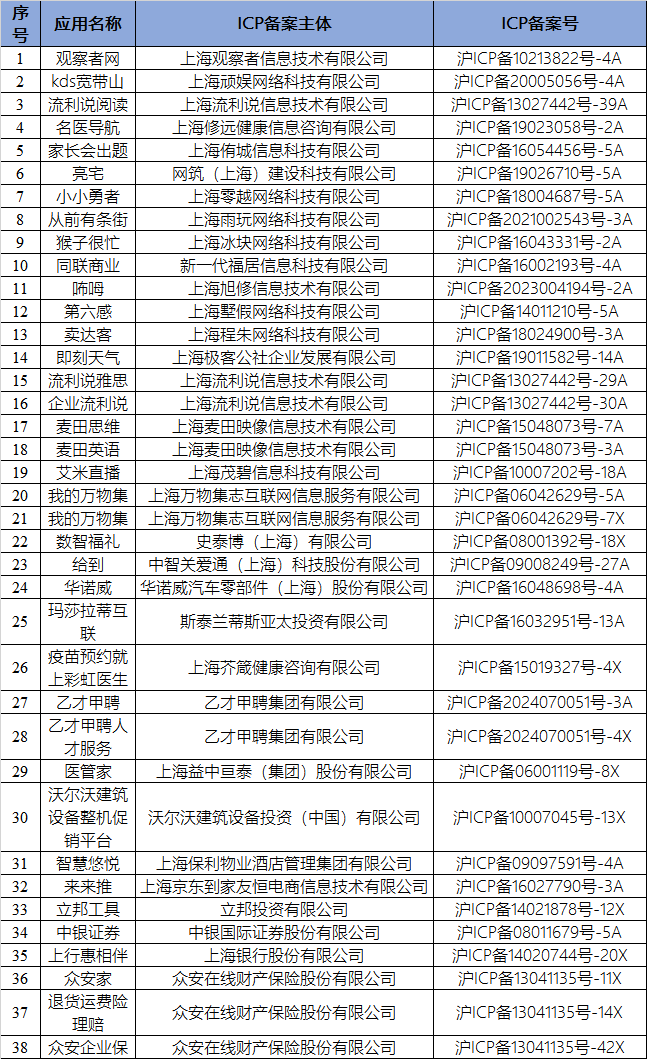
上海通信局下架处理4款金融小程序,今年32家金融机构涉侵权
2 1 Shi Ji Jing Ji Bao Dao· 2025-12-19 09:49
Core Viewpoint - The Shanghai Municipal Communications Administration has announced the removal of 38 apps (SDKs) that have violated user rights, with ongoing monitoring and potential further actions against these apps [1][3]. Group 1: Regulatory Actions - The Shanghai Municipal Communications Administration has accelerated compliance rectification of apps, publishing 10 batches of violating apps by December 19, 2025, compared to only 2 batches in the previous year [3]. - The regulatory body will continue to track the listed apps and may impose administrative penalties or include them in a list of poorly performing telecom businesses [1][3]. Group 2: Specific Apps Involved - Among the 38 apps, Shanghai Bank's "Shangxing Huixiangban" and three mini-programs from Zhong An Online Property Insurance were identified for issues such as lack of clear personal information processing rules and difficulties in account cancellation [1][3]. - The "Shangxing Huixiangban" program, launched on November 25, 2022, aimed to provide integrated services for small and micro customers but has been removed from WeChat [6]. Group 3: Data Protection Concerns - The issues highlighted include failure to clearly state personal information processing rules, difficulties in account cancellation, and unauthorized collection of personal information [3][5]. - The financial sector, particularly banks and insurance companies, faces increasing scrutiny regarding data security and personal information protection, with 32 financial institutions reported for improper handling of personal information [3][4]. Group 4: Regulatory Framework - The National Financial Supervision Administration has issued guidelines emphasizing data security, outsourcing management, business continuity, and personal information protection, outlining 18 requirements for mobile application management [4]. - The Ministry of Industry and Information Technology has intensified its regulatory efforts on personal information protection since November 2019, including the regulation of SDKs [4].
64岁的“中国区块链教父”和他的“虚拟资产第一股”
Mei Ri Jing Ji Xin Wen· 2025-12-18 14:54
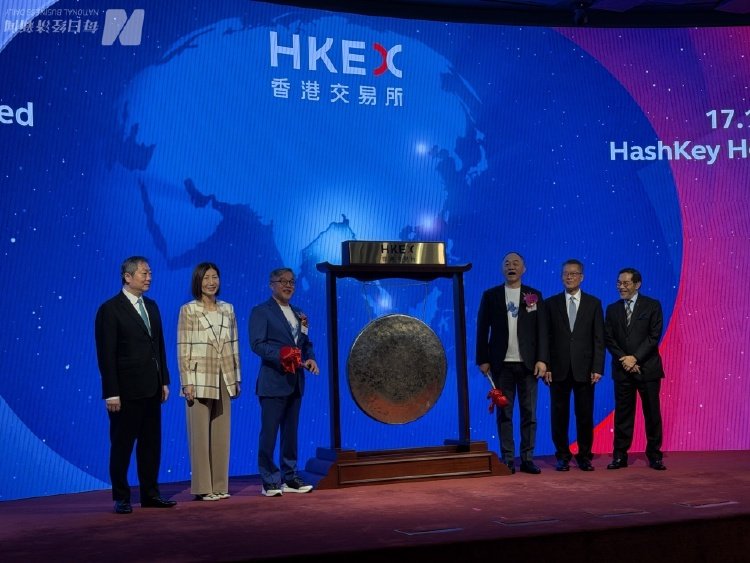
Core Viewpoint - HashKey has officially listed on the Hong Kong Stock Exchange, marking it as the first fully cryptocurrency-based company in the Hong Kong market, despite a lackluster stock performance on its debut day [1][18]. Company Overview - HashKey is recognized as Hong Kong's largest licensed cryptocurrency exchange operator, with a market capitalization of HKD 15.6 billion [1]. - The company was founded by prominent figures in the blockchain space, including "blockchain father" Xiao Feng and Wanxiang Group Chairman Lu Weiding, who is also the largest shareholder [1][4]. Stock Performance - On its first trading day, HashKey's stock price opened with a slight increase of nearly 1% but soon turned negative, closing at HKD 6.67, a decrease of 0.15% [1]. - By the second trading day, the stock price further declined to HKD 5.63 [1]. Business Strategy - HashKey emphasizes a compliance-first approach, having established itself in 2018 when the regulatory framework for virtual assets in Hong Kong began to take shape [7]. - The company has obtained 13 licenses across six different jurisdictions, adhering to principles of licensing, compliance, and regulation [8]. Financial Performance - HashKey's revenue has shown significant growth, with projections indicating revenues of HKD 5.18 billion from transaction facilitation services in 2024, accounting for 71.8% of total revenue [9]. - Despite revenue growth, the company has reported substantial losses, with cumulative losses exceeding HKD 2.3 billion over three years [12]. Market Position - HashKey aims to cover the entire value chain of digital assets, including trading facilitation, on-chain services, and asset management [11]. - The company is positioned as the largest asset management service provider headquartered in Hong Kong, with a cumulative asset management scale of HKD 7.8 billion [11]. Industry Context - The listing of HashKey is seen as a significant milestone for the development of virtual assets in Hong Kong, representing a shift towards more regulated and compliant operations in the cryptocurrency sector [19]. - The company’s founder, Xiao Feng, expressed confidence in the long-term potential of the virtual asset industry, citing the importance of regulatory frameworks [17].
尊享e生2026版将康复纳入核心保障
Jing Ji Guan Cha Wang· 2025-12-18 12:06
Core Viewpoint - ZhongAn Insurance has launched the "Zunxiang Esheng 2026 Edition" health insurance product, focusing on a comprehensive health service model that includes treatment and rehabilitation, addressing the issue of homogeneity in the million medical insurance market [1] Group 1: Product Features - The "Zunxiang Esheng 2026 Edition" extends its coverage to include post-operative rehabilitation, marking a shift towards full-process health services [1] - It provides inpatient rehabilitation support for 16 specific diseases, including neurological and musculoskeletal conditions, within 180 days of the first diagnosis [1] - The product integrates 19 health management services covering the entire medical process: pre-diagnosis consultations, in-hospital assistance, and post-treatment care [1] Group 2: Service Enhancements - Pre-diagnosis services include consultations with top-tier hospital doctors and cancer early screening [1] - In-hospital services feature direct payment for medical expenses and assistance from critical illness experts [1] - Post-treatment services encompass home nursing care and ongoing rehabilitation support, creating a closed-loop health service from prevention to recovery [1] Group 3: Medication Services - The insurance plan expands its medication services to include over 380 common original research drugs through ZhongAn's internet hospital, facilitating online prescriptions and home delivery [1]
众安保险推出“尊享e生2026版” 保障服务双升级
Zheng Quan Ri Bao Zhi Sheng· 2025-12-18 11:24
Group 1 - The core upgrade direction of "Zunxiang eSheng 2026 Edition" is "treatment + rehabilitation," extending coverage to critical post-operative rehabilitation stages, achieving dual upgrades in protection services [1] - The product includes inpatient rehabilitation coverage for 16 specific diseases, providing support for rehabilitation hospitalization within 180 days of the first diagnosis, along with direct payment for rehabilitation medical expenses at designated hospitals [1] - The product integrates 19 health management services covering the entire medical process, from pre-diagnosis to post-diagnosis, and expands medication services to include over 380 common original research drugs with online prescription and home delivery [1] Group 2 - Since its launch in 2015, the "Zunxiang eSheng" million medical insurance has undergone 25 iterations and served over 10 million families [2] - In the context of ongoing reforms in the basic medical security system, commercial health insurance is increasingly valued for its role in integrating medical resources and optimizing service processes to meet patients' comprehensive and multi-level protection needs [2] - The upgrade of "Zunxiang eSheng 2026 Edition" not only expands the coverage and services of a single product but also reflects the company's commitment to continuously respond to patient needs and focus on the quality of rehabilitation and health outcomes in product innovation [2]