Panasonic

Search documents
X @Bloomberg
Bloomberg· 2025-09-18 04:34
Battery Technology - Panasonic plans to debut sample solid-state batteries by the fiscal year ending March 2027 [1] - The company aims to enter the next-generation batteries market for robots and other systems [1]
专访松下电器中国总裁赵炳弟:中国是制造中心,也是创新中心
2 1 Shi Ji Jing Ji Bao Dao· 2025-09-18 04:02
Core Viewpoint - Panasonic has witnessed significant changes in the Chinese market over the past 40 years, evolving from a manufacturing hub to an innovation center, and aims to leverage its competitive edge gained in China for global markets [3][4]. Group 1: Market Dynamics - Panasonic's revenue from China was only about 1% of its global total when it first entered the market, but has since benefited from China's rapid economic growth and the rise of local competitors [3]. - The company recognizes the intense competition in the home appliance sector, which is transitioning into a saturated market, and emphasizes the need for both internal improvement and orderly competition [4]. Group 2: Product Strategy - Panasonic is shifting its business model from "Made in China" to "Made by China," focusing on integrated processes of planning, design, production, and sales within China [5]. - The company plans to achieve double-digit growth in export business in 2024, with products like washing machines and kitchen appliances being exported to Southeast Asia and the Middle East [5]. Group 3: Supply Chain Importance - China serves as a crucial supply chain base for Panasonic, with over 6,000 suppliers providing components and materials, accounting for 80% of the global supply chain [6]. - The robust supply chain in China helps Panasonic reduce manufacturing costs, enhance product competitiveness, and improve production efficiency [6]. Group 4: Competitive Advantages - China is not only a manufacturing powerhouse but also a consumer and innovation leader, with advantages in market scale, speed of innovation, and talent pool [7]. - The rapid development in areas like AI, new energy, and biotechnology presents new opportunities for Panasonic [7]. Group 5: Policy Impact - Recent reforms and policies aimed at enhancing the investment environment in China have positively influenced foreign companies like Panasonic, fostering a win-win relationship [8][9]. - The company anticipates further support from the Chinese government in terms of open policies to expand its investment and business scope [9][11].


Daktronics (NasdaqGS:DAKT) Conference Transcript
2025-09-17 17:17
Daktronics Conference Call Summary Company Overview - **Company**: Daktronics (Ticker: DAKT) - **Industry**: LED video display manufacturing - **Fiscal Year**: May through April - **Trailing 12-Month Revenue**: Approximately $749 million [3] Key Highlights - **Market Position**: - Number one American LED video display provider - Third largest worldwide - Products installed in over 120 countries, serving over 12,000 customers annually [3] - **Investment Highlights**: - Unique culture of excellence in engineering, manufacturing, and customer service - Only U.S. manufacturer of scale with a global footprint - Offers customizable LED video solutions and standard products through channel partners [4] - **Target Markets**: - Live events, commercial, transportation, and high school park and recreation segments - Growing demand driven by advertising, audience experience, and sports fan engagement [5][6] Financial Performance and Growth Strategy - **Revenue Segmentation**: Focus on diversifying businesses to drive long-term growth and profitability [9] - **Global Footprint**: Manufacturing facilities in South Dakota, Minnesota, Ireland, and China, producing about 80% of revenue [10] - **Customer Relationships**: Displays used for an average of 7 to 10 years, with repeat customers often returning for upgrades [11] Future Growth Initiatives - **Technological Investments**: Focus on narrow pixel pitch, micro-LED technologies, and SaaS-based control solutions [12] - **Business Transformation**: Implementing price adjustments, launching SaaS trials, and enhancing inventory efficiency [12][13] - **Financial Goals**: Targeting operating margins of 10-12% and returns on invested capital of 17-20% by FY28, with a compound annual growth rate of 7-10% [15][16] Market Opportunities - **High School and Park Recreation Segment**: Fastest growing area, driven by the adoption of video displays and funding through advertisements [22][23] - **International Strategy**: Currently about 9-10% of overall business, with growth opportunities in the Middle East, Australia, and Europe [27] - **Competitive Landscape**: Competes with companies like Panasonic and Samsung in live events, and traditional scoreboard providers in high school markets [32][34] Challenges and Considerations - **Tariffs**: Uncertain impact on business; U.S. manufacturing provides a competitive advantage, but reliance on imported parts may incur tariffs [39][40] - **CEO Search**: Ongoing search for a new CEO, with expectations to finalize a candidate soon [44] Conclusion - Daktronics is positioned as a global leader in the LED display market, with a strong focus on innovation, customer service, and strategic growth initiatives aimed at enhancing shareholder value and expanding market presence [16][47]

日企里的AI尖子生,松下中国「求变」
3 6 Ke· 2025-09-12 06:51
Group 1 - Panasonic is accelerating its AI initiatives in China, emphasizing the urgency for foreign companies to effectively apply AI technology to survive in the market [1] - The company has implemented a "dual-track" plan in China, focusing on providing core components for AI servers and integrating AI technology into end products and internal operations [1][3] - Panasonic's supply chain is deeply integrated into AI infrastructure, with key materials and components produced locally in China [1] Group 2 - Panasonic's R&D team in China is expanding at an annual rate of 20%-30%, with plans to continue this growth over the next three years [3] - The company is developing "small models" (SLM) for AI applications in home appliances and residential devices, addressing the need for offline AI functionality [3] - Internal operations have seen the initial implementation of "full AI" across the company, promoting a culture of AI application through competitions [3] Group 3 - Panasonic has adopted a "local decision-making" approach, allowing Chinese teams to operate independently and make decisions without waiting for approval from Japan [4][5] - The localization of the supply chain is crucial for achieving "Chinese cost," with over 6,000 suppliers in China contributing to a third of Panasonic's global supplier base [6] - The company has established a global procurement office in Shanghai to connect Chinese suppliers with global opportunities [6] Group 4 - Panasonic's performance in Northeast Asia has shown growth, with a 3% increase in sales and a 10% increase in operating profit for the 2024 fiscal year [9] - The company plans to restructure into three independent business units by April 2026, reflecting a response to increasing market competition [10] - Panasonic aims to leverage its success in the Chinese market to replicate effective strategies globally, enhancing its competitive edge [10][11]

全球与中国表面贴装设备(SMT)市场现状及未来发展趋势
QYResearch· 2025-09-12 05:35
Core Viewpoint - The SMT (Surface Mounter Technology) market is experiencing strong growth driven by the increasing demand for miniaturized, high-performance electronic products, particularly in sectors like 5G, IoT, and electric vehicles [4][10]. Market Overview - In 2024, global SMT sales are projected to reach approximately 71,000 units, with an average price of $72,300 per unit [4]. - The global SMT equipment market size is expected to reach $5.595 billion by 2025 and $7.483 billion by 2031, with a CAGR of 4.96% from 2025 to 2031 [5]. Regional Insights - Asia-Pacific, particularly China, Japan, South Korea, and Taiwan, dominates the SMT equipment market due to large-scale electronic manufacturing [4][7]. - North America and Europe are increasing investments in advanced SMT production lines for electric vehicles, aerospace, and medical devices [4]. Market Trends - The SMT equipment market is witnessing robust growth due to the demand for compact, high-performance electronic products [9]. - Automation is a key trend, with the adoption of smart SMT systems integrating sensors, data analytics, and real-time monitoring [9]. Market Drivers - The shift towards smaller, lighter, and more powerful electronic devices, such as smartphones and IoT devices, is driving the demand for advanced SMT solutions [10]. - The transition to electric vehicles and advanced driver-assistance systems (ADAS) is increasing the need for high-reliability and compact PCB components, further boosting SMT equipment demand [10]. Competitive Landscape - Major SMT equipment manufacturers include Fuji, ASM Pacific Technology, and Panasonic, with Japanese companies holding significant market share in the high-end segment [7]. - Domestic manufacturers in China, such as Beijing Borey and Beijing Torch, primarily compete in the low-end market [7]. Supply Chain Dynamics - The SMT equipment relies on precision components and materials, with suppliers including Keyence (sensors), Omron (automation components), and Murata (materials) [11]. - Downstream users of SMT equipment include EMS providers like Foxconn and OEMs such as Apple, Samsung, and Intel, which utilize SMT production lines for various electronic products [11].

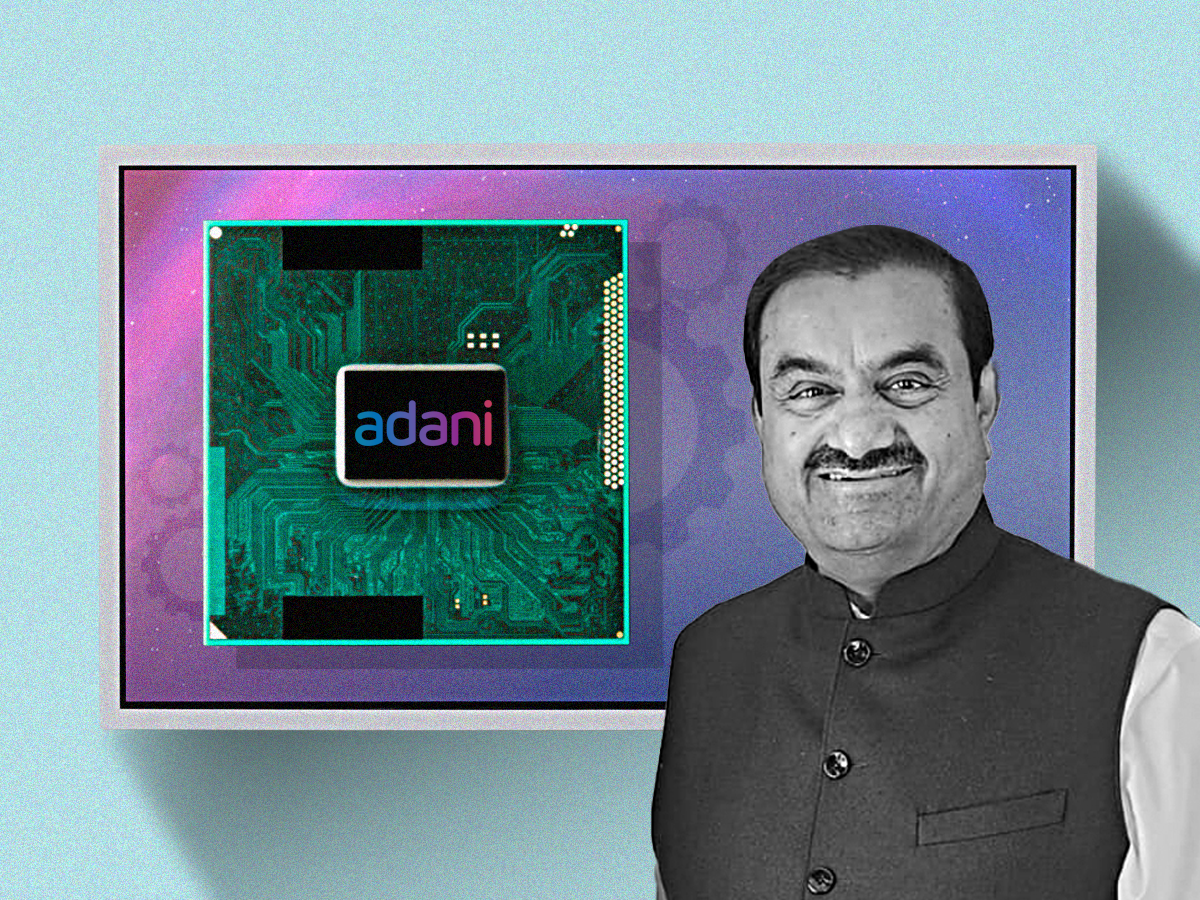
Adani scouts for partners again for LCD display fab
The Economic Times· 2025-09-12 00:30
Core Viewpoint - The Adani Group is making a second attempt to enter the semiconductor sector by establishing a joint LCD display fabrication plant in India, following the collapse of its previous $10 billion chip manufacturing proposal with Tower Semiconductor [1][2][10]. Group 1: Adani Group's Strategic Moves - The Adani Group had previously announced a $10 billion plan to set up a chip manufacturing facility in Maharashtra, which was later paused due to concerns over commercial viability and strategic alignment [2][10]. - The group is now focusing on establishing an LCD display fab, with discussions reportedly gaining momentum after Prime Minister Modi's visit to Japan [3][10]. - The Maharashtra government has provided a 'comfort letter' to the Adani Group, indicating readiness to offer land for data centers or semiconductor-related projects, contingent on finding a suitable partner [4][10]. Group 2: Market Context and Opportunities - The Ministry of Electronics and Information Technology (MeitY) has prioritized establishing display fabs under the proposed Semicon 2.0 scheme to boost domestic manufacturing and reduce imports [4][10]. - India currently consumes nearly 9% of the global display panel market, and establishing display fabs could unlock nearly 70% of display value within India, significantly reducing import dependency [4][10]. - Analysts suggest that display fabs present lower entry barriers and quicker returns compared to chip fabs, aligning well with Adani's infrastructure strengths [5][10]. Group 3: Partnerships and Technological Expertise - The Adani Group is in discussions with Sharp and Panasonic, both of which have shifted their focus to niche, high-value B2B sectors, leveraging their unique technologies [5][11]. - Sharp is recognized for its Indium-Gallium-Zinc-Oxide (IGZO) technology and is investing in new technologies like nano LED and reflective displays, while Panasonic is a key player in the automotive display sector [7][11]. - The collaboration with Sharp and Panasonic is seen as a strategic move to enhance Adani's capabilities in high-growth electronics manufacturing [4][10].

Freshworks (NasdaqGS:FRSH) 2025 Investor Day Transcript
2025-09-11 16:32
Freshworks Investor Day 2025 Summary Company Overview - **Company**: Freshworks (NasdaqGS:FRSH) - **Event**: Investor Day 2025 - **Date**: September 11, 2025 - **Focus**: Uncomplicated AI-native service platform for customer and employee experiences Core Industry Insights - **Industry**: Software as a Service (SaaS) focusing on IT and customer service - **Market Size**: Total addressable market for EX (Employee Experience) and CX (Customer Experience) software is estimated at **$80 billion** [22] - **Target Market**: Mid-market and lower-end enterprise customers, which account for over **$10 trillion** in economic activity in the U.S. alone [22] Key Company Highlights - **Growth Metrics**: - Recurring revenue increased from approximately **$560 million** to **$840 million** in two years [10] - Achieved Rule of 45 milestone ahead of schedule [10] - AI monetization grew to **$20 million**, doubling in the last year [10] - 25% revenue growth from customers spending over **$100,000** [12] - Majority of revenue now from mid-market and enterprise customers [11] - **Product Portfolio**: - **Freshservice**: AI-powered platform for IT and employee services - **Freshdesk**: AI-powered customer service solution - **Freddy AI**: Includes Freddy AI Copilot, Freddy Insights, and Freddy AI Agents for enhanced customer and employee support [9] Strategic Focus Areas - **AI Integration**: Continuous infusion of AI across core products to enhance value and solve more problems [57] - **Vertical Expansion**: Focus on sectors like education, healthcare, and government [57] - **Add-on Products**: Scaling IT asset management and enterprise service management (ESM) products [58] - **Adjacency Expansion**: Exploring areas like AI Ops and SecOps for future growth [59] Customer Base and Testimonials - **Diverse Customer Base**: Over **74,000** companies including Fortune 500 firms like Panasonic and various government entities [6][7] - **Customer Success Stories**: - **Big Bus Tours**: Transformed customer service center into a profit center using Freddy AI [63] - **Modamax**: Unified IT operations and improved onboarding processes through Freshservice [51][52] Financial Outlook - **Future Projections**: On track to achieve over **$1.3 billion** in recurring revenue by 2028 with strong cash flow and operating margins [21] - **Sustained Growth**: EX business expected to sustain **20% growth** for years [21] Conclusion - Freshworks is positioned to capitalize on the growing demand for uncomplicated, AI-driven solutions in the SaaS market, with a clear strategy for growth and a strong commitment to customer success. The company aims to continue its upward trajectory by leveraging its innovative product offerings and expanding into new market segments.

Amazon demands proof of authenticity from electronics sellers
Ecommerce News· 2025-09-11 13:53
Core Points - Amazon has implemented new verification requirements for electronics sellers to prove their products come from authorized suppliers, effective September 17, 2025 [1][3] - Sellers must submit recent invoices and detailed supplier information, impacting numerous well-known brands and potentially affecting many sellers [2][3] - The new rules have raised concerns among sellers regarding unclear communication and the risk of losing product listings if documentation is not provided [4][5] Seller Requirements - Sellers are required to submit invoices dated within the last 180 days that include at least 100 units, along with full supplier details [2] - Acceptable document formats include PDF, JPG, PNG, or GIF, and the rules apply across several European countries [2] Impact on Brands and Retailers - The requirement affects major brands such as Samsung, Dyson, Canon, Philips, HP, Sony, and Panasonic, with many sellers potentially facing warnings [3] - Retailers unable to provide the necessary documentation risk losing their product listings, which may lead to the return, destruction, or donation of existing inventory [5] Customer Complaints and Company Justification - Amazon's verification requirement aims to ensure the availability of safe and authentic products, responding to customer complaints regarding product authenticity [6] - The company emphasizes the need for sellers to demonstrate a reliable supply chain to meet these new requirements [6]