
SpaceX

Search documents
OpenAI CEO:太空数据中心的想法很荒谬!
Sou Hu Cai Jing· 2026-02-23 06:22
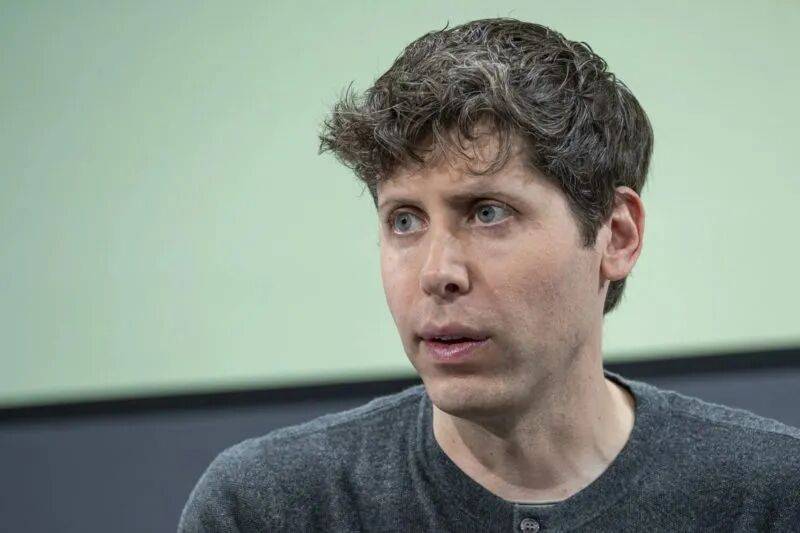
2月23日消息,据《印度快报》(The Indian Express)报道,OpenAI CEO山姆·奥尔特曼(Sam Altman)在印度AI 影响力峰会(India AI Impact Summit 2026)期间出席《印度快报》主办的一场活动上,回应了外界针对AI的高能 耗将影响环境的担忧,同时批评了特斯拉及SpaceX CEO埃隆·马斯克所提出的太空数据中心计划是"荒谬"的。 奥尔特曼回应称,"绝对不可能接近那个程度"。他抱怨道,许多关于ChatGPT能源消耗的讨论并不公平,特别是 那些讨论聚焦在"训练一个模型需要多少能源,相较于人类进行一次推理查询需要多少成本"。 "我真心觉得,在当前环境下,把数据中心送上太空的想法很荒谬,"山姆·奥尔特曼说:"虽然总有一天这会说得 通,但如果你粗略计算一下发射成本与我们在地球上能用的电力成本,更别提你在太空中修理坏掉的GPU了,而 它们仍然经常坏,遗憾的是。我们还没到那一步。" 事实上,使用SpaceX火箭将1764磅(800公斤)送入近地轨道的成本为560万美元,但对于计划发射数十吨的火箭 来说,每公斤价格可能会降低。不过,英伟达的NVL72 GB200机架级解 ...

X @Tesla Owners Silicon Valley
Tesla Owners Silicon Valley· 2026-02-23 03:41
SPACEX IS WINNING CONTRACTS OVER BOEING & LEGACY PLAYERS – SAVING AMERICANS BILLIONSSpaceX doesn’t win NASA, DoD, and commercial contracts because of favoritism — it wins them because its vehicles are better, faster, and dramatically cheaper. The result? Taxpayers save enormous sums while America gets reliable access to space.Key wins that prove the point:•NASA Commercial Crew — Boeing received $4.2 billion, SpaceX got $2.6 billion. SpaceX finished years earlier, has flown all crew rotations to the ISS, and ...
X @Elon Musk
Elon Musk· 2026-02-23 02:17
Order at https://t.co/Q1VvqV58aKHistoric Vids (@historyinmemes):This guy tested Starlink in the middle of the ocean and played CS2 with almost perfect ping https://t.co/ErSFZ67631 ...
奥特曼批评马斯克太空数据中心愿景:当下不切实际,很荒谬
Sou Hu Cai Jing· 2026-02-23 00:11
Core Viewpoint - OpenAI CEO Sam Altman believes that the concept of orbital data centers is impractical in the current context, citing economic and technical challenges associated with launching data centers into space [2][3]. Group 1: OpenAI's Perspective - Altman stated that the idea of sending data centers into space is absurd given the current circumstances, particularly due to the high launch costs and difficulties in addressing issues related to components like GPUs [3]. - He acknowledged the future potential of orbital data centers but emphasized that the technology is not yet at that stage [3]. Group 2: Elon Musk and SpaceX's Vision - Elon Musk has been advocating for the establishment of data centers in space, claiming that the lowest cost for deploying artificial intelligence will be in space, with a target timeline of two to three years [3]. - Musk's vision includes integrating xAI with SpaceX to accelerate the orbital data center project, which aims to create a network of one million satellites functioning as orbital data centers [3]. Group 3: Google's Initiatives - Google is also exploring the concept of space data centers, with CEO Sundar Pichai describing the initiative as a "moonshot" project aimed at developing a solar-powered system that exceeds Earth's current energy production capabilities [4]. - Pichai mentioned that Google plans to take the first step towards this goal by deploying small equipment racks on satellites by 2027, expressing confidence that this approach will become a conventional method for building data centers in about ten years [4][5]. - The internal project at Google, named "Project Suncatcher," aims to utilize solar energy from space to address the growing energy demands of artificial intelligence while reducing the environmental impact of traditional data centers [5].


商业航天,正在改写太空探索格局
Xin Lang Cai Jing· 2026-02-23 00:08
Core Viewpoint - The commercial space industry is rapidly evolving, with significant advancements from companies like SpaceX and Blue Origin, as well as increasing competition from other nations, particularly China and Europe, aiming to secure a leading position in the space economy [1][3][4]. Group 1: Developments in Commercial Space - SpaceX has submitted an application to the FCC to launch up to 1 million satellites to create an "orbital data center" [1] - Blue Origin successfully recovered its "New Glenn" heavy-lift rocket, becoming the second private company after SpaceX to master vertical recovery technology for orbital rockets [1] - The global commercial space sector is characterized by a competitive landscape where the U.S. maintains a strong lead due to early industry advantages and systematic policy support [3] Group 2: U.S. Leadership in Commercial Space - Since the introduction of the Commercial Space Launch Act in 1984, the U.S. has encouraged private sector participation in space through top-level design and policy guidance [3][9] - SpaceX's Starlink system has launched over 9,000 satellites, providing communication services to more than 5 million users across over 100 countries [3] - The U.S. government has implemented policies to streamline the approval process for commercial space projects, significantly reducing the time required for project approvals [9][12] Group 3: Global Competition and Emerging Players - China's commercial space sector is experiencing a "golden development period," supported by national strategies and achieving significant breakthroughs in rocket and satellite manufacturing [4] - By 2025, China aims to complete 50 launches, accounting for 54% of global space launches, with 25 of those being commercial rocket launches [4] - European companies are collaborating to create a unified aerospace entity to compete with U.S. market dominance, focusing on satellite internet and commercial launch vehicles [6][8] Group 4: Factors Supporting U.S. Commercial Space Growth - The U.S. commercial space industry benefits from a unique public-private partnership model that injects continuous funding into the sector [11][12] - The government supports key technology development through various financial instruments, ensuring funding for long-term, high-risk projects [12] - American companies adopt a rapid iteration and optimization approach in technology development, exemplified by SpaceX's development cycle for the Falcon 9 rocket [13][15]
Robinhood Launches $1B Fund To Give Retail Investors Access To Space X, Stripe
Yahoo Finance· 2026-02-22 21:30
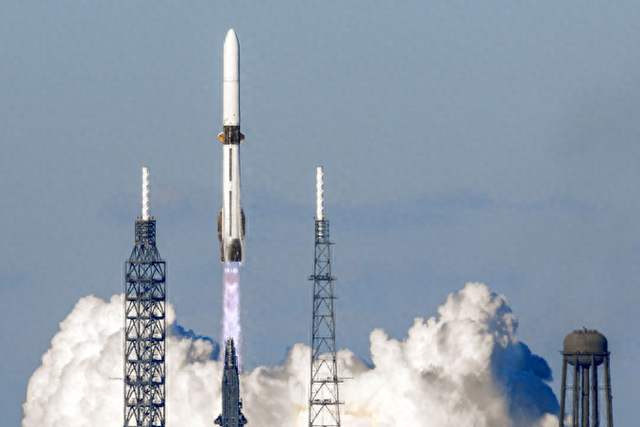
Core Insights - Robinhood Ventures Fund I is raising $1 billion by selling 40 million shares at $25 each, with 35 million shares from the fund and 5 million from Robinhood, indicating a significant move to provide retail investors access to high-profile companies like SpaceX and Stripe [5][25] - The closed-end fund market has been relatively dormant, with only 46 new funds launched since 2019, and the first IPO this year raised just $53 million, highlighting the challenges in this investment space [1][25] - The fund will not pay regular dividends and only considers distributions if excess cash exists, charging a 2% management fee, reduced to 1% for the first six months after IPO [3] Investment Opportunities - Investors can gain exposure to companies like SpaceX and Databricks through the fund, which already owns shares in these firms, allowing them to benefit from future IPOs or sales [4] - The fund's structure allows for trading based on sentiment and liquidity rather than just net asset value, which can lead to premiums or discounts in pricing [2][3] Market Dynamics - The sentiment, liquidity, and supply-demand dynamics will heavily influence the trading of the fund, making it essential for investors to understand these factors [2] - The fund's approach to investing in high-profile tech companies provides retail investors access to opportunities typically reserved for institutional investors [4]

Where Will Rocket Lab Stock Be in 10 Years?
The Motley Fool· 2026-02-22 20:05
Core Insights - The space economy is experiencing rapid growth, with companies like SpaceX leading the charge, although individual investors cannot currently invest in SpaceX stock [1] - Rocket Lab is a publicly traded company that competes with SpaceX for launch contracts, boasting a revenue growth of nearly 900% over the past five years [2] Company Overview - Rocket Lab's current market capitalization is $38 billion, with a stock price of $70.84, having experienced a daily change of -7.50% [4] - The stock has a 52-week range of $14.71 to $99.58, with a gross margin of 28.93% [5] Business Operations - Rocket Lab operates as a rocket launch provider for both commercial and military applications, utilizing its Electron rocket to deliver small payloads to orbit, with a backlog exceeding $500 million [6] - The company has expanded into satellite design, generating over $100 million in quarterly revenue from its space systems segment, which has outpaced its launch segment in sales [7] Future Expansion Plans - Rocket Lab plans to continue launching the Electron rocket while also developing the Neutron rocket, which will be larger and capable of delivering bigger payloads, potentially generating $50 million in revenue per launch [8] - The Neutron's testing and commercial deployment are slightly delayed, with expectations for the first test launch in 2026, which could significantly increase Rocket Lab's revenue [9] Long-term Projections - In the next decade, Rocket Lab could perform numerous launches annually and expand its space systems capabilities, potentially leading to billions in revenue [10] - However, the stock may already reflect much of this anticipated growth, with concerns about future shareholder dilution and low profit margins in the spaceflight industry, making it challenging to justify the current market cap [11]


AI Scales Up as the Biggest Players Battle for Supremacy
FinanceFeeds· 2026-02-22 19:08
Core Insights - The AI industry is undergoing a significant shakeout, leading to a concentration of power among a few major players, similar to the public cloud infrastructure battle [1] - Recent months have seen a surge in multi-billion-dollar acquisitions in the AI sector, indicating a trend towards consolidation [2][4] - The quality of AI tools is under scrutiny, with many companies struggling to deliver on promises, leading to increased pressure on AI startups [6][8] Acquisitions and Market Trends - Major acquisitions include Google’s $30 billion purchase of Wiz, SoftBank’s $5.4 billion acquisition of ABB's robotics business, and Palo Alto Networks’ $25 billion buyout of CyberArk [2] - Smaller acquisitions are also prevalent, with ServiceNow acquiring Pyramid Analytics and Nvidia taking control of SchedMD [3] - PwC's Brian Levy notes that the AI market is structurally reshaping itself, with elevated deal values expected to continue throughout the year [4] Challenges in AI Implementation - A survey revealed that 62% of CIOs have faced scrutiny from CEOs regarding AI-related decisions, and 74% feel their jobs are at risk if they cannot demonstrate productivity gains [6][7] - Studies indicate that many AI tools are not meeting expectations, with open-source developers taking 19% longer to complete tasks using AI [8] - The implementation of AI is identified as a significant challenge, requiring systemic changes rather than just technology adoption [9] Strategic Acquisitions - Acquisitions are seen as a low-risk strategy for tech companies to enhance product quality and capabilities [11] - ServiceNow's acquisition of Pyramid Analytics aims to integrate a semantic data layer to improve its AI tools [12] - OpenAI's acquisition of OpenClaw is intended to enhance the development of autonomous AI agents by providing necessary infrastructure [15][16] Future Outlook - The AI industry is predicted to follow a similar trajectory to the public cloud, with consolidation leading to a few dominant players and many startups failing to survive [24] - The excitement around AI experimentation is shifting towards a focus on delivering measurable productivity gains and real revenue growth [25]

X @Tesla Owners Silicon Valley
Tesla Owners Silicon Valley· 2026-02-22 18:48
RT Eva Fo𝕏 🦊 Claudius Nero's Legion (@EvaFox)Proud mom, Maye Musk on her son, Elon Musk:“You know, with each stage, each project he took on, his ideas are always for the future, so people don't always understand it.When he said electric cars, and I said 'Wow, why would you want to do that?' and he said 'Climate change and we need to use batteries' and it made sense, but it still didn't make enough sense to actually build them. And he goes ahead of time.And then of course, rockets, now he launches more rocke ...

X @Tesla Owners Silicon Valley
Tesla Owners Silicon Valley· 2026-02-22 18:44
🚀 2025 PAYLOAD DOMINATION: SpaceX vs. THE WORLDSpaceX just dropped ~90% of ALL payload mass humanity launched to orbit in 2025.165 record-shattering Falcon 9 launches (mostly Starlink) + Starship test flights carried the vast majority — while the entire rest of the planet (China, Russia, everyone else) scraped together the other ~10%.Elon nailed it: “SpaceX will carry ~90% of the world’s payload mass to space this year, so it is pretty much Earth’s space program.”Reusable rockets changed everything. The gap ...