
KLA

Search documents
电子:北方华创&芯源微强强联合,半导体设备迈入新阶段
Huafu Securities· 2025-03-11 08:27
Investment Rating - The industry investment rating is "Outperform the Market" [5] Core Viewpoints - The merger between North Huachuang and ChipSource Micro is expected to reshape the semiconductor equipment market, marking a new growth phase in advanced manufacturing [4][8] - The collaboration is significant for China's semiconductor industry, as both companies are leaders in their respective fields and possess top-notch technological capabilities [4] - The merger is anticipated to create synergies, enhancing product offerings and market reach while optimizing resource allocation and reducing costs [8] Summary by Sections Industry Dynamics - North Huachuang plans to acquire control of ChipSource Micro, with significant share transfers from major shareholders [2] - The semiconductor equipment market is dominated by a few key players, with the top five companies accounting for approximately 85% of the global market revenue [3] Strategic Importance - The merger is seen as a critical step for overcoming challenges posed by external sanctions and the need for increased domestic production [4] - The integration of technologies and products from both companies is expected to enhance manufacturing precision and efficiency [4][8] Investment Recommendations - The report suggests focusing on the accelerated growth and competitive landscape reshaping in advanced manufacturing, semiconductor equipment, and key components [9] - Specific companies to watch include North Huachuang, ChipSource Micro, and others in the semiconductor supply chain [9]


半导体行业点评:半导体设备并购整合进入加速期
Minsheng Securities· 2025-03-11 06:06
Investment Rating - The report maintains a "Buy" rating for the companies involved, specifically recommending Northern Huachuang and Xinyuanwei, as well as other platform-oriented leading equipment manufacturers such as Tuojing Technology and Zhongwei Company [4]. Core Insights - The semiconductor equipment sector is entering an accelerated phase of mergers and acquisitions, driven by regulatory support and the need for domestic manufacturers to enhance their competitive edge through consolidation [2][3]. - Northern Huachuang's acquisition of a stake in Xinyuanwei is expected to strengthen its product line, as Xinyuanwei is a leading domestic player in the photolithography coating and developing segment, with a comprehensive product range that includes advanced packaging and cleaning equipment [1][2]. - Xinyuanwei is projected to achieve a revenue of 1.77 billion yuan and a net profit of 211 million yuan in 2024, while Northern Huachuang's revenue is expected to range between 27.6 billion yuan and 31.78 billion yuan in the same year [1][2]. Summary by Sections Mergers and Acquisitions - The report highlights that the semiconductor equipment sector is likely to see an increase in mergers and acquisitions, particularly after the regulatory changes that encourage technology companies to pursue controlling acquisitions [2]. - Historical examples from overseas, such as KLA and Lam Research, illustrate that mergers and acquisitions are a common strategy for growth in the equipment sector [2]. Company Performance Forecast - Northern Huachuang is expected to have an EPS of 10.44 yuan in 2024, with a PE ratio of 44, while Xinyuanwei is projected to have an EPS of 1.05 yuan and a PE ratio of 84 for the same year [4]. - Other companies mentioned, such as Tuojing Technology and Zhongwei Company, also have favorable EPS and PE projections, indicating a positive outlook for the sector [4].
Why Semiconductor Equipment Stocks ASML Holdings, KLA, and Lam Research Plunged Today
The Motley Fool· 2025-03-10 20:25
Core Viewpoint - Semiconductor equipment stocks, including ASML Holdings, KLA, and Lam Research, experienced significant declines due to fears of a tariff-induced recession and increasing trade tensions with China [1][4][6] Group 1: Market Reactions - ASML Holdings, KLA, and Lam Research saw their shares drop by 6.71%, 4.63%, and 6.58% respectively, reflecting a broader sell-off in semiconductor stocks [1] - The market is reacting negatively to comments from President Trump regarding potential recessions linked to tariffs, which has impacted economically sensitive stocks, particularly in the tech sector [4][6] Group 2: Trade Tensions and China - Tariffs on China complicate the semiconductor market as China is a major buyer of chips and is investing heavily in domestic semiconductor production [2][7] - China's development of alternatives to extreme ultraviolet (EUV) technology poses a threat to ASML, which currently holds a monopoly in this area [3][11] Group 3: Technological Developments - China has reportedly increased its use of domestic chipmaking tools to 13.6% last year, indicating progress in its semiconductor capabilities [10] - The introduction of laser-induced discharge plasma (LDP) technology in China could signal advancements in producing leading-edge semiconductors, although it remains uncertain if it can match EUV technology [11][14] Group 4: Historical Context and Future Outlook - Historical trends show that semiconductor stocks have previously rebounded after similar sell-offs during trade wars, suggesting potential long-term buying opportunities [13][16] - Despite current market conditions, megatrends such as cloud computing, remote work, and AI are expected to support growth in chip and semiconductor equipment stocks moving forward [15][16]


台积电巨额投资美国,更多细节曝光
半导体行业观察· 2025-03-07 01:23
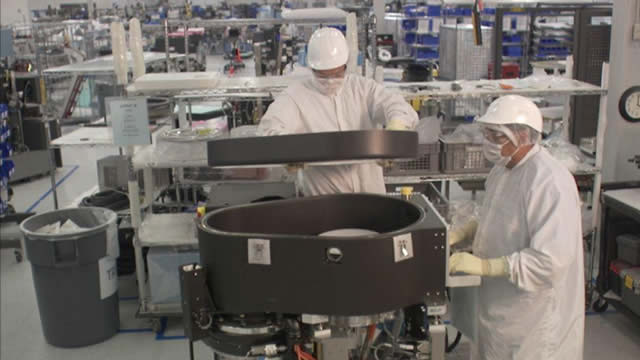
Core Viewpoint - TSMC plans to invest an additional $100 billion to expand its manufacturing capabilities in the U.S., which will include three new fabs, two advanced packaging facilities, and a large R&D center, bringing its total investment in the U.S. to $165 billion, making it one of the largest foreign investors in the country [1][16]. Group 1: New Facilities and Expansion Plans - TSMC has not disclosed specific details regarding the timing, location, or technology for the new investments, but there is sufficient space at the existing Fab 21 site in Arizona for new facilities [2][3]. - The Fab 21 site spans approximately 1,100 acres, which is more than twice the size of Monaco, and TSMC initially planned to build six fab modules there [2][3]. - The expansion includes three phases at Fab 21, two advanced packaging facilities, and an R&D center, with the aim of making it a major production hub [3][16]. Group 2: Employment and Workforce Impact - TSMC estimates that the new announcement will create 40,000 jobs over the next four years, significantly up from the previous estimate of 20,000 jobs by the end of 2020 [4]. - The company anticipates that some projects may run concurrently, increasing labor demand, although it has not specified whether this will double the production capacity for N3 and/or N2/A16 technologies [4][6]. Group 3: Global Investment Strategy - Despite the significant investment in the U.S., TSMC is also focusing on expanding its operations in Taiwan, Japan, and Germany, with plans to invest $38 billion to $42 billion globally by 2025 [6][7]. - TSMC is currently constructing a fab in Germany and is set to begin building a second fab in Japan, indicating a balanced global investment strategy [6][7]. Group 4: Technology Transfer and Production Costs - TSMC's ability to transfer advanced manufacturing technologies to the U.S. may face delays, as the company prefers to develop new technologies in Taiwan, where its R&D facilities are located [9][11]. - Chips produced in the U.S. using TSMC's N4 and N5 nodes are expected to be 20% to 30% more expensive than those produced in Taiwan, which may limit U.S. companies' interest in manufacturing there unless absolutely necessary [12][16]. Group 5: Customer Demand and Market Dynamics - TSMC's U.S. customers, including major firms like Apple, AMD, Broadcom, Nvidia, and Qualcomm, have requested increased production capacity in the U.S., despite the higher costs associated with U.S. manufacturing [14][16]. - The demand for U.S. production capacity has reportedly increased in light of potential tariffs on chips produced in Taiwan, adding a layer of political uncertainty to TSMC's decision-making [14][16].

KLA Corporation (KLAC) Management presents at Goldman Sachs Communacopia + Technology Conference 2024 (Transcript)
2024-09-11 23:01
KLA Corporation (NASDAQ:KLAC) Goldman Sachs Communacopia + Technology Conference 2024 September 11, 2024 12:30 PM ET Company Participants Bren Higgins - EVP and CFO Ahmad Khan - EVP and President, Semiconductor Process Control Conference Call Participants Toshiya Hari - Goldman Sachs Toshiya Hari Great. We'd like to get started. Good morning, everyone. Thank you so much for coming. My name is Toshiya Hari, I cover the semiconductor space as well as the semi cap equipment space. Very honored to have the team ...
KLA Corporation (KLAC) Citi's 2024 Global TMT Conference (Transcript)
2024-09-04 22:22
KLA Corporation Conference Call Summary Company Overview - **Company**: KLA Corporation (NASDAQ: KLAC) - **Event**: Citi's 2024 Global TMT Conference - **Date**: September 4, 2024 Key Points Industry and Market Dynamics - **Transition Year**: 2024 is characterized as a transition year with wafer fabrication equipment (WFE) levels expected in the mid-$90 million range, slightly up from the previous year [6] - **End Market Performance**: The semiconductor industry is primarily driven by foundry logic, accounting for 70% to 75% of the market, with expectations of memory growth in the following year [7][14] - **China Market Stability**: China remains a stable market for KLA, with expectations of flat performance half-to-half, but growth is anticipated from non-China customers [7][36] Company Performance and Strategy - **Service Business Growth**: KLA's service business is projected to grow at the high end of the target range of 12% to 14%, marking 48 consecutive quarters of year-over-year growth [8] - **Profitability Metrics**: Gross margins are in the mid-60s, with operating margins expected to align with consensus views for the fourth quarter [10] - **Dividend Increase**: KLA announced a 17% increase in its quarterly dividend to $1.70 per share, marking the 15th consecutive annual dividend increase, reflecting confidence in business performance [10] Advanced Packaging and Technology - **Growth in Advanced Packaging**: KLA's expectations for advanced packaging revenue have increased from $300 million to $500 million, driven by the complexity of packaging technologies [17][24] - **Focus on Leading Edge Technology**: The company is seeing strength in leading-edge investments, particularly from major customers like Intel and TSMC, with expectations for increased investment in N2 technology [13][15] - **Hybrid Bonding Opportunities**: KLA is focusing on hybrid bonding and advanced inspection capabilities, which are critical for the next generation of semiconductor packaging [29][32] Competitive Positioning - **Diversification Advantage**: KLA's diverse exposure to various inflections in the semiconductor industry, such as lithography and transistor architecture changes, positions it uniquely compared to competitors [22] - **Market Leadership in Inspection**: KLA is leveraging its expertise in wafer inspection and metrology to capture market share in advanced packaging and process control [17][52] Future Outlook - **Memory Market Recovery**: Expectations for NAND recovery are low but anticipated to improve next year, with a more significant focus on DRAM investments [35] - **China's Investment Trends**: While China accounted for over 40% of revenue earlier in the year, this is expected to decrease as non-China customer investments grow [36][38] - **Sustainable Growth Drivers**: The company anticipates continued growth in its service business due to improved utilization rates and longer tool lifespans, with a focus on delivering value to customers [58][61] Additional Insights - **Long-term Growth Strategy**: KLA is committed to capital allocation that supports business execution and growth, regardless of potential tax rate changes [42] - **Market Trends in Metrology**: The company is observing a shift in demand for higher-end metrology systems as semiconductor designs become more complex [53][55] This summary encapsulates the key insights and strategic directions discussed during the conference call, highlighting KLA Corporation's positioning within the semiconductor industry and its growth prospects moving forward.
KLA Corporation (KLAC) BofA Securities 2024 Global Technology Conference (Transcript)
2024-06-08 03:10
KLA Corporation Conference Call Summary Company Overview - **Company**: KLA Corporation (NASDAQ: KLAC) - **Industry**: Semiconductor Equipment Key Points and Arguments Financial Targets and Growth Expectations - KLA set a target of 9% to 11% topline growth, aiming for $14 billion in sales and $38 in earnings by 2026 [2][11] - Semiconductor revenue growth is projected at approximately 6% to 7%, with expectations of a $1 trillion semiconductor revenue market by 2030 [3][4] - The company anticipates a growth rate of 7% to 8% in the wafer fab equipment (WFE) market, driven by rising capital intensity [3] Market Dynamics and Investment Trends - The mix of logic/foundry WFE is expected to exceed 60%, which is crucial for KLA due to the higher process control intensity in this segment compared to memory [5][6] - KLA's position in process control is significantly stronger than competitors, with a market share approximately five to six times larger than the nearest competitor [6] - The company expects its systems business to grow around 10%, with service business growth updated to 12% to 14% through the cycle [7][12] Service Business Insights - KLA's service revenue is less correlated to WFE and more aligned with semiconductor revenue, providing a predictable revenue stream [14][18] - The service business has shown resilience, growing every year except for 2009, with a mid-high single-digit growth last year despite lower utilization rates in the industry [18][21] Market Outlook and Demand - The second half of 2024 is expected to show sequential growth, with mid-high single-digit growth anticipated in the WFE market [23][24] - Leading-edge investments are a significant driver for KLA, with expectations for growth in the 2-nanometer node and strong demand from high-performance computing (HPC) and AI sectors [25][26] - Memory market dynamics are improving, with signs of better financial performance and inventory management among memory customers [26] Advanced Packaging and Market Position - KLA's advanced packaging business is projected to grow from $400 million to potentially $450 million to $500 million, driven by AI market improvements [37][38] - The company participates in various advanced packaging processes, including plasma dicing and TSV formation, and is well-positioned to capitalize on increasing complexity in semiconductor packaging [39][41] Supply Chain and Capacity Management - KLA has invested in its supply chain to ensure capacity for future demand, with lead times for products generally around nine months [50][51] - The company is prepared for strong demand in 2025, particularly in foundry/logic investments and improving memory dynamics [52] Additional Important Insights - KLA's service contracts are primarily subscription-based, contributing to predictable revenue streams [7][12] - The company has made strategic decisions to exit less profitable segments, such as the flat-panel business, to focus on higher-growth areas [9] - KLA's gross margins are expected to remain strong, with a target of 63% plus as the company scales its operations [11]