东风股份

Search documents
东风股份(600006.SH)8月汽车合计销量7126辆
智通财经网· 2025-09-08 10:12
Core Viewpoint - Dongfeng Motor Corporation reported a total vehicle sales of 7,126 units for August 2025, with a cumulative sales of 84,713 units for the year, reflecting a year-on-year decline of 17.39% [1] Summary by Category Overall Sales Performance - The company’s cumulative vehicle sales for the year reached 84,713 units, which is a decrease of 17.39% compared to the previous year [1] New Energy Vehicle Sales - In August, the sales of new energy vehicles amounted to 1,575 units, with a cumulative total of 12,703 units for the year, showing a year-on-year decline of 23.18% [1]

东风股份8月销售汽车7126辆,今年累销同比下降17.39%
Ju Chao Zi Xun· 2025-09-08 10:11
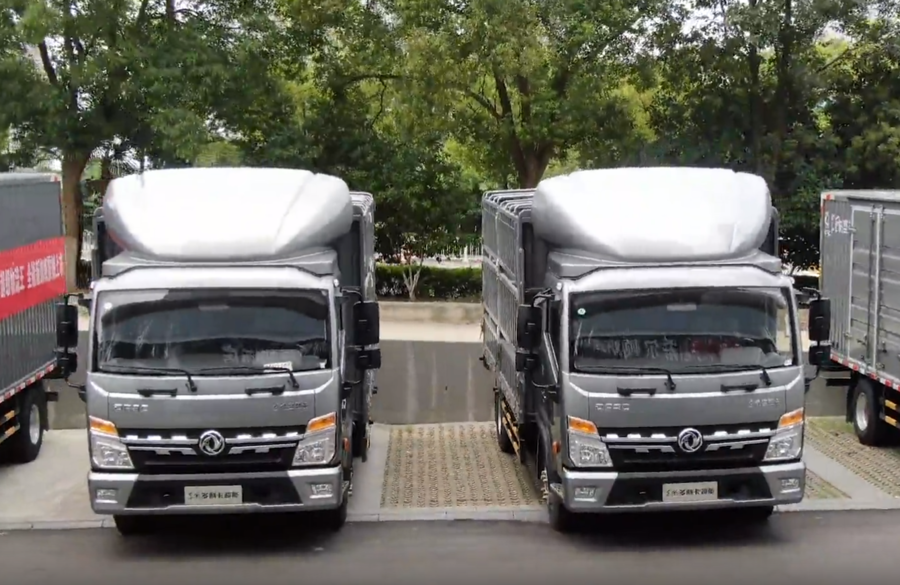
Core Insights - The overall production and sales of Dongfeng Motor in August showed a significant decline compared to the previous year, with total production down by 20.11% and total sales down by 17.39% [1][2] Production and Sales Data - Light commercial vehicles had a production of 6,203 units in August, with a year-to-date production of 73,009 units, reflecting a year-on-year decrease of 17.29%. Sales for August were 6,616 units, with a cumulative sales figure of 79,589 units, down 13.96% year-on-year [1][2] - Buses saw a production of 352 units in August, with a year-to-date production of 2,820 units, marking a significant decline of 58.87%. August sales were 234 units, with cumulative sales of 3,521 units, down 57.62% year-on-year [1][2] - Non-complete buses had a production of 286 units in August, with a year-to-date production of 1,535 units, down 10.55%. August sales were 276 units, with cumulative sales of 1,603 units, down 7.82% year-on-year [1][2] - The total production of vehicles for August was 6,841 units, with a cumulative production of 77,364 units, down 20.11% year-on-year. Total sales for August were 7,126 units, with cumulative sales of 84,713 units, down 17.39% year-on-year [1][2] New Energy Vehicles - In August, the production of new energy vehicles was 629 units, with a year-to-date production of 13,651 units, reflecting a decline of 25.49%. Sales for August were 1,575 units, with cumulative sales of 12,703 units, down 23.18% year-on-year [1][2] Dongfeng Cummins Engine - Dongfeng Cummins engines had a production of 15,753 units in August, with a year-to-date production of 143,452 units, showing an increase of 5.14%. August sales were 16,271 units, with cumulative sales of 146,311 units, up 9.93% year-on-year [1][2]

东风股份(600006.SH):8月汽车合计销量7126辆
Ge Long Hui· 2025-09-08 09:58
Core Viewpoint - Dongfeng Motor Corporation reported a total vehicle sales of 7,126 units in August, bringing the cumulative sales for the year to 84,713 units [1] Summary by Category Sales Performance - In August, the total vehicle sales reached 7,126 units [1] - Year-to-date cumulative sales amount to 84,713 units [1]
东风股份(600006) - 东风汽车股份有限公司2025年8月份产销数据快报
2025-09-08 09:45
证券代码:600006 证券简称:东风股份 公告编号:2025--055 东风汽车股份有限公司 2、东风康明斯发动机有限公司是本公司与康明斯(中国)投资有 限公司分别持有50%股份的合资公司。 东风汽车股份有限公司董事会 2025年9月9日 单位:辆/台 车型类别 产量 销量 本月 去年 同期 本年累计 去年同 期累计 累计增 减幅度 (%) 本月 去年 同期 本年累计 去年同 期累计 累计增 减幅度 (%) 商 用 车 轻型货车 6,203 6,832 73,009 88,267 -17.29 6,616 7,067 79,589 92,502 -13.96 客车 352 1,028 2,820 6,857 -58.87 234 1,136 3,521 8,308 -57.62 客车非完整车辆 286 274 1,535 1,716 -10.55 276 280 1,603 1,739 -7.82 汽车合计 6,841 8,134 77,364 96,840 -20.11 7,126 8,483 84,713 102,549 -17.39 其中:新能源汽车 629 910 13,651 18,320 -25 ...
东风股份:8月汽车合计销量7126辆
Ge Long Hui· 2025-09-08 09:44
格隆汇9月8日丨东风股份(600006.SH)公布8月份产销数据快报,本月汽车合计销量7126辆,本年累计销 量84713辆。 ...
东风股份:前8月汽车累计销量8.47万辆,同比下降17.39%
Xin Lang Cai Jing· 2025-09-08 09:39
东风股份9月8日公告,2025年8月份汽车销量为7126辆,上年同期为8483辆。2025年1-8月,公司累计销 售汽车8.47万辆,较去年同期下降17.39%。其中,新能源汽车8月销量为1575辆,上年同期为1035辆; 1-8月累计销售1.27万辆,同比下降23.18%。 ...
东风股份:8月份汽车合计产量6841辆,销量7126辆
Xin Lang Cai Jing· 2025-09-08 09:39
东风股份公告,2025年8月份汽车合计产量6841辆,销量7126辆;本年累计产量77364辆,增 减-20.11%,累计销量84713辆,增减-17.39%。其中新能源汽车本月产量629辆,销量1575辆;累计产量 13651辆,增减-25.49%,累计销量12703辆,增减-23.18%。东风康明斯发动机本月产量15753台,销量 16271台;累计产量14.35万台,增减5.14%,累计销量14.63万台,增减9.93%。 ...
硬派越野车的“新三样”革命
Zhong Guo Qi Che Bao Wang· 2025-09-08 02:44
Core Insights - The Chengdu Auto Show is witnessing a revolution in the rugged off-road vehicle segment, with the introduction of smart electric off-road vehicles, indicating a shift from traditional fuel-powered models to electric and intelligent designs [2][10] - Consumers are demanding off-road vehicles that not only perform well but also integrate smart technology and lifestyle features, reflecting a change in market expectations [2][6] Electric Drive Transformation - The transition to electric drive is significantly reshaping the performance boundaries of off-road vehicles, with electric systems reducing fuel consumption and emissions, thus aligning with regulatory requirements [3] - The Fangcheng Leopard 8, equipped with a 2.0T hybrid system, showcases impressive performance with a maximum power output of 550 kW and a torque of 760 N·m, achieving 0-100 km/h in just 4.8 seconds while maintaining a fuel consumption of 1.79 L/100 km [3] Intelligent Driving Systems - The integration of intelligent driving technologies is redefining traditional perceptions of rugged off-road vehicles, with features like advanced driver assistance systems becoming standard [6][7] - The Haval Tank 500 and Dongfeng Warrior M817 are examples of vehicles that incorporate sophisticated sensor systems and autonomous driving capabilities, enhancing the driving experience in challenging terrains [6][7] Ecosystem Redefinition - The development of a connected ecosystem is transforming off-road vehicles into "mobile ecological platforms," catering to diverse lifestyles and outdoor activities [8][10] - The trend of "urban and wild" versatility is evident in new vehicle launches, with brands emphasizing lifestyle integration and outdoor capabilities [8] Market Dynamics - The rugged off-road vehicle market is evolving from a niche segment to a mainstream category, driven by the adoption of electric, intelligent, and ecosystem-oriented features [10] - The shift towards "light off-road" vehicles is blurring the lines between traditional off-roaders and urban SUVs, expanding the potential user base [10]

到2027年力争初步建成武汉科技金融中心 为科技创新装上“金融引擎”
Chang Jiang Ri Bao· 2025-09-08 00:22
Core Insights - Wuhan Fangding's production value in the first half of the year has already surpassed the total for the previous year, with sales reaching 400 million yuan in the first seven months, indicating a strong growth trajectory [1] - The company has expanded its workforce from over 260 to 400 employees to meet increasing order demands, with an average of over 40 vehicles dispatched daily [1] - The company has established itself as a primary supplier for major automotive brands, including Dongfeng and BYD, and has diversified its product offerings to include over 1,300 types of automotive parts [2] Company Performance - The company aims to exceed its annual sales target of 500 million yuan, driven by new customer acquisitions in both the automotive and home appliance sectors [1] - The automotive segment has seen significant growth due to new orders from electric vehicle brands, with one model from Dongfeng requiring over 100 different components [1][2] - The home appliance division is also expected to double its business this year, supplying parts to leading brands like Midea and Haier [2] Technological Advancements - Since 2018, the company has focused on the new energy sector, implementing advanced technologies such as laser welding to enhance vehicle lightweighting and cost efficiency [2] - The company has invested nearly 40 million yuan in automation equipment, achieving a 70% overall automation rate, with welding lines operating 24 hours a day [2] Industry Position - Over the past decade, the company has grown from a million-level annual output to a billion-level output, consistently ranking among the top 100 manufacturers in Wuhan [2] - The company has received various accolades, including being recognized as a "little giant" enterprise in Hubei province and a "gold seed" enterprise for potential listing in Wuhan [2]
经济总量破6万亿,揭开湖北的崛起密码
21世纪经济报道· 2025-09-07 14:40
Core Viewpoint - Hubei's economy has surpassed 6 trillion yuan, achieving its "14th Five-Year Plan" goals ahead of schedule, driven by the integration of traditional industries and new growth drivers, as well as talent return and regional interaction [3][4]. Economic Growth and Industrial Transformation - Hubei's geographical advantages as a central hub in China, along with its rich industrial base in automotive, optoelectronics, and health sectors, have contributed to its economic growth [3][4]. - The province is undergoing industrial transformation, particularly in the automotive sector, where traditional manufacturers are shifting towards new energy vehicles [7][8]. - Hubei's automotive industry is expected to exceed 1 trillion yuan by 2024, with new energy vehicles accounting for a significant market share [8]. Low-altitude Economy Development - Hubei is actively developing its low-altitude economy, with a focus on drone production and logistics, exemplified by the establishment of a general airport in Zhushan County [9][10]. - The low-altitude economy is enhancing logistics efficiency in rural areas, significantly reducing delivery times and increasing local economic activity [9][10]. Regional Specialty Industries - Traditional industries in Hubei are leveraging digital transformation to expand market reach, as seen in the textile and e-commerce sectors in Tianmen [12][13]. - Hubei's agricultural sector, particularly in mushroom production, has seen significant growth through e-commerce and export initiatives [13][14]. Cultural and Tourism Development - The cultural and tourism sector is becoming a key driver of economic growth in Hubei, with significant increases in visitor numbers and revenue [17][19]. - Hubei is focusing on enhancing its cultural heritage and tourism infrastructure, as demonstrated by initiatives in Yunmeng County and the development of the Wudang Mountain tourism project [19][20]. Conclusion - Hubei's economic strategy emphasizes the integration of traditional and new industries, the development of low-altitude economies, and the enhancement of cultural tourism, positioning the province for sustainable growth and competitiveness in the future [21][22].